
Archives for January 14, 2019

Is Aphria (TSX:APHA) Stock the Most-Watched Cannabis Investment Right Now?

With leadership changes and a quarterly earnings report that shows considerable year-on-year growth, it’s hard to go a day without seeing headlines that pertain to legal marijuana heavyweight, Aphria (TSX:APHA)(NYSE:APHA). One of the most popular weed stocks on the TSX index, Aphria has become a key stock to watch when gauging the performance of this fascinating new Canadian industry.

Aphria has outperformed the Canadian pharma crowd

Comparing year-on-year earnings growth within markets is a good way to get a handle on a stock’s profitability. Aphria’s one-year past earnings growth of 94% versus the Canadian pharma average of 72% should be vindication enough for shareholders that they were backing the right horse. That figure also beats a five-year average past earnings growth of 89.6%, and shows that Canadian pot stocks can pull it out of the bag when it comes to profitability. The other thing to bear in mind is that pharma is a key defensive area, and to outperform in this space is no mean feat.

Overall, Aphria stock is shaking out as a moderate to strong buy right now: it’s got surprisingly good value stats, some decent quality indicators, and a fair amount of momentum. Let’s break that down now and see how that buy signal is supported by the data.

While not an undervalued stock compared to the rest of the TSX index, Aphria stock has some interesting ratios at the moment: consider a P/E of 44.7 times earnings (a little high, but par for the course for an outperforming legal weed ticker), an acceptable PEG of 0.8 times growth, and a fairly modest P/B of 1.4 times book. There’s no dividend on offer as yet, but who knows where the legal recreational and medical cannabis industry will end up?

A growth stock with impressive momentum stats

Meanwhile, quality is indicated by a ROE of 2% (low, but at least positive), EPS of $0.19, and very tasty 54.7% expected annual growth in earnings. Sure, there are better quality stocks on the TSX index, but that projected jump in earnings should interest growth investors, while a very low comparative debt level of 3.8% of net worth should appease investors with a lower appetite for risk.

Aphria stock gained 15.99% in the last five days (not bad for a post-Christmas market) while its share price is overvalued by more than double its future cash flow value. A beta of 2.65 indicates high volatility. This means good things for the momentum investment crowd and shows that legal marijuana stocks can continue to reward buyers with upside.

The bottom line

Compare the above stats with those of Canopy Growth (TSX:WEED)(NYSE:CGC). You’ll see that Aphria stock comes out on top in terms of value against a P/B of 7.1 times book. Indeed, in terms of valuation against growth, Aphria stock is the better buy. However, Canopy Growth’s 76.4% expected annual growth in earnings is a little higher, and with share price up 39.48% in the last five days, Canopy Growth beats Aphria on its core momentum stats, with a 2.94 per-market beta showing extreme volatility compared to the market.

Marijuana was legalized across Canada on October 17th, and a little-known Canadian company just unlocked what some experts think could be the key to profiting off the coming marijuana boom.

Besides making key partnerships with Facebook and Amazon, they’ve just made a game-changing deal with the Ontario government.

One grassroots Canadian company has already begun introducing this technology to the market – which is why legendary Canadian investor Iain Butler thinks they have a leg up on Amazon in this once-in-a-generation tech race.

This is the company we think you should strongly consider having in your portfolio if you want to position yourself wisely for the coming marijuana boom.


Stocks to watch: CapitaLand, Creative Technology, Keppel Corp, Best World, ICP

THE following companies saw new developments that may affect trading of their shares on Monday:

CapitaLand: Property group CapitaLand is acquiring Temasek’s subsidiary Ascendas-Singbridge (ASB) in a S$11 billion deal aimed at creating Asia’s largest diversified real estate group. After the transaction, CapitaLand’s combined total assets under management will exceed S$116 billion, and cover asset classes such as logistics/business parks, industrial, lodging, commercial, retail and residential. The company’s shares last traded on Jan 11 down S$0.01 at S$3.27.

Creative Technology: The audio technology company said on Monday that it is ready to work with original equipment manufacturers (OEMs) to incorporate its Super X-Fi headphone technology into their products, after getting a good response from some large players at last week’s CES tech trade show in the US. Its stock last traded on Friday at S$5.19, up S$0.99 from its opening price.

Keppel Corporation: Energy solutions provider Keppel Infrastructure Holdings has secured a contract to design, build and operate pipe racks on Jurong Island worth about S$40 million. The contract was awarded by JTC Corporation to Pipenet, a wholly owned subsidiary of Keppel Infrastructure, for the construction of pipe racks along parts of Banyan Drive, Banyan Avenue and the Jurong Island Highway that will facilitate pipeline connection to the Jurong Rock Caverns. The counter last traded on Jan 11 at S$6.25, up one Singapore cent.

Best World:The wellness and skincare company is investing in A*Star spin-off Celligenics through a share subscription that will see it taking up at least a 12.5 per cent stake in the biomedical startup. In the first phase of the share subscription agreement with Celligenics, Best World or a wholly owned subsidiary will invest around S$5.63 million to subscribe for 115,165 new ordinary shares representing 12.5 per cent of the total number of issued shares in Celligenics on a fully diluted basis. Best World shares last changed hands at S$2.64 a piece on Friday, down two Singapore cents.


ICP Ltd: Private equity firm CMIA Capital Partners has taken up S$3.9 million worth of new shares in hotel management company ICP Ltd. Catalist-listed ICP announced on Monday that it has issued 460 million new ordinary shares at S$0.0085 per share to CMIA. ICP shares last traded on Jan 10, up 0.1 Singapore cent at S$0.009.

Minister ignores suggestions to fix free flag program — despite century-long wait list

A Canadian flag is seen flying above the Peace Tower on Parliament Hill in Ottawa in 2017.

Wildly popular Peace Tower flag program ‘unsustainable,’ according to internal briefing note

Despite a wait list exceeding the lifespan of even the healthiest Canadians, the minister in charge of doling out free flags that have flown from the Peace Tower on Parliament Hill is ignoring her own department’s advice about how to fix the program.

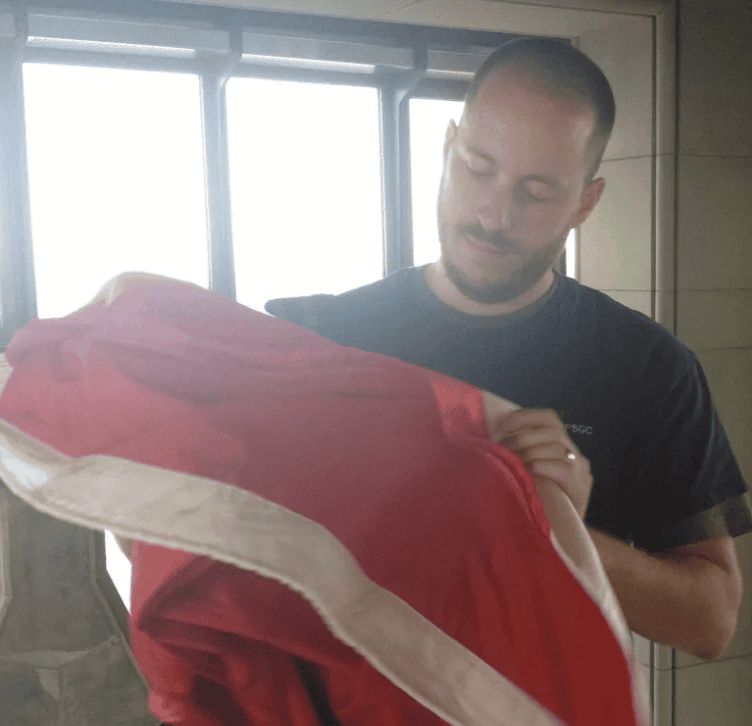
The Canadian flag on the Peace Tower in Ottawa is changed every weekday and since 1994, Canadians have been able to apply to receive one of the flags free of charge. That allows for 248 flags per year from the tower to be mailed out to Canadians. 

But the program has become victim of its own success, with more and more people adding themselves to the wait list. According to Public Services and Procurement Canada, as of mid-October, there are currently 22,650 people waiting for a Peace Tower flag, which the department now estimates will take approximately 114 years to clear.

The flags on Parliament’s East and West Blocks are also available: that wait list is 99 years long. Peace Tower flags are larger and cost about $140 each, while the East and West Block ones cost $40.

According to Statistics Canada, the average Canadian man can expect to live just shy of 80 years now and the average woman nearly 84. As of the last census in 2016, there were just 8,320 people over the age of 100 in the country.

Plans for change

The department sent the minister a briefing note last July, which CBC obtained through access to information. It listed several options for changes to the program hoping to make it more reasonable. At that time, the wait for a Peace Tower Flag was 101 years. 

“While successful, the initiative as presently structured has become unsustainable,” reads the briefing note.

Parliament Hill maintenance worker Robert Labonté prepares to ascend the stairs of the Peace Tower with a fresh flag in 2014. A worker changes the flag every weekday and sends one out to Canadians. 

The proposed solutions in the briefing note have been redacted, but the department stressed they needed a new approach.

“The initiative has reached a critical point where a decision is required,” officials wrote.

Despite those pleadings Public Services and Procurement Minister Carla Qualtrough decided against any changes.

“There are currently no plans to change the Parliament Hill Flag Initiative,” said her press secretary Ashley Michnowski in an email to CBC.

CBC sent several follow up emails and phone calls, but received no response as to why the minister decided to leave the program as is.

People receiving Peace Tower flags today asked for them in 2005. The department said if someone on the waiting list dies it is currently the responsibility of the executor of their estate to notify the department.

Canada, First Nations express concern over U.S. Arctic drilling plans

Wild caribou are seen near the Meadowbank Gold Mine in Nunavut on Monday, March 23, 2009. The federal government, two territorial governments and several First Nations in Canada are expressing concerns to the U.S. over plans to open a massive cross-border caribou herd’s calving ground to energy drilling, despite international agreements to protect it. 

Calving grounds of caribou herd among areas to be opened to drilling, despite protection agreement

The Canadian government, two territories and several First Nations are expressing concerns to the United States over plans to open the calving grounds of a large cross-border caribou herd to energy drilling, despite international agreements to protect it. 

“Canada is concerned about the potential transboundary impacts of oil and gas exploration and development planned for the Arctic National Wildlife Refuge Coastal Plain,” says a letter from Environment Canada to the Alaska office of the U.S. Bureau of Land Management. 

Yukon and the Northwest Territories have submitted similar concerns as the administration of U.S. President Donald Trump drafts plans to study the environmental impact of selling exploration leases on the ecologically rich plain.

“Much of the wildlife that inhabits the … refuge is shared with Canada,” says the N.W.T.’s letter to the U.S..

“The conservation of these transboundary shared resources is very important to Indigenous groups.”

It’ll be tough, says Indigenous leader

The Porcupine herd is one of the few remaining healthy caribou populations in the North and a crucial resource for Indigenous people.

In this undated file photo provided by the U.S. Fish and Wildlife Service, caribou from the Porcupine Caribou Herd migrate onto the coastal plain of the Arctic National Wildlife Refuge in northeast Alaska. 

Canada says the caribou are covered by one of four different international agreements — including two over polar bears and one for migratory birds — that commit the U.S. to preserve the area. At least three diplomatic notes have passed between the two countries over the issue.

Canada wants assurances from the U.S. about the content of the environmental study. The N.W.T. is asking that hearings be held in Canadian Indigenous communities that depend on the herd.

It’ll be tough, said Bobbi Jo Greenland-Morgan, head of the Gwich’in Tribal Council.

“We’re not dealing with the same government we’ve been dealing with for the past 30 years,” she said.

In December, the U.S. released a draft environmental impact study proposal for the lease sale with a public comment period until Feb.11.

The stakes are high for the narrow strip of land along the central Alaskan coast. The Porcupine herd numbers 218,000 and is growing. Greenland-Morgan said the animals are a regular source of food for her people.

“We probably have [caribou] at least once or twice a week.” 

Development will ‘negatively affect’ caribou, U.S. acknowledges

Adult caribou can co-exist with development, but scientists have shown they avoid any disturbance on their calving grounds. 

“Canada is particularly concerned that oil and gas exploration and development will negatively affect the long-term reproductive success of the Porcupine caribou herd,” says the federal letter.

The U.S. is aware of that possibility. 

Wild caribou roam the tundra in Nunavut on March 2009. Canada wants assurances from the U.S. about the content of the environmental study. The N.W.T. is asking that hearings be held in Canadian Indigenous communities that depend on the herd. 

“Potential impacts, particularly those relating to changes in calving distribution and calf survival, are expected to be more intense for the [Porcupine herd] because of their lack of previous exposure to oil field development,” says the draft plan.

It also points out the herd’s importance to Canadian First Nations and acknowledges they take about 85 per cent of the annual harvest.

“These Canadian communities would be among the most likely to experience potential indirect impacts.”

Craig Machtans of the Canadian Wildlife Service represents Canada on an international committee that manages the Porcupine herd. He said he has a good relationship with his counterpart in Alaska.

“He does keep me informed,” Machtans said. 

But the ties aren’t what they were. 

There’s an obligation to consult that isn’t being implemented right now.

– Michael Byers , International law professor 

The U.S. representative used to come from the U.S. Fish and Wildlife Service. The current member is from the Department of the Interior.

“He has a different mandate,” said Machtans. “I’m not sure it’s the same relationship.”

Officials at Global Affairs Canada say the U.S. is living up to the agreement on the Porcupine herd. American officials were not available for comment due to a partial government shutdown in that country.

Machtans said Canada has no special status as the U.S. considers public input on the draft.

“We’re not in the inner circle,” he said. “We’re participating as members of the public.”

International law professor Michael Byers said the U.S. may have already broken a clause in the agreement that commits both parties to consulting the other before a final decision is made on anything that affects the herd’s future.

“There’s an obligation to consult that isn’t being implemented right now,” Byers said. 

He noted that the U.S. has already said it intends to sell the leases this year.

Greenland-Morgan said her people have been fighting for decades to keep the Porcupine calving grounds free of development — but this time feels different.

“We’ve always had to do this,” she said. “But with the Trump administration, it’s been more challenging.”

Changes to food safety regulations have small businesses concerned

Small food businesses say changes to Canada’s food safety regulations that come into effect on Tuesday will make it harder to sell across provincial lines.

‘It obviously takes time away from us doing what we’re here to do, which is to grow food’

Small businesses in Nova Scotia and New Brunswick are worried about changes to Canada’s food safety regulations that they say will make it harder to sell across provincial lines starting this week.

The Safe Food for Canadians Regulations, which go into effect on Jan. 15, clear up grey areas that previously meant businesses with provincial licences could sell up to 20 kilograms of food products into another province.

Kent Coates, the owner of Nature’s Route Farm in Pointe de Bute, N.B., said he sells vegetables at farm markets in New Brunswick most of the time.

But he does sell a bit in nearby Nova Scotia — mostly to other farmers to supplement their inventory when they sell out.

On Tuesday, that has to stop until Coates gets a federal licence.

“It obviously takes time away from us doing what we’re here to do, which is to grow food,” he said.

‘It’s not completely clear’

“And it obviously adds cost to our process because every moment that I spend doing the administration stuff just to be able to sell my food is time that I’m not spending taking care of my crops. So I have to replace that with staff that take care of my crops.”

Coates also said it hasn’t been easy figuring out what licence he needs and how to get it.

“It’s not completely clear,” he said. “Somewhere there’s someone that knows exactly what I need. But as with all large organizations, when you call [the] 1-800 number you don’t talk to that one person in the organization that understands what’s happening.”

Any foods under the Canadian Agricultural Products Act, including dairy, fresh fruit and vegetables, as well as honey, would need to be federally licensed to be sold interprovincially.

Willem van den Hoek, owner of That Dutchman’s Cheese Farm, said he used to sell his cheeses online across the country.

But starting next week, he can’t. He said he doesn’t want to get a federal licence because of the cost and more rigorous controls, which means he’s losing about five per cent of his business.

“They closed that allowance and that has impacted us. It’s not a lot, but it’s a job for somebody here,” he said.

“I’d just like to see the reasoning why [they made these changes.]”

“When we did the new regulations, we went through them with a fine-tooth comb to make sure that there’s nothing in there that isn’t absolutely necessary and warranted for food safety,” she said.

“Consumers expect that we as the CFIA are doing everything in our power to ensure that the food that they purchase is as safe as it can be.”

Former rules unclear

But Lamondin said the former rules allowing provincially-licensed businesses to sell up to 20 kg out of province were never intended to be for the producer.

She said it’s actually an allowance for the consumer, allowing them to bring in a product from another province of less than 20 kg — and that hasn’t changed. But she admits the former rules were murky.

“That lack of clarity probably led to some confusion over time of how the exception would be applied and to whom. The new regulations make it crystal clear,” she said.

“As soon as they decide to sell into another province they need that CFIA licence.”

Lamondin also said she understands that the federal requirements are more stringent . For small businesses, it’s going to be “a step up in terms of expectations.”

If people continue to sell outside of their province without a federal licence after Tuesday, Lamondin said they’ll run into trouble. But she couldn’t say what the punishment might look like.

“The most important thing though we would say is, by selling outside of the province, you have triggered federal regulation,” Lamondin said.

“So please get yourself a CFIA licence … and then you will be operating without any any worries.”

Fintech Firms Want to Shake up Banking, and That Worries the Fed

FILE PHOTO: St. Louis Federal Reserve Bank President James Bullard speaks at a public lecture in Singapore October 8, 2018. 

WASHINGTON – The U.S. Federal Reserve is wary of giving “fintech” firms such as OnDeck Capital Inc or Kabbage Inc. access to the country’s financial infrastructure, putting the central bank at odds with other regulators looking to bring them into the fold.

The Office of the Comptroller of the Currency (OCC) and the Federal Deposit Insurance Corporation (FDIC) are exploring granting federal bank-like licenses to tech-driven firms that offer financial services, such as money transfers and lending.

The plan is part of a broader push by President Donald Trump’s administration to boost small businesses and promote job growth. Federal licenses would allow fintech firms, which currently operate under a patchwork of state rules, to reduce their regulatory costs and expand into new regions and products.

However, fintech firms say they are reluctant to invest heavily in nationwide expansion without access to the payment systems, settlement services, and other Fed tools and the central bank has yet to decide whether to let those lightly-regulated players in.

Many Fed officials fear these firms lack robust risk-management controls and consumer protections that banks have in place.

“They probably do want access to the payments system, but they don’t want the regulation that would come with that access,” St. Louis Fed President James Bullard told Reuters in November. “I am concerned that fintech will be the source of the next crisis,” he added.

Companies such as PayPal and LendingClub Corp have attracted millions of customers by offering greater convenience or better prices than traditional banks. The OCC and the FDIC say such firms can broaden access to financial services because their low-cost models allow them to reach poorly served areas and offer small loans that are uneconomical for bigger banks.

But some fintech firms say they would be reluctant to invest the time and resources in applying for and maintaining the new OCC fintech license unless the Fed gives them access to the payments system, so they will not have to depend on banks to route money for them. Direct access would eliminate bank routing fees, a top-five operating cost for many fintech firms, and would allow them to compete more effectively with traditional lenders.

“It’s hard to know if it’s worthwhile applying if you don’t know what access you’d have to the Fed services,” said Jason Oxman, CEO of the Electronic Transactions Association, which represents fintechs and banks. “It would be helpful for the Fed to clarify.”

Banks are pushing back, arguing fintech firms should access the Fed system only if they comply with the same rules banks face.”You don’t want a new charter that skirts existing rules and regulations and call that innovation,” said Paul Merski, executive vice president for the Independent Community Bankers of America.

Unveiled in July, the OCC special charter allows fintechs to operate nationwide under a single license, provided they satisfy some liquidity, capital and contingency planning requirements.

Currently, state regulators that oversee fintechs focus primarily on consumer protections, such as capping interest rates on lending products, privacy safeguards, and preventing unfair or deceptive practices. Some states may also require firms to comply with anti-money laundering rules, submit business plans or allow onsite examinations.

By comparison, nearly every aspect of banks’ operations is subject to rigorous scrutiny and multiple federal and state laws. These include a host of capital and liquidity requirements, operational risk, cyber risk, vendor risk, anti-money laundering and bank secrecy rules, fair lending and anti-discrimination lending laws.

The OCC fintech charter does not permit companies to collect federally insured deposits, now a precondition for accessing the Fed’s payment system.

RAPID GROWTH

In private meetings, Fed officials in Washington are divided on the issue, with many reluctant to offer any reassurances or even guidance on how fintechs should proceed, said fintech executives.

“It’s not a two-way street, it’s a one-way radio channel right now,” said Sam Taussig, Atlanta-based Kabbage’s head of global policy, of communication with the Fed. “We don’t know what’s going on.”

Some officials are unsettled by the rapid growth of fintech firms, which half of U.S. consumers now use to transfer money, according to consultancy EY.

From 2010 to 2017, more than 3,330 new fintech firms were created, according to the Treasury, with financing for such firms soaring thirteen-fold over that period to $22 billion.

Officials worry these young players favor growth over risk-management and regulatory know-how – a concern exacerbated this month when fintech Robinhood mistakenly claimed its new checking and savings accounts were federally insured.

“Atlanta’s trying to be a fintech hub, so I get the opportunity to talk to a lot of entrepreneurs in this space,” said Atlanta Fed President Raphael Bostic at a banking conference late last year. “Almost none of them has risk at the top of what they’re thinking about, and that makes me nervous.”

Some officials worry that direct access to the payment network would mean that a fintech firm’s collapse, a major IT stumble or cyber breach, could spread risk across the system or hurt consumers.

Fintech firms argue their rapid growth simply reflects strong demand for their services and that many are already complying with a host of state regulations. A spokeswoman for the Federal Reserve Board in Washington declined to comment, but Lael Brainard, one of its governors who is leading the Fed’s thinking on the issue, has also urged caution over letting fintechs into the Fed system.

OCC spokesman Bryan Hubbard said its proposed charter still offers many benefits for fintech firms, which can continue to partner with banks that can access Fed services.

The regulator is in discussions with dozens of firms and expects to award the first national license under the new charter early this year, a development fintechs hope will put pressure on the Fed to formally clarify its stance.