Archives for January 11, 2019

It makes more sense to rent than buy, but only if you live in these areas

This image has an empty alt attribute; its file name is MW-GB551_forren_20180110182404_ZH.jpg

A majority of Americans are renting on the cheap — at least, compared to what they’d be paying if they bought a home.

In more than half (59%) of housing markets nationwide — 442 of 755 U.S. counties — renting a three-bedroom property is now more affordable than buying a median-priced home, according to a new report from real-estate data firm Attom Data Solutions. Among the 40 counties across the country with more than 1 million residents, only three had housing markets where it was still cheaper to buy a home than rent one: Wayne County (Detroit), Mich.; Philadelphia County, Pa.; and Cuyahoga County, Ohio.

Moreover, home prices are rising faster than wages in 80% of housing markets nationwide, including everywhere from Chicago to Houston to Phoenix.

“The buy-versus-rent calculus is shifting toward renting being more affordable,” said Daren Blomquist, senior vice president at Attom Data Solutions. With a strong jobs market, Americans want to stay mobile and often can’t afford to buy near urban centers where they’re more likely to get a job at higher wages, he said.

Renting may be better than owning to build wealth — if you’re disciplined enough to invest the money you save by not owning a property, a 2017 study suggested. “When considering buying and building wealth through equity appreciation versus renting, and reinvesting in a portfolio of stocks and bonds, property appreciation does not change the results,” co-author Ken Johnson, real estate economist at Florida Atlantic University’s College of Business, said.

Interest rates rose last year and are expected to keep increasing in 2019, making buying a home with a mortgage less affordable for many — even younger Americans who aim to pay off their home in 20 or 30 years and reap the appreciation of a rise in home values. And despite a slight drop in demand in some housing markets, tight housing inventory across the country is still fueling competition for homes and consequently making them more expensive.

Plus, Blomquist said, the “drive until you afford” mentality has made many once-affordable suburbs and exurbs vastly more expensive. Large swaths of the New Jersey and New York commuting belt have seen double-digit house price increases in recent years, for instance.

The new tax law has further complicated the math in deciding whether to rent or buy, according to the Urban Institute. Under the 2017 tax code, a family of three with an annual income of $150,000 would be better off buying if their rent exceeded $1,507 per month. But with the new tax code, they’d have to pay more than $1,885 per month to make buying worthwhile. “Do we expect people not to buy because of these changes? At the margin, yes,” researchers at the Urban Institute wrote.

As MarketWatch’s Tax Guy Bill Bischoff wrote, “the new law limits your deduction for state and local income and property taxes to a combined total of $10,000 ($5,000 if you use married filing separate status). Foreign real property taxes can no longer be deducted. So no more property tax write-offs for your place in Cabo. However, you can still choose to deduct state and local sales taxes instead of state and local income taxes.”

Rents are rising faster than wages in most markets

What’s more, in 52% of markets, including Chicago and Los Angeles, rents are rising faster than wages. And more renters may also find themselves priced out of the housing market, because home prices are appreciating more quickly than rents in 70% of markets. As a result, the old guideline of not spending more than 30% of your income on rent (or a mortgage) has become increasingly difficult to follow in cities like San Francisco and New York.

Take Huntsville, Ala., which had the most affordable rental market in the country back in January 2018, according to Attom Data Solutions. Last year, the average renter there only had to devote 22.3% of their wages to rent. But home prices in that area rose nearly 11% between 2016 and 2017, as investors flocked and bought up properties to rent out. And the prevailing wages in places like Huntsville aren’t as high as in cities like New York or Seattle.

So for those who are no longer happy renting, they may not have much choice. “It’s great in theory to buy in those markets and have a lot of disposable income, but the problem is going to be finding a job, period, or a job that will pay as well,” Blomquist said.


New bill would require high school students to take ‘personal finance’ class

Something seem out of the norm there? 

Maybe not for much longer! 

South Carolina lawmaker Luke Rankin, Horry County Senator, has pre-filed a bill that would require high school students take a personal finance class.

The class would cover things like budgeting, insurance, taxes, retirement planning, banking, and how to avoid too much debt. 

“You can really put yourself in a really bad hole that you’re gonna be digging yourself out of the rest of your life,” Dr. Christopher St. John, Certified Financial Planner at Carolina Wealth Advisors, told WCBD. 

If the bill is passed, the course would be required and students would have to take a test at the end of the year before graduation.

It would go into effect during the 2020-2021 school year if passed. 

Will Supporting Your Adult Kids Kill Your Retirement?

As a parent, it’s natural to want to be there for your children — even once they’re grown and have families of their own. But while it’s one thing to offer your adult kids emotional support, it’s another thing to offer them support that’s financial in nature. A new study from Merrill Lynch and Age Wave, however, reveals that many parents are going overboard on the latter.

Each year, parents spend twice as much on their adult children as they contribute to their retirement accounts. Specifically, U.S. parents spend $500 billion annually on adult children aged 18 to 34 yet contribute a collective $250 billion to their nest eggs. And if they don’t start prioritizing their own financial needs, they risk falling short down the line.

Are you putting your golden years at risk?

There’s nothing wrong with helping your adult kids navigate their own financial lives if you can afford to do so. Most older Americans, however, are behind on retirement savings and can’t afford to be spending more on their grown children than they contribute to their IRAs or 401(k)s.

Consider this: The average household aged 50 to 55 has $124,831 set aside for retirement savings, while the average household aged 56 to 61 has $163,577. To be fair, this data is a few years old, and it doesn’t take non-retirement-plan assets into account. In other words, a given 50-something couple might have just $150,000 in an IRA but might also be sitting on a home worth $800,000 that it plans to sell in retirement.

On the other hand, the aforementioned numbers are just averages. The median retirement savings balance for households aged 50 to 55 is just $8,000, and for those aged 56 to 61, it’s $17,000. And when you have a median that’s considerably lower than an average for the same set of data, it means that most people fall well below the average. And that’s why funding your adult kids’ lifestyles is so problematic. Chances are, you need that money yourself to catch up on savings.

Imagine you spend your entire 50s giving your adult children $300 a month. If you were to put that money into an IRA or 401(k) for a decade instead and invest it an average annual 7% return, you’d boost your nest egg by about $50,000. And that’s money that’s bound to come in handy during retirement.

While Social Security will provide some income for you during your senior years, it won’t be nearly enough to cover all of your bills. Therefore, if you have money to spare during the latter part of your career, it pays to put it into your own savings rather than use it to help your grown children.

Supporting your grown kids in other ways

While giving your adult children money to pay their bills is a move that could ultimately hurt you, that doesn’t mean you can’t support them in other ways. If you have a flexible work schedule, for example, you might offer to help with child care for your grandkids to save your own children money on day care or babysitters. Or you might allow your recently graduated child to live at home for a number of months to save money while he or she tackles whatever outstanding student loans are at play.

It’s great to offer up support that doesn’t cost you anything, but don’t make the mistake of putting your adult kids’ needs ahead of your nest egg. Remember, they have their whole lives ahead of them to earn more money, whereas you might only have a handful of years left to boost your savings before retiring. And contrary to what the guilty side of your brain might try to get you to believe, putting your own financial needs over those of your kids doesn’t make you a bad parent. If anything, it makes you a responsible adult who doesn’t want to risk struggling financially in retirement and having to rely on his or her kids down the line.

The No. 1 job billionaires and multimillionaires held before they got filthy rich

There are billions of reasons to do this job.

Many of today’s self-made billionaires and multimillionaires held a sales job, or jobs, when they were younger — a fact they consider crucial to their current success, according to research conducted by sociologist and historian Rainer Zitelmann and published in his recent book “The Wealth Elite.”

Zitelmann interviewed 45 individuals, whose net worth ranged, on the low end, from 10 million to 30 million euros (roughly $11.4 to $34.2 million) to, on the upper end, several billion euros (more than $3 billion), and whose wealth was either entirely self-made or built on inheritances that were later multiplied.

“To date, researchers have either underestimated or totally ignored the critical role of sales skills in self-made, ultra-high-net-worth individuals,” Zitelmann tells Marketwatch. “Among those in our study, it was the factor they themselves considered [to have] played the most important role in their success.”

Indeed, roughly two in three said that their talents as sales people had been a “significant” factor in their financial success. More than one in three said they owed 70% or more of their success to their sales talents.

So what sales jobs did they have early on? They sold everything from costume jewelry and cosmetics to used car radios and wheel rims — and even old egg cartons that could be used as noise insulation.

Plenty of wealthy celebrities and CEOs say they did sales work before becoming rich, too. Kanye West was a salesperson at the Gap; both Johnny Depp and Jennifer Aniston were telemarketers; and Netflix CEO Reed Hastings was a door-to-door vacuum-cleaner salesman. “I loved it, strange as that might sound,” Hastings told his former college newspaper. “You get to meet a lot of different people.”

And a separate study of thousands of CEOs from LinkedIn found that sales manager was one of the five most common first jobs for CEOs (consultant was No. 1 on that list — and it, too, is a role that typically requires sales skills).

Experts say it’s no coincidence that successful people have strong sales skills. “Sales skills are very valuable,” says Cheryl Palmer, founder of career coaching firm Call to Career. “Every company runs on sales.”

Even if you don’t plan to run a company, sales experience is essential, experts say. “Everyone needs a basic understanding of their strengths and how to sell them, because no one else is going to sell them for you,” says Randalyn Hill, a relationship-development specialist with career coaching firm Ama La Vida. “Throughout your entire life and career, you need to advocate for yourself and sell your worth. This will help you get clients, negotiate salaries, secure promotions. The ability to sell yourself is crucial in many aspects of your career journey.”

So how do you get sales experience if you have none? Palmer suggests applying for positions that are commission-only, as they may be easier to get. “This is a no-risk proposition for the company. If you do well, they make money. If you don’t, they don’t lose anything,” she explains.

You can also learn to excel at sales in a side gig. Hill says you could consider looking for a weekend shift as a barista (upselling customers on drinks, for example) or at retail stores, especially those with unusual offerings, as “you learn how to give convincing advice and sell them on a product they aren’t sure about.”

There are also plenty of classes that can teach sales skills. Look online for courses (Cornell’s online education offerings include the subject, for example) and at your local university, or consider grabbing a book on the topic.

And don’t worry if you aren’t instantly good at it, says Hill: “Almost all selling is uncomfortable at first, but, the more and more you do it, the stronger you get.”

Samsung may unveil its foldable phone and Galaxy S10 on February 20th (update)

The company is eschewing its MWC tradition.

Samsung has traditionally launched its new Galaxy S phones at Barcelona’s Mobile World Congress. This year, though, it appears it’s breaking with tradition. Wall Street Journal reports that the company will be showing off its 10th anniversary flagship phone line up and its much-anticipated foldable phone at events in San Francisco and London on February 20th. Initial reports suggested we’d have to wait until March to see the foldable, rumored to be called the “Galaxy F”.

This means we’ll find out sooner rather than later whether it’ll come with the eye-watering price tag of $1,770 some outlets have suggested, and whether the 5G-enabled S10 might be a more affordable alternative. Details of the S10 leaked early this year, hinting at a hole-punch display, tiny bezels and multiple cameras. The company has been lauding its foldable for a long time, and the S10 represents the first major redesign of the Galaxy S line since the S8 in 2017, so it’ll be a big day for Samsung.

Update: Samsung Mobile’s Twitter account has confirmed that it will indeed be hosting an Unpacked event on February 20th, and the animation is clearly hinting at a certain “10” device.

TiVo will add apps for smart TV boxes and WiFi for Mini this year

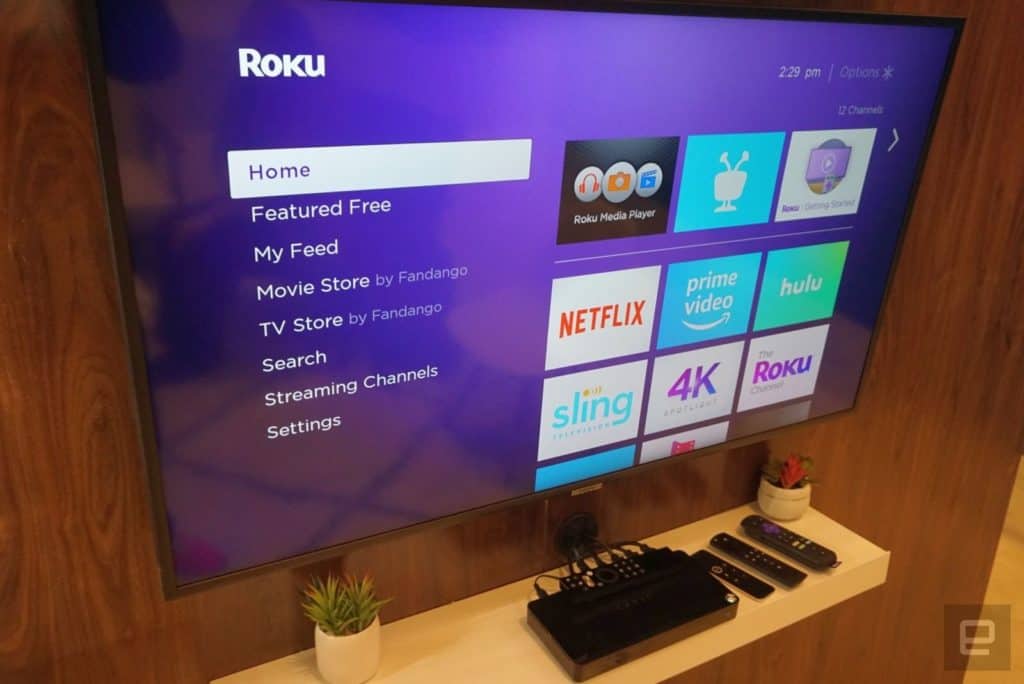
Fire TV, Roku and Apple TV are in line to get TiVo apps that stream from the DVR.

It’s been a few years since TiVo released a limited app for Amazon’s Fire TV platform, but as it promised last year, the next-generation platform will reach third-party boxes. Those include not only Fire TV (and Android) but also Roku and eventually Apple TV.

We got a brief demo of the experience on those boxes at TiVo’s booth, where it streamed transcoded video from a connected Bolt DVR without issue. If everything goes according to plan, you should see the full app for Fire TV in Q2, followed an app for Roku, and later, perhaps in the fall, access will extend to the Apple TV. Additionally, it’s not planning to charge for access to the apps, although TiVo owners will only be able to stream to two third-party devices at once.

TiVo is still focused on its Mini as a proper extender for the living room experience into other rooms, and now it’s going to offer a 801.11AC WiFi adapter to make that easier. Since not everyone has coax cable or Ethernet running everywhere, an official wireless solution will make things easier than ever. We witnessed it in action within the signal hell that is a CES show floor, so it can probably handle the crowded bandwidths of your neighborhood.

We also got a preview of the feature rolling out that uses data from Thuuz to extend recordings of sporting events that run long. Unfortunately it’s not ready to solve the “Sunday night CBS show” delay issue by moving around subsequent recording windows, but that just gives us one more thing to dream about.