Archives for January 8, 2019

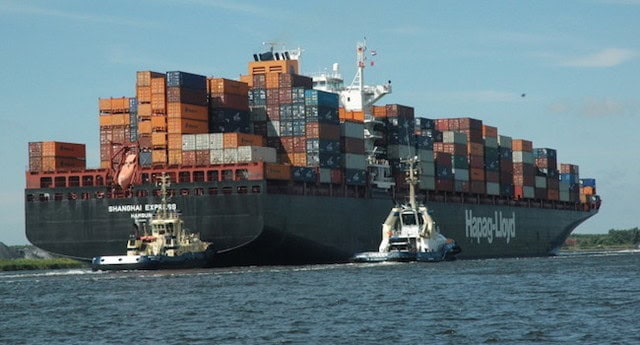
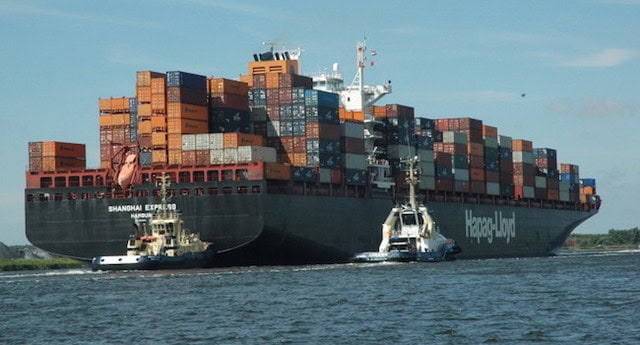
Battling container ship fire

A second offshore support vessel has arrived off Canada’s east coast to help fight a fire that has been burning for days aboard a large container vessel bound for Halifax.

“Several containers are still burning,” Tim Seifert, a spokesman for the international shipping company Hapag-Lloyd, said in an email Monday from Hamburg, Germany. “The focus is on containing the fire.”

Seifert confirmed that the 95-metre Maersk Mobiliser, based in Newfoundland, on Monday reached the 320-metre Yantian Express, which first reported a container fire on Thursday.

The container ship is about 1,500 kilometres east of Halifax.

Seifert said the Maersk Mobiliser had joined the 71-metre Smit Nicobar, an offshore support ship from Belgium that arrived on Friday night.

The Smit Nicobar is equipped with fixed fire monitors — a type of water cannon that can pump large volumes of water to extinguish fires.

All 23 crew members from the Yantian Express have been moved onto the Smit Nicobar. There were no reports of injuries, and the extent of damage to the larger vessel remains unclear.

A spokesman for the U.S. Coast Guard said the plan is to have the Maersk Mobiliser tow the container ship to Halifax.

Seifert said it was unclear when the ships would reach the port city. He declined to say what the Yantian Express is carrying or what may have caused the fire.

The Yantian Express was travelling from Colombo, Sri Lanka, to Halifax on Thursday when a fire started inside a container on the ship’s forward deck, then spread to other containers.

The U.S. Coast Guard in Boston forwarded the ship’s call for help to a coast guard base in Portsmouth, Va.


More time to fix solitary law


A solitary confinement cell  

The Court of Appeal of British Columbia has given the federal government more time to fix its solitary confinement law after a lower court declared the law unconstitutional last year.

The B.C. Supreme Court ruling last January gave Ottawa a year to enact replacement legislation, and the Appeal Court has now extended the deadline to June 17, with conditions to protect prisoners’ constitutional rights in the meantime.

“While we are prepared to extend the suspension of the declaration of constitutional invalidity, that cannot be a justification for the federal government to maintain unchanged the conditions of inmates kept in administrative segregation,” a three-judge panel wrote in a joint ruling released Monday.

“Without violating the existing legislation, the government must take steps to deal with constitutional concerns.”

The conditions to protect prisoners include that health-care professionals must complete daily visual observations of inmates in solitary confinement and advise the institutional head within 24 hours if they believe the inmate must be removed from segregation.

The B.C. Civil Liberties Association and the John Howard Society of Canada launched the legal challenge.

The two groups said in a joint statement before the Appeal Court’s ruling was released that prolonged, indefinite solitary confinement causes “terrible physical, psychological and spiritual consequences.”

“We know that solitary confinement leads to death. Isolating incarcerated people from meaningful human contact is a torturous practice that must end,” the groups said.

A nine-week trial in 2017 heard from former inmates who continue to experience mental health issues after being released and from the father of a 37-year-old man who hanged himself at Matsqui Institution in Abbotsford, B.C., following his placement in a segregation cell.

The advocacy groups are also fighting a bill introduced by the federal government in October that would limit solitary confinement to 22 hours or fewer per day.

The bill would mean prisoners who pose risks to security or themselves would instead be moved to new “structured intervention units” and offered the opportunity to spend four hours a day outside their cells, with a minimum of two hours to interact with others.

However, the bill does not include hard caps on how many days or months inmates can be isolated from the general prison population.

The Canadian Civil Liberties Association launched a separate case against solitary confinement in Ontario, and the Court of Appeal in that province has given the federal government until April 30 to enact new legislation.

The federal government did not immediately respond to a request for comment.

Bell wants more of your info

Canada’s largest telecommunications group is getting mixed reviews for its plan to follow the lead of companies like Google and Facebook in collecting massive amounts of information about the activities and preferences of its customers.

Bell Canada began asking its customers in December for permission to track everything they do with their home and mobile phones, internet, television, apps or any other services they get through Bell or its affiliates.

In return, Bell says it will provide advertising and promotions that are more “tailored” to their needs and preferences.

“Tailored marketing means Bell will be able to customize advertising based on participant account information and service usage patterns, similar to the ways that companies like Google and others have been doing for some time,” the company says in recent notices to customers.

If given permission, Bell will collect information about its customers’ age, gender, billing addresses, and the specific tablet, television or other devices used to access Bell services.

It will also collect the “number of messages sent and received, voice minutes, user data consumption and type of connectivity when downloading or streaming.”

“Bell’s marketing partners will not receive the personal information of program participants; we just deliver the offers relevant to the program participants on their behalf,” the company assures customers.

Teresa Scassa, who teaches law at the University of Ottawa and holds the Canada Research Chair in Information Law and Policy, says Bell has done a good job of explaining what it wants to do.

But Scassa says Bell customers who opt into Bell’s new program could be giving away commercially valuable personal information with little to no compensation for increased risks to their privacy and security.

“Here’s a company that’s taking every shred of personal information about me, from all kinds of activities that I engage in, and they’re monetizing it. What do I get in return? Better ads? Really? That’s it? What about better prices?”

Toronto-based consultant Charlie Wilton, whose firm has advised Bell and Rogers in the past, says there’s “tonnes” of evidence that consumers are increasingly aware of how valuable their personal information can be.

“I mean, in a perfect world, they would give you discounts or they would give you points or things that consumers would more tangibly want, rather than just the elimination of a pain point — which is what they’re offering right now,” Wilton says.

Scassa says there are also privacy and security concerns to consider.

At the macro level, Bell’s data security could be breached by hackers. At the micro level, she adds, there’s the potential for family friction if everybody starts getting ads based on one person’s activities.

Ads for pornography, birth control or services for victims of abuse could trigger confrontations, for instance.

“Some families are open and sharing. Others are fraught with tension and violence,” Scassa says.

Wilton says a company in Bell’s position also runs the risk that customers will feel betrayed if their information is leaked or the advertising they receive is inappropriate.

In the age of social media, he says, “one leak or one transgression gets amplified a million times.”

For its part, Bell spokesman Nathan Gibson notes in an email that its customers aren’t required to opt into its new marketing program and they can opt out later by adjusting their instructions to the company.

“Bell is responsible for delivering the advertising we believe would be most relevant to customers who opt in to the program, rather than the random online ads they would receive otherwise,” Gibson says.

“Customer information is always protected, enforced by our strict privacy policy and in accordance with all Canadian privacy regulations.”

Oil prices rebound, buoying loonie and Canadian stocks


An oil tanker is loaded at Saudi Aramco’s Ras Tanura oil refinery and oil terminal in Saudi Arabia on May 21, 2018. Oil prices are rising after Saudi Arabia and other OPEC producers cut output. 

As OPEC production cuts kick in, benchmark contract has been rising

After a sharp downturn in December, oil prices have recovered, with the benchmark North American contract nearing the key $50 US a barrel threshold, before sinking back again.

The West Texas Intermediate contract was up 73 cents at the close of trading on Monday at $48.69 a barrel.

The stronger international prices helped buoy the Canadian contract, with Western Canada Select up $2.66 to $38.02.

A strong energy sector and gains in technology and consumer stocks helped the TSX/S&P index rise by 77 points to 14,501. Stocks have been volatile for the past four weeks amid uncertainty over oil prices, trade wars and the economic outlook.

The loonie also strengthened, rising .43 of a U.S. cent to 75.2 cents US after plunging in December in tandem with oil.

Oil edged higher as cuts in production promised by the Organization of Petroleum Exporting Countries are kicking in, and tanker volumes out of Saudi Arabia were cut by 500,000 barrels per day in December.

There is also lower output from the North Sea and from Alberta, which has implemented production caps because it doesn’t have sufficient pipeline capacity to get its crude to market.

OPEC and non-OPEC countries such as Russia, have agreed to cut production by 1.2-million barrels a day in January.

On Monday, the Saudis began hinting they’d cut further, perhaps to as low as 7.1 million barrels a day, in a bid to boost oil prices higher, according to the Wall Street Journal.

The exception to this declining output is U.S. production, primarily shale oil, which rose 12 per cent in the past month, according to the latest figures from the U.S. Energy Information Administration.

In a report released Sunday, Goldman Sachs slashed its oil price forecast for 2019, citing rising shale production and slowing economic growth.

Oil’s slide in December was tied to fears about a decline in economic growth as the U.S. and China continue their trade war.

Goldman Sachs predicts WTI will average $55.50 a barrel in 2019, down from a prior estimate of $64.50, it said.

“We expect that the oil market will balance at a lower marginal cost in 2019 given: higher inventory levels to start the year, the persistent beat in 2018 shale production growth amidst little observed cost inflation, weaker than previously expected demand growth expectations (even at our above consensus forecasts) and increased low-cost production capacity,” its report said.