Archives for January 7, 2019

Dow futures move higher as US-China trade talks resume

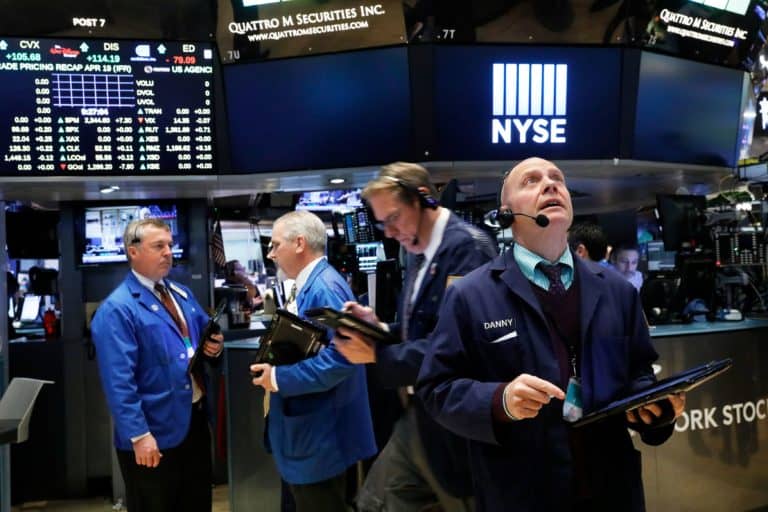
U.S. stock index futures were slightly higher on Monday morning, after stronger-than anticipated jobs data and a dovish turn from the Federal Reserve helped to alleviate concerns of a possible economic slowdown.

At around 4:00 a.m. ET, Dow Jones Industrial Average futures rose 43 points, indicating a positive open of more than 31 points. Futures on the S&P and Nasdaq were also relatively upbeat.

Market sentiment is largely attuned to trade talks between Chinese officials and their U.S. counterparts early this week. According to Reuters, the Chinese foreign ministry said Monday that China and the U.S. have expressed an eagerness to work together. The ministry also added China stands ready to resolve trade disputes with the U.S. on equal footing.

President Donald Trump said Sunday that weakness in the Chinese economy gave Beijing an extra incentive to work toward a resolution to the global trade war.

The world’s two largest economies slapped a series of punitive tariffs on each other’s goods last year, sparking concerns over a global economic slowdown. The U.S. has already put tariffs on $250 billion in Chinese goods — and has threatened duties on double that value of products. Beijing has responded with tariffs on $110 billion in U.S. goods, specifically targeting politically important industries such as agriculture.

The moves in pre-market trade come after risk appetite received a significant boost on Friday, when U.S. payrolls showed 312,000 jobs were created in December. Economists surveyed by Dow Jones had been expecting job growth of just 176,000.

Federal Reserve Chairman Jerome Powell also sought to ease market concerns of slowing growth in the world’s largest economy on Friday, saying the U.S. central bank would be “patient ” and flexible with monetary policy decisions this year.

On the data front, ISM non-manufacturing figures for December are expected to be released at around 10:00 a.m. ET.

On Friday, the Dow jumped more than 700 points amid better-than-expected economic news and easing fears of tighter monetary policy in the near term.
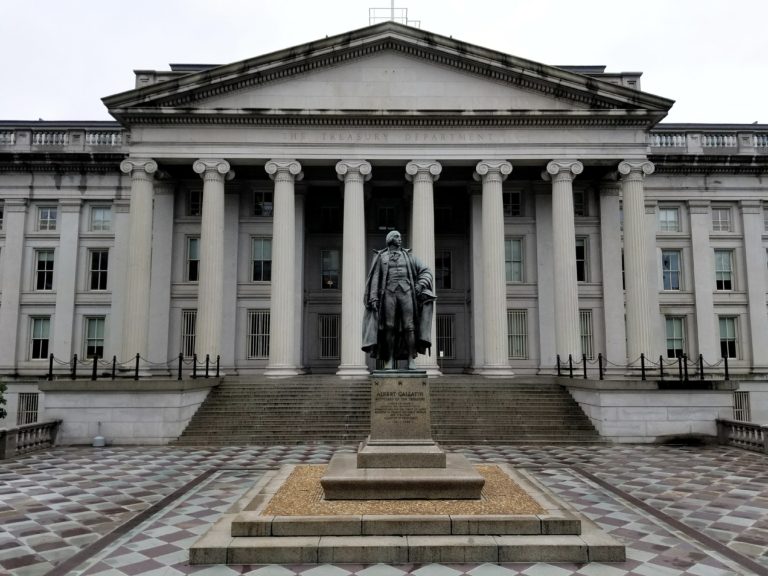
US Treasury yields move lower as trade war talks continue

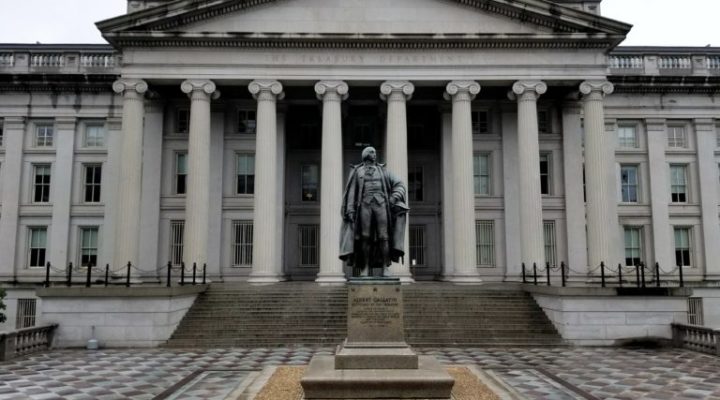
U.S. government debt prices were higher on Monday morning, after robust jobs data and a dovish turn from the Federal Reserve helped to alleviate concerns of a possible economic slowdown.

The yield on the benchmark 10-year Treasury note, which moves inversely to price, was lower at around 2.6481 percent, while the yield on the 30-year Treasury bond was also lower at 2.9531 percent.

Market participants are likely to turn their attention to trade talks between Chinese officials and their U.S. counterparts early this week. According to Reuters, the Chinese foreign ministry said Monday that China and the U.S. have expressed an eagerness to work together. The ministry also added China stands ready to resolve trade disputes with the U.S. on equal footing.

President Donald Trump said Sunday that the talks were going well and weakness in the Chinese economy gave Beijing an extra incentive to work toward a resolution.

It comes after U.S. payrolls data published Friday showed 312,000 jobs were created in December. Economists surveyed by Dow Jones had been expecting job growth of just 176,000.

Federal Reserve Chairman Jerome Powell also sought to ease market concerns of slowing growth in the world’s largest economy, saying the U.S. central bank would be “patient” and flexible with policy decisions this year.

On the data front, ISM non-manufacturing figures for December are expected to be released at around 10:00 a.m. ET.

Meanwhile, the U.S. Treasury is set to auction $39 billion in 13-week bills and $36 billion in 26-week bills on Monday.

Stocks to rebound 15 percent this year, and now’s the time to buy: Blackstone

Blackstone is telling investors not to give up on 2019, and perhaps they’re starting to listen.

Its investment strategist, Joseph Zidle, is optimistic stocks will rebound this year, blaming the market’s wild swings on misguided, negative sentiment.

“This is a buying opportunity. We see the market, the S&P 500, up 15 percent in 2019,” he said Thursday on CNBC’s “Futures Now. ” “This is just not a recessionary environment.”

And, Wall Street may be getting the message.

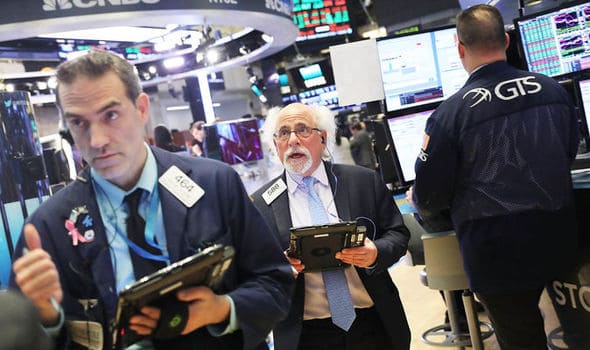
On Friday, the Dow jumped 746.94 points or 3.3 percent, to close the week at 23,433.16. The S&P 500 also soared more than 3 percent to 2,531.94. The rally followed a better-than-expected December jobs report and comments from Federal Reserve Chairman Jerome Powell indicating a more dovish tone.

Zidle has been advising clients to put money to work over the past several weeks as volatility gripped the market — singling out cyclical groups such as materials, industrials, technology and energy.

“They’re the most beaten down,” he said. “I think oil prices find a bottom, and I don’t think the conditions are nearly as dire as people are making them out to be. ”

Zidle, who has called himself a “stubborn bull,” believes significant progress on the trade war will ultimately revive bullish momentum this year for good.

“The trade war is going to get resolved. We think we see a deal in the first quarter,” Zidle said. “China and the U.S. have an incentive to get a deal done.”

Oil rises on US-China trade talks, supply cuts

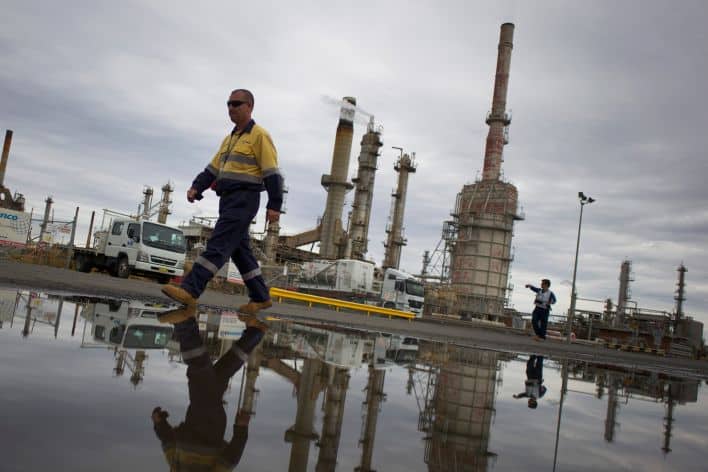
Oil prices rose by more than 1 percent on Monday, lifted by optimism that talks could soon resolve the trade war between the United States and China, while supply cuts by major producers also supported the market.

Brent crude futures were at $57.75 per barrel at 0404 GMT, up 69 cents, or 1.2 percent, from their last close.

U.S. West Texas Intermediate (WTI) crude oil futures were at $48.67 per barrel, up 71 cents, or 1.5 percent.

Financial markets were riding a relief rally on Monday on expectations that face-to-face trade negotiations between delegates from Washington and Beijing, due to start on Monday, would lead to an easing in tensions between the two biggest economies in the world.

The United States and Beijing have been locked in an escalating trade spat since early 2018, raising import tariffs on each other’s goods. The dispute has weighed on economic growth.

Goldman Sachs said in a note on Monday it had downgraded its average Brent crude oil forecast for 2019 from $70 per barrel to $62.50 a barrel because of “the strongest macro headwinds since 2015.”

J.P. Morgan, another U.S. bank, said in a note late last week that “the 3 percent global growth pace we have been anticipating for the next two quarters looks increasingly challenging.

The bank also said that “bond and commodity markets appear to be pricing in on average close to a 60 percent chance of a U.S. recession over the coming year compared to a 40 percent chance by our economists and 27 percent chance by the consensus.”

Despite the likelihood of a slowdown, crude future prices were being supported by supply cuts started late last year by a group of producers around the Middle East-dominated Organization of the Petroleum Exporting Countries (OPEC) as well as non-OPEC Russia.

OPEC oil supply fell in December by 460,000 barrels per day (bpd), to 32.68 million bpd, a Reuters survey found last week, led by cuts from top exporter Saudi Arabia.

Potentially undermining OPEC’s efforts is swelling U.S. oil supply.

U.S. crude oil production stayed at a record 11.7 million bpd in the last week of 2018, according to weekly data by the Energy Information Administration (EIA) released on Friday.

That makes the United States the world’s biggest oil producer ahead of Russia and Saudi Arabia.

Record output is also swelling U.S. fuel stockpiles.

Crude oil inventories rose by 7,000 barrels in the week ending Dec. 28, to 441.42 million barrels.

Distillate and gasoline stocks, however, rose by a whopping 9.5 million and 6.9 million barrels, to 119.9 million and 240 million barrels respectively, the EIA data showed.

“The U.S. supply glut remains a bearish concern,” said Stephen Innes, head of trading for Asia-Pacific at futures brokerage Oanda in Singapore.