
Archives for January 7, 2019

Calgary Booster Juice was using countertop cleaner to wash fruits and veggies

Alberta Health Services found that this Booster Juice in northwest Calgary was using countertop disinfectant to wash fruits and veggies.

Restaurant ordered to fix multiple violations as company pledges re-training for staff

An Alberta Health Services inspection last week found a northwest Calgary Booster Juice was using countertop cleaner to wash fruits and vegetables.

On Dec. 30, inspectors found the smoothie bar in Crowfoot Crossing was using Sani-Stuff — a powerful benzalkonium chloride cleaner for sanitizing hard surfaces like countertops and equipment — to wash food.

They also found that Windex and stain remover were being stored in the Sani-Stuff bottles, wheatgrass planters were being stored near ready-to-eat-fruits and veggies, and no probe thermometer was being used to ensure foods were being kept at the right temperatures.

The restaurant was ordered to:

  • Stop using non-food-safe cleaners to wash food.
  • Provide a thermometer.
  • Store wheatgrass on a bottom shelf to prevent contamination.
  • And re-label bottles to identify what chemicals are inside.

Sani-Stuff’s website states the chemical should only be used to disinfect hard surfaces in locations like restaurants or hospitals, and that it could cause severe skin burns and eye damage and should not be inhaled.

An AHS spokesperson said the Booster Juice location has complied with the orders and the inspection was the result of a tip from the public.

“The amount of sanitizer that could have come into contact with food was at a very low concentration and did not present a significant health concern,” reads a statement from AHS.

“Booster Juice management were extremely co-operative and took immediate steps to ensure the proper use of the disinfectant at all of its locations. EPH investigates all complaints received and appreciates the public bringing forward concerns about improper food handling practices so these concerns can be properly investigated.”

Booster Juice said employees at the location are going through re-training and all violations will be addressed. The company said the cleaning sanitizer is diluted, and used to clean utensils as well, but never should have been used to clean fruits or vegetables even though the concentration meant it didn’t pose harm to customers.

“When an incident that does not uphold our brand standards is identified, we act quickly to ensure that the issue is resolved,” said Booster Juice’s president and CEO Dale Wishewan in an emailed statement.

“We can assure consumers that this is not a company wide issue. When a location does not adhere to our strict food handling procedures by following our checklists or using the tools readily available in our stores, it is dealt with right away, as we take food handling very seriously.”


Cash-handling machines being upgraded to handle new $10 Viola Desmond bank notes

Wanda Robson, sister of Viola Desmond, holds the new $10 bank note featuring Desmond during a press conference in Halifax on Thursday, March 8, 2018. Civil rights activist Desmond is the first Canadian woman to be featured on a regularly circulating bank note.

Some bank and vending machines will require software updates to process the new bills

Hundreds of thousands of cash-handling machines across the country have had to be upgraded to handle Canada’s distinctive new $10 bill, featuring a vertical portrait of Nova Scotia civil rights advocate Viola Desmond, while some others still awaiting changes are rejecting the distinctive banknotes.

Ensuring vending and other machines can read the new polymer note requires a software upgrade for each device.

Spencer Baxter, owner of Value Vending Services in Nova Scotia, said his 125 devices simply won’t accept the new bills. Upgrading them all, which he has not yet had a chance to do, costs about $10 each, excluding driving and labour time to get to the machines at various locations.

“It’s time and money,” Baxter said from Halifax. “Each time they change them, we need to upgrade.”

Since their introduction in mid-November, the Bank of Canada has made 19.6 million of the new notes available to financial institutions and almost 16.9 million of those are now considered to be in circulation. By contrast, a total of 158 million $10 notes were in circulation at the end of November, the central bank said.

‘It’s not a huge deal’

“With about half a million cash-handling machines of various types in use across Canada, it stands to reason that they won’t all accept this note from the day it begins to circulate,” said Rebecca Spence, a spokeswoman for the Bank of Canada. “In that case, the bank’s advice is: If a $10 note featuring Viola Desmond is not accepted by a cash-handling machine, try using the previous regular circulating note instead.”

Metrolinx, the Toronto area’s regional transit agency, said it knew the new bills would be an issue for its Presto and other machines used for purchasing rides on buses, subways and commuter trains.

Most devices have already been reprogrammed, said Anne Marie Aikins, senior media manager with the transit agency. The upgrades, she said, are simply the cost of doing business in an increasingly automated society.

“The beautiful $10 bill is vertical in its image, which has thrown off vending machines,” she said. “We have to make sure they’re all updated. It’s not a huge deal. It’s just a matter of getting to them.”

A sample of the new $10 Canadian bank note, featuring civil rights icon Viola Desmond, is seen in this undated handout image from the Bank of Canada. Hundreds of thousands of cash-handling machines across the country have had to be upgraded to handle Canada’s distinctive new $10 bill, featuring a vertical portrait of Nova Scotia women’s rights activist Viola Desmond, while some others still awaiting changes are rejecting the distinctive banknotes.

The new bank note, with its suite of security features, appears to have provoked less of an outcry than the introduction in 2011 of the polymer notes that replaced the old cotton-paper banknotes, or the lighter loonies and toonies produced by the mint in 2012. In those cases, some vending-machine operators complained they were ill prepared for the change and were forced to mollify unhappy customers and spend time and money fixing machines that refused to recognize the new currency.

‘New software required’

The Bank of Canada said it had been working with financial institutions and equipment manufacturers to minimize the impact of the new $10 bill on the cash-handling industry. The note, the bank said, keeps the machine-readable features of Canada’s other polymer notes and is printed on the same material.

The bank also said it provided test notes in advance to equipment manufacturers to help ensure machine readiness.

In addition, with the gradual roll-out, relatively few of the bills have so far made their way into public wallets and purses and then into machines. That has helped create breathing room for owners and operators to reprogram their devices.

“People, like me, I got my first one and I’m keeping it,” said Aikins. “By the time [the bill] gets broadly into circulation, the fix will be in.”

Chris Stegehuis, president of the Canadian Automatic Merchandising Association, said the introduction of the Viola Desmond bill appears to have gone more smoothly than some earlier changes.

“There was new software required for our bill validators, as is expected with any coinage or bill change,” Stegehuis said. “No problem with it at all.”

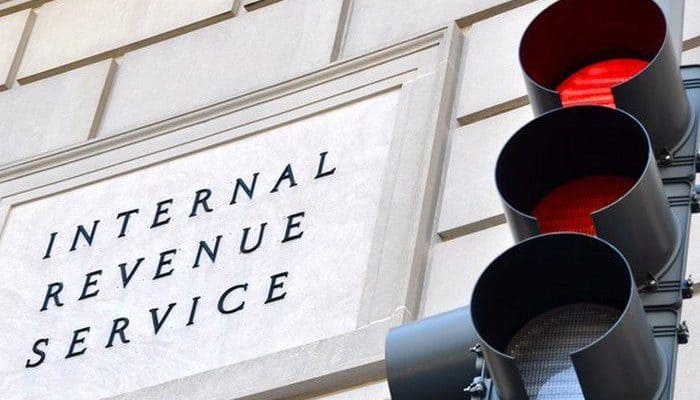
5 IRS Tips for the 2019 Tax Season

Americans are starting to get ready for tax season, with many taxpayers hopeful that new laws will result in bigger refunds. Yet with the government shutdown having hit at a particularly inopportune time for the Internal Revenue Service, it’s still not clear exactly when tax season will officially start.

But even if you can’t know for sure exactly when you’ll be able to file your return, it’s not too early to get ready for tax season — whenever it comes. The IRS recently gave taxpayers five key things to consider as they get ready to file their taxes for the 2018 tax year.

1. Watch your withholding

Tax reform caused the amount of money withheld from paychecks to go down in 2018 for many taxpayers. That made their paychecks bigger, but it could result in smaller refund checks for many, and some might even end up owing tax when they file their returns.

The IRS has come up with a tool to assess whether your withholding is correct. If it’s not, you can make adjustments to your payroll withholding by filing a new Form W-4 with your employer. Or looking at estimated tax payments can prevent you from owing penalties and interest.

2. Predict what your refund will be — and when you’ll get it

The biggest motivator for many to file their returns is to get their refund. But tax reform will likely affect those refund amounts in many ways. Higher standard deductions, lower tax rates, and larger child tax credits could boost refunds, while the elimination of personal exemptions, limitations on certain itemized deductions, and the phase-out of various other tax benefits could reduce them.

One thing families should remember is that if you’re eligible for the earned income credit or the additional child tax credit, then your refund will be delayed at least until mid-February. Given the potential for delays to the beginning of tax season, it’s likely that even those who aren’t seeking those credits could have to wait at least that long to get money back from the IRS.

3. Look at these special rules for those without Social Security numbers

If you’re required to file taxes but don’t have a Social Security number and aren’t eligible to get one, then the IRS issues what it calls individual taxpayer identification numbers. These ITINs fill the same role as a Social Security number for tax purposes for certain nonresident aliens, as well as a set of resident aliens and dependents or spouses.

The critical thing about ITINs is that they expire. Therefore, the IRS urges those whose ITINs could expire before they file their returns to submit a renewal application now in order to avoid any future hassles.

4. Familiarize yourself with new tax forms

Millions of taxpayers will have to deal with a new tax form for the very first time during the 2019 tax season. Everyone will use a shortened version of Form 1040, which has been shortened to more closely resemble short-form returns like the 1040-EZ and 1040A. Yet the 1040 will also require new schedules that taxpayers will have to attach in certain circumstances. With the new forms available on the IRS website, it’s smart to get a head start by looking at them before starting your tax prep for the year.

5. Know where to get help

The IRS knows that tax reform will create a lot of confusion, but there’s help available. From online assistance to taxpayer assistance centers and the Volunteer Income Tax Assistance program, Americans can get the guidance they need to deal successfully with their tax returns in the coming months.

Be ready for tax season

Preparing your tax return might seem daunting this year, especially with all the changes that have occurred lately. But with the prospect of possible tax savings, you have a big incentive, and getting ready now will help you get off to a running start when tax season officially opens.

Let 2019 be the Year Your 401(k) Loses the Dead Weight

Running a marathon is tough! Running a marathon with a 50-pound backpack is darn near impossible. The vast majority of American’s are unknowingly running their retirement race with an unbearable load. The dead weight dragging us down are the excessive and unnecessary fees that plagues most retirement plans.

The fees in most 401(k) plans, especially those with small companies, can exceed more than 1.5 percent annually and some are north of 2 percent. While those percentages sound small at first, consider their impact over the course of your life….

Let’s assume you get a 7 percent annual return over your lifetime. This is less than the market has averaged but on par with a typical balanced portfolio over the long haul. A single one-time investment of $10,000 will grow to more than $295,000 over a 50-year period. That’s the power of compounding! But now let’s strap on that backpack of high fees and see just how efficient we are…

Let’s say the fees in your 401(k) are an egregious 2 percent annually. This means the provider and the broker get their 2 percent off the top, no matter what. And just like that, your 7 percent return becomes a 5 percent return. Growing at 5 percent, your one-time investment will only grow to $115,000 over the same time frame — less than half of what you could have had!

Most of us will be none the wiser to the amount we left on the table but it could mean the difference of having to work a decade longer than hoped! Or worse, running out of money in retirement and be forced into family or Government assistance.

Now, it’s true that nothing is free in this world so what would be a reasonable fee structure for 401(k) plans? I am glad you asked. The vast majority of very large 401(k) plans, like those with Fortune 1000 companies, have very competitive fee schedules due to their buying power and astute third party consultants (a luxury that small business owners just don’t have). Most pay 0.65 percent or less annually for all investment related fees (meaning those that are extracted from your account balance).

To continue our marathon metaphor, the participants in those large plans are running the race with nothing but a tank top, short shorts and the latest, lightest running shoes while smaller companies are unfairly given the equivalent of lead shoes. So when the gun goes off, employees are unfairly charged simply because of the size of their employer. At the risk of mixing my metaphors, this is the most unlevel playing field imaginable.

We collect the “fee disclosure document” from thousands of small plans each year and in our last study, not a single major provider (mostly insurance companies and payroll companies) had average fees under 1 percemt annually (with the bulk falling between 1.3 percent and 1.9 percent annually). The primary reason is compensation to the provider to keep funding massive marketing budgets (think logos on stadiums and blimps) and compensation to the local broker who has the relationship with the business owner and will take him/her golfing every so often.

So what can you do about it? If you are an employer, you are obligated by law to periodically benchmark your plan against alternatives (a practice very few do or even know they should do). There are now a handful of next generation providers that don’t use brokers, don’t get paid commissions and don’t get kickbacks from mutual funds. These savings add up quick so that small business owners can have a very competitive and transparent fee structure (0.65 percent or less is a good target).

In you are an employee, ask the owner or human resources if they have done a benchmark recently. Many are pleased to find out that a fee reduction is in order as they too have their retirement accounts in the plan (A good first step is to forward this article). You can also ask for a copy of your fee disclosure from the existing provider’s customer service line.

It’s worth noting that as I write this, the market has taken steep correction with the worse December on record. While the US market has always risen over time, these short-term corrections or bear markets are simply part of the journey. However, from the standpoint of fees, if your 401(k) plan takes a short term hit, it will have a much harder time keeping pace when the market recovers if the fees remain high. It’s like adding a couple steep San Francisco hills to the marathon. Insult to injury, one could say.

So let’s shed the dead weight of high fees in 2019 and give ourselves and our families the absolute best chance of running the retirement race efficiently and finishing with dignity!

Will Your Job Drive You Into Early Retirement?

At some point during your career, you’re apt to reach a point where the notion of retirement becomes less of a dream and more of a reality. So, you might start planning to retire at a certain age, and that, in turn, might dictate the extent to which you save year after year until that point. But what happens when changes at your company or job compel you to retire early?

It’s not a highly unlikely scenario. An estimated 56% of today’s retirees left the workforce sooner than planned, according to recent data from Transamerica, and among that 56%, 54% cited job-related reasons. Specifically, 24% reported having lost their jobs, while 22% said that organizational changes within their companies caused them to leave unexpectedly.

And let’s not forget the 15% of seniors who retired sooner than expected due to unhappiness with their jobs. Seeing as how just 40% of the overall workforce is content at present, that’s not a shocking statistic.

All of this leads to one key point: While you might plan on retiring at a certain age, circumstances at your place of work might result in a scenario where you’re leaving your career behind earlier than expected. And if you don’t plan for that possibility, you’ll inevitably put your retirement at risk.

Don’t wait to boost your savings

Many folks aim to retire at some point in their 60s, once Social Security eligibility begins and Medicare follows suit. But if things go sour at your job, you might find yourself out of work and unable or unwilling to start over much earlier in life.

Remember, the older you are, the more challenging it can be to find work, since age discrimination has a tendency to rear its ugly head. Therefore, if you’re planning to do a bunch of nest egg padding during your 60s, you might want to ramp up sooner.

The good news? Catch-up contributions for IRAs and 401(k) are allowed as soon as you turn 50, which means you have a solid decade to make great progress on your savings before your 60s begin. Currently, workers 50 and over can set aside up to $7,000 a year in an IRA, and $25,000 a year in a 401(k).

Now let’s assume that you’re 50 years old with $200,000 in savings. If you were to max out an IRA between now and age 60, and invest your savings at an average annual 7% return (which is just below the stock market’s average), you’d grow your nest egg to $490,000. Max out a 401(k) for those 10 years under the same set of circumstances, and you’ll be looking at $739,000 — all by age 60.

Of course, the longer you’re able to work and save, the more substantial a nest egg you’re apt to accumulate. The point, however, is to operate under the assumption that your career might get cut short, and take steps to save aggressively while you’re still gainfully employed.

Securing long-term work on your own

While saving as much as you can from as early an age as possible will give you some financial protection in the event of an earlier-than-expected retirement, there’s another way to buy yourself some long-term security: Get a side hustle. By building up a side business, you’ll essentially be giving yourself a source of work to fall back on should you wind up having to leave your main career earlier than anticipated, whether due to layoffs, restructuring, or general on-the-job misery.

The great thing about working a side hustle is that you’ll not only have access to extra income that can be used to fuel your nest egg, but you’ll also have the option to carry that gig with you into retirement. And that, in turn, will serve as an extra source of income later in life, as well as a meaningful way to spend your time during your golden years.

We can plan for retirement as much as we’d like, but circumstances sometimes dictate that we have no choice but to change course. Since it’s fairly common to be forced into early retirement due to job-related factors, your best bet is to save aggressively earlier on in your career while taking steps to secure a side income. And who knows? If you do a good job at both, you might end up retiring early not because you have to, but because you want and are able to.

Retirement may be more of a challenge for millennials

For millennials, retirement may be more of a challenge than for prior generations.

They are almost certain to live longer than their parents, so their money will have to last longer and clear more hurdles along the way.

For starters, no one really knows what Social Security is going to look like in 30 or 40 years. No matter how Congress adjusts the system over the next decade, younger workers shouldn’t count on receiving the same benefits as their parents.

“I tell younger investors to plan as if Social Security will be nonexistent when they retire,” said Ryan Fuchs, a certified financial planner in Little Rock, Ark. “I don’t believe that will be the case. But if they can create a successful plan without it, then any money they do receive will be icing on the cake.”

In a 2017 survey from GOBankingRates, more than 60 percent of millennials reported having less than $1,000 in a savings account, and 46 percent of respondents ages 18 to 24 said they had nothing saved.

“When we meet with younger clients, we’ll use simple calculations to show what saving a few hundred dollars a month can do for a portfolio when you extend that growth over 40 years,” said Nate Creviston, a certified financial planner in Shaker Heights, Ohio.

If you set aside $200 a month and earn an average annual return of 7 percent, you’ll have $480,000 after 40 years. Boost contributions every time you get a raise, and you’ll have much more than that. Eventually, you should aim to save 15 percent of income.

Putting aside the question of Social Security, the big difference in the retirement outlook between past generations and millennials is the shift away from traditional pensions.

Most private employers have moved toward defined contribution plans, such as 401(k)s, which allow workers to contribute a certain amount of their paycheck into a pretax account.

According to Rui Yao, a personal finance professor at the University of Missouri, that shift began right before Generation X joined the workforce and culminated with millennials.

For millennials, if your employer offers a 401(k) plan and will match your contributions up to a certain percentage of your pay, take it. It’s the closest you’ll come to getting free money.

Even without the match, a 401(k) is a strong starting point as long as it offers a diversified selection of mutual funds that aren’t hobbled by exorbitant fees. (Brightscope.com offers a tool that will rank your 401(k) against its peers.)

If you’re self-employed or your employer doesn’t offer a 401(k), your next best bet may be a Roth IRA.

In 2019, you can contribute up to $6,000 to a Roth, as long as your income is less than the IRS’s thresholds. The money isn’t tax-deductible, but as long as you wait until you’re at least 59½, all withdrawals — including earnings — will be tax-free, and you can withdraw contributions at any time without paying taxes or penalties.