Archives for December 24, 2018

ARDUINO HEART RATE MONITOR HAS STAR TREK CHIC

Building a real-life version of the Star Trek tricorder has been the goal of engineers and hackers alike since the first time Dr McCoy complained about being asked to work outside of his job description. But while modern technology has delivered gadgets remarkably similar in function, we’ve still got a long way to go before we replicate 24th century Starfleet design aesthetic. Luckily there’s a whole world of dedicated hackers out there who are willing to take on the challenge.

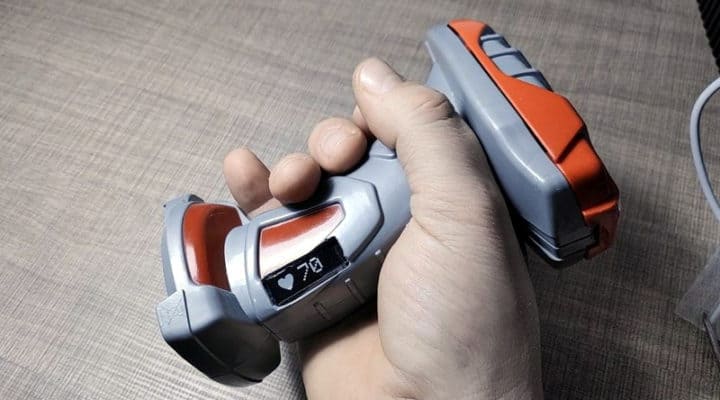
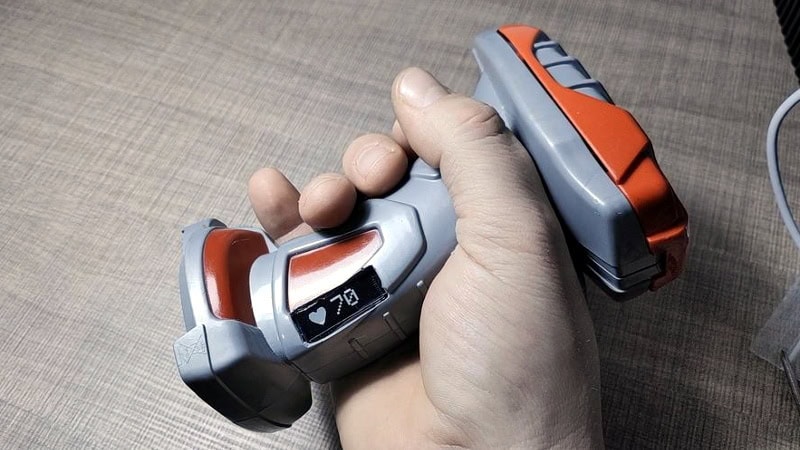
[Taste The Code] is one such hacker. He wanted to build himself a practical gadget that looked like it would be at home on Picard’s Enterprise, so he gathered up the components to build a hand-held heart rate monitor and went in search for a suitable enclosure. The electronics were simple enough to put together thanks to the high availability and modularity we enjoy in a post-Arduino world, but as you might expect it’s somewhat more difficult to put it into a package that looks suitably sci-fi while remaining functional.

Internally his heart rate monitor is using an Arduino Pro Mini, a small OLED screen, and a turn-key pulse sensor which was originally conceived as a Kickstarter in 2011 by “World Famous Electronics”. Wiring is very simple: the display is connected to the Arduino via I2C, and the pulse sensor hooks up to a free analog pin. Everything is powered by 3 AA batteries delivering 4.5 V, so he didn’t even need a voltage regulator or the extra components required for a rechargeable battery pack.

Once everything was confirmed working on a breadboard, [Taste The Code] started the process of converting a handheld gyroscopic toy into the new home of his heart rate monitor. He kept the battery compartment in the bottom, but everything else was stripped out to make room. One hole was made on the pistol grip case so that a finger tip could rest on the pulse sensor, and another made on the side for the OLED screen. This lets the user hold the device in a natural way while getting a reading. He mentions the sensor can be a bid fiddly, but overall it gives accurate enough readings for his purposes.
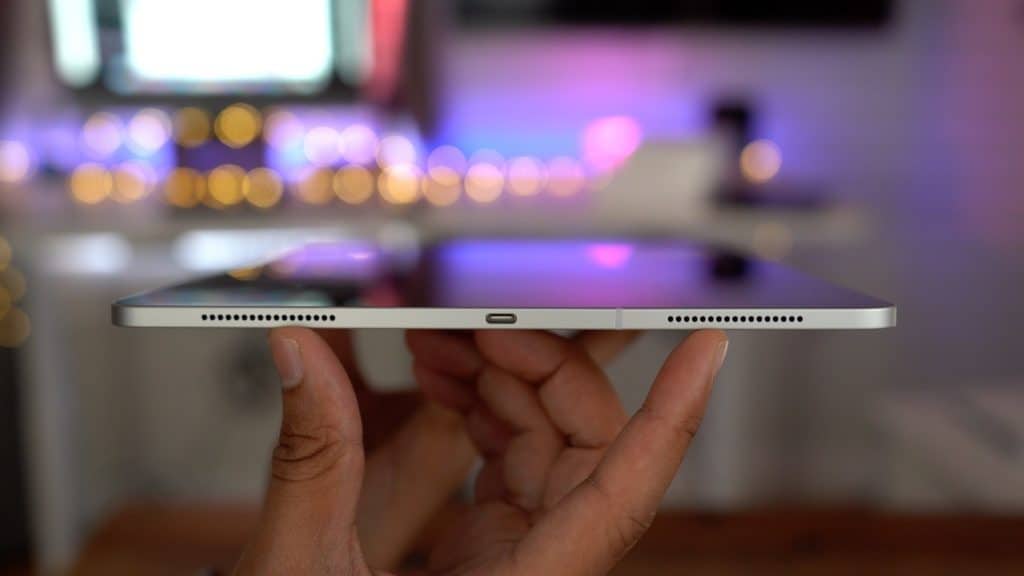
Apple denies its acknowledgement that iPad Pros are prone to bending, says they’re perfect

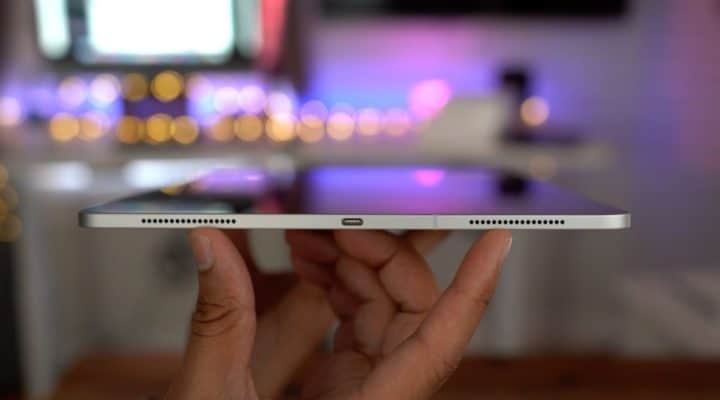
In context: Apple’s latest iPad is ahead of the curve in terms of features and design, but that didn’t prevent it from having certain issues with curves. Almost immediately after its release, it became apparent the device was bending in everyday use and could come slightly bent out of the box. Just a few days ago, we reported that Apple had acknowledged the controversy and claimed it was “normal” in a statement to the Verge. But, wait…
Apple has revealed they never made that statement to the Verge, and apparently, the Verge placed unofficial quotations from Apple employees out of context. Most of the information is still believed to be factual, however, such as Apple’s claim that the iPad Pro hasn’t seen above average return rates.

Quite a few people messaged Apple support regarding the matter, and they all got very similar email responses from Apple’s Senior Vice president of Hardware Engineering Dan Riccio. Here’s one such response that MacRumors received.

“Relative to the issue you referenced regarding the new iPad Pro, its unibody design meets or exceeds all of Apple’s high-quality standards of design and precision manufacturing. We’ve carefully engineered it and every part of the manufacturing process is precisely measured and controlled.

Our current specification for iPad Pro flatness is up to 400 microns which is even tighter than previous generations. This 400-micron variance is less than half a millimetre (or the width of fewer than four sheets of paper at most) and this level of flatness won’t change during normal use over the lifetime of the product. Note, these slight variations do not affect the function of the device in any way.

Again, thanks for reaching out and I hope the above explanation addresses your concerns.”

The email went on to imply that Apple would issue a formal statement to news outlets by the end of yesterday. That hasn’t occurred yet, so we’ve decided to publish this article without it, but we’ll provide an update when they do.

Of course, if you haven’t noticed already, there are some very bold claims in the email. “Flatness is up to 400 microns” – tell that to the users whose iPad Pros were bent several millimetres out of the box. Equally as suspicious is the claim that the “level of flatness won’t change during normal use.” While normal use is tricky to define (intentionally, no doubt), many reports of iPad Pros bending after being kept in a backpack for a week can be found online.

In the end, though, the iPad Pros have a very serious Achilles’ heel, and Apple is unlikely to do anything about it. But if everyone keeps reminding Apple about the issue, they might just fix it for their next iPad.

Installing iOS 12.1.2 might break cellular data, calling, and messaging

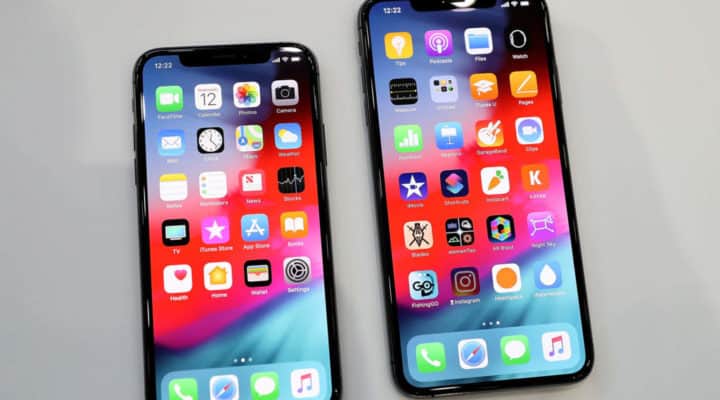
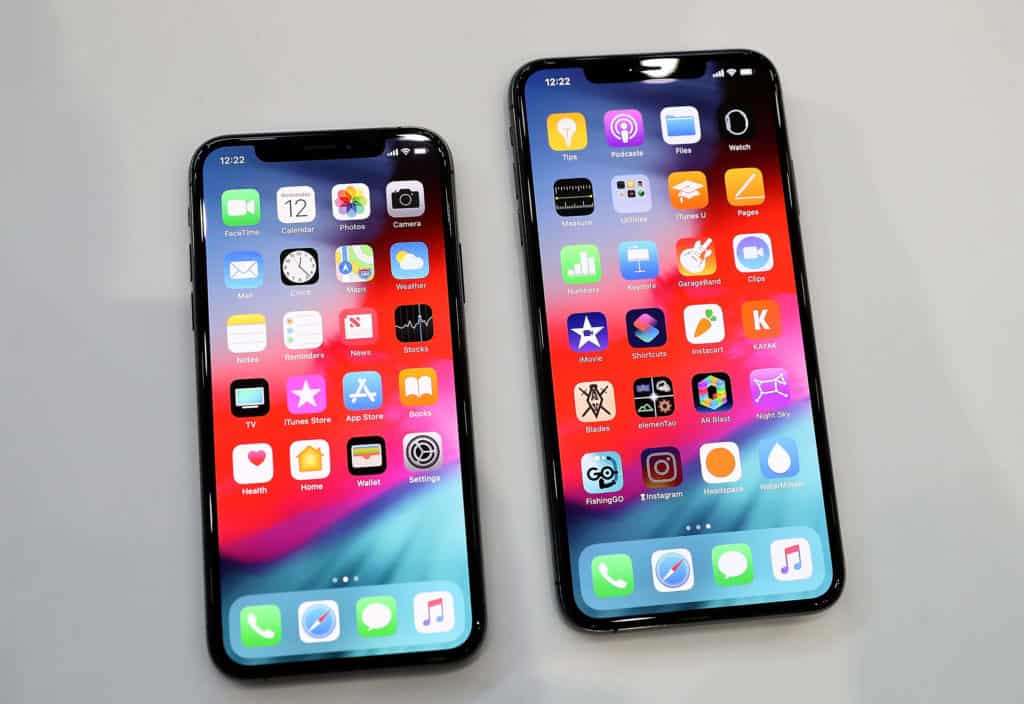
Facepalm: Basic functions of a smartphone should include the ability to make and receive phone calls, use messaging services, and have access to high speed internet via cellular networks. Apple’s latest iOS update has broken those key features for many users.

Last week Apple released iOS 12.1.2 for the iPhone, but had some trouble along the way. Just days after releasing the initial build, a second build was pushed out to replace the first, changing only the build number, not incrementing the well recognized version number.

The main fixes of iOS 12.1.2 are intended to solve problems associated with eSIM support on the iPhone XR, XS, and XS Max. Ironically, the update is also supposed to resolve issues with cellular connectivity for residents of Turkey. However, users across the world have been reporting issues with cellular data following the update.

iPhone owners located in Europe, Asia, and South America have all taken to Twitter to tell Apple their phones are no longer able to use LTE data. In North America, United States residents have been heavily affected.

Many users have reported that they are unable to make phone calls and some have been unable to send or receive text messages. A select few iPhone users have also had problems with WiFi connectivity as well running iOS 12.1.2.

Quite frankly, the roll out of this latest rendition of iOS to iPhone owners has been a bit of a mess. Apple Support has not yet publicly acknowledged the problems that prevent iPhones from being used as actual phones.

For those affected by issues with calling, messaging, and cellular data use of any kind, rest assured that iOS 12.1.3 is not far away. Even though another revision is likely more focused on avoiding further iPhone bans internationally than fixing user issues, Apple will hopefully toss in some patches as well.

If you have not upgraded to iOS 12.1.2 yet, it would be best to sit this one out until Apple decides to acknowledge or at least fix the problems.

Is your smart speaker SPYING on you? They are the year’s must-have presents but privacy campaigners fear ‘connected’ gizmos are actually highly efficient surveillance devices

At first glance, there was no witness to the grisly murder of Christine Sullivan, who was stabbed to death alongside a friend, Jenna Pellegrini, at her home in rural New Hampshire in the U.S. last year.

But as detectives searched the secluded colonial-style home and its tree-lined garden, they came to realise that a big clue was staring them in the face.

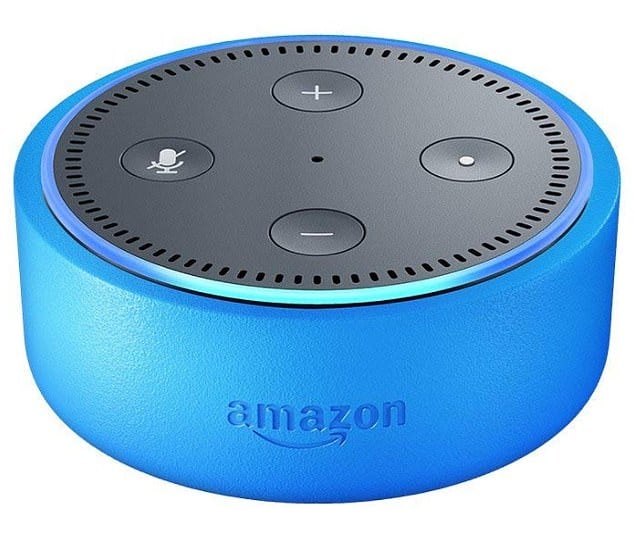
For on the kitchen worktop was an Amazon Echo, one of the increasingly ubiquitous ‘smart speakers’ that can perform a host of household tasks, from checking the weather and playing music to creating shopping lists and looking up recipes.

Such devices follow a user’s spoken commands, so are almost always listening out for fresh orders. What’s more, this one was likely to have been within earshot of Sullivan’s cold-blooded killing, and could be the first-hand witness police were looking for.

That was the theory, at least. So last month, a judge hearing the trial of Sullivan’s alleged killer, a former housemate called Timothy Verrill, ordered Amazon to turn over any voice recordings that the Echo made between January 27, 2017, when the women were murdered, and January 29, when their bodies were found. Prosecutors now hope they might be able to prove Verrill’s guilt. The defendant, who protests his innocence, presumably hopes otherwise.

Whatever the outcome, the whole thing provides a stark illustration of a strange (and some might say chilling) new truth: that the high-tech gadgets, increasingly part of our daily existence, also happen to be highly efficient surveillance devices.

In a world where more and more products, from TVs and ‘home assistants’ to washing machines and even children’s toys are designed to connect to the internet, we are slowly filling our homes with things capable of spying on us. To some, including murder detectives, this can only be a good thing.

Yet to privacy campaigners, the increasing popularity of ‘connected’ devices, tens of thousands of which will be wrapped up under Christmas trees tomorrow morning, portends a dystopian future.

The new breed of technology is part of the so-called ‘internet of things’ through which our homes, cars, and possessions can be controlled remotely, often via smartphone. Yet this not only allows tech giants to chronicle our daily habits, it can also allow friends, family and even complete strangers to eavesdrop on our intimate moments.

A recent article in the Harvard Law Review argued that such devices were turning corporations into ‘surveillance intermediaries’, which hold vast quantities of our personal information, and can be turned over to third parties without our knowledge.

Take, for example, the case of ‘Danielle’, a woman from Portland, in the U.S. State of Oregon, whose Amazon Echo recently took it upon itself to record her late-night conversation with her husband, and sent it to his employee.

She told a local TV station how the employee then telephoned asking why he’d been emailed a sound file of their domestic chat.

According to Amazon, the incident occurred by accident because Echos (just like their rival devices, Facebook’s Portal, Apple HomePod and Google Home) are operated via a ‘wake word’, which users say in order to highlight the fact they are about to give them a task. It mistook one of Danielle’s remarks as its ‘wake word’.

‘Echo woke up due to a word in background conversation sounding like [the Echo’s ‘wake word’] “Alexa”. Then, the subsequent conversation was heard as a “send message” request. At which point, Alexa said out loud “To whom?” At which point, the background conversation was interpreted as a name in the customer’s contact list. Alexa asked, “[contact name], right?” Alexa then interpreted background conversation as “right”.’

Two-thirds of the products, which include anything from toys to robots, that connect to the internet or synch to a smartphone app, were found this week to be sharing children’s data with third parties such as advertising firms.

The Parker Teddy Bear, for instance, gathers information about its user’s habits and social media activity, according to The Times. However, its privacy policy says it cannot guarantee the privacy of data it holds.

Many other smart toys have what Which? magazine has described as ‘concerning vulnerabilities’ which could ‘enable a stranger to talk to a child’.

The vulnerability is caused by the fact that any device controlled via a smartphone can also be accessed by anyone who is nearby and possesses a device — such as a phone — with Bluetooth capability. The ‘hacker’ can say something inappropriate to the child, or listen to what the child is saying. If the device has a camera, it can be used to watch them.

Last year, the FBI warned American parents to do their research before buying any toy that contained speech recognition software or an internet connection. Meanwhile, more than two million private messages left by parents for their children (and vice versa) on the server of one of the smart toy providers were hacked.

Such developments are particularly concerning to anyone who has made use of the growing trend for smart devices — particularly ‘home assistants’ — to replace phones for calling and messaging.

At present, Apple users can make and answer iPhone calls via their HomePod, while Google Home devices can make free calls to UK landlines or mobiles. Facebook’s portal devices can also be used to call your friends.

While these firms say they do not keep records of users’ conversations, Amazon (whose Echo has around a 75 per cent market share) does things differently.

It admits to storing users’ conversations by ‘streaming audio to the cloud’, as it describes in its privacy policy. In theory, this means your conversations with friends and family made through Alexa Calling and Messaging may be recorded and uploaded to its servers in real time.

Worryingly, among more than 12,000 words of Amazon terms and conditions are contradictory statements as to what it actually does with the recordings.

One policy says Alexa is not ‘recording all my conversations’, and that ‘Echo devices are designed to detect only your chosen wake word’.

But elsewhere we read that ‘Alexa processes and retains your Alexa interactions . . . including voice inputs . . . and content you provide or receive through [Alexa]’ and that ‘your messages, communications requests and related interactions’ are all stored in its online servers.

Another potentially Orwellian feature of the Echo home assistant is ‘Drop In’ — a video-calling service which allows any enabled contact to ‘drop in’ to someone’s device unannounced and begin a video conversation with them.

Crucially, the function does not provide an option for a recipient to decline the call before the camera starts rolling. The hazards of this function in a bedside Echo device go without saying.

Little wonder, perhaps, that critics say the only way for users to ensure they aren’t filmed or recorded unawares is by unplugging the devices from the wall.

‘People may not understand how much data is collected by home hubs, and how that information may be analysed,’ said Jim Killock, executive director of Open Rights Group, a privacy rights group.

‘If they are on, they are listening and recording. While companies may be responsible and delete it, there is a temptation to use it and make money from listening to you in the background.’

Silkie Carlo, director of Big Brother Watch, a privacy campaign group, says: ‘The very idea of a smart home is one of ambient surveillance and constant recording. Many smart devices are essentially internet-connected surveillance devices that their owners have limited control of.

‘The terms are deliberately set out to protect the company’s interests rather than the user’s. Families should think carefully about the security risks before spending their money on these devices.’

Earlier this month, the Mail revealed how multinational companies harvest valuable data from their customers.

One of the worst offenders was, predictably, Amazon. It detailed in its privacy policy how it ‘collects’ a treasure trove of customer data including home addresses, credit history, ID documents, dates of birth and locations.

It collates its customers’ product searches, downloads and documents saved on Amazon Drive, and ‘periodically imports and stores’ their contacts on Alexa Calling and Messaging.

Amazon also ‘shares your personal information’ with extensive third-party companies ‘to perform functions on [its] behalf’, and does not make clear what information it collects is used for.

Buried within the small print are clauses which state that if customers don’t co-operate with terms, including agreeing to Alexa recording and storing their voice recordings, Amazon can revoke their access to the home assistant hardware without a refund.

All of which begs the question: are these increasingly popular smart devices actually assisting their owners? Or are the home assistants only really designed to assist the rapacious tech giants?

3 Great Stocks You Can Buy and Hold Forever

It’s in times of turmoil that you should differentiate the most between what’s temporary and what’s not. This statement applies to several areas of life — but it’s definitely relevant to investing.

We’re in one of those times of turmoil in the stock market right now. The year-to-date gains for the major market indices have been wiped out. Unless something changes over the next few days, the market is on course for its worst December since the Great Depression.

But now is exactly when you should look for the kinds of stocks that won’t merely be temporary additions to your portfolio. Now is the time to look for great stocks that you can buy and hold forever. Three such stocks are Alphabet (NASDAQ:GOOG) (NASDAQ:GOOGL), Walt Disney (NYSE:DIS), and Intuitive Surgical (NASDAQ:ISRG).

1. Alphabet
Alphabet is essentially a collection of companies, the most prominent of which is Google. Co-founder Larry Page said that one reason he and Sergey Brin liked the name Alphabet was that it referenced alpha — which for investors is a return that beats a benchmark — and a bet. When Brin and Page founded Google, they told investors to expect “smaller bets in areas that might seem very speculative or even strange when compared to our current businesses.”

This commitment to placing these small bets on ideas that hold the potential to generate tremendous returns makes Alphabet a stock to buy and hold forever. The world won’t stop changing. Companies that survive and thrive will be the ones that continually explore new ideas. That’s exactly what Alphabet does.

Yes, most of the company’s revenue comes from advertising generated on Google Search, YouTube, GMail, and other apps and sites. But Alphabet has also built other major businesses, including its Google cloud services platform and Nest smart-home technology products.

One analyst predicts that Alphabet’s Waymo self-driving car subsidiary will account for around $114 billion in annual sales by 2030. That’s more than Alphabet’s total revenue in 2017. Even if Waymo doesn’t reach that target, Alphabet appears to be a smart bet for investors looking for returns that beat the market over the long run.

2. Disney
In a way, Disney is a bet that one idea will keep paying off for years to come. And that one idea is that people love to be entertained.

Disney has done a great job of entertaining people across the world for 95 years. The company’s media networks, parks, resorts, studios, and consumer products entertain millions today on a daily basis.

The real magic of Disney is the company’s ability to monetize one asset in multiple ways. For example, a character in a movie produced by Walt Disney Studios can show up in the company’s parks and resorts as well as on an assortment of consumer products from clothing and toys to video games.

In the world of entertainment, content is king. And Disney is loaded with content. The company claims a massive library of TV shows and movies. It also has enduring franchises like Marvel and Star Wars that should generate plenty of new hits. In addition, Disney has the new streaming services ESPN+ and Disney+ (with the latter scheduled to launch in late 2019) that give the company even more ways to monetize its content. Disney’s magic should reward shareholders for at least another 95 years.

3. Intuitive Surgical
Intuitive Surgical ranks as one of the best-performing healthcare stocks of the 21st century so far. The stock should continue to perform very well for decades to come for two simple reasons.

First, more people will require surgical procedures in the future. Populations across the world are aging. As individuals get older, they tend to require more surgical procedures — and especially some of the types of procedures for which Intuitive’s da Vinci robotic surgical system is frequently used.

Second, everyone — patients, providers, and payers — will want those procedures to be as safe and as cost-effective as possible. And Intuitive Surgical’s technology makes surgical procedures safer and more cost-effective. The company’s da Vinci system helps reduce complications in surgical procedures, which in turn leads to fewer hospital readmissions.

Intuitive Surgical has established a strong track record for safety and clinical outcomes that demonstrates value for its robotic surgical systems. As the company continues to innovate, its technology will become even safer and more cost-effective than non-robot-assisted surgery. Innovation also should pave the way for significant growth for Intuitive Surgical as additional types of procedures can be performed using da Vinci.

The greatest common denominator
There’s a word that hasn’t been used so far that’s probably the greatest common denominator for Alphabet, Disney, and Intuitive Surgical. That word is “moat.” All three of these stocks enjoy a strong moat that gives them an enduring competitive advantage.

One big moat for Alphabet is its access to arguably more data than any other company. That data gives Alphabet the fuel for coming up with new ideas and turning them into profitable businesses. Disney’s moat is its brand and huge arsenal of creative properties. Intuitive Surgical’s moat includes its large install base of customers with an incentive to maximize their investment and the company’s safety record that no new rival will be able to match.

Alphabet, Disney, and Intuitive Surgical are great companies. They’re great stocks. And they should continue to be great stocks to buy and hold because of their great moats.

Q&A: Does the stock market sell-off mean a recession is coming?

Does the stock market know something the economy doesn’t? The S&P 500 index has plunged 17.5 percent since its Sept. 20 peak. The rout intensified last week, stirring fears of a looming recession despite an economy that, by most measures, seems to be on solid footing. Economics reporter Paul Davidson sorts out the split-screen messages.

What is a recession?
A recession is a decline in economic activity that lasts more than a few months, according to the National Bureau of Economic Research (NBER). Many economists define a recession as a drop in gross domestic product for two straight quarters. But some downturns don’t necessarily fit that mold. Rather, NBER looks at GDP as well as income, employment, industrial production and wholesale and retail sales in deciding when to officially call a recession, typically well after it has begun.

What causes a recession?
A recession typically happens when the economy has peaked and starts to peter out in various ways. For example, so many Americans replace worn-out cars during an economic expansion that most of the demand is sapped and auto sales begin falling. Very low unemployment forces businesses to raise wages, which in turn narrows their profits and leads them to dial back hiring and investment. A run-up in inflation spurs the Federal Reserve to raise interest rates too sharply, discouraging borrowing and economic activity.

Recessions can also be triggered by shocks, such as the bursting of the dot-com bubble in 2001, which doused business investment. The subprime mortgage crisis of the mid-2000s caused millions of Americans to lose their homes and led banks to pull back on lending, setting the stage for the Great Recession of 2007-09.

Is the current market sell-off signaling a recession next year?
A market correction (a drop of 10 percent or more) is often a leading indicator of recession six months or so down the road as investors sniff out a coming slowdown in consumer and business spending that would hurt corporate profits. But by several key measures, the economy is in its best shape in years, posting its strongest six-month stretch since 2015 and poised to reach 3 percent growth this year for the first time since 2005. The 3.7 percent unemployment rate marks a half-century low and heralds faster wage growth for American workers. And retail sales were robust last month. That’s key because consumer spending makes up 70 percent of economic activity.

Are there any weak spots in the economy?
Sure, the housing market has been in the doldrums this year. And business investment slowed in the third quarter while a key measure of business equipment spending fell in two of the last three months. But they represent smaller pillars of the overall economy, and it’s too soon to tell if they’re signaling deeper troubles ahead.

Then why is the market tumbling?
Markets are forward-looking and often reflect fears and risks rather than economic fundamentals. The Federal Reserve has been steadily raising interest rates and signaling further hikes ahead. That’s making lower-risk bonds more appealing than stocks for many investors and triggering worries that the rate hikes will slow the economy. The Fed raised its key rate again last week, and although Fed officials lowered their forecast from three hikes next year to two, investors wanted the policymakers to take more of a wait-and-see approach to future rate increases.

That’s because they see storm clouds gathering next year: The fading effects of federal tax cuts and spending increases; a slowing global economy that could be worsened by the U.S. trade war with China; and the cumulative effect of the nine Fed rate hikes since late 2015.

So is the market right?
Probably not. Like many economists, Gregory Daco of Oxford Economics says investors are overreacting. Sure, the economy will slow next year, but a recession is highly unlikely, most economists say, though many are predicting a downturn in 2020. Economists surveyed by Wolters Kluwer Blue Chip Economic Indicators expect the economy to grow a solid 2.6 percent in 2019 based on their average estimate. That’s not even close to the decline in economic output that would spell recession.

“This correction is pricing in a recession that we do not think will occur,” Wells Fargo Investment Institute wrote in a research note Friday. “We view the sell-off as overdone.”

Can the market sell-off itself cause a recession?
Yes, and economist say that’s the bigger risk – that the correction could make a recession a self-fulfilling prophecy by damaging consumer and business confidence. That will become a more tangible risk if stocks fall another 5 percent or the rout extends another month or two, says Joseph LaVorgna, chief economist for the Americas for research firm Natixis.

“Do you think that would make companies upbeat about hiring people?” LaVorgna asks.

Can this negative dynamic be changed?
Yes. A U.S. trade deal with China would be a positive catalyst for both the economy and markets. Resolving the government shutdown that began over the weekend couldn’t hurt. And if the market keeps diving, LaVorgna expects the Fed to signal that it’s further scaling back its rate-hike plans as soon as its late January meeting. That, no doubt, would make markets very happy.