Archives for November 26, 2018

Google settles with contractor over alleged racial discrimination

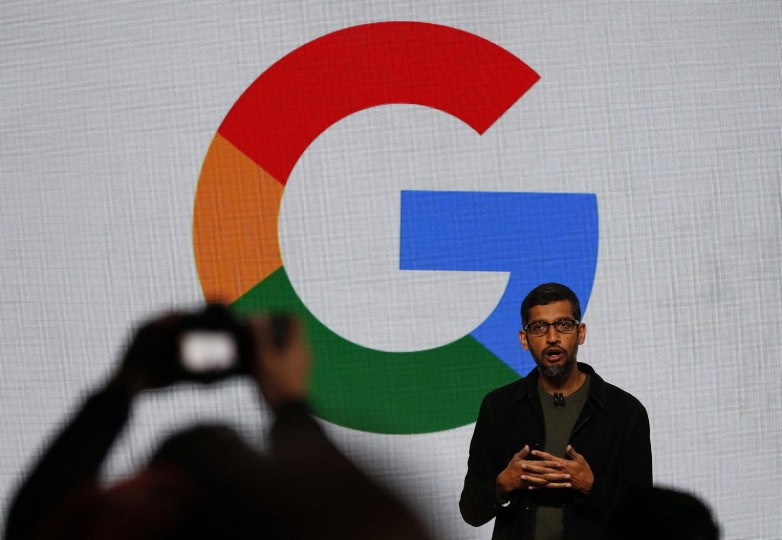
As much as Google talks about being inclusive of other cultures, it might have some more work to do. The Guardian has learned that Google recently settled a racial discrimination claim from a British contractor who collected shopping mall WiFi data for the Maps team in Europe. Allegedly, the company withdrew an offer for a new contract after the man (going by the pseudonym Ahmed Rashid) complained about harassment and racial profiling from mall staff and security due to his Moroccan roots. The company had a “complete disregard” for safety by insisting on secrecy for the project, Rashid said — he couldn’t tell others he was coming or flash ID to allay their suspicions.

According to Rashid, Google not only kept some malls and stores in the dark, but told contractors not to identify themselves to store staff even though they were carrying equipment like laptops and backpacks. The company reportedly ignored requests to obtain a badge, too. This led to multiple incidents where security would follow him around, pull him aside or even ask if he was a terrorist.

Google apparently settled the claim for £4,000 (about $5,130), but didn’t admit wrongdoing in the process.

The company has also partly challenged Rashid’s claims in a statement to The Guardian. It maintained that people in his role are “instructed to be forthright” about working for Google when asked, rather than keeping quiet. It also justified some of its approach by saying it didn’t need permission to collect publicly available WiFi data. It didn’t address other points, however, such as the reasons for dropping the contract offer or supposedly ignoring ID requests.

To Rashid, Google also hasn’t really addressed the central concern: that the firm doesn’t appear to be aware of or responsive to potential racial discrimination issues for contractors. Google didn’t stop to think that contractors might face unfair targeting based on their appearance, Rashid argued. And if he’s accurate, this kind of problem might persist until there are reforms.


Whoa. A Pair Of Genetically Edited Babies Might Have Been Successfully Born In China

A Chinese scientist is claiming to have helped create the world’s first genetically edited babies after a couple gave birth earlier this month to two twin girls whose DNA was engineered to have the capability to thwart off HIV and AIDS.

Jiankui He, the lead researcher, and a team of scientists at the Southern University of Science and Technology, in Shenzhen, China, started sharing their work a few weeks ago, documenting how they had been recruiting couples to create the first gene-edited babies, as first reported by MIT’s Technology Review.

He then announced the successful birth of twins Lulu and Nana on YouTube and expounded upon the stunning, scientific leap in an interview with the Associated Press on Monday.

The scientists’ goal, He explained, was not to cure or prevent an inherited disease, but to give the embryos the rare capability to fight off contracting HIV.

“I feel a strong responsibility that it’s not just to make a first, but also make it an example,” He told the AP. “Society will decide what to do next.”

Gene editing is a highly controversial topic that has alarmed many scientists, not only because of its ethical murkiness, but who argue that the process could have harmful, unknown genetic ramifications, because those edited genes could change the DNA of future generations.

Altering genes is banned in the US. In 2016, the director of the National Institutes of Health (NIH) said the concept of making “designer babies” raised grave ethical concerns about the belief that human beings have the right and ability to begin editing our own species.

Dr. Kiran Musunuru, a University of Pennsylvania gene editing expert, told the AP that the experiment is “unconscionable.” Other experts, however, say the science could have a monumental impact on public health, especially if parents with devastating, inheritable diseases have a chance at saving their children.

He has pushed back on the term “designer babies,” arguing that it diminishes the work and that his team has no desire to “design” children.

“[These parents] carry a lethal genetic disease. Often a small mistake in a single gene of 20,000,” the researcher said in a YouTube video on Monday. “If we can help these parents protect their children it’s inhuman for us not to.”

The mother in the experiment, Grace, got pregnant through “regular IVF,” He explained in the YouTube video, but with one significant difference.

“After we sent her husband’s sperm into her egg we also sent in a little bit of protein and instructions for a gene surgery,” the scientist said. “When Lulu and Nana were just a single cell this surgery removed a doorway through which HIV enters to infect people.”

A few days later, the team checked to see how the embryo fared before putting it back into Grace’s womb. The mother went on to have a normal pregnancy and then gave birth to two healthy baby girls, he said.

The babies’ father, Mark, never thought he would be able to have “a normal life” with kids, the scientist said, because he has HIV.

“Mark and Grace couldn’t bear to bring a child into that world of fear,” He said.

The scientists recruited this couple, along with several others, through a Beijing-based AIDS advocacy group. According to the AP, He edited 16 out of 22 embryos and 11 were used in six attempted implants before Mark and Grace’s successful pregnancy.

However, the team’s claims and results have yet to be verified and the experiment has not been published in any scientific journal.

The AP gave several scientists materials from He for review, and the outlet reported that the experts said that, so far, the tests “are insufficient to say the editing worked or to rule out harm.”

Google just found malware apps hiding in the Play store that were downloaded over 500,000 times

Google has taken swift action after it was discovered that more than a dozen apps that install malware on user devices were found in the Google Play store.

The company has yanked the 13 Android apps, which included car and truck driving simulations as well as a couple that actually got featured in the store’s trending section. However, that removal came after a researcher claimed that at least 500,000 users had download the apps in total, risking the installation of malware on their devices.

From a report via NDTV Gadgets: “The apps not only showed no legitimate functionality but also hid in the handsets to make it easier to install malware … In a tweet [which you can read below] ESET security researcher Lukas Stefanko revealed details about the 13 malicious apps discovered in the Google Play Store. He claimed that these apps containing Android malware were downloaded over 560,000 times. Interestingly, all the apps listed a single developer named Luiz Pinto.”

The NDTV report goes to note the apps were basically disguised as games, but they didn’t work, and actually crashed every time they were launched. They included a luxury car driving simulator, and their thumbnail images showed graphics that made them seem legitimate.

“It is not the first time that a huge number of Android users have been affected by malicious apps containing malware,” the NDTV piece rightly concludes. “Last year, an auto-clicking adware called Judy was discovered on 41 apps and said to have affected between 8.5 million and 36.5 million Android devices. Also, another botnet malware called FalseGuide had reportedly infected millions of Android devices via Google Play.”

Google, for its part, knows it needs to be more aggressive in this area. In January, the company disclosed that it had pulled more than 700,000 malicious apps from the Play Store last year.

Black Holes, Quantum Systems, Superconductors and Planck’s Constant are Related

Researchers from the CNRS and Université de Sherbrooke, have discovered a universal law for the electronic properties of high-temperature superconductors. They exposed superconductors to an intense magnetic field to weaken superconductivity and reveal underlying properties. They measured the variations of electrical resistivity up to -263 °C, and developed a predictive model that can be applied to multiple families of high-temperature superconductors.

This energy dissipation speed limit is linked to the numerical value of Planck’s constant, the fundamental quantity of quantum mechanics representing the smallest possible action that can be taken in nature.

Natalie Wolchover writing at the Atlantic describes how superconducting research could be near conceptual breakthroughs in understanding the physics of superconductors. There appears to be holographic duality that mathematically connects systems of scrambled quantum particles, like those in strange metals, to imaginary black holes in one higher dimension.

Black holes, quantum systems, superconductors and Planck’s constant appear to be related.

Nature Physics – Universal T-linear resistivity and Planckian dissipation in overdoped cuprates

Electrons inside a variety of ceramic crystals of cuprate superconductors seem to dissipate energy as quickly as possible, apparently bumping up against a fundamental quantum speed limit. Older studies found that other exotic superconducting compounds—strontium ruthenates, pnictides, tetramethyltetrathiafulvalenes also burn energy at what appears to be a maximum allowed rate.

Abstract – Universal T-linear resistivity and Planckian dissipation in overdoped cuprates

The perfectly linear temperature dependence of the electrical resistivity observed as T → 0 in a variety of metals close to a quantum critical point is a major puzzle of condensed-matter physics. Here we show that T-linear resistivity as T → 0 is a generic property of cuprates, associated with a universal scattering rate. We measured the low-temperature resistivity of the bilayer cuprate Bi2Sr2CaCu2O8+δ and found that it exhibits a T-linear dependence with the same slope as in the single-layer cuprates Bi2Sr2CuO6+δ, La1.6−xNd0.4SrxCuO4 and La2−xSrxCuO4, despite their very different Fermi surfaces and structural, superconducting and magnetic properties. We then show that the T-linear coefficient (per CuO2 plane), A1□, is given by the universal relation A1□TF = h/2e2, where e is the electron charge, h is the Planck constant and TF is the Fermi temperature. This relation, obtained by assuming that the scattering rate 1/τ of charge carriers reaches the Planckian limit whereby ħ/τ = kBT, works not only for hole-doped cuprates but also for electron-doped cuprates despite the different nature of their quantum critical point and strength of their electron correlations.

Dow rises 300 points after global markets, crude oil rally

Cyber spirits bright for Monday?

Cyber Monday shopping in focus

Stock rose at the start of trade, following the worst Thanksgiving-week performance in seven years, as oil prices and global equities rally, and as U.S. shoppers begin to take advantage of deals offered by retailers on Cyber Monday.

How are the benchmarks performing?

The Dow Jones Industrial Average DJIA, +1.57% surged 331 points, or 1.4%, to 24,614, while the S&P 500 index SPX, +1.41% rose 31.11 points, or 1.2%, to 2,664. The Nasdaq Composite Index COMP, +1.73% rallied 92 points, or 1.3%, to 7,028.

On Friday, the Dow Jones Industrial Average fell 178.74 points, or 0.7%, to 24,285.95, the S&P 500 index off 17.37 points, or 0.7%, at 2,632.56, while the Nasdaq Composite Index retreated 33.27 points to 6,938.98, a decline of 0.5%.

Last week, the Nasdaq tumbled 4.3%, the Dow ended the week 4.4% lower, while the S&P 500 notched a week-on-week decline of 3.8%. It marked the worst Thanksgiving week since 2011 for all three U.S. indexes.

What’s driving the market?

Losses for oil prices helped drive stocks lower last week, and the reverse was true for Monday. After losing 7.7% in Friday’s session alone, U.S. crude futures CLF9, +2.80% rose 1.7% to $51.27 a barrel, while Brent crude LCOF9, +3.13% jumped 2.1% to $60.22 on Monday.

Signs that Italy’s coalition government was prepared to cut its budget deficit target — a move that could defuse tensions between Rome and the European Union — also helped buoy sentiment. U.K. Prime Minister Theresa May also walked away from an EU meeting with approval for her Brexit deal.

The retail industry will be in focus Monday, as investors digest initial data on the U.S. consumer’s willingness to spend this holiday season, after shoppers began deal-hunting in earnest following last week’s Thanksgiving holiday.

In-store traffic fell as much as 9% compared with last year’s Black Friday, according to closely watched metrics from RetailNext and ShopperTrak. But consumers made up for it by spending more money online, as internet sales rose by 26.4% from last Wednesday through Friday, according to an estimate by Adobe Systems Inc. Traders will continue to focus on incoming data on spending on today’s Cyber Monday, from retailers and outside analysts.

Meanwhile, the issue of U.S.-China trade tensions continues to loom over the market, in the days leading up to a Group of 20 summit beginning Friday, when President Trump and Chinese President Xi Jinping are expected to meet and discuss trade issues.

Which stocks are in focus?

Shares of Amazon.com Inc. AMZN, +4.01% are up 1.8% in early trade amid forecasts Cyber Monday holiday shopping is expected to generate $7.8 billion in sales this year, a gain of 18% on the previous year, making for the biggest online shopping day in the U.S. ever, according to Adobe Analytics.

Other retailers seeing a boost in premarket action include Best Buy Co Inc. BBY, +2.73% which is up 1.3% before the bell, and Target Corp. TGT, +1.95% rising 1% early Monday.

Stocks of retailers without robust online operations, like Dollar Tree, Inc. DG, +1.04% are sinking early Monday, down 0.8%.

What are the strategists saying?

Paul Hickey, co-founder of Bespoke Market Intelligence cautioned investors to put Monday’s early gains in perspective. “Last Friday the S&P 500 did close at a new low for the current correction, and even with today’s 1% gain at the open, the S&P 500 will only be back to levels it was trading at a half-hour before the close on Wednesday,” he said.

“Futures are on fire this morning,” Dave Lutz, head of ETFs at JonesTrading, wrote in a Monday-morning note to clients. “Traders are on the lookout for signs that fresh concessions will be made before President Trump and China’s President Xi Jinping sit down together later this week, “ he wrote, adding that the market “hopes for a strong showing this ‘Cyber Monday’ from online retailers.”

How are other markets trading?

Asian markets traded broadly higher, with Japan’s Nikkei NIK, +0.76% rising 0.7% and Hong Kong’s Hang Seng Index HSI, +1.73% closing the day up 1.7%. Chinese markets were more muted, with the Shanghai SHCOMP, -0.14% up early but ending down 0.1%.

European markets are broadly higher Monday, with the Stoxx Europe 600 SXXP, +1.23% and the FTSE 100 UKX, +1.17% in positive territory.

Crude oil CLF9, +2.80% was in rebound mode, up 2.8%, after plunging 7.7% Friday in its biggest one-day fall in more than three years, while gold GCZ8, +0.05% edged higher and the U.S. dollar DXY, -0.01% started the week on a soft note.

Gold edges higher as dollar weakens

Gold futures traded higher Monday, as positive developments in Europe weighed on the dollar, providing a runway higher for bullion.

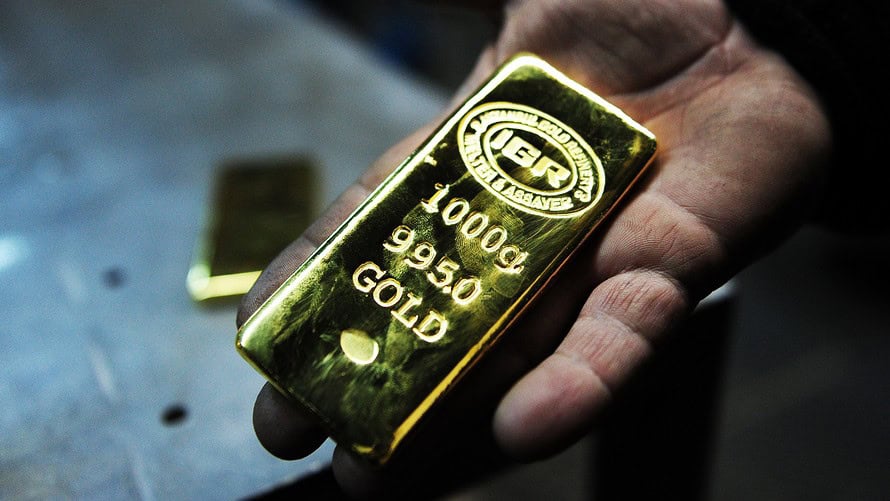
Gold for December delivery GCZ8, +0.06% trading on Comex rose 0.2% at $1,225.30 an ounce, after registering a weekly climb of less than 0.1% on Friday.

The British pound GBPUSD, +0.3361% and the euro EURUSD, +0.0529% were strengthening, putting pressure on a gauge of the dollar, the ICE U.S. Dollar Index DXY, -0.01% amid reports that the Italian government is making concessions with the European Commission over its budget by altering its fiscal proposal so that its projected deficit is near 2% of gross domestic product, down from 2.4%.

Meanwhile, the approval by the European Union of Britain’s divorce from the trading bloc also has provided buoyancy to sterling. If the deal is given a green light by Parliament, the U.K. will then be able to focus on negotiations for the new trade and security relations with EU after it’s official exit in March. U.K. Prime Minister Theresa May, however, is seen facing an uphill battle in winning parliamentary approval.

The dollar gauge was down 0.2% at 96.77. A weaker buck can make gold more attractive to users of other currencies.

Stephen Innes, head of Asia-Pacific trading at Oanda said “dollar movements will ultimately provide gold’s near-term direction, early in the week. Last week the [U.S. dollar] was supported by global growth concerns.”

Separately, December silver SIZ8, +0.12% rose 8 cents, or 0.2%, to $14.320 an ounce, after the metal on Friday put in a weekly decline of 0.9%.

In exchange-traded fund trading, the SPDR Gold Shares GLD, -0.15% was up 0.1% in premarket trade Monday, while the iShares Silver Trust SLV, -0.19% added 0.5%. The VanEck Vectors Gold Miners ETF GDX, +0.26% advanced 0.8% before the bell.