
Archives for November 24, 2018

Bitcoin selloff has more room to go, says analyst

Ether at risk of trading below $100

After a Thanksgiving respite, the crypto selloff has resumed with all major coins trading lower on Friday and on track to log their third consecutive weekly declines.

Bitcoin, BTCUSD, -0.52% the world’s largest cryptocurrency, was last changing hands at $4,259.80, down 3.8% since 5 p.m. Eastern Time on the Kraken crypto exchange a day earlier and lower by 23% since the start of the week.

And for one analyst, the end to the crypto demise is far from in sight.

“Bitcoin is likely to move even lower after a failed attempt to break above the $4,700 level. The regulatory environment is suffocating the bulls and the bears are going wild. It is likely that the price may touch the level of $3,800 or even $3,500 if the current momentum continues,” wrote Naeem Aslam, chief market analyst at Think Markets U.K.

Aslam added that broad-based declines in cryptocurrencies is more concerning for Ether, the currency mostly distributed when crypto-related ventures pursue an initial coin offering.

“The most worrying aspect is that Ethereum could fall below the 100-mark and the honest truth behind that is because a large number of bogus coins have been flushed out of the system and this has made Ethereum less valuable,” he continued.

A single Ether ETHUSD, +2.02% was last fetching $122.12, down 5.2% on the day. Ether is down more than 90% from its alltime high and has not breached $100 on the downside since May 2017.

Elsewhere in altcoins, which are smaller coins other than bitcoin, Litecoin LTCUSD, +2.71% is down 4% at $31.79, XRP XRPUSD, +1.84% is off 5.2% to 41 cents and Bitcoin Cash BCHUSD, +2.96% was down 10.2% at $195.30.

In futures trading, the Cboe Global Markets December contract XBTZ8, -4.23% closed down 4.2% at $4,190 and the CME Group November contract BTCX8, -4.21% ended the day down 4.2% at $4,205.

Gold dips Friday but logs slim weekly though trade jitters persist

Trade, interest rates and stock volatility drive metals trading sentiment

Gold futures eased in Friday’s shortened session, pulling back from Wednesday’s, pre-Thanksgiving two-week high. Still, the loss was slim enough to leave the precious metal just in the green for the week.

Market focus remained fixated on Federal Reserve interest-rate plans over coming months, the dollar’s response to said rate moves, and what looming China-U.S. trade discussions could indicate for the economy’s fortunes. Stock volatility, with major averages pushed into negative for the year earlier this week, is underpinning the appetite for haven gold as well.

Gold for December delivery GCZ8, -0.37% on Comex fell $4.80, or 0.4%, to settle at $1,223.20 an ounce. Gold settled at 12:30 Eastern time, about an hour early for Black Friday. It rose less than 0.1% for the week.

“The gold story looks very intriguing in the face of looming trade war risk [and] a possible u-turn on Fed policy, which would result in a significantly weaker U.S. dollar. All of which suggests gold prices will continue to find a bid,” said Stephen Innes, head of Asia-Pacific trading with Oanda.

The Fed is widely expected to enact its fourth rate increase of 2018 in December, but investors have concerns over how many increases the central bank can implement next year without sparking a domestic recession, amid emerging signs of global economic weakness. The Fed has penciled in three more hikes for 2019.

Part of the economic uncertainty germinates with trade tensions. China rejected fresh U.S. accusations of perpetuating “unfair” trade practices and urged Washington on Thursday to stop making provocations, as the two sides will join up next week at the Group of 20 summit.

Gold fell as the ICE U.S. Dollar Index DXY, +0.46% a gauge of the currency against a basket of six major rivals, rose 0.4% Friday afternoon. It was up nearly 0.5% for the week and 0.9% for the month so far. Gold often moves inversely to the dollar. A firmer dollar can make gold less attractive to users of other currencies.

Gold investors are “awaiting next week’s Mr. Powell [who speaks Wednesday and releases meeting minutes from the central bank’s November meeting on Thursday] and a December rate hike from a data-dependent Fed,” said George Gero, managing director and within the senior consulting group at RBC Wealth Management.

He said trade news could be a near-term market driver but added that longer-term inflation, deficits and worries about politics “could bring a brisk rally to gold.”

Meanwhile, after one of the weaker starts to a Thanksgiving week in recent years, the S&P 500 index, SPX, -0.66% Dow Jones Industrial Average DJIA, -0.73% and Nasdaq Composite Index COMP, -0.48% were all set to register weekly declines of more than 3%, according to FactSet data. See Market Snapshot.

In other metals trade, December silver SIZ8, -1.67% fell 26 cents, or 1.7%, to $14.243 an ounce, with prices for the white metal down about 0.9% for the week. December palladium PAZ8, -2.76% fell nearly 4.4% for the week, while January platinum PLF9, -0.88% fell about 0.3% compared to last Friday and December copper HGZ8, -1.50% gave up 1.4%.

In exchange-traded fund trading, the SPDR Gold Shares GLD, -0.08% was down 0.1% Friday afternoon, while the iShares Silver Trust SLV, -1.32% fell 1.4%. The VanEck Vectors Gold Miners ETF GDX, -2.27% fell 2.3%.

GM Under Investigation for Faulty Brake Vacuum Pumps

FILE – This May 16, 2014, file photo, shows the General Motors logo at the company’s world headquarters in Detroit. The U.S. government is investigating more than 100 complaints of poor brake performance on 2.7 million General Motors big pickups and SUVs. The National Highway Traffic Safety Administration says a brake vacuum pump can deteriorate, causing increased braking effort and longer stopping distances.

GM under investigation for faulty brake vacuum pumps.

The U.S. government is investigating more than 100 complaints of poor brake performance on 2.7 million General Motors big pickups and SUVs.

The National Highway Traffic Safety Administration says a brake vacuum pump can deteriorate, causing increased braking effort and longer stopping distances.

The agency has 111 consumer complaints including nine crashes and two injuries.

The investigation covers 2014 through 2016 Chevrolet Silverado and GMC Sierra pickups. Also involved are Chevrolet Suburban and Tahoe, the GMC Yukon and Cadillac Escalade SUVs.

The agency will determine how often the problem happens and whether a recall is necessary.

GM is monitoring complaints and warranty claims about the brakes and is working with NHTSA to evaluate them, spokesman Tom Wilkinson said Friday.

Any owner who has a problem with brake performance should have them examined by a GM dealer or independent repair shop, Wilkinson said.

They should keep receipts because they could be reimbursed for repairs if there is a recall, he added.

S&P 500 Slides Into ‘Correction’ for Second Time This Year

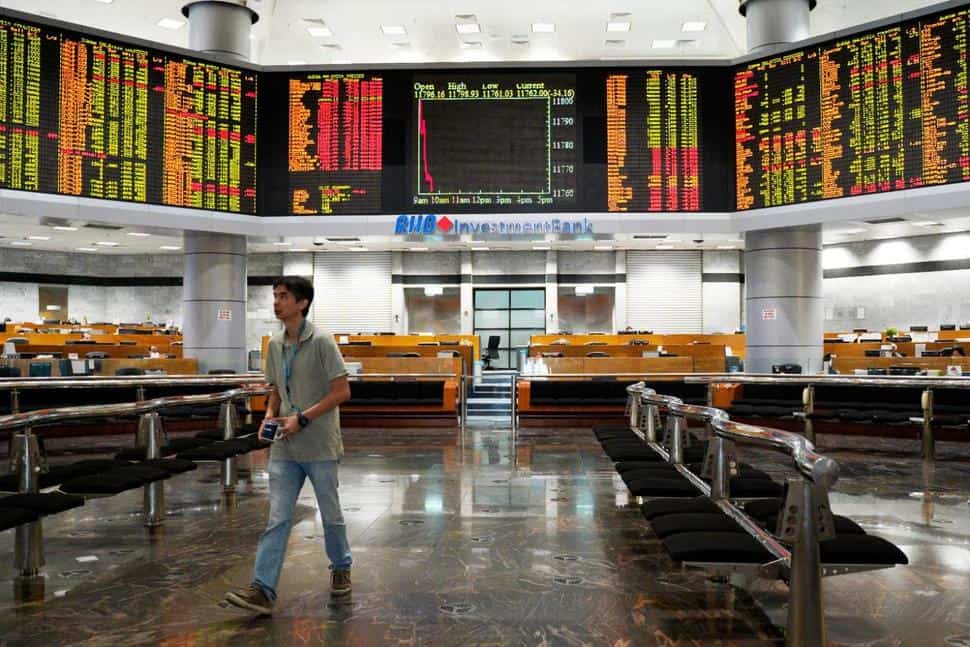
An Investor walks in front of private stock trading boards at a private stock market gallery in Kuala Lumpur, Malaysia, Friday, Nov. 23, 2018. Asian markets are mostly lower as traders dwelled on risks from a drawn-out dispute between the U.S. and China and other events closer to home.

U.S. stocks closed lower Friday, bumping the benchmark S&P 500 index into a correction, or drop of 10 percent from its recent all-time high.

U.S. stocks closed lower after a shortened session Friday, bumping the benchmark S&P 500 index into a correction, or drop of 10 percent below its most recent all-time high in September.

Energy companies led the market slide as the price of U.S. crude oil tumbled to its lowest level in more than a year, reflecting worries among traders that a slowing global economy could hurt demand for oil.

“Oil is really falling sharply, continuing its downward descent, and that appears to be giving investors a lot of concern that there’s slowing global growth,” said Jeff Kravetz, regional investment director at U.S. Bank Private Wealth Management. “You have that, and then you have the recent sell-off in tech and in retail, and then throw on there trade tensions and rising rates.”

Losses in technology and internet companies and banks outweighed gains in health care and household goods stocks. Several big retailers declined as investors monitored Black Friday for signs of a strong holiday shopping season.

Trading volume was lighter than usual with the markets open for only a half day after the Thanksgiving holiday.

The S&P 500 index fell 17.37 points, or 0.7 percent, to 2,632.56. The index is now down 10.2 percent from its last all-time high set Sept. 20. The last time the index entered a correction was in February.

The latest correction comes as investors worry that corporate profits, a key driver of stock market gains, could weaken next year.

“The market is re-pricing and trying to assess where we’re going to be in the early part of 2019,” said Quincy Krosby, chief market strategist at Prudential Financial.

The Dow Jones Industrial Average lost 178.74 points, or 0.7 percent, to 24,285.95. The Nasdaq composite dropped 33.27 points, or 0.5 percent, to 6,938.98. The Russell 2000 index of smaller-company stocks picked up 0.40 points, or 0.03 percent, to 1,488.68.

Crude oil prices fell for the seventh straight week on worries that a slowing global economy could hurt demand even as oil production has been increasing.

The benchmark U.S. crude contract slid 7.7 percent to settle at $50.42 per barrel in New York. That is the lowest since October 2017. Brent crude, the international standard, lost 6.1 percent to close at $58.80 per barrel in London.

Saudi Arabia and other OPEC members have recently signaled a willingness to consider production cuts at the oil cartel’s meeting next month. The U.S. has been increasing pressure on Saudi Arabia and OPEC to not cut production, however, a move which could push prices down further.

The slide in oil prices weighed on energy stocks. Concho Resources, a developer and explorer of oil and natural gas properties, slumped 6.3 percent to $126.96.

Tesla fell 3.7 percent to $325.83 after the electric auto maker said it intends to cut prices for its Model X and Model S cars in China to make them more affordable.

Traders had their eye on retailers as Black Friday, the traditional start to the crucial holiday shopping season, began. Shares in L Brands, operator of Victoria’s Secret and Bath & Body Works, added 2 percent to $29.97. Other retailers put investors in a selling mood. Kohl’s fell 3.7 percent to $63.83, while Target lost 2.8 percent to $67.35. Macy’s dropped 1.8 percent to $32.01.

Rockwell Collins climbed 9.2 percent to $141.63 after Chinese regulators conditionally approved the sale of the maker of communications and aviation electronics systems to United Technologies Corp.

Investors will be watching next week when Presidents Xi Jinping and Trump meet at the Group of 20 summit in Argentina for signs that the two leaders can find common ground to begin unwinding the spiraling trade dispute.

The dispute between the U.S. and China has weighed on the market, stoking traders’ worries that billions in escalating tariffs imposed by both countries on each other’s goods will hurt corporate earnings at a time when the global economy appears to be slowing.

“If you can get President Trump and President Xi to even just come closer with their rhetoric and make a bit of progress on the trade front that could be the catalyst for markets to move higher,” Kravetz said.

It may take more than a meeting to work out deep-seated issues between Washington and Beijing, which resumed talks over their trade dispute earlier this month. According to The Wall Street Journal, the U.S. has asked its allies to stop using telecommunications equipment from Huawei, which is Chinese-owned. The report cited people familiar with the matter.

Bond prices fell Friday. The yield on the 10-year Treasury note rose to 3.05 percent from 3.04 percent late Wednesday.

The dollar fell to 112.88 yen from 112.97 yen late Thursday. The euro weakened to $1.1330 from $1.1406. The pound eased to $1.2810 from $1.2876.

Gold declined 0.4 percent to $1,223.20 an ounce. Silver dropped 1.8 percent to $14.24 an ounce. Copper slid 1 percent to $2.77 a pound.

In other commodities trading, wholesale gasoline plunged 7.9 percent to $1.39 a gallon. Heating oil lost 4.8 percent to $1.88 a gallon. Natural gas fell 3.2 percent to $4.31 per 1,000 cubic feet.

Major indexes in Europe finished mostly higher after shaking off an early slide.

Traders were weighing the latest developments in the negotiations for Britain’s exit from the European Union. Both sides were finalizing the terms of the divorce Friday and expected to sign off on the deal Sunday, though it’s unclear whether the British parliament will pass the deal.

The FTSE 100 index of leading British shares slipped 0.1 percent. Germany’s DAX index rose 0.5 percent, while France’s CAC 40 gained 0.2 percent.

Earlier in Asia, South Korea’s Kospi shed 0.6 percent and Hong Kong’s Hang Seng index dropped 0.4 percent. Australia’s S&P/ASX 200 bucked the trend, gaining 0.4 percent. Shares fell in Taiwan and rose in Singapore, Thailand and Indonesia. Japanese markets were closed for a holiday.

Stores usher in Black Friday

People wait in line to buy televisions as they shop during an early Black Friday sale at a Best Buy store on Thanksgiving Day Thursday, Nov. 22, 2018, in Overland Park, Kan.NEW YORK – Retailers aren’t just ushering the official start of the holiday season with the usual expanded hours and fat discounts on big TVs and toys.

They’re offering new ways for shoppers to get deals online and in the store easier and faster in the age of instant gratification.

Walmart introduced a digital map on its mobile app to make it easier for shoppers to find an item’s exact location in the store. Kohl’s has a new feature on its mobile app that lets customers take photos of products anywhere and find similar items at the department store. And customers, frustrated with long checkout lines, can check out at Walmart and other stores with a salesperson right on the spot.

Shoppers are also facing new free shipping options. Target leapt in front of Walmart and Amazon to offer two-day free shipping for the holidays without any minimum purchases. Online leader Amazon followed, dropping its $25 minimum. Walmart is still sticking with its $35 threshold.

“Retailers are pulling out all the stops to get shoppers earlier with online deals and using online to push shoppers in the store,” said Marshal Cohen, chief industry adviser at the NPD Group, a market research group. “I think overall spending will be decent.”

Macy’s was pushing such door buster deals as 70 per cent discounts on cookware and 40 per cent off of boots. As of early morning Friday, Macy’s Herald Square, which opened all night, had a steady stream of shoppers, mostly tourists.

“We got here at 4:30 a.m. We couldn’t go to sleep so we went shopping,” said Shane Wilson, who arrived in Manhattan from London on Wednesday. She was buying shoes and boots at 40 per cent off. She said her next stop was Bloomingdale’s.

Nicole Battini, from Bologna, Italy showed up with a friend at Macy’s at 5 a.m. after a night of clubbing. Battini, who arrived in New York earlier this week, was looking for shoes, a handbag and a coat. Then she said she was going to sleep.

“Tomorrow, we go back to clubbing,” she said.

Still, Black Friday isn’t what it used to be. It has morphed from a single day when people got up early to score door busters into a whole month of deals. Many major stores, including Walmart, Best Buy and Macy’s, start their blockbuster deals on Thanksgiving evening, which has consequently thinned out the crowds.

Black Friday is nonetheless expected to be the biggest shopping day of the year, according to ShopperTrak, a technology company. And analysts say Black Friday sales should be even bigger than a year ago. They are expected to hit $23 billion on Friday, up from $21 billion during the same year-ago period, according to MasterCard SpendingPulse, which tracks all forms of payment, including cash.

With the jobless rate at a five-decade low of 3.7 per cent and consumer confidence at an 18-year high, analysts project healthy sales increases for November and December. The National Retail Federation, the nation’s largest retail trade group, is expecting holiday retail sales in November and December — excluding automobiles, gasoline and restaurants — to increase as much as 4.8 per cent over 2017 for a total of $720.89 billion. The sales growth marks a slowdown from last year’s 5.3 per cent, which was the largest gain since 2010. But the figure is still healthy.

Annual inflation rises

Signage mark the Statistics Canada offices in Ottawa.

The country’s annual inflation rate picked up its pace last month to hit 2.4 per cent in an advance mostly fuelled by higher gasoline prices, compared to a year ago, Statistics Canada said Friday.

The federal agency’s October inflation number marked an increase from 2.2 per cent in September and pushed the reading a little farther away from the Bank of Canada’s ideal, two per cent target.

Economists had expected October inflation to be 2.2 per cent, according to a poll by Thomson Reuters Eikon.

Year-over-year prices at the pump were 12 per cent higher in October, air transportation prices were up 9.4 per cent and mortgage interest costs climbed seven per cent, the report said.

The downward pressure month was led by prices declines of 7.2 per cent for video equipment, four per cent for telephone services and 3.9 per cent for traveller accommodation, compared to a year earlier.

Prices were higher last month in all provinces compared to October 2017, but Alberta was the only one to show a slower pace of inflation. A year earlier Alberta’s inflation rate was three per cent, while last month the pace was 2.8 per cent.

In Ontario, Statistics Canada said energy prices slid 2.4 per cent on a month-to-month basis after the provincial government got rid of its carbon cap and trade program, which had been introduced last January.

The average of the agency’s three core inflation readings, which omit more-volatile items like gas prices, edged slightly higher to two per cent last month to hit the Bank of Canada’s bull’s-eye. The average core, or underlying, measure was 1.93 per cent in September, 2.03 per cent in August and 1.97 per cent in July.

The central bank pays close attention to core inflation ahead of its interest-rate decisions — and it can raise its trend-setting rate as a way to keep inflation from rising too high. It aims to keep inflation within a range of one to three per cent, with the two per cent mid-point as its primary target.

Bank of Canada governor Stephen Poloz’s next interest-rate announcement is scheduled for Dec. 5.

In a separate report Friday, Statistics Canada said retail sales for September moved up 0.2 per cent compared with August. Month-to-month retail trade was essentially unchanged in August and saw an increase of 0.2 per cent in July.

The September increase brought retail trade to $50.9 billion for the month.

The main contributor behind the increase were higher sales, of 0.9 per cent, at food and beverage stores. Supermarkets saw sales rise 1.7 per cent, which more than made up for a 1.7 per cent decline in beer, wine and liquor stores.

Sales also rose at general merchandise stores by 1.2 per cent, while motor vehicle and parts dealers saw an increase of 0.5 per cent.