Archives for November 24, 2018

Blazing Fast Internet Connectivity From Space Is Coming. Here’s How to Play It

The future of connectivity depends on a big idea; the launch of vast constellations of inexpensive satellites.

Elon Musk’s SpaceX got one step closer to that dream on Nov. 16 when the Federal Communications Commission granted approval for the launch of 7,518 satellites.

The implications and the opportunity for investors are big.

Musk muses that that he founded SpaceX to make a small fortune. The punchline is that he began with a large fortune. As an early investor and leader of PayPal — and later, of course, Tesla (TSLA – Get Report) — his investment career has been charmed. He always started with a big idea, then worked backward to find a way to make it work.

With Tesla, his electric car company, Musk aspired to wean the planet off gas-guzzling cars. He began with a no compromises all electric sportscar built for enthusiasts. He followed with less expensive, but still fun to drive vehicles aimed at the mass market.

Musk’s space ambitions preceded electric cars, and they are more far reaching. He has been dreaming of interplanetary travel since SpaceX was founded in 2002. Ultimately, he would like to colonize Mars. But getting to the red planet requires a monumental engineering effort and a huge capital investment with limited returns.

So SpaceX engineers reimagined space travel. They started with the idea that rocket boosters should be reusable. Launchers can cost $60 million a pop and normally end up at the bottom of the ocean minutes after blast off. Reusing the booster reduces the cost of future launches to $200,000 worth of fuel. It also means faster turnaround times, and profitability.

Better rockets are innovative. But that alone is not enough to fund Mars.

Starlink is a constellation of inexpensive satellites. These Low Earth Orbit (LEO) beacons would beam coordinated signals back to Earth from 210 and 750 miles away using the Ka and Ku frequency bands.

In theory, a system of this size could blanket the entire planet in high-speed internet connectivity. The use cases would be extraordinary. Internet service providers might beam signals directly into homes, negating the need for costly fiber optic lines. Wireless carriers could offer subscribers worldwide, unlimited voice and data plans without the fear of lost signals, or roaming charges.

And low latency, high bandwidth global connectivity would speed up next generation network applications. It would make cities smart, cars driverless and manufacturing more efficient.

In the past, satellite internet has been plagued by costly devices parked far away from Earth in geostationary orbit. The service was slow and notoriously poor in bad weather. Numerous LEO devices with the latest semiconductors, machine learning and smarter antenna systems would remedy these shortcomings. Signals could be effortlessly bounced around storms.

In January, the Wall Street Journal reported that Space X internal files showed its constellation internet service is projected to earn $15 billion in profits annually, beginning in 2025.

Investors should think smaller. The secret is the little things, inside the big idea.

Versum Materials makes the specialty chemicals and machines that semiconductors firms use to build next generation microprocessors. Its customers range from Intel (INTC – Get Report) to Samsung (SSNLF) , and every company in between. If a processor pushes the envelope, it has Versum in its DNA.

Business is good. Sales grew 21.8% in fiscal 2018. All of the key managers are their middle 50s, with plenty of experience cultivating relationships in the sector. And at only 12.8x forward earnings, the company’s share price is not high.

Macom Technologies is considered the leading maker of phased array antenna systems. Next generation wireless networks will utilize this technology to beam signals into homes, office buildings and shops.

Its scalable planar array tiles, developed in partnership with MIT, set a new standard in antenna design. They are five times less expensive than conventional slat arrays and can be tailored and scaled for multiple applications, including 5G.

The Lowell, Mass., company has had a tough stretch. Its optical networking business got caught in the lengthy transition from LTE to 5G. And it was hurt by the ongoing trade war with China, one of its most important markets. Now the transition to 5G is finally under way, and Macom still makes best-in-class gear.

The stock trades at 12.1x forward earnings. Shares used to be $60. They are now $18.

Blazing fast internet beamed from space is coming. It’s a big idea made possible by small innovations in silicon and antenna design.


Quantum sound waves to open doors for more powerful sensors

For the last decade, scientists have been making giant leaps in their ability to build and control systems based on the bizarre rules of quantum mechanics, which describe the behavior of particles at the subatomic scale.

But a challenge is getting delicate quantum systems to play well with mechanical ones—anything with moving parts—which underlie a great deal of existing technology.

In a first, scientists with the Institute for Molecular Engineering at the University of Chicago and Argonne National Laboratory have built a mechanical system—a tiny “echo chamber” for sound waves—that can be controlled at the quantum level, by connecting it to quantum circuits. Published Nov. 21 in Nature, the breakthrough could extend the reach of quantum technology to new quantum sensors, communication and memory.

“Getting these two technologies to talk to one another is a key first step for all kinds of quantum applications,” said lead study author Andrew Cleland, the John A. MacLean Sr. Professor for Molecular Engineering Innovation and Enterprise and a senior scientist at Argonne National Laboratory. “With this approach, we’ve achieved quantum control over a mechanical system at a level well beyond what’s been done before.”

In particular, Cleland said, there’s been much interest in integrating quantum and mechanical systems in order to make incredibly precise quantum sensors that could detect the tiniest of vibrations or interact with individual atoms.

“Many techniques for detecting things rely on sensing force and displacements—meaning motion,” he said. “These sensors play a fundamental role in any type of application where you’re trying to measure something. And mechanical systems are the easiest to build and the most sensitive, so there’s long been an interest in getting them to the quantum limit.” (Mechanical sensors, for example, are at the heart of the systems that detect gravity waves—the ripples in the fabric of space-time that allowed us to “see” black holes colliding across the universe.)

Cleland’s research focuses in part on quantum electrical circuits, and he wanted to hook up one of these circuits to a device that generates surface acoustic waves—tiny sound waves that run along the surface of a block of solid material, like ripples moving across the surface of a pond. This phenomenon plays a key role in everyday devices like cell phones, garage door openers and radio receivers.

A key breakthrough was building the two systems separately, on different kinds of material, and then connecting them together. This allowed the team to optimize each component and yet still communicate with one another. Both have to be kept very, very cold—just ten thousandths of a degree above absolute zero.

Scientists are excited because this gives them a platform to experiment with sound at the quantum level.

“This particular result opens the door to be able to do a lot of things with sound that you can already do with light,” Cleland said. “Sound moves 100,000 times slower than light, which gives you more time to do things. For instance, if you’re storing quantum information in a memory, it can last a lot longer stored in sound than in light.”

There are a number of fundamental unanswered questions about how sound waves behave in the quantum realm, he said, and this system could give scientists a platform to address them.

The technique also could point the way toward a quantum “translator” that would allow quantum communication across any distance. The electronic atoms Cleland’s group works with can only operate and communicate at very low temperatures; quantum acoustics could allow these circuits to convert quantum information to optical signals that could then be communicated over large distances at room temperature. It’s possible an acoustic-wave setup could form the basis for such a system, known as a quantum repeater, Cleland said.

The first author was Kevin Satzinger, Ph.D.’18, now with Google. Coauthors on the paper included Assoc. Prof. David Schuster and Prof. David Awschalom, as well as postdoctoral researchers Audrey Bienfait and Etienne Dumur; graduate students Youpeng Zhong, Hung-Shen Chang, Greg Peairs, Ming-Han Chou, Joel Grebel, Rhys Povey and Sam Whiteley; and undergraduates Ben November and Ivan Gutierrez (both AB’18).

A separate study in the same edition of Nature, led by Robert Schoelkopf at Yale University, also reports the creation of single-phonon excitations. Taken together, the two studies open a new avenue for storing quantum information, the authors said.

The devices were fabricated in the Pritzker Nanofabrication Facility at the IME.

Apple knows 5G is about infrastructure, NOT mobile phones

With Apple shares down more than 20 percent from their all-time highs of only a few weeks ago, writers are piling-on about what’s wrong in Cupertino. But sometimes writers looking for a story don’t fully understand what they are talking about. And that seems to me to be the case with complaints that Apple is too far behind in adopting 5G networking technology in future iPhones. For all the legitimate stories about how Apple should have done this or that, 5G doesn’t belong on the list. And that’s because 5G isn’t really about mobile phones at all.

Just to get this out of the way, I see Apple shares currently presenting a huge buying opportunity. A good Christmas quarter will regain that lost 20 percent, and I don’t see any reason why Apple shouldn’t have a good Christmas quarter.

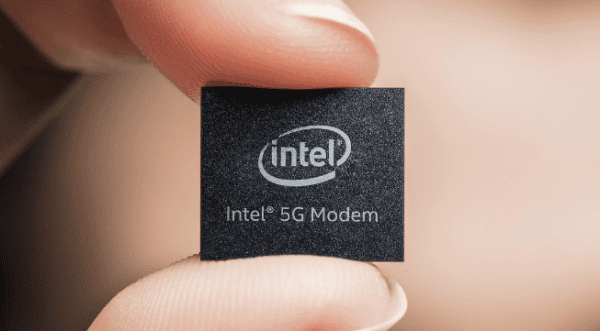
Back to 5G, I ran across this story about Apple being at a disadvantage to Samsung and others when it comes to introducing phones with 5G support. The gist of the story is that Apple is waiting for Intel to finish its 5G chipset while the other vendors are sticking with Qualcomm’s part that is already available. So Apple’s first 5G iPhone won’t appear until 2020 while Samsung’s will be out in 2019.

Apple and Qualcomm are in a $5+ billion legal dispute over claimed royalty evasion and IP theft, so it shouldn’t be surprising that Apple is trying to find alternate silicon suppliers. And Intel is somewhat delayed in its 5G roll-out. That all makes sense. But where I have a problem is with understanding how Apple is somehow at a strategic disadvantage by not having 5G in 2019.

5G networks aren’t here yet. They are close to being ready, but won’t start rolling-out until next year and most 5G networks won’t be available nationally until 2020 — just about the time Apple will be shipping its first 5G iPhone. So Apple’s a little behind, but not much really given the network build-outs still to happen. It’s hard to see much of a story here, frankly.

But it’s actually worse than that, because this story presumes that 5G support is somehow vital to mobile phones. It isn’t.

The first iPhone had 2G networking at a time when 3G networks were emerging, so we’ve been here before. But what’s different this time is that there’s little functional difference between 5G and the current 4G LTE (Long-term Evolution) networks we currently use.

Yes, there are myriad technical differences between 5G and LTE. 5G is way faster — at least 20 times faster than LTE. But the important question to ask here is why that speed difference matters for mobile phone users? It doesn’t. 5G is no killer app.

Remember that a killer app is an application so valuable to users that it justifies by itself buying the hardware upon which it runs. The original personal computer killer app was VisiCalc — the first spreadsheet.

What, then, does 5G enable mobile phone users to do that they can’t do today? I can’t think of anything. Sure, 5G will have us sharing 20 gigabits of bandwidth where LTE allows us to share just one gigabit, but what do we do that actually requires that kind of speed? Nothing.

I have a T-Mobile LTE portable WiFi hotspot that always gives me at least five megabits-per-second and I’ve seen speeds of up to 27 megabits-per-second. Both speeds can support, for example, streaming video at the highest resolution my phone can offer. Netflix, Hulu, Amazon, YouTube — they all run flat-out already. What more is 5G going to offer me?

The traditional argument in this case is that we can’t know until the network is actually up and running at which point some developer will give us a compelling new class of app that does, in fact, need that kind of bandwidth. Only this time I don’t think it is going to work that way because, as I said, 5G isn’t actually about mobile phones at all. It’s about infrastructure.

The current 5G roll-out is by far the most expensive network roll-out in wireless history. That’s because where previous network technologies generally made more efficient use of existing spectrum, 5G requires new spectrum — lots and lots of new spectrum. Much of this spectrum has been bought-back by wireless carriers from TV license holders. We’ll see this trend continue over the next decade or so until there will be no over-the-air TV left at all. At that point you’ll still be able to watch all the same TV, but it will be over 5G, instead.

The wireless carriers are paying billions for this spectrum not just to takeover TV carriage from broadcast — they want to take it over from cable, too. They fully expect to destroy cable TV over the next 15 years, taking not just TV viewers but also the even more important Internet users.

The whole idea behind 5G is that it will allow the wireless carriers to totally eat the lunches of wireline telephone, cable and Internet service providers while also supplanting broadcast TV.

5G is truly the one network that will rule them all.

Wireless carriers fully expect to turn traditional TV networks into content developers while putting traditional phone and cable companies simply out of business.

All networking will be wireless and truck rolls will end forever. No more cable guy.

This is pretty much inevitable. I remember explaining it to a crowd of PBS programmers in a meeting at Sundance back in 2002. Back then the network was spending $1.8 billion rolling-out digital HDTV and I suggested saving that money, selling the spectrum outright, and moving service first to cable and then to the Internet, using the money saved from both sources to endow PBS effectively forever. They thought I was crazy, when in fact I was only somewhat ahead of my time.

I’m sure there will be bandwidth-intensive mobile apps that take good advantage of 5G, but I doubt that any will be game-changing. Retina-type mobile displays long ago reached limits of perceivable visual difference, which is why phones had to get so big. You can make the display 4K, 5K or even 8K and on a phone it will look all the same. We can up refresh rates, I suppose, but anything beyond 144K (for those of us who aren’t teen gamers just 60K) is also beyond our physical ability to perceive as different. Or maybe we’ll have some type of retinal scan display that puts a 100-inch 8K 3D screen directly in our eyeballs, but I seriously doubt even that will require bandwidth much beyond LTE given that silicon will also improve and, along with it, video compression software.

Whatever amazing 5G mobile apps appear, the very earliest we’ll see them is 2020 or later when the 5G roll-outs are finally complete. And isn’t that when Apple is supposed to be shipping 5G phones?

See, they aren’t too late at all.

Microsoft is winning the console war from second place

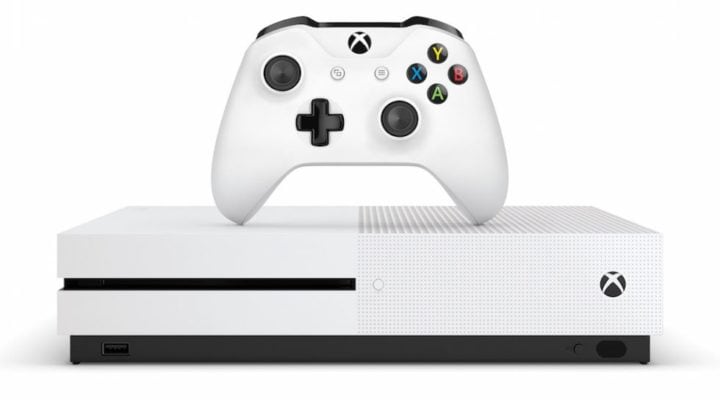
It has not been a friendly console cycle for Microsoft and the Xbox One. Microsoft’s troubles began from the second it revealed the Xbox One back in 2013 – not only did the company reveal a console that seemed to put gaming last, but it also took a heavy-handed approach to digital rights management that immediately received a lot of blowback. Though Microsoft reversed many of these controversial decisions before the console launched, the damage was done.

Fast forward to today and the Xbox One lags behind the PS4 by some unknown – yet still likely significant – quantity. There seems to be very little hope that the Xbox One will ever catch up to the PS4 in terms of sales, and we can probably point to that initial reveal as the primary cause. Add to that a small lineup of exclusive games, and the Xbox One becomes even less appealing for mainstream consumers.

Even though it’s been a fairly disappointing generation for Microsoft, I’d argue that the company is actually winning the generation from its position in second place – in matters other than lifetime sales, of course. Microsoft seems to be doing more to move the gaming industry forward than Sony is, perhaps because it knows that it can’t catch up to the PS4 and therefore doesn’t need to be concerned about creating value that only extends as far Xbox One and no further.

One of the best examples of this is Microsoft’s decision to put all of its first-party exclusive games on PC. When Microsoft first announced this new initiative, it left me scratching my head, because it meant that there was even less of a reason for someone who owns a capable gaming PC to buy an Xbox One. If a PC gamer decided they wanted to buy a console, Microsoft’s move to put its Xbox One exclusive games on the platform meant that gamer would almost certainly be buying a PS4.

Still, even if it may not make a ton of a sense from a console manufacturer’s perspective, it’s been great for PC gamers, as it means they no longer need to buy a separate console to play games like Forza Horizon 4 or Sea of Thieves. It’s just nice to see the company giving PC gaming some love, especially given its position as the developer of Windows.

Another thing, helping to move the gaming industry forward is Xbox Game Pass, and this is something I don’t think would have ever existed if Microsoft dominated this generation right out of the gate. Regardless, Xbox Game Pass offers really good value for the money, and as sad as it is to say it, that almost feels novel in this age of video games that are designed to squeeze as much money out of players as possible.

At worst, it’s a cheap way for gamers to fill the gaps between major releases, but I imagine that for some, it’s the primary way they play games on Xbox One. I’m really excited to see where Xbox Game Pass goes in the future, and I hope subscription services that offer game downloads persist into the next generation and improve from there.

In fact, Xbox Game Pass has already had an effect on the industry, as Sony flipped the switch on game downloads for PlayStation Now back in September. Before that, PlayStation Now was only a streaming service, and I’m tempted to argue that had it not been for the competition from Game Pass, we would have never seen this feature come to PS Now.

Then we come to the device that, for me, really drives this idea home: the Xbox Adaptive Controller. Revealed and launched earlier this year, the Xbox Adaptive Controller allows users to attach any variety of switches or buttons and map them to whatever function they want. With large built-in buttons and a flat design, it’s meant to be a solution for gamers with disabilities that prevent them from using a regular gamepad.

In short, I think this controller is awesome and Microsoft should be commended for putting in the time and resources to develop it. Anything that enables more people to enjoy gaming is a win in my book. The Xbox Adaptive Controller is an excellent device and the gaming world is better for its existence, full stop.

Microsoft also seemed to be on board with the idea of cross-platform functionality early on, at least within the context of this console cycle. Would that have been different if Microsoft were on top instead of Sony? Maybe, and we can even say that it’s probable given Microsoft’s own resistance to the idea of cross-play in the previous generation. This time around, though, Microsoft has a lot more to gain from cross-platform play, as one of its biggest titles, Minecraft, is available on a variety of different platforms outside of the Xbox family.

What-ifs aside, the reality is that when Psyonix said that it was ready to flip the switch on cross-platform multiplayer in Rocket League a couple of years back, Microsoft seemed to approve of the idea almost immediately. Even though it shot down the idea of cross-play back when the Xbox 360 was in its prime, it can’t really be accused of delaying the arrival of it in the current console cycle.

Then we have what Microsoft plans to do in the future, namely device-agnostic game streaming. We have precisely no details about when this might launch, how it will work, or how much it’ll cost consumers, but Microsoft’s goal as stated at E3 2018 is to provide “console-quality gaming on any device.” This is a pretty big undertaking, because so far, game streaming has been a fairly limited affair.

Of course, Sony deserves kudos for its part in moving game streaming forward with PlayStation Now, which is one of the few examples of a successful game streaming platform. PlayStation Now support, however, has vanished from a number of platforms since launch. Last year, Sony culled the list of supported PlayStation Now platforms to just PlayStation 4 and PC, so it’s sort of heading in the opposite direction of Microsoft.

In truth, whatever game streaming platform Microsoft is working on is likely years off and, for now at least, there’s no guarantee that it’ll actually work the way it’s currently envisioned. Still, it’s an example of Microsoft leveraging all the work it’s done with cloud computing and Azure to give people more ways to play games, and even if its brand of game streaming isn’t truly device-agnostic when it eventually arrives, that’s an encouraging thing to see.

Wrap-Up
Sony naturally deserves praise for all that it’s done during this console generation too. Some of the PlayStation 4 exclusives we’ve seen throughout the past five years have elevated gaming to an entirely new level, and many of them can be counted among the best games of the entire generation.

Microsoft, however – possibly driven by the fact that the Xbox One will always play second fiddle to the PlayStation 4 – has done a lot of things geared less toward elevating gaming and more toward bringing more people into the fold. Whether it’s the Xbox Adaptive Controller, Xbox Game Pass, or this move to put Xbox exclusives on PC, they’ve all been carried out with the goal of making gaming more accessible to a greater number of people. I’m not about to tell people to start choosing an Xbox One over a PlayStation 4, but when all of these initiatives are taken together, they sure do a lot to diminish the perceived gap between Sony and Microsoft this generation.

Stock indexes log worst Thanksgiving week since 2011 all three fall at least 3.5%

U.S. stock markets closed at 1 p.m. ET on Black Friday

U.S. stocks closed lower Friday, pressured again by falling oil prices, which drove the indexes to weekly loses of more than 3.5%—the second straight week of declines.

The New York Stock Exchange closed at 1 p.m. Eastern Time, while other financial markets also saw earlier closures on Black Friday.

How did the benchmarks perform?

The Dow Jones Industrial Average DJIA, -0.73% fell 178.74 points, or 0.7%, to 24,285.95, the S&P 500 index SPX, -0.66% off 17.37 points, or 0.7%, at 2,632.56, while the Nasdaq Composite Index COMP, -0.48% retreated 33.27 points to 6,938.98, a decline of 0.5%.

For the week, the Nasdaq tumbled 4.3%, the Dow ended the week 4.4% lower, while the S&P 500 notched a week-on-week decline of 3.8%.

According to Dow Jones Market Data, this week’s performances for all three major indexes marks their worst Thanksgiving weeks since 2011.

What’s drove the market?

Crude oil’s bear market worsened Friday, as investors wrestled with growing output from the U.S., President Donald Trump’s entreaties to key producers to keep prices lower, and generally rising inventories, despite a recent cold snap in many oil-consuming regions. The slide in oil prices weighed heavily on energy stocks, as 9 of the 10 of the biggest losers in the S&P 500 Friday were from shares of companies with links to the energy complex.

Investors also keyed in on developments in European politics, after the U.K. and European Union both announced progress on Thursday in outlining their future relationship after Britain exits the EU.

In Asia, markets faced serious pressure that rippled onto U.S. shores, after The Wall Street Journal reported that the U.S. government attempted to persuade foreign allies to avoid telecommunications equipment from China’s Huawei Technologies Co.

The reports highlight nagging tensions between Beijing and Washington centered on tariffs and the Trump administration’s claims of apparent abuses of intellectual property rights and espionage by Chinese tech firms.

President Xi Jinping and Trump are scheduled to meet in Buenos Aires on the sidelines of the G-20 summit next week.

On the bright side, the holiday shopping season appears to be off to a good start, after a report from Adobe Analytics showed that Thanksgiving online shopping rose 28.6% from last year, data that boosted some retailers during trade Friday.

What are strategists saying?

While falling oil prices are causing investors to worry about the slowing global economy, it is the rise in the U.S. dollar—resulting from an overseas slowdown—that will have the most direct impact on S&P 500 earnings, Jeff Kravetz, regional investment director at U.S. Bank told MarketWatch.

“Dollar strength could be a serious headwind for earnings going forward,” he said, because much of S&P 500 companies’ sales growth is derived abroad.

“It’s another down day, which is concerning,” Karyn Cavanaugh, senior market strategist at Voya, told MarketWatch. “The market continues to be worried about slowing global growth,” she said, adding that today’s drop in oil prices reinforces this fear.

“Investors are worried because the last time we saw oil really plummet, back in 2015, we also saw a serious slowdown in global growth,” Cavanaugh said.

“But there’s a real disconnect between market sentiment and the actually economy.’ she argued, which puts markets in a position to have a significant ‘Santa Clause’ rally, as she expects holiday sales figures to continue to show that “consumers are healthy and they’re out there spending money.”

Which stocks were in focus?

Shares of retailers Macy’s Inc. M, -1.78% Target Corp. TGT, -2.76% and Best Buy Co Inc. BBY, +0.74% are in focus as Black Friday sales kickoff. Macy’s stock fell 1.8%, while Target shares were down 2.8%, and Best Buy stock was up roughly 0.7%.

Retail trade was one of the Dow’s bright spots Friday, after data from Adobe Analytics showed strong growth in online shopping Thanksgiving Day. Walmart Inc. WMT, +0.99% shares rose 1% Friday, while Walgreens Boots Alliance Inc. WBA, +1.32% stock advanced 1.3%.

Shares of energy-related firms were under pressure Friday, as the price of oil was down 6% on the day and more than 21% in November, so far. Marathon Oil Corp. MRO, -4.63% shares fell 4.6%, TechnipFMC Plc FTI, -4.19% stock retreated 4.2%, Devon Energy Corp. DVN, -5.68% stock fell 5.7%, and shares of Concho Resources Inc. CXO, -6.31% shed 6.3%.

Rockwell Collins COL, +9.21% shares rallied 9.2% Friday, after Reuters reported that Chinese market regulator has given conditional approval to United Technologies Corp.’s UTX, +2.65% takeover bid.

Which data were in focus?

The Markit flash reading on manufacturing PMI fell to 55.4 in November, a three-month low.

How did other markets trade?

Chinese stocks fell Friday, with the Shanghai Composite SHCOMP, -2.49% down 2.5%, while the smaller Shenzhen Composite 399106, -3.66% tumbled 3.6%. Japanese markets were closed for a public holiday.

In Europe, stocks ended the trading day mixed, with the Stoxx Europe 600 SXXP, +0.40% edging up 0.4%, and the FTSE 100 UKX, -0.11% down 0.1%.

Crude oil CLF9, -7.76% added to its November woes, falling 6% Friday, while gold GCZ8, -0.37% was off 0.4%, and the U.S. dollar DXY, +0.46% edged up 0.2%.

Dollar rallies as oil-linked currencies skid amid crude’s price drop

Dollar index firms as Brexit, economic data drag on sterling, euro

The U.S. dollar inched higher versus its main rivals on Friday, as U.S. traders returned from the Thanksgiving holiday, and investors closely tracked an intensifying decline in crude oil.

The global oil benchmark, Brent for January delivery LCOF9, -5.45% was down nearly 5%. Growing output continues to weigh on the oil price, despite a recent cold snap. The price drop hurt financial assets across the board, including stocks and commodity-linked currencies.

The Norwegian krone USDNOK, +0.7253% led developed market losers, trading near its lowest level since May 2017, with one dollar fetching 8.5915 krone, up from 8.5349 late Thursday in New York. Canada’s dollar USDCAD, +0.3412% also weakened versus its U.S. rival, leaving the greenback to rise to C$1.3208, from C$1.3190.

In emerging markets, oil-linked currencies, the Russian ruble USDRUB, +0.9279% drifted sharply down, recently at 66.224 ruble per one dollar, compared with 65.603 ruble late Thursday.

As for the greenback’s trade against major rivals, the ICE U.S. Dollar Index DXY, +0.46% was up 0.1% at 96.830, headed for a 0.4% gain this week.

Elsewhere, European markets continued worrying about Brexit developments ahead of a key summit this weekend.

The future for Gibraltar — a British-held peninsula in the south of Spain — following Brexit is the latest hurdle to emerge during the U.K.’s divorce from Brussels, with Spain demanding to get more of a say in the future of the key transport hub.

Meanwhile, embattled U.K. Prime Minister Theresa May has been trying to appeal to the British public to support the deal she agreed to with the EU on Thursday. The deal had led the pound to climb higher.

On the data front, November PMIs for the eurozone underperformed consensus estimates, with the composite index coming in at 52.4, versus 53 expected, which also weighed on the euro. A reading of at least 50 indicates improving conditions.

The weaker-than-expected data dealt a blow to any investors looking for a eurozone rebound in the fourth quarter, market participants said.

“Continued weakness will have many beginning to doubt the ECB’s ability to hike rates next year,” said Win Thin, global head of currency strategy at Brown Brothers Harriman. “Quantitative easing will undoubtedly end in December but talk of another TLTRO [targeted longer-term refinancing options] is feeding into a more dovish take on the ECB.”

The euro EURUSD, -0.5700% was down $1.1334, a five-day low, versus $1.1404 late Thursday in New York.

Sterling GBPUSD, -0.6600% last bought $1.2804, down from $1.2878.