Archives for October 21, 2018

Online sellers ‘pay for positive reviews’

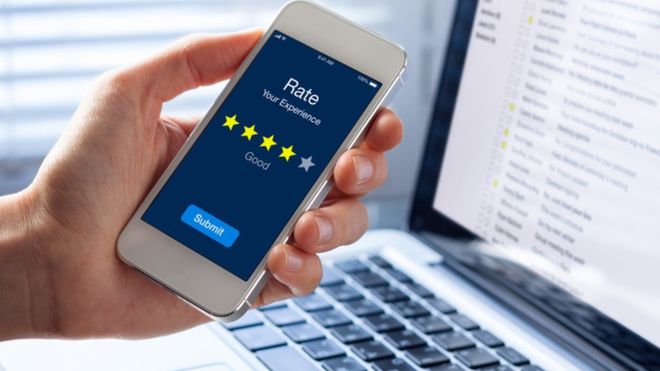
Some online sellers are offering people free goods in return for positive product reviews, an investigation by consumer group Which? has found.

Its investigator joined several “rewards for reviews” groups and was hired to write high-rated reviews in return for free items.

Paid-for, or fake, reviews flout rules set by platforms such as Amazon and Facebook.

A similar investigation by BBC 5 live uncovered the trade in false reviews.

The Which? investigator found five sellers who gave instructions to order an item through Amazon, write a review and share the link, with the promise of a refund.

The investigator gave an honest review of the items, but in three out of five cases was not refunded because the reviews were not positive enough or the seller could no longer be contacted.

The consumer group said that in one example the investigator gave a smartwatch a two-star review. They were told by the seller to rewrite it because the product was free, so it “is the default to give five-star evaluation”.

In another, the investigator was told that a “refund will be done after a good five-star review with some photo” after receiving some wireless bluetooth headphones. But after posting a three-star review with photos they were told they would not be refunded unless they wrote a five-star review.

How to spot a fake review

  • Do not rely on ratings – delve deeper and read the reviews
  • Check the dates – look at when the reviews were posted. If many of them were posted in a short time period, it might mean there has been a push for reviews on Facebook groups or other platforms
  • Impartial reviews – click on some reviewers and check their history. Do they give everything five stars?
  • Pattern of ratings – are the ratings at different ends of the scale with very little in between? It is rare that people are completely polarised about a product

Source: Which?

Alex Neill, Which? managing director of home products and services, said the sellers were effectively “ripping people off” with paid-for reviews.

Responding to Which?, Facebook said: “Facilitating or encouraging the trade of fake user reviews is not permitted on Facebook. We urge people to use our reporting tools to flag content they suspect may violate our standards so that we can take swift action.”

Amazon told Which?: “We do not permit reviews in exchange for compensation of any kind, including payment. Customers and sellers must follow our review guidelines and those that don’t will be subject to action including potential termination of their account.”

In April, BBC 5 live Investigates described how it was able to buy a false, five-star recommendation placed on one of the world’s leading review websites, Trustpilot.

It also uncovered online forums where Amazon shoppers were offered full refunds in exchange for product reviews. Both companies said they do not tolerate false reviews.
UK firms near point of no return

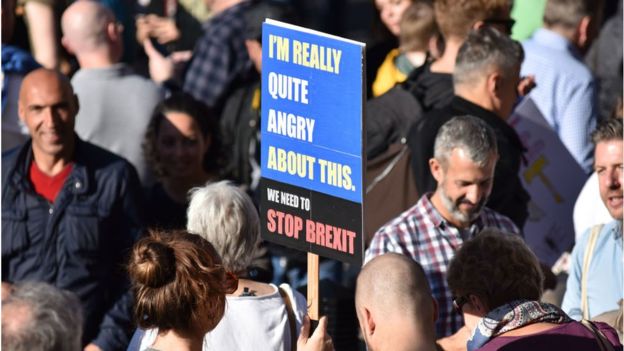
Businesses are becoming exasperated at the lack of progress in Brexit talks and are pausing or cancelling investment in the UK.

A week that many had hoped would bring progress in the talks has now come and gone without a breakthrough.

Employers group the CBI says 80% of surveyed members feel Brexit uncertainty has already had a negative impact on investment decisions.

On Friday, Theresa May held a conference call with 150 top bosses.

She wanted to reassure them that she was still confident of striking a deal and that she recognised their concerns.

The chief executive of one company on the call told the BBC the PM had “done a good job and had a reassuring tone” while another said there had been “nothing new in her message”.

Of the members surveyed by the CBI, 39% said they would trigger additional contingency plans if there was no further clarity by November, while a further 19% said it was already too late.

Nicole Sykes, the CBI’s head of EU negotiations, says the situation is urgent, pointing to concrete examples of cancelled projects: “We heard from a fashion house that wanted to set up a new factory in the UK. £50m of investment, cancelled.

“But we’re also talking about some small things. We heard from a Northern Ireland farmer who wanted to build a new machine to make their operations more efficient, grow competitive. Again, that’s been cancelled. So we really are talking about real economic consequences.”

Despite the PM’s attempts to calm nerves, many businesses are in the process of stepping up their preparations for leaving the EU without a deal at the end of March next year.

Transportation worries

Supermarket executives told the BBC they were weighing up the viability of flying in fresh food from outside the EU to avoid potential log jams at the ports like Dover.

Different companies reached different conclusions.

One said: “We haven’t started chartering aircraft yet but we are looking at it. We are very worried about Dover so we are also looking at alternative ports like Felixstowe as an alternative.”

Another major supermarket executive said that air freight isn’t the answer: “There simply isn’t the capacity at a moment when every other industry will be trying to do the same thing.”

However, they felt that the problem is potentially so severe that they do not believe it will come to that.

“There is no way the UK or EU would allow the UK to run out of food, but we are looking at alternative ways to transport fresh food, as stockpiling is not an option.”

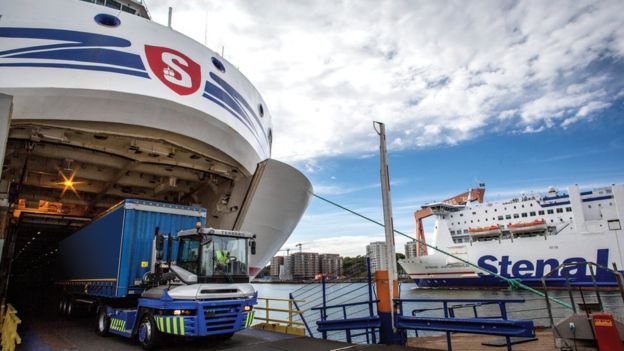
Global ferry company Stena is warning that UK ports are not ready for Brexit

The car industry is also very sensitive to supply chain hold-ups.

Industry body the SMMT described the lack of progress in talks as hugely disappointing and said it had “grave concerns”.

Car makers are looking at alternative ports, increased warehousing and moving the supply of some parts outside the UK.

BMW has already brought forward an annual shutdown of Mini production to coincide with the UK’s departure from the EU, while Jaguar Land Rover has warned of the potential loss of tens of thousands of UK jobs.

It’s not just business which is pessimistic about a deal being struck in time.

International Trade Secretary Liam Fox this week reiterated his prediction that a no deal scenario was more likely than not.

“I’ve said that the chance of a no deal is 60% and I’m not changing that view,” he said.

He also told a gathering of business leaders this week that great opportunities in international trade await the UK outside the EU.

Most of the audience that night will hope he got the first bit wrong.

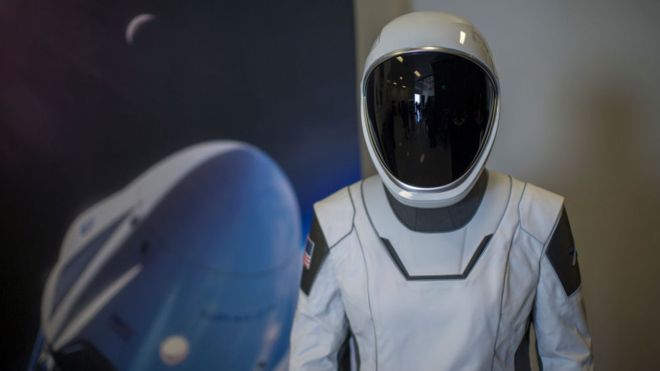
The billionaires fuelling a space race

Dubbed “NewSpace”, an increasing number of entrepreneurs are joining in the race to create cheap, commercialised space travel.

Among these are billionaires Elon Musk, Jeff Bezos and Sir Richard Branson, who all made their fortunes in other industries.

Between them, they’re posing a major challenge to established space industry giants.

Fuelled by intense rivalries, their ambitions include the development of space tourism and developing permanent human settlement on the Moon and even Mars.

But emerging space entrepreneurs are also filling a huge void left by governments that have had to cut funding for space missions.

As a result, names like SpaceX and Blue Origin are becoming part of the increasingly lucrative military space race as the US seeks to counter ambitions by China and Russia. By some estimates, the space industry is expected to be worth $1 trillion (£766bn) by 2040.

So what are the companies hoping to make money by radically transforming our future, and who are the men behind them?

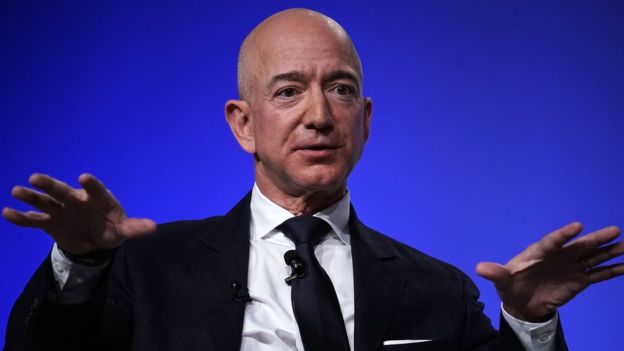
Jeff Bezos: Blue Origin

Amazon founder Jeff Bezos, the world’s richest man, was one of the first billionaires to jump into the commercial “space race”, starting Blue Origin in 2000.

Compared with industry rivals it has a reputation for being far more guarded about its activities.

The company has suffered setbacks after several failed launches and problems with its BE-4 engine, and since 2016 Bezos has sold $1bn of his Amazon stock every year to keep the company flying.

Like rival SpaceX, its goal is to drive down the cost of space travel by building reusable rockets. In the past, rockets have been discarded after just one launch.

Three years ago it became the first company to land a rocket successfully. The same rocket, New Shepherd, has landed now on five different occasions, but rival Elon Musk took a dig at Bezos on social media, pointing out that these flights had only been sub-orbital.

Gaining momentum, Blue Origin is now securing lucrative government contracts and recently gained national security certifications from the US government.

Earlier this year, together with Northrop Grumman and United Launch Alliance, it was chosen by the US Air Force to develop new rockets which can be used for military launches. Each company will be getting $109m from the deal.

Bezos is set on sending “space tourists” into sub-orbital flight. Blue Origin says it will be selling tickets from next year, with company insiders suggesting they could go for up to $300,000 a pop.

In the future, Bezos has ambitions to form a partnership with Nasa to test the possibility of permanent human settlement of the Moon.

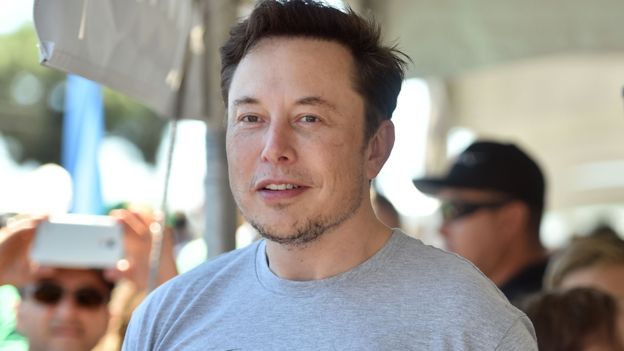
Elon Musk: Space X

South African-born businessman Elon Musk started SpaceX in 2002 with $100m of his early fortune from PayPal, which he co-founded.

The company has launched nearly 70 rockets to date, and has won contracts with Nasa, the US Air Force and Argentine’s space agency to deliver satellites into orbit and to help resupply the International Space Station.

It has also ventured deeper into space than Blue Origin and Virgin Galactic, reaching 22,000 miles above the Earth’s equator.

But there have been setbacks along the way for Musk, too. Several launches have results in rockets exploding and payloads being lost, including a spy satellite for the US military.

But Musk is known for publicity stunts to make light of failures and highlight successes. Last year, he shared a “blooper reel” of failed rocket launches and landings, featuring “some epic explosion footage”. SpaceX also launched a Tesla car into space as part of its Falcon Heavy rocket project.

Like Blue Origin, Musk plans to one day send people into space on commercial flights. Earlier this year, he announced that SpaceX’s first “moon tourist” would be Japanese billionaire Yusaku Maezawa.

But one of SpaceX’s ultimate goals is to send manned flights to Mars and eventually colonise the Red Planet.

“I want to die on Mars,” Musk has said, “just not on impact.”

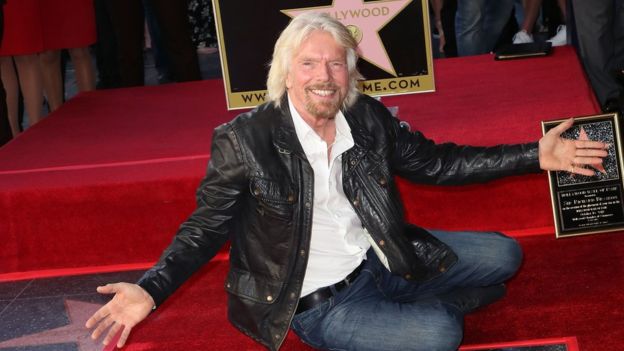
Sir Richard Branson: Virgin Galactic

British tycoon Sir Richard Branson is one of the newest members of the NewSpace set, founding Virgin Galactic in 2004.

While rivals have ambitions for deep space travel, Sir Richard is focused on developing reusable “space planes” to take tourists and other payloads on brief trips to sub-orbital space.

Virgin Galactic has already started selling tickets for $250,000, and celebrities such as pop star Justin Bieber have already signed up. It’s also attracted significant investment from, among others, the UAE’s sovereign wealth fund.

The company made headlines in 2014 after a spaceship exploded during a test flight in California, killing one pilot and injuring another. This proved a significant setback to its initial goal of becoming the first company to send a tourist to space.

But the company has since completed several test flights and earlier this month, Sir Richard said the company will be in space “in weeks, not months”.

Telus launches kids fund

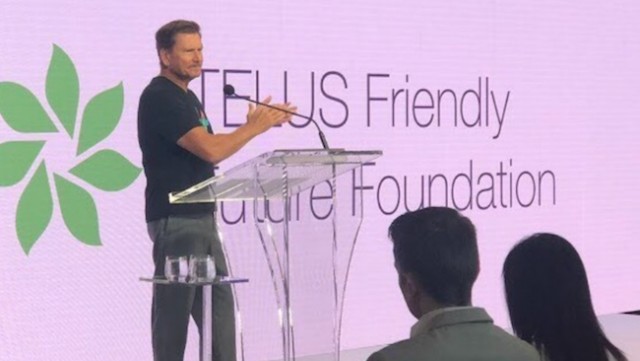
Telus Corp. is donating $120 million to launch a foundation that helps vulnerable youth.

Telus president Darren Entwistle says the foundation will give grassroots charities grants that can be used to help youth build digital literacy skills, provide basic health care and mental health support to the homeless, and open up educational opportunities.

The Telus Friendly Future Foundation complements other social initiatives by the company, including Mobility for Good, which offers a free cellphone and data plan to youth aging out of foster care in B.C., Ontario, and Quebec.

It also has a program that gives nearly 30,000 low-income families in B.C. and Alberta access to a computer and low-cost, high-speed internet.

And another initiative sends mobile health clinics to communities where front-line care is urgently needed.

Entwistle says in the last two decades, the company, its team members and retirees have contributed more than $1 billion in financial support and volunteer hours but there is more to be done.