
Archives for June 18, 2018

For Many Americans, Money Is a Key Source of Happiness — and Stress

For better or worse, it’s natural for our lives to revolve around money to some degree. And while money is a source of satisfaction for many U.S. adults, it’s also a major stress inducer.

A good 87% of Americans say nothing makes them happier or drives up their confidence levels than feeling financially secure, according to Northwestern Mutual’s 2018 Planning & Progress Study. At the same time, 54% of U.S. adults say money is a primary source of anxiety, while 52% say money causes them to experience feelings of insecurity.

If you’d rather not spend your days being stressed about money, there are some steps you can take to achieve that goal. And the sooner you do, the less sleep you’ll lose over money matters.

1. Have a well-stocked emergency fund

One major source of financial anxiety is not knowing when the next unexpected bill might land in your lap. A good way to combat that stress, therefore, is to have enough money in the bank to know that you’re covered as far as unplanned expenses go. And that’s where your emergency fund comes in.

A good emergency fund is one with enough money to pay for at least three months’ worth of living costs, and ideally, more like six months’ worth of expenses. If you don’t have emergency savings at present, start cutting back on spending so you can build yours slowly but surely. You might also consider working a side hustle, which will give you extra money to put in the bank. It’ll most likely take you some time to establish that safety net, but the sooner you start working toward that goal, the better you’ll feel about the prospect of an unanticipated expense.

2. Maintain a budget

One of the most stressful financial situations you might encounter is having no idea where your money is going. And a good way to avoid having that happen is to follow a budget. To create one, simply list your recurring monthly expenses, factor in one-time expenses, and compare that total to what you earn. If you find that you’re spending down your paychecks completely, you’ll need to make changes to not only give yourself some wiggle room, but allow for long-term savings. Having your expenses mapped out, however, will make it easy to identify those categories where you’re able to cut back.

3. Live below your means

The more expenses you commit to on a regular basis, the less flexibility you’ll have in your budget. That’s why it pays to keep your fixed living costs to a minimum and buy yourself the freedom that comes with not maxing out your entire paycheck. This means that if you have the financial ability to take on a $1,500 monthly mortgage payment, find a home that’ll cost you $1,200 instead. Similarly, rather than buy a car with a $500 monthly payment, look for one that’ll cost you $100 less. Living below your means may require you to forgo certain luxuries, but the peace of mind it’ll buy you will more than compensate.

4. Stay out of debt

One final way to alleviate some of the financial stress so many Americans face is to stay away from bad debt, which comes in the form of credit cards. Now it’s OK to use a credit card to make purchases, but only if you make a point to pay off what you owe by the time each bill comes due. Otherwise, you’ll put yourself in a position where you’re throwing money away on interest, which is hardly something to feel good about.

Worse yet, once you kick-start a cycle of carrying a balance and accruing interest, you might struggle to break free from it. So do everything in your power to avoid that debt in the first place, and if you don’t trust yourself to use a credit card wisely, do yourself a favor and pay with cash.

Money shouldn’t be a major source of stress in your life, and if you manage your finances responsibly, it won’t have to be. So build emergency savings, follow a budget, live below your means, and steer clear of dangerous debt. With any luck, that’ll do the trick in buying you a degree of financial security and turning money into something positive, not negative.
Forget 2022! A Big Social Security Change Is Happening Right Now

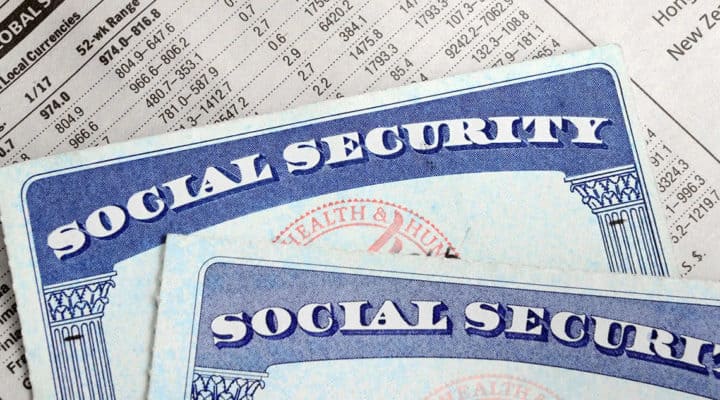
Social Security is a critical resource that tens of millions of seniors rely on when they hang up their work gloves for good. According to April 2018 data from the Social Security Administration, nearly 45 million seniors were netting a Social Security benefit, with close to 43 million of them receiving the retired worker benefit. Out of these retirees, some 62% are reliant on Social Security for at least half of their monthly income, while just over a third (34%) depend on Social Security’s guaranteed monthly check for essentially all of their monthly income (90% to 100%).

The fact that Social Security has been around for 83 years, and has been making payments to retired workers for 78 of those years, is a comfort to seniors who may need a financial foundation during retirement. But, truth be told, Social Security itself isn’t in the best of shape.

Remember that big change coming to Social Security in 2022?

In an annual report released last summer by the Social Security Board of Trustees, it was estimated that Social Security was just a few years away from a monumental change. Having generated more revenue than what it was paying out to beneficiaries since 1982, the Trustees projected that by 2022 the program would begin paying out more in benefits than it was collecting in revenue. Or, to put it in even simpler terms, Social Security’s excess cash that it’s saved up over more than three decades would begin to dwindle.

Why would this switch even occur in the first place, you ask? It has to do with a confluence of factors, but can be succinctly summarized by saying that the ongoing retirement of baby boomers, a steady lengthening of life expectancies, inaction by Congress, and growing income inequality are mostly to blame.

What happens when Social Security’s asset reserves start going down? Well, as you might rightly imagine, people panic. Though these folks do have every right to be concerned, the good news is that under no circumstances can the program go bankrupt. Social Security generates most of its revenue from a 12.4% payroll tax on wage income between $0.01 and $128,400, as of 2018. As long as Americans keep working, money will continue to flow into the program, which ultimately can be disbursed to eligible beneficiaries.

However, the 2017 Trustees report — and virtually every Trustees report since the mid-1980s — was very clear of one thing: The current payout schedule isn’t sustainable. The 2017 report estimated that the program’s asset reserves would be completely depleted in 2034, upon which an across-the-board cut in benefits of up to 23% may be needed to guarantee payouts through the year 2091. Between 2022 and 2034, Social Security was expected to burn through approximately $3 trillion in excess cash.

Big change is happening, right now

However, the newly released 2018 report from the Social Security Board of Trustees paints an even scarier picture for retirees. Rather than Social Security waiting until 2022 before it pays out more in benefits than it generates in revenue, that event is now anticipated to occur this year. In 2018, Social Security is expected to see $1.7 billion more head out to beneficiaries than is collected by the program.

Should this surprise anyone? Well, yes and no. On one hand, Social Security’s cost has exceeded its annual noninterest revenue — i.e., payroll tax revenue plus income from the taxation of benefits — since 2010. Keeping in mind that the Board of Trustees’ annual report is nothing more than an estimate, it’s not too shocking to see this monumental switch occurring earlier than expected.

On the other hand, it is somewhat unnerving how far off the 2017 Trustees reports’ short-range estimates (those looking at the upcoming 10-year period) were for the Old-Age, Survivors, and Disability Insurance Trust (OASDI) in relation to where they are now for the intermediate-cost model.

As you can see, the new report projects a worse cash outflow each year, with the exception of 2026. Rather than Social Security’s asset reserves declining by nearly $395 billion in the short-range forecast, as estimated in the 2017 Trustees report, it’s now projected to decline by just over $700 billion in 10 years. Ouch!

According to the Trustees report, the passage of the Tax Cuts and Jobs Act, along with the assumed discontinuation of the DACA program, caused the Trustees to adjust their short-range forecast model this year.

There are a few silver linings

It is worth noting that the 2018 Trustees report did offer minor concessions of good news for seniors, given their reliance on the program. For example, even though Social Security is expected to begin depleting its asset reserves four full years ahead of last year’s estimate, the long-range asset reserve exhaustion year remains 2034. In other words, Social Security’s outlook didn’t get noticeably worse, at least through 2034.

Also, assuming lawmakers are unable to come to a resolution in terms of raising additional revenue for the program, the across-the-board cut in benefits needed to sustain payouts over the next 75 years would be an estimated 21%, which is a bit better than the 23% called for in last year’s report. Nevertheless, a 21% cut in benefits is bound to be felt by the more than three in five seniors that leans on Social Security for at least half of their monthly income.

Ultimately, this report serves as a reminder to today’s working Americans that Social Security was never designed to replace more than 40% of their working wages. With long-touted (and worried) changes finally here, perhaps this’ll be the impetus to get working Americans to save more, as well as to push lawmakers on Capitol Hill to fix Social Security for current and future beneficiaries.

A healthier, happier summer starts with these tips

(BPT) — In the cold of winter, at the start of the year, people all across the country resolve to live a healthier lifestyle — yet summer is actually the perfect time to start your resolution. Think about it: The weather is beautiful, the kids are out of school and fresh produce is abundant.

Instead of starting a resolution to live healthier at a time when you’ll be cooped up inside to avoid the cold, why not do it now when you can’t wait to be outside?

Your path to success begins with these five tips.

• Get the family outdoors. Whether it’s hiking, walking, gardening or swimming, there are scores of things to do outdoors during the summer, and any of these can help you burn calories, improve muscle mass and, best of all, have fun. And did you know that moderate exposure to sunlight can also provide the vitamin D your body needs to fight off disease? Bonus! Pick an activity that appeals to the whole family (furry friends included) and you’re more apt to stick to your routine.

• Start your day off right. Summertime is full of indulgences, from ice cream cones to frosè to s’mores over the campfire. Don’t be afraid to dig into these treats, but make sure the rest of the day stays balanced. Everything in moderation, as they say! A bagel or toast with a quick spread of Arla Cream Cheese made with no artificial flavors or preservatives is a quick, nutritious way to start your day off on the right foot. When you start with a cream cheese that is so deliciously simple, it’s easy to layer on the farmer’s market fruits and veggies. Give it a try and you’ll find an entirely new breakfast routine to fuel your summer fun.

• Grab some shades. Proper eye care is advised all year long, but it’s especially important in the summer when you’re outside in the sun. Invest in a good pair of shades capable of blocking at least 99 percent of all ultraviolet A and B rays. Then make sure you wear them when you’re outdoors. Not only will you look incredibly cool and chic, you’ll also reduce the possibility of wrinkles developing around your eyes and ward off cataracts.

• Serve up healthy snacks. Having a casual neighborhood get-together calls for easy, bite-sized snacks to complement your summer drinks. Skip the chips and aim for healthy snacks instead. Cranberry cream cheese dip, cheesy snack bread with grilled local vegetables, and warm spinach and Gouda Gateau will all redefine your idea of good snacking, and they’re easy to make. Visit Arla’s website to find your inspiration and make casual al fresco hosting more delicious and healthy than you ever expected.

• Take that vacation. Yes, actually take it. Your total health is more than just your physical well-being; it’s your mental health as well. Nothing helps you reset the batteries like a good vacation. With that in mind, make sure your vacation doesn’t create stress. Keep travel and related expenses to a minimum and you’ll spend more time enjoying your vacation and less time wondering how to get everywhere and pay for it. If traveling overseas or taking a whole week away is too big of a leap, instead try a long weekend in a new city in your own state, or road trip to a National Park and book a campsite. There are options at every budget level, and summer is the perfect time to get out and go!

Start enjoying a healthier lifestyle today

There’s no reason to wait until next winter to start living a healthier lifestyle. Everything you need is right here in the summer, so formulate your plan, apply the tips above and stick with it. Do so and your resolution will be holding strong by the time New Year’s rolls around again.

Why you need to ditch your budget

IF LIKE me you have ever tried to lose weight, you have probably referred to some form of diet. And like me, you probably struggle to stick to it.

Every year billions of dollars are spent on weight loss programs and diet plans.

Which brings me to your budget. Just saying the word evokes tension, doesn’t it?

For most, a budget is something you have been told you should have, but the thought of spending the time putting one together is stressful …

… and that’s before you try to stick to it.

The arguments FOR a budget

Over the years, I have seen many arguments for using a personal budget to help you take control of your money.

Here are some of the more popular ones:

Governments and Businesses have them.

Yep, they do, and we all know how well governments go at sticking to them. That isn’t the issue though.

Governments and Businesses have budgets because they have employees, in some cases many thousands of employees. These employees rely on direction to achieve their job outcomes. Without some financial constraints, governments and businesses would fail rapidly.

The ability to share elements of the budget to their employees enables them to develop strategy and plans to achieve the financial goals of the business.

The Budget is just the start

This justification is where things start to go a little off track.

The argument is that once you have created your budget, the real hard part has only just begun.

Wait, what?

You might know that not many households actually have a budget. So why is it that?

It might just be this argument for having one! The HARD work starts once you have created it.

Nobody likes hard work. If it is hard work, and you don’t like the work, why would I create the budget in the first place?

That just doesn’t make sense.

For me, this is the best argument for NOT having a budget, but I will come back to that point shortly.

A budget is the best way to control your money

This argument suggests that if you are prepared to spend the time to make a budget and put in the hard work, then this is the best way to take control of your money.

But is it?

For most people, a budget involves making some estimations of how much you are going to spend on all aspects of your life, normally for the next 12 months.

Given we are not able to predict the future, there are some guesses made for some items and plans for others.

Once you are done, you pat yourself on the back and acknowledge that if you stick to this budget you will, hopefully, have a surplus at the end of the year that you can choose to spend or invest. Woo-hoo!

This all supposes that you can stick to the budget. And remember, that is the HARD part.

I don’t know about you, but these reasons are not really presenting a compelling case FOR a budget.

The argument AGAINST a budget

An important distinction to make is that I am not suggesting you do nothing to control your money. Quite the opposite as you will see.

The simple argument against a budget is that it does not assist in controlling your money.

As you read above, the process of creating the budget is just the start, the hard part is sticking to it!

The process itself of having a budget does nothing to control your money, especially if you are the type of person who has had difficulty to date managing your money.

Are you starting to see the similarity to a diet yet?

To take control of your money, you need to have a system in place that automatically allocates your money to the places it needs to go to support your financial goals.

The process itself does the HARD work for you.

This process will ensure that you meet your expenses, have money available when you need it, cover your living expenses and most importantly, allocate money to building your wealth.

By automating your money transfers, you reduce the risk of overspending on items that don’t support your financial goals. It removes the temptation because you won’t have the money readily available to overspend.

The process has taken care of that for you.

The process of automation is what gives you control. Something a budget on a spreadsheet, that you likely never look at, cannot do.

What it comes down to is this: you need a plan for your money, that contains a process that removes the HARD part.

Just as a diet doesn’t change behaviour when you are craving that chocolate, a budget doesn’t help control your money, especially when you are shopping and must have that next shiny toy.

So throw out the budget and instead move toward an automated system of money transfers to dedicated bank accounts that support your spending and investing plans.