Archives for June 18, 2018

Cree chef a farmers market success story in Vancouver

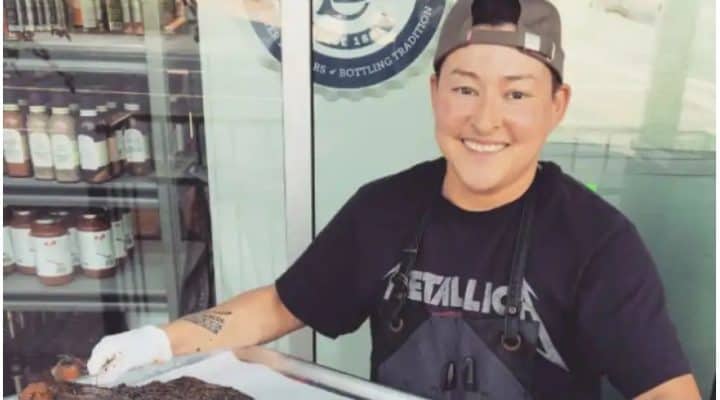
Heat Laliberte wants One Arrow Meats to represent the strength and resiliency of Indigenous people

The name One Arrow Meats was chosen to represent the strength to overcome obstacles. (Heat Laliberte)

Heat Laliberte loves selling his brand One Arrow Meats at city farmers markets. He likes the atmosphere and loves getting to know the customers who try his hand-cured bacon.

He sees every conversation as an opportunity to connect and consult about his artisanal product.

“I do my sampling at the market, and when I offer my different flavours, I’m able to offer them my story,” Laliberte said.

Laliberte’s tale is one full of community connection and taking the opportunities presented through them. He was born in Humbolt, Sask. and grew up in Saskatoon.

He was a foster kid adopted into a non-Indigenous family that had struggles with poverty, mental health and addiction.

Laliberte says they didn’t have a phone and needed a food bank a lot of the time. He pushed through those years and, at the age of 20, moved to Vancouver, taking a job as a line cook at Moxie’s.

“That sort of set the tone for realizing I was able to cook,” he said.

Introduced to charcuterie

Laliberte enrolled in Vancouver Community College’s culinary arts program and found his calling.

Laliberte sources his pork in the Fraser Valley and cures it by hand. (Heat Laliberte)
He worked at several high-end hotels and restaurants in the city. At the Fairmont Hotel Vancouver, he was introduced to charcuterie and really took to the art of it.

“There’s just something about the smell of bacon in the morning and it makes everyone happy,” he said.

One Arrow Meats has four flavours of locally-sourced hand-cured bacon. Unlike grocery store bacon, it isn’t injected with water or salt to plump it up for the packaging, so it doesn’t shrink the same way while cooking.

Heat Laliberte caught the cooking bug at his first Vancouver job, then went to Vancouver Community College’s culinary school. (Heat Laliberte)

To found the company, Laliberte took advice offered in the Aboriginal BEST Program at Vancouver’s Aboriginal Friendship Centre Society and accessed grants and loans.

He chose the name One Arrow Meats as a symbol of his Cree heritage and his strength to get through any barriers put in front of him.

His goal is to have the bacon distributed through a grocery delivery service.

Battling mental illness, B.C. mountain climber finds peace in the outdoors

‘It’s real and it’s connection. I think we all need that for positive mental health’

Brent Seal works as a mental health trainer for youth and young adults. He takes youth into the outdoors, which he says improves their mental health. (James Frystak)

A diagnosis of schizophrenia at age 22 left Brent Seal in a debilitated state. He struggled, attempting suicide, experiencing delusions, hallucinations and symptoms of psychosis until he found relief through hiking with his parents.

“I couldn’t go to school, I couldn’t drive a car, I couldn’t live on my own,” said Seal, now 34.

He believes the experiences he had in nature saved his life.

According to the Canadian Mental Health Association, one million British Columbians will encounter mental health struggles this year, and a growing body of research shows that heading to the outdoors could be one approach to managing mental illness.

“I think the studies that have shown benefits have shown some really impressive benefits,” said Emily Rugel, a PhD candidate and scholar at the School of Population and Public Health at the University of British Columbia.

Rugel studies the positive effect exposure to nature has on our brains.

She said she hopes her work mapping urban green spaces and the relative quality of those spaces will help policy makers better understand what it is about nature that helps people connect to each other in a more meaningful way than in busy urban environments.

“Social isolation is really a big problem that we face,’ Rugel said.

“I think that nature has great potential to help us strengthen our bonds with other people and improve our mental health by doing so.”

A 2017 study from UBC showed exposure to nature among study participants increased their happiness and connectedness to other people.

Outdoor therapy can help provide connection and social supports for people, but it’s not a sweeping solution to severe mental illness, according to Liz Robbins, executive director of the Crisis Lines Association of BC.

“That sense of connectedness is hugely important for suicide prevention,” she said, adding, “If someone is in a suicidal crisis, they may still feel very alone.”

‘It’s real and it’s connection’

For Seal, climbing mountains helped him build a community of support that he could turn to when his symptoms of schizophrenia returned five years ago.

“When I struggle the most, I isolate the most and the outdoors is a platform to connect with people,” he said.

“The fun, the laughter, the support, the conversations that come up during the hike; it’s real and it’s connection.

“I think we all need that for positive mental health.”

Seal is now a motivational speaker and the founder of Mavrixx Academy, an organization that raises awareness of mental health through mountain-climbing expeditions.

It also provides mental health programming for youth and young adults, much of it based in the outdoors.

He teaches that a holistic approach is needed to succeed in recovery and says psychiatrists, social workers, medication, nutrition and rest were all essential in his own recovery.

“All the things that affect our mental health and wellness are the things I tapped into to get back on my feet,” he explained.

Island chef takes home national award

‘It’s a nice award to win knowing that you are being recognized from your peers across the country’

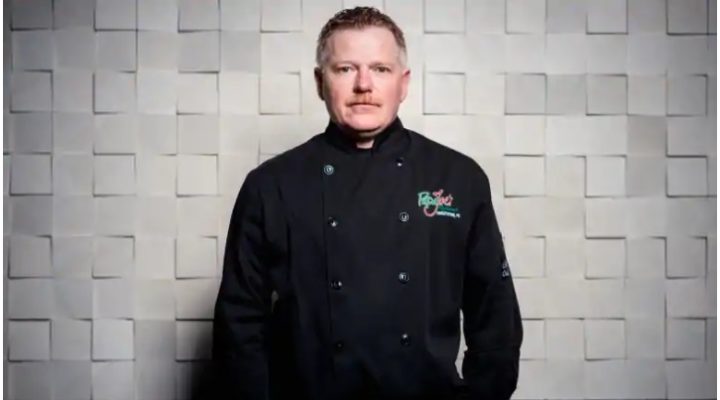
Irwin MacKinnon won the Canadian Culinary Federation’s Chef of the Year award. (Heather Ogg)

Island chef Irwin MacKinnon took home the Canadian Culinary Federation’s Chef of the Year award at the federation’s annual conference held in Charlottetown this week.

The conference brought chefs from across Canada together to learn more about P.E.I’s culinary scene.

MacKinnon was voted chef of the year by his colleagues in the industry. He said receiving the award was especially meaningful because he could share it with his friends and family on the Island.

“It’s extra special because my wife was in attendance and other family as well,” he said.

“It’s a nice award to win knowing that you are being recognized from your peers across the country.”

Another award for the trophy case

MacKinnon, who’s also the president of the Culinary Federation of P.E.I., has worked in the restaurant industry for 35 years, starting his career as a dishwasher and then taking courses at the Culinary Institute of Canada. He said he’s travelled throughout Canada and Europe over the years, learning about different cuisine.

He now works as executive chef of Papa Joe’s restaurant in Charlottetown.

He’s also no stranger to winning awards. MacKinnon won Prince Edward Island chef of the year last year, and is a two-time winner of the Best of Sea.

He attributes his success to the mentorship of local chefs like Hans Anderegg, who is also a past recipient of the award.

“In my acceptance speech, I mentioned the fact that cooking is a passion and you have to do it from the heart,” MacKinnon said.

He said he likes to to cook with regional ingredients like mustard pickles or pickled beets.

“Simple, local, fresh. That’s how I like to cook,” he said.

His favourite thing though is watching people enjoy his meals.

“Whether it’s for customers or for family and friends, it’s a very enjoyable trade to have and do, and I love it a lot.”

MacKinnon said he plans to stay in P.E.I, while continuing to promote the Island’s food.

“It’s a great chef community here. The people that help me every day are equally as passionate about food and equally deserving of this award,” he said.


Edmonton Transit Service highlights history at 40th anniversary LRT celebration

Displays and demos draw crowds to D.L. MacDonald Garage

Visitors tour Edmonton Transit Service’s first LRT car (#1001) during a 40th anniversary celebration at the D.L. MacDonald Garage. (CBC)

Public transit enthusiasts didn’t need a ticket to get a behind-the-scenes look at Edmonton’s light-rail-transit system on Saturday.

Edmonton’s LRT turned 40 last month and ETS marked the occasion this weekend with a free event at the D.L. MacDonald Garage in northeast Edmonton.

At the maintenance yard, families and curious commuters looked at historical displays, stepped in old cars and spoke with dozens of staff who keep the system on track.

“It’s a pretty momentous day for us,” ETS branch manager Eddie Robar told CBC News Saturday.

The LRT opened on April 22, 1978, coinciding with the Commonwealth Games.

That was just one year after Lloyd Meyer started working for ETS as an operator. He began driving LRT trains in 1981 and has since become the manager of LRT operations.

Meyer called his colleagues the best part of his career.

“It’s a great family feeling here — a team effort,” he said, “whether it be track crew, maintenance personnel, our operators, the office staff… that’s what keeps me coming back, day after day.”

From handwritten train logs to the system’s first computer, Meyer has watched the LRT evolve over the years.

“Technology is the one big thing that has changed the most,” he said.

There are more changes ahead, from the construction of new lines to a replacement fleet of cars.

“It’s pretty exciting to be a part of, over this next 20 years,” Robar said.

Garmin’s Fenix 5 Plus watches help you survive mountain climbing

They also bring maps, music and payments.

Garmin is no stranger to catering to fans of specific sports with its GPS watches. Its latest wristwear, however, takes that devotion to another level. It’s upgrading its Fenix 5 outdoor watches with the Fenix 5 Plus series, whose star attraction is a new Pulse Ox Acclimation sensor that gauges your blood oxygen saturation levels when you’re climbing at high altitudes. If you’re not coping well with an arduous mountain ascent, your watch will let you know it’s time to take it easy.

Don’t worry if you’re not scaling K2 any time soon — there are some universal upgrades as well. The Plus models pack the music, payments and maps you’d expect from Garmin’s latest watches. That’s more than a little handy for features like a round-trip creator that automatically generates routes for your next run or bike ride. They also include Galileo tracking to find your location when GPS alone might fail, and the more compact Fenix 5S Plus (shown at left) stuffs in a larger 1.2-inch screen while still remaining suitable for slimmer wrists.

Your choices mostly come down to battery life and case size. The sleeker 5S Plus lasts a week in smartwatch mode, or four hours in GPS and music mode. Step up to the slightly bulkier 5 Plus and you’ll get 10 days of smartwatch use and 8 hours of GPS/music, while the chunky 5X Plus lasts for 20 days as a smartwatch and 13 hours with GPS/music.

Be prepared to pay a premium for this do-everything design, though. The Fenix 5 Plus range is even more expensive than the original with prices ranging from $700 to an eye-watering $1,150. You’re getting one because you absolutely depend on accurate fitness tracking — the smartwatch features are just a bonus.

This article originally appeared on Engadget.

World’s largest ARM supercomputer is headed to a nuclear security lab

“Astra” is a collaboration between Hewlett Packard Enterprise and the Department of Energy.

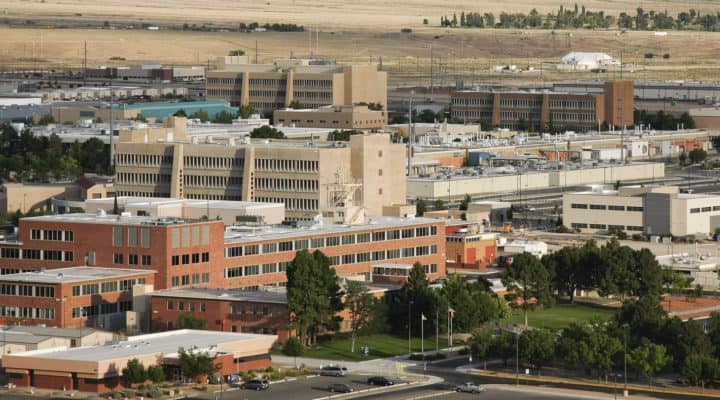
Sandia National Laboratories

Most supercomputers are focused on pure processing speed. Take the DOE’s new Summit system, which is now the world’s most powerful supercomputer, with 9,000 22-core IBM Power9 processors and over 27,000 NVIDIA Tesla V100 GPUs. But processing performance isn’t everything. Last year, Hewlett Packard Enterprise announced The Machine, its prototype for a supercomputer built around blazing fast memory. It’s meant to churn through tons of data, though it can handle it’s fair share of high performance computing (HPC) jobs.

Now, HPE is turning that vision into an actual product: Astra, the largest ARM-based supercomputer ever made. Developed together with the Department of Energy, it’s being adopted by the Sandia National Laboratory as an experimental new platform for nuclear research. Since it’s powered by Cavium ThunderX2 ARM processors, it’s considerably more power efficient and denser (meaning it can fit more hardware) than a comparable x86 system. Notably, that ARM chipset also offers 33 percent faster memory speeds than x86 CPUs.

HPE’s Astra

“The energy consumption needed to move data around a system is an order of magnitude greater than the power needed to compute that data,” said Mike Vildibill, VP of HPE’s Advanced Technologies group, in an interview. Consequently, the need for more efficient data transfer is one reason why HPE is diving into memory-driven systems.

Astra is built on HPE’s Apollo system, and it’s made up of more than 145,000 cores across 2,592 dual processor servers. The 28-core ThunderX2 processors HPE is using also offer eight memory channels, compared to the six found on typical x86 chips. At its peak, HPE claims Astra can deliver 2.3 PFLOPs of performance, which makes it among the top 100 fastest supercomputers in the world (as listed by top500.org).

Additionally, each of the system’s CPUs have direct access to a large pool of memory. That’s a big difference from the CPU-centric computing we see today, where each chip has access to small amounts of memory, and it’s tough to share information between processors.

“For one processor to access data not held in its own memory, the computer must play an inefficient game of “Mother May I,” so to speak,” HPE writes in a memory computing explainer. “One processor must request access from another processor to get anything accomplished. What’s worse, the relationship between storage and memory is also inefficient. In fact, in today’s computers it’s estimated that 90 percent of work is devoted to moving information between tiers of memory and storage.”

At Sandia Labs, Astra will be a part of its Vanguard prototype program, which is focused on finding new technologies for accomplishing its core mission: managing America’s nuclear stockpile. Specifically, it’ll be a test to see how well an ARM-based system can handle all of the physics simulations Sandia performs daily.

“With any new hardware architecture, there are going to be software challenges and gaps,” said Sandia’s James Laros, lead for the Vanguard project. “We’re hoping that Astra is the right scale to address these problems, to identify any sort of issues in supporting their simulation code.” Before laying out hundreds of millions on a complete system revamp, Sandia is making a smaller investment to prove the viability of ARM-based servers.

Sandia’s typical applications are “particularly sensitive to bandwidth,” Laros says — to the point where the apps sometimes overload and get slowed down by their caches. He likens the jump in ARM’s bandwidth to when AMD placed a memory controller on their 2003-era CPUs, which gave those chips a major speed advantage over Intel’s.

While it’s being tested, Astra won’t be replacing any existing systems at Sandia, but Laros says it’ll likely end up being a production system eventually. At the moment, it’s primarily an experiment, but it’s one that has the potential to reshape the world of supercomputing.


This article originally appeared on Engadget.