Archives for May 28, 2018

FDA approves AI tool for spotting wrist fractures

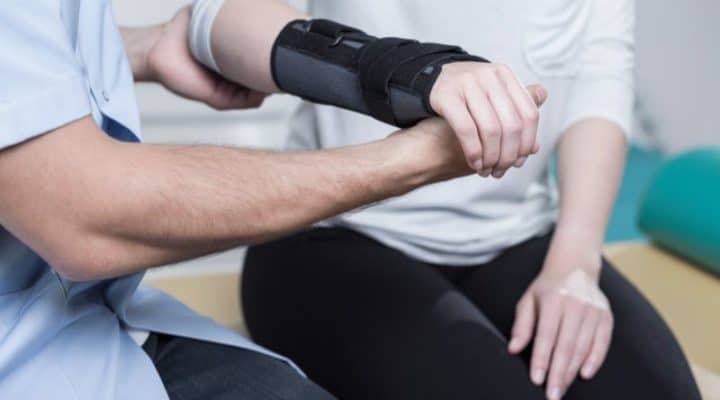
The FDA has been approving its fair share of AI-powered medical technology, but its latest might be particularly helpful if you ever have a nasty fall. The agency has greenlit Imagen’s OsteoDetect, an AI-based diagnostic tool that can quickly detect distal radius wrist fractures. Its machine learning algorithm studies 2D X-rays for the telltale signs of fractures and marks them for closer study. It’s not a replacement for doctors or clinicians, the FDA stressed — rather, it’s to improve their detection and get the right treatment that much sooner.

The approval came relatively quickly by using the De Novo premarket review pathway, which streamlines the process for products with “low to moderate risk.”

You may have to wait a while before you see OsteoDetect in use at the family doctor’s office. However, you might see considerably more AI going forward. FDA commissioner Scott Gottlieb recently said his administration was collaborating with experts on a “new regulatory framework” that could help the government body keep pace with technologies like AI. If that goes forward, algorithmic health care could quickly become commonplace.

This article originally appeared on Engadget.

Gene-edited rice plants could boost the world’s food supply

Rice may be one of the most plentiful crops on Earth, but there are only so many grains you can naturally obtain from a given plant. Scientists may have a straightforward answer to that problem: edit the plants to make them produce more. They’ve used CRISPR/Cas9 gene editing to create a rice plant variety that produces 25 to 31 percent more grain per plant in real world tests, or far more than you’d get through natural breeding. The technique “silenced” genes that improve tolerances for threats like drought and salt, but stifle growth. That sounds bad on the surface, but plants frequently have genetic redundancies — this approach exploited this duplication just enough to provide all of the benefits and none of the drawbacks.

There have been genetically modified rice plants that produced more grains, but those have typically involved borrowing genes from other plants like barley.

The CRISPR technique isn’t ready to be used in the field just yet. Researchers want to see how this editing affects “elite” rice variants like those farmers use. If successful, though, it could work wonders in parts of the world where food shortages are a regular problem. Agriculture companies would have to overcome ethical fears, however. There are already concerns about the use of genetically modified rice, including a lack of scientific consensus on its value and corporate control (can a company own a specific variety of plant, for example?). Producers would likely have to ensure that gene-edited rice is both safe and accessible before introducing it to the farming community.

This article originally appeared on Engadget.

B.C. paramedics take gold at international competition

Competitors judged on how well they respond to medical emergencies

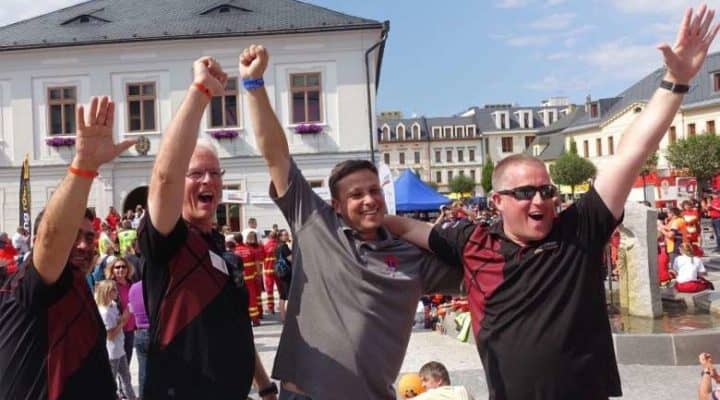
“When they announced that it was Team Canada, we were just ecstatic,” said team captain Alex Mattes. (Submitted by Alex Mattes)

A group of B.C. paramedics has won the top prize at an international competition that tests the life-saving skills of paramedics.

The Rallye Rejviz International Paramedic Competition has taken place in the Czech Republic for the past 22 years.

In the competition, paramedics from around the world compete in different scenarios where they are judged by the way they treat and transport patients.

The team of Gene Benoit, Stu Myers, Ron Van Houten and Alex Mattes beat 17 other international teams in their division to take gold.

Team captain Alex Mattes said the group completed 11 different scenarios in the 24-hour challenge. During that time, team members had no idea how they were doing.

“We finished all of our scenarios … and we had been going from 6 a.m. in the morning till 3:30 a.m. [the next] morning, so we were just dead,” Mattes said.

“We had no idea how we were going to do and … we were very nervous out there and then when they announced that it was Team Canada, we were just ecstatic.”

Mattes said the competition is particularly challenging because the actors in the scenarios only spoke Czech, so the Canadian paramedics had to communicate using hand gestures to get information from the patients.

“You’ve got to be very clear to them. It’s an extra challenge for us but it’s also very interesting because it’s very realistic to what we work with in Canada because we’re so multicultural [here], we run into these calls all the time,” he said.

A chance to learn

Mattes said competitions like this one offer a chance to practice and study different kinds of scenarios, and also network with other professionals from around the world.

“When you do this, it makes you a much better paramedic in the end. You learn so much more, not that we’re bad, but you get very complacent sometimes,” he said.

“This takes away all that complacency and makes sure you’re going to do it.”

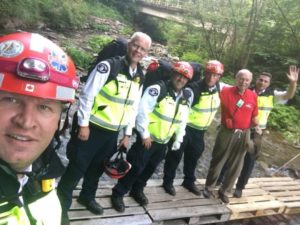
Competitors are judged on how they respond to different patients — played by actors — in life-threatening conditions. (Ambulance Paramedics of BC/Facebook)

One of the team’s sponsors was the Ambulance Paramedics of B.C.

Cameron Eby, the president of the association, said taking home top prize was “quite an honour.”

“We’re super excited by it. It’s a competition we’re going to for a number of years and it really is the best of the best from around the world as far as paramedicine,” Eby said.

“We’re very proud of them.”

Tobique First Nation gets 1st major housing project in 16 years

Chief and council hope this will ease overcrowded housing conditions

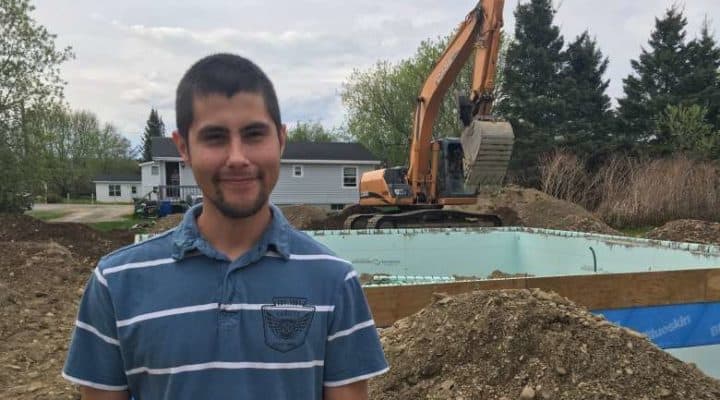
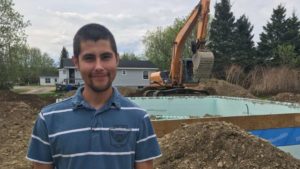
BJ Wolfe stands by the Tobique First Nation site where his new house is being built. By late September he and his girlfriend and eight-month-old daughter will be able to move in and pay subsidized rent. (Hadeel Ibrahim/CBC)

With its first major housing project in 16 years,Tobique First Nation is tackling a problem that’s left three-generation families living in crowded conditions.

Band councillor Julian Moulton said by building five houses this year and 10 next year, and switching to an anonymous way to select who gets those houses, he hopes to alleviate overcrowding and restore faith in the system.

“A lot of families are doubled up and there’s families living on top of families, so you’ve got some people living in a four-bedroom house, and there have been cases where there are 10 people living in that house,” he said.

“So this is what we’re trying to do is to restore hope in our people for them to know that we are going to build houses and that the situation is going to get better.”

Almost 250 people are still on the waiting list for a house.

The chief and council created a new eight-member housing authority about a year ago, Moulton said. The goal is to avoid a system where chief and council choose who gets houses, avoiding possible favouritism.

To apply for a house now, members of the First Nation must fill out a survey that asks about the number of people in the family, the number of people they live with and their job status.

The housing authority assesses the anonymous survey answers and decides who has “the biggest need,” Moulton said. Then the names are revealed and the authority contacts the chosen families or individuals.

Moulton said housing may be the first step to battling the other challenges facing people on the reserve.

“In First Nations alone there’s such a high rate of suicide and drug abuse, and I feel that the majority equates to the fact of lack of services and things that are not offered,” Moulton said.

“I see that people tend to start abusing drugs when their sense of hope is destroyed, and I feel that we’re kind of re-establishing that hope now that we’re going to be building houses.”

The houses

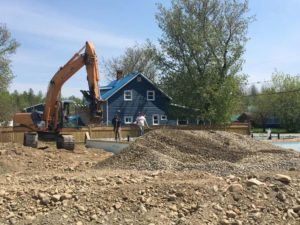
On the reserve north of Perth-Andover this week, three of the houses were being built on Front Street.

Building the five houses will cost $565,000, which will come from the First Nation, Canada Mortgage and Housing Corp. and Indigenous and Northern Affairs Canada.

Three of the five houses being built on Tobique First Nation reserve are on Front Street. (Hadeel Ibrahim/CBC)

Moulton said the price is so low because it’s subsidized by the federal housing agency.

The reserve is also on federal land so it doesn’t have to go through the same process as it would for provincial land, including buying a provincial building permit, he said.

Next year the band plans to create a cul-de-sac with 10 more houses.

By the end of September, Moulton said, he hopes the project will be done, adding two one-bedrooms, a two-bedroom, a three-bedroom and a four-bedroom house to the housing stock.

‘It’s our heritage’

B.J. Wolfe, his eight-month-old daughter and his girlfriend are getting one of the new houses.

He said he’s excited his daughter’s room, which will be decorate and painted in blue and purple.

“We’ve been living in my mother’s home and it’s kind of over-crowded, having three generations in the same home is rough,” he said.

“Becoming 30 years old, I really wanted a home of our own definitely, and we have a new child who’s eight months old so we definitely need a home.”

Wolfe said it’s also important for him to be able to stay on reserve and not have to move to Fredericton, where he lived for a short time and felt “disconnected.”

“This is where our culture is, our heritage and our language. My mother is a Maliseet language [speaker] and it’s a dying language, so we definitely want to keep it going.”

He said he’s also looking forward to some independence.

“Feels like I’m growing up, it really does,” he said. “To have a house that we call home, to be ours, to be able to take care of it, and make it grow as a family is definitely exciting.”

‘I get to contribute’

On Wednesday the plumbing and foundation crews were on site, laying gravel over the foundation and nailing plywood to the sides.

Some of the construction crew live on the reserve, including Justin Moulton, who’s been in plumbing for three years. Aside from a project to build a preschool, he said, this is his first time building a house in his community.

It’s important to him to be part of building up the reserve, he said, especially considering the community’s need for more housing.

“It’s good I get to contribute to my community in a good way, make changes in a positive way,” he said.

Moulton said another new approach is getting people to pay for the houses they’re getting. Tenants will be paying subsidized rent that will go toward the mortgage. After about 25 years, they will have the option of ownership of the home as long as they’re not in arrears.

“The homeowners never had to pay for their houses,” he said. “We feel like if you’re paying for something you appreciate it more . … The houses they won’t be destroyed, or people will have more sense of pride, just an appreciation for the house.”

A 5-year strategic plan

Tobique First Nation Chief Ross Perley said the housing project is part of a five-year plan that got the reserve out of a third-party management system.

That system was forced upon Tobique by Indian Affairs because the First Nation was millions of dollars in debt.

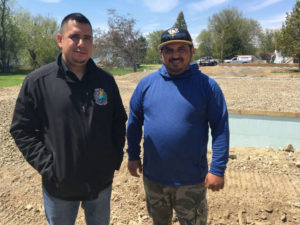
Tobique First Nation councillor Julian Moulton, left, and Chief Ross Perley said this housing project is part of the band’s five-year plan that got them out of a third-party financial management system where they had no control of the First Nation’s finances. (Hadeel Ibrahim/CBC)

Perley said the band was able to make a case, including signing up for a debt-repayment plan, and persuade Indian Affairs to allow the First Nation to control the finances again.

He said the goal is to be independent.

Hip-replacement technique gets patients back on their feet sooner

Same-day discharge surgery is still a novel approach, but it’s increasingly used by doctors in Canada

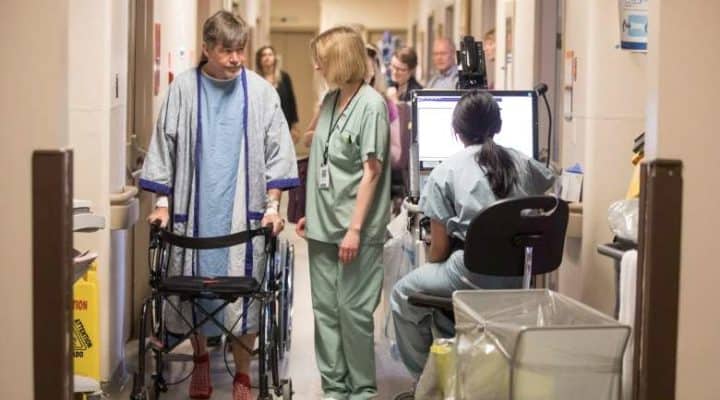
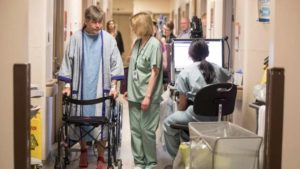
Physiotherapist Ellen Newbold, right, helps Tim Heenan walk as he prepares for his release following day surgery for a hip replacement at Toronto’s St. Michael’s Hospital. A new technique being practised by orthopedic surgeon Dr. Amir Khoshbin is boasting speedier recovery times. (Chris Young/Canadian Press)

Tim Heenan was in his teens when he injured his left hip in a four-metre fall while goofing around with some buddies. When his school hockey coach saw him favouring his leg before practice soon after, he said: “Just wait until you’re older.”

Those turned out to be prophetic words.

Now 60, the construction worker from Innisfil, Ont., found the pain in his hip growing increasingly worse, especially in the last year.

“It was very difficult to get up and down a flight of stairs, up and down ladders,” said Heenan, a married father of four and an avid sports enthusiast.

“If you were on the ladder all day long, it would get sore, and that got me thinking that it could be time to get the ball rolling for a hip replacement.”

Late last year, Heenan discussed making arrangements for a new hip joint with his family doctor, who subsequently called to say he had heard about an orthopedic surgeon at St. Michael’s Hospital in Toronto who was performing the operation in a new way that promised a speedier recovery.

Unlike more traditional hip replacements, with incisions to reach the joint through either a patient’s side or back, Dr. Amir Khoshbin is performing the operation through the front and using a special surgical table to aid that approach.

The benefit is that patients begin recovering more quickly and are able to go home the same day as the surgery, instead of needing to be admitted for at least a day or two, as is usually the case.

“There’s a different ideology,” said Khoshbin, who was trained in the technique in New York.

Same-day discharge surgery is still a novel approach, but it’s increasingly used by doctors in Canada.

“People used to think of hip replacements or knee replacements and you were in the hospital for four to five days,” he said. “But now we’re saying you’re safe enough to go home.”

Prep for post-surgery life is key

That doesn’t mean patients just hop off the gurney at the conclusion of the surgery, though the use of a spinal epidural to numb the lower extremities instead of going under general anesthetic means they are less groggy and not as prone to side effects like nausea.

Once the epidural has worn off and a patient is feeling stable, the work of recovering mobility begins, with occupational and physical therapists getting the person on their feet and slowly moving with the aid of a walker.

But preparation for life after a hip replacement begins with a visit to the hospital prior to the surgery date, when therapists assess the patient’s current mobility status and any equipment they will need at home to aid their recovery and assist them in daily activities, like showering.

“That would include what walking aids they would need after surgery, as well as what assistive devices they might need in their home environment, particularly in their bathroom,” said physiotherapist Ellen Newbold, who helped get Heenan back on his feet after he recently received his new titanium hip joint.

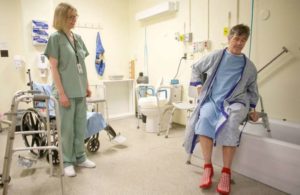
Newbold, left, watches as Heenan practises his technique for getting into a bath at St. Michael’s Hospital. (Chris Young/Canadian Press)

“So depending on their setup, whether they have a tub shower or a walk-in shower, we may recommend a [bath] seat or a bench to increase their safety there. And as well, some individuals may benefit from a raised toilet seat,” she said.

“Then the patient feels more prepared.”

With Heenan, Newbold and occupational therapist Mary Van Impe began a series of simple exercises while he was still in a post-op bed on the ward, before having him progress to a walker and a short journey down the hallway to an exercise room. Once there, they taught him how to enter and exit a bathtub, walk up and down a short flight of stairs and perform some standing exercises to practise at home.

“I think he did very well,” said Newbold. “He showed good tolerance, certainly, to his pain. I think when he was demonstrating getting in and out of the tub, that was quite a high surface to lift over.

“He did sort of push through that.”

Still, Heenan managed and then gamely made it up and down the few stairs — a necessarily slow process that requires careful steps that favour the leg with the hip replacement.

“I feel great,” he insisted, as his wife Carrie looked on.

The goal over time is to improve range of motion and strength around the hip joint and throughout the lower extremity, which will translate into improved mobility, explained Newbold, adding that patients are given a series of exercises to perform following discharge to their home.

‘Rapid recovery’

Khoshbin said he and the surgical team have done about 15 to 20 rapid-recovery joint replacements since January, including six double, or bilateral, hip replacements, though the latter requires at least one overnight stay in hospital before rehab begins.

Adding this surgical approach to hip replacements took “a lot of changes from many different disciplines within the hospital,” he said, noting that St. Mike’s surgeons continue to perform more traditional methods of the operation.

Khoshbin points out, however, that the newer technique provides a cost-saving to the budget of about 20 per cent — or roughly $1,800 — because it does away with the overnight stay in the hospital.

So is this method better?

“I wouldn’t use the word better or easier,” the surgeon said. “I do think if you look at the different approaches for hips, if you look at six months or a year, there’s absolutely no difference with respect to outcomes. At one year, 90 to 95 per cent are doing very well.

“However, there might be a faster recovery and maybe a little less use of narcotics, being able to wean off the ambulatory aids, mainly within the very acute phases of two to six weeks.

“So it does help with the rapid recovery.”

This form of surgery isn’t applicable for every patient, he said. “But I do think there are people, for example, people like Tim, who is very healthy and can be safely discharged.”

For Heenan, the appeal of the same-day-discharge technique is the shorter healing time, which should mean he can resume working sooner and get back to his favourite activities.

“I played a lot of sports,” he said. “So I’d love to be able to do that and be a little faster and more mobile, without all the pain.”

World Cup preparations have Russians getting ready to smile and speak English

Russians hope Western tourists will look past politics for tournament

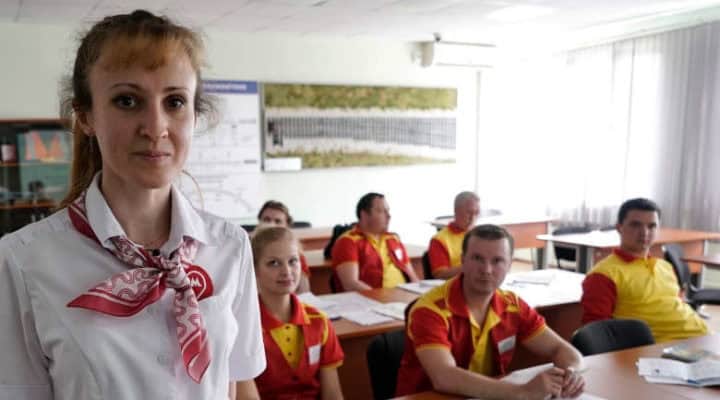
Language teacher Evgenia Zaborskaya has taught hundreds of Moscow Metro workers to speak English in the lead up to FIFA 2018 in Russia. (Pascal Dumont/CBC)

In light of Russia’s near-pariah status in much of the Western world, many Russians are treating the 2018 World Cup soccer tournament as a chance to put a more welcoming face on their country.

So in a classroom next to noisy train tracks in southern Moscow, language teacher Evgenia Zaborskaya is grilling about 20 Moscow transit staff on how to be polite and helpful — in English.

“We want to attract more foreign tourists; it’s good for our economy,” Zaborskaya says as she leads the class through a discussion on how give out directions to popular sites such as Red Square.

A guide titled ‘Be polite!’ helps Moscow Metro workers learn useful English phrases for dealing with a flood of foreign visitors expected for the World Cup. (Pascal Dumont/CBC)

Until recently, there were few non-Cyrillic signs in Moscow and a lack of English speakers to help. But in the lead-up to the tournament the transit system has provided intensive training to hundreds of staff who will be on duty during the competition. Russia expects to host as many as one million foreign visitors during the month-long event, which kicks off June 14.

“We just want to show the beauty of Moscow and the Moscow underground,” said Zaborskaya.

Global outcast

When Russia was awarded the world’s most-watched sporting event back in 2010, few could have anticipated the extent to which its relationship with the West would deteriorate.

The list of crisis points has been lengthy: Russia’s takeover of Crimea; the downing of Malaysian Airlines flight 17 by a Russian missile; the Olympic doping scandal; allegations of meddling in the 2016 U.S. election; and accusations over the poisoning of a former Russian spy in England have led to successive rounds of political and economic sanctions.

Earlier this week, family members of those killed in the destruction of MH-17 published an open letter saying a “shadow” hangs over the tournament because Russia’s leaders continue to deny the findings of the official investigation, which concluded that the plane was shot down by a Russian missile.

Britain has actively encouraged its football fans to avoid Russia. Its foreign minister, Boris Johnson, has even suggested that Russian President Vladimir Putin hosting FIFA 2018 is akin to Hitler hosting the 1936 Olympics in Berlin.

Opponent jailed

Putin has put himself at the centre of the event preparations and is expected to attend the opening match against Saudi Arabia.

His main political nemesis, opposition figure Alexey Navalny, won’t be afforded the same opportunity. Navalny was arrested for staging nationwide demonstrations against Putin last month and will spend much of the tournament in jail.

Still, while some official delegations — notably Britain and Iceland — have chosen not to take part, Russian organizers claim 90 per cent of the almost 2.4 million tickets that were available have sold out, with more than half going to foreign football fans.

A man shows a match ticket during the opening day of FIFA ticket sales points in 2018 FIFA World Cup host cities, in Moscow, Russia May 1, 2018. (Sergei Karpukhin/Reuters)

Many Russians seem intent on making the most of the opportunity, hoping that hospitality will trump politics and that visitors will leave with at least a few stereotypes dispelled.

“I think foreigners will understand that Russia is not a hostile state,” said Juliya Golubeva, who was posing for photos with her partner, Alexei Khovostov, next to the FIFA countdown clock in downtown Moscow.

“They will see that we are friends and are open to everyone.”

She said she was most looking forward to mingling with the expected huge crowds.

‘More important’ than Olympics

“This is even more important to them than the Olympics, ” said Doug Steele, a Canadian who has lived in Moscow for more than 24 years.

“They want the world to come here. They need and they want a positive image.”

Steele, who owns Papa’s Bar and Restaurant just off the Nikolskaya pedestrian mall, says it’s understandable that some people are concerned about celebrating a sporting event hosted by Putin, but he says Russia is more than just one man.

“Don’t get caught up on the idea of who runs it. You can come and enjoy the people. There’s a lot to see and do, and there’s a very wealthy culture.”

The people behind Moscow’s Metro subway system — a tourist attraction in its own right, with many beautiful, classically designed stations — have been especially proactive at trying to make a positive impression.

At the Kitay Gorod station, Metro information staffer Ivan Smetanin told CBC News that he believes the World Cup’s expensive $11 billion US price tag will have been worth it if visitors have a good time.

“We are interested in attracting more tourists here,” he said. “This is the trend in all the cities in the world — cities compete with each other to impress their visitors.”

Soviet stereotypes
He added that many tourists are surprised to find just how far Russia has come since the Soviet era.

“[Some people] expect old stereotypes that we are not so client-oriented, not so friendly. But we try to contradict.”

More than 26 million foreigners visited Russia in 2016, but most came from former Soviet republics like Kazakhstan. Tourism growth beyond those areas has been stagnant since the various political crises began in 2014.

This year, football fans will flood into the country to see World Cup events at 11 different venues across Russia. Cities such as Volgograd, Kazan and Saransk, which tend to see relatively fewer Western visitors, are expecting sizable crowds.

Cities like Yekaterinburg and Rostov will benefit from the construction of new airports and roads. Nine new stadiums were built from scratch, including the facility in St. Petersburg that ended up costing over $800 million US — seven times the initial budget — because of engineering challenges and problems with the grass turf.

But Steele, the Canadian expat, says he believes the tournament will give an economic boost to Russian regions that rarely see much government spending, and most people will see it as money well spent.

“All these other cities which have never seen this quality are going to experience a world-class event,” he says.

“People are going to leave with a very positive impression.”