Archives for May 17, 2018

Who Are T-Mobile’s Competition?

T-Mobile (NASDAQ: TMUS) is the third-largest wireless carrier in the United States. It doesn’t offer anything besides wireless service for cell phones and connected devices like tablets and smartwatches. (It recently purchased Layer3 TV, so it has a small hand in the television distribution business through Layer3.)

Thus, when investors think of T-Mobile’s competition, the first companies that come to mind are probably AT&T (NYSE: T), Verizon (NYSE: VZ), and Sprint (NYSE: S). But in the press release announcing T-Mobile’s merger with Sprint, T-Mobile CEO John Legere said, “There are now at least 7 or 8 big competitors.”

So, where do those other competitors come from? There’s a growing number of companies offering wireless service through mobile virtual network operator (MVNO) agreements, including Comcast (NASDAQ: CMCSA) and Alphabet’s Google, and Charter is set to launch a service of its own later this year.

The question for investors (as well as the Federal Communications Commission and the Department of Justice) is whether those companies can be considered true competitors to T-Mobile in order to gain regulatory approval for the proposed merger with Sprint.

T-Mobile store in Times Square

Comcast is adding more wireless customers than AT&T and Verizon

Comcast launched its Xfinity Mobile service last summer, exclusively for customers of its in-home internet and video services. Since then, it’s managed to add 577,000 phone lines to its service, 196,000 of which it added in the first quarter this year.

By comparison, AT&T and Verizon both lost postpaid phone subscribers in the first quarter.

But Verizon is still benefiting from the 577,000 Xfinity Mobile customers. Comcast is relying on Verizon’s wireless network to deliver its service through an MVNO agreement struck in 2011 as part of a deal for Verizon to acquire wireless spectrum from several cable TV providers. Charter will use the same agreement to launch its service later this year.

Likewise Google’s Fi service relies on both T-Mobile’s and Sprint’s wireless networks. Every time Google signs up a new subscriber, both wireless carriers benefit to some degree.

These agreements make a gray area for whether to consider these MVNO service providers as competitors. On the one hand, they provide additional choices for consumers; on the other, they still benefit the same four major players in wireless (with small benefits for the MVNO service provider).

The case for considering cable companies a competitor

One thing that’s worth pointing out is that the wireless industry and the pay-TV industries are converging. That’s been evident for years now since AT&T and Verizon launched their U-Verse and FiOS pay-TV and home internet services. AT&T’s acquisition of DirecTV Now to become the largest pay-TV provider in the U.S. cemented that reality.

All three of the largest pay-TV providers — AT&T, Comcast, and Charter — will soon offer a wireless phone service to their customers. On the flip side, all three of the largest wireless service providers — Verizon, AT&T, and T-Mobile — will soon offer some form of pay-TV option after T-Mobile launches T-Mobile TV.

What’s more, AT&T, Verizon, and T-Mobile, are all talking about providing home internet access with their forthcoming 5G networks. Verizon and AT&T are testing fixed-wireless 5G connections this year with speeds that blow away those from their own in-home internet services as well as Comcast’s and Charter’s. They expect to be competitive in the home internet connection market.

One of the biggest focuses of the T-Mobile-Sprint press release was that it would accelerate the deployment of their 5G network, enabling average speeds of 15x their current LTE speeds, and up to 100x speeds in some cases. Those speeds would more than suffice for a home internet connection.

Comcast’s internet subscribers surpassed its video subscribers three years ago, and the gap gets wider every quarter thanks to cord-cutting. Since Comcast is now basically a high-speed internet company that also sells cable TV, that makes it a direct competitor to one of the future growth avenues for the major wireless carriers.

What will the authorities think?

There’s a lot riding on the merger between T-Mobile and Sprint. The two companies expect to save $6 billion per year in cost synergies, representing a present value of over $43 billion. Not only that, AT&T and Verizon investors stand to benefit from a merger as well, as it ought to reduce the competitive intensity that has dragged down their wireless business’s financial results over the last few years.

But the Department of Justice has historically looked at the competitive history for proposed mergers and acquisitions, not at the future competitive environment facing the companies. Since T-Mobile and Sprint have historically competed nearly exclusively with Verizon and AT&T, it casts a big shadow over prospects for approval. If the focus is shifted to where T-Mobile and Sprint are looking to compete next, however, there’s plenty of competition for approval.


3 Reasons to Buy Kraft Heinz Stock, 1 Reason to Sell

What to do about Kraft-Heinz (NASDAQ: KHC)? One of Berkshire Hathaway’s larger holdings (Berkshire owns roughly 26.7% of shares outstanding, controlling the company in tandem with Brazilian investment firm 3G Capital), Kraft’s stock has tumbled roughly 28% in 2018, as the consumer packaged foods industry (“CPG”) has come under pressure.

In addition, the market is growing increasingly skeptical of Kraft’s ability to make a transformative aquisition, which had been the main upside thesis in Kraft-Heinz ever since the two companies merged three years ago.

Now near 52-week lows, is it time for holders to cut bait on the fallen darling, or is the stock now a screaming deal?

Reason to sell: disruption

I always like to get bad news out of the way first. Ironically, Kraft’s bad news was recently articulated not by short-sellers or bearish sell-side analysts, but rather by its very own largest stakeholder!

At a recent conference, 3G Capital CEO Jorge Paulo Lemann admitted, “I’ve been living in this cozy world of old brands and big volumes… We bought brands that we thought could last forever… You could just focus on being very efficient… All of a sudden we are being disrupted.”

a man sits at a desk with Oscar Meyer meats and a laptop and funny glasses.

Can innovatinve marketing like “Bacoin” save Kraft-Heinz? Image source: Kraft-Heinz.

Lehmann founded 3G, and was instrumental in the acquisition-of-big-brands strategy behind Kraft-Heinz, AB InBev (NYSE: BUD) and Restaurant Brands (NYSE: QSR). For him to admit his company was “caught by surprise” after deploying billions of dollars toward the large consumer brand strategy was quite an admission.

The disruption has come from the confluence of several factors, including the rise of craft/natural foods, low-cost private label brands, and the advent of e-commerce. The new generation of more health-conscious, yet budget-constrained consumers, has put traditional consumer packaged goods brands in a tough spot. On the high-end, these brands are being crowded out by healthier, more natural alternatives, while huge retailers have come out with high-quality private label brands, such as Costco’s (NASDAQ: COST) Kirkland brand and Kroger’s (NYSE: KR) Simple Truth, which are often priced below CPG rivals.

These factors have challenged Kraft-Heinz’s top-line, which fell 1.5% (in constant currency) in the first quarter. That being said, Lehmann also said, “I’m not going to lie down and go away,” and Kraft’s executives have been working hard to adapt to the times. Here are three reasons why you may want to buy the stock today.

Reason to buy: it’s a bargain

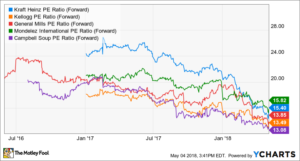
While the “safety” of consumer packaged goods companies traditionally earned these stocks relatively high price-to-earnings multiples, even with low growth, that has changed in a hurry very recently. Lackluster growth as well as concerns about high freight cost inflation have taken a toll on the industry, and especially Kraft-Heinz:

KHC PE Ratio (Forward) data by YCharts

Currently, you are not only buying into a low-priced sector, you are arguably buying the best-run company of the lot, at a valuation on par with its industry peers, and receiving a 4.5% dividend as well.

Of course, buying a cheap stock doesn’t necessarily turn out well, unless management is on its way to improving. On that front, there are two ways in which Kraft-Heinz is attacking this new age of disruption.

Reason to buy: product innovation

Kraft-Heinz isn’t resting on its laurels, but is quickly innovating its products. These innovations fall primarily into two camps. One is around renovating “powerhouse” brands ($1 billion+ in sales) such as Kraft, Heinz, Oscar Mayer, Planters, and Philadelphia to make them more relevant (like taking out artificial ingredients from Kraft Mac ‘n Cheese), and well as extending them to horizontal products (such as Kraft mayonnaise).

The second type of innovation is for entirely new products. On that front, Kraft-Heinz is moving quickly, aiming for 60% more innovations in 2018 versus 2016. Recent successes include Devour frozen meals, as well as the new, “Just Crack an Egg,” which, on the recent call with analysts, CEO Bernardo Hees said was “selling faster than we can make it.” Kraft also recently started its Springboard platform, a start-up accelerator to find the next big food innovation. Management has emphasized the need to provide incremental sales, not just the replacement of declining or outdated products.

Obviously, new brands such as these are not going to move the needle in the near-term — new innovations only made up 7% of sales over the past three years. Still, there are hints at least some are making a difference. In its recent post-integration update, management credited the new Devour line with returning the company’s frozen food category to growth after serval years of mid-teens declines.

Reason to buy: new marketing

Behind all of this product innovation will also be a revamped marketing strategy. One of the more interesting things Kraft Heinz is doing is doubling down on its own salespeople inside supermarkets, rather than pulling back or using third-party merchandisers. By bringing everything in-house, the company believes it can be more effective, as well as use big data analytics to further target marketing campaigns to the modern age. Hees said, “We started doing this in 2017. I can guarantee you that it’s paying off and we’re actually doubling down on this.”

Kraft is also investing in its people, with employees completing 60,000 hours of custom-made courses just in the first quarter alone. These courses keep employees up to speed on the latest innovations in R&D, marketing, and industry knowledge.

Get hungry

Down severely in 2018 while possessing the most dynamic management team in the industry, I’d be a buyer of Kraft-Heinz here here rather than a seller. It’s time to be hungry when others are fearful!

Is Alnylam Pharmaceuticals, Inc. (ALNY) a Buy?

I wrote three months ago that I viewed Alnylam Pharmaceuticals (NASDAQ: ALNY) stock as a pretty good pick — but with a couple of qualifications. First, I didn’t think that the biotech would generate returns in 2018 nearly as great as it did last year. Second, I thought that there were even better stocks to buy than Alnylam.

Since that article was published, Alnylam stock is down more than 15%. At least I was right about 2018 not being as good as 2017 and that there were better stocks to buy. With Alnylam significantly cheaper than it was earlier this year, has the investing case for the stock changed?

Scientists in white labcoats working in a lab.

A different dynamic

I’ll be the first to admit that I didn’t see it coming. I’m referring to Pfizer’s (NYSE: PFE) surprisingly positive results from a phase 3 study evaluating tafamidis in treating transthyretin (TTR) cardiomyopathy, a rare condition associated with progressive heart failure. I like Pfizer and even own the big pharma stock, but tafamidis didn’t rank high on my list of reasons why.

Alnylam’s lead candidate is patisiran. The drug uses RNA interference (RNAi) to treat hereditary ATTR amyloidosis, which includes patients with cardiomyopathy symptoms. Alnylam hopes to obtain FDA approval for patisiran by early August 2018.

Like many, I expect patisiran will win FDA approval. Also like many, I thought that Ionis Pharmaceuticals’ inotersen would probably be the primary potential competition for patisiran. However, I viewed patisiran as the stronger product due to its efficacy and safety.

Now, though, it appears that Pfizer could present a real threat to both Alnylam and Ionis. Tafamidis is a capsule, which should give it an advantage over patisiran, which requires infusion every three weeks, and inotersen, which is an injection. Also, Pfizer has marketed tafamidis in Europe for several years as a treatment for TTR familial amyloid polyneuropathy (FAP), so the drug has an established safety track record that neither patisiran nor inotersen yet have.

Pfizer’s clinical win means there is a different dynamic for Alnylam than just a few months ago. However, I still think that patisiran will be successful, although peak sales could be lower than the $1.5 billion projected by some analysts.

Looking beyond patisiran

Nothing has shaken up the landscape for the other candidates in Alnylam’s pipeline. The biotech is evaluating givosiran in a phase 3 study for treating rare liver disease acute hepatic porphyrias (AHPs). Topline interim results from this study are expected to be announced in September. Assuming all goes well with this study, Alnylam expects to submit for FDA approval of the drug by late 2018.

Alnylam’s partner, Sanofi (NYSE: SNY), is taking the lead on a phase 3 study of another experimental RNAi therapeutic, fitusiran, in treating hemophilia A and B. Sanofi now has global rights to the drug as a result of a restructuring of the two companies’ rare disease collaboration agreement signed in 2014. Alnylam stands to receive royalties between 15% and 30% of any future sales for fitusiran.

Another of Alnylam’s partners, The Medicines Company (NASDAQ: MDCO), completed enrollment in phase 3 studies of inclisiran, an Alnylam-developed RNAi drug targeting treatment of hypercholesterolemia. If inclisiran ultimately wins approval, Alnylam will be eligible for milestone payments and royalties of up to 20% on all sales of the drug.

Alnylam will also soon have another late-stage pipeline candidate. The company plans to move forward with a phase 3 study of lumasiran in treating rare genetic disease primary hyperoxaluria type 1 (PH1) in mid-2018. Results from this study could be announced next year. Alnylam would probably be able to file for regulatory approval in early 2020 if lumasiran succeeds in the late-stage study.

To buy or not to buy?

Alnylam’s market cap is now around $10.3 billion. That’s still an optimistic valuation for a company that lost more than $140 million in the first quarter.

Is the stock a buy? I still think it is. The biotech could benefit from a couple of catalysts over the next few months: FDA approval of patisiran and positive clinical results for givosiran.

But I still have the same qualifications in viewing Alnylam as a buy. The stock isn’t likely to generate a huge return in 2018 and I continue to think that there are better stocks, including other biotechs, that have more room to run.

Strong Box Office and Park Attendance Power Disney’s Results

Going into media giant Walt Disney’s (NYSE: DIS) second-quarter financial report, the company was fresh off record performance of Marvel’s Black Panther, which broke into the top 10 in all-time worldwide box office, bumping Star Wars: The Last Jedi from the No. 9 position and generating more than $1.338 billion in global ticket sales.

Investors were hoping that the record Marvel showing combined with robust visits to Disney parks and resorts would be enough to continue the return to growth that began last quarter — and that’s exactly what happened.

Black Panther’s King T’Challa sitting on the Wakandan throne.

The raw numbers

Metric                            Q2 2018                       Q2 2017                       Year-Over-Year Change

Revenue          $14.548 billion                               $13.336 billion                             9%

Segment operating income    $4.237 billion     $3.996 billion                       6%

Net income                     $2.937 billion                $2.338 billion                         23%

Adjusted earnings per share  $1.84                         $1.50                                   23%

Free cash flow                  $3.463 billion             $2.345 billion                          48%

Data source: Disney Second-Quarter 2018 Financial Release. Chart by author.

For the just-completed quarter, Disney reported revenue of $14.548 billion, up 9% year over year and exceeding analysts’ consensus estimates for revenue of $14.08 billion. Net income grew 23% year over year, generating adjusted earnings per share of $1.84, an increase of 23% over the prior-year quarter and handily beating expectations for $1.69.

On a GAAP basis, earnings per share grew 30% to $1.95.

Revenue Source                   Q2 2018                       Q2 2017                 Year-Over-Year Change

Media networks                 $6.138 billion          $5.946 billion                       3%

Parks and resorts              $4.879 billion             $4.299 billion                   13%

Studio entertainment       $2.454 billion           $2.032 billion                     21%

Consumer products           $1.077 billion           $1.057 billion                      2%

Data source: Disney Second-Quarter 2018 Financial Release. Chart by author.

Revenue was up across all of the company’s operating segments, marking the second successive quarter of year-over-year revenue growth.

Media networks revenue grew 3% year over year to $6.1 billion, while operating income for the segment fell 6% to $2.08 billion. Disney blamed the drop on higher programming costs at ESPN, which was partially offset by affiliate revenue growth and higher advertising. The company also said that investments in BAMTech — the company’s streaming segment — played a part in the decline.

The parks and resorts business handed in another strong performance, with revenue of $4.88 billion that grew 13% compared to the prior-year quarter on stronger attendance and guest spending. Operating income in the segment grew 27% year over year to $954 million.

Studio entertainment also shined, with revenue that increased 21% over the prior-year quarter on the strong box office success of Black Panther. Operating income of $847 million was up 29% year over year.

Consumer products revenue increased 2% year over year, though operating income fell 4% to $354 million as the result of lower same-store sales and an unfavorable currency impact.

The strength in the studio segment was primarily the result of the blockbuster success of Black Panther, which Disney’s chairman and CEO Bob Iger called out on the conference call.

It’s hard to come up with enough superlatives to adequately express the tremendous work that team is doing … the incredible performance of Black Panther is just one of many examples. This groundbreaking movie opened to huge acclaim and record-breaking box office, instantly becoming a cultural phenomenon, inspiring people of all ages, and breaking down age-old industry myth.

Looking ahead

Disney doesn’t provide quarterly guidance, but analysts’ consensus estimates for the upcoming third quarter are for revenue of $15.3 billion, which would represent growth of 7.5% compared to the year-ago quarter. Investors’ expectations have been rising, based on the box office success of Black Panther and Avengers: Infinity War. Consensus estimates for earnings have increased to $1.96 per share, which would represent growth of 24% year over year.

While investors seemed unimpressed with the performance, Disney continues to make all the right moves to position the company for future success.

Waze’s traffic data is available in Ford Sync 3 cars

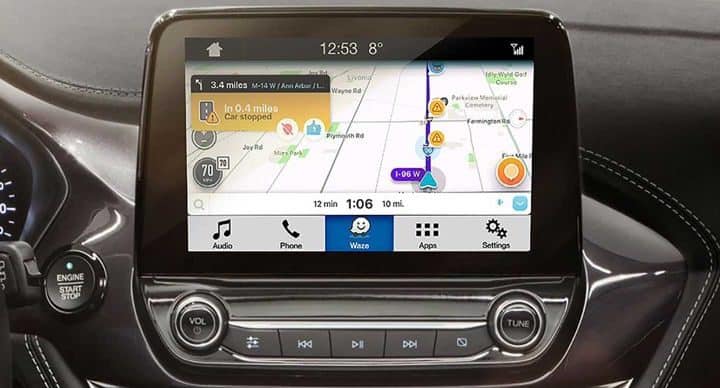
You now have a simple way to put Waze on car’s screen — if you have the right

You now have a simple way to put Waze on car’s screen — if you have the right phone and the right car. As promised back at CES, iPhone owners can now project the crowdsourced navigation app on the touchscreens of Ford’s Sync 3-equipped cars. It won’t be as sophisticated as the Android Auto implementation, but you can still use both touch and voice control for most tasks (you can’t type in an address while the car is moving, for obvious reasons). You don’t need to do much more to get started beyond plugging your iPhone into the car’s USB port.

The big-screen support is available worldwide and requires that your phone run iOS 11.3 or newer. This won’t make a huge difference if you’re content to use Apple Maps through CarPlay, but it could be intensely valuable if you prefer Waze’s Google-sourced maps and dynamic traffic info.

This article originally appeared on Engadget.

Abode Systems wants to make home security simpler and more affordable

abode starter kit

Keeping yourself safe shouldn’t cost an arm and a leg, and luckily, Abode Systems agrees. The DIY smart home security company announced a new configuration for its security starter kit earlier this year to make it easier for anyone and everyone to protect themselves and their loved ones. Now, to make things simpler still, Abode has brought Alexa to its security offerings, enabling Unlock by Voice and Unlock by App functionality that lets you unlock your doors integrated with the Abode system.

As Alexa does with other smart locks, she’ll ask for a pin code when you say, “Alexa, unlock my front door.” If you provide the correct series of numbers, the Amazon smart assistant will disarm the Abode system, and let you into your home without the need to pull out keys or punch in any numbers.

Moreover, the new Alexa integration will also allow you to control devices throughout the Abode ecosystem from the Alexa app. You can see the status of all devices from your smartphone — whether the doors are locked, whether the lights are on, and more. Of course, you can trigger actions for an entire room with your voice, too. For example, if you find that you’ve left the lamp and the ceiling lights in your living room on, just say, “Alexa, turn off the living room,” rather than naming each device.

Abode’s starter kit consists of an Abode gateway, a mini door-window sensor, a remote key fob, and a PIR motion sensor. The entire package will set you back $279, $20 less than its original price. And currently, the company’s products are on sale for 10 percent off.

The Abode gateway comes with a built-in 93 dB siren, battery backup, as well as Zigbee, Z-Wave, and Abode RF device support. The mini door-window sensor features Abode RF for long-range support, and promises a long battery life to continuously detect the opening and closing of entrances. You can quickly arm or disarm your entire Abode home security system with the remote key fob, while the PIR motion sensor can trigger alarms or automations upon detecting movement.

This reconfigured starter kit will still allow customers access to the same Android or iOS smartphone apps that existing Abode users are familiar with, as well as the same familiar web app and home automation engine. Plus, the new starter kit is compatible with most smart home devices and voice assistants. In fact, the starter kit boasts direct in-app integrations with Philips Hue, ecobee thermostats, LifX RGB light bulbs, and Nest devices. Moreover, Abode works alongside both Google Assistant and Amazon Alexa, so you can control your security with your voice.

Folks interested in purchasing further Abode services can check out plans like the Starter Kit + Connect Plan, which includes 3G cellular backup connection as well as 13 days of timeline and media storage. Alternatively, the Starter kit + Secure plan includes 24/7 professional monitoring, 3G cellular backup, and 90 days of timeline and media storage. The plans will set you back $329 and $379 respectively.

“Since the launch of Abode, we’ve collected feedback and implemented features and enhancements to our entire solution based on what our customers have shared with us,” said Abode Cofounder Chris Carney. “Based off the needs of our customers, we’re excited to introduce a new configuration of our starter kit to make Abode even more affordable while simultaneously keeping the same level of freedom, flexibility, and integrations intact.”