Archives for April 17, 2018

What to Watch When Kinder Morgan Inc Reports First-Quarter Results

After declining for the past two years, Kinder Morgan (NYSE: KMI) expects cash flow to start growing again in 2018. Investors will get their first glimpse of whether that’s the case when the pipeline giant reports first-quarter results Wednesday evening. That return to growth is one of a few things investors should keep an eye on this quarter.

Look for cash flow to come in above expectations

Kinder Morgan’s guidance calls for it to pull in $4.57 billion, or $2.05 per share, of distributable cash flow (DCF) this year, which would be about 3% higher than 2017. The company anticipates collecting 26% of that DCF in the first quarter, or about $1.89 billion ($0.53 per share). However, given what has transpired since the company provided this guidance, it seems increasingly likely that it will exceed those expectations.

Pipelines with a blue sky in the background.

Two factors support that view. First, Kinder Morgan noted in a recent investor presentation that it had already spent $500 million to repurchase 27 million shares since December, which should reduce its outstanding share count by more than 1%. In addition to that, the company based its budget on oil averaging $56.50 per barrel this year. Crude, however, spent much of the first quarter in the low $60s, which should add some incremental cash flow. The higher cash flow from oil against a lower share count suggests the company could deliver first-quarter results that exceed guidance, potentially putting it on pace to beat full-year expectations.

See if the company has any updates on Trans Mountain

While Kinder Morgan expects to return to growth mode the year, its future became a little cloudier after the company’s Canadian subsidiary Kinder Morgan Canada Limited (TSX: KML) recently threatened to cancel its planned expansion of the Trans Mountain Pipeline if it doesn’t have sufficient clarity by the end of May. Such a move would be a huge disappointment, as it’s a needle-moving project for Kinder Morgan, representing about half of its backlog and anticipated incremental earnings through 2021.

However, while some in Canada don’t want to see Kinder Morgan build this pipeline, Prime Minister Justin Trudeau has since called it “a vital strategic interest to Canada.” His government is exploring ways to push the project forward, including potentially investing directly in the pipeline. That increases the likelihood Kinder Morgan will eventually build the project, which is why it will be interesting to see if the company has any further updates when it reports earnings this week.

Watch for new projects

Because Trans Mountain is still questionable at the moment, investors will want to see if Kinder Morgan has anything else coming down the pipeline to help cushion the blow if it does ultimately pull the plug on that vital project. There’s reason to be optimistic, as several rivals have already announced a slate of new expansion projects this year. ONEOK (NYSE: OKE) has been among the most active. The company started the year by announcing that it secured enough long-term contracts to move forward with a $1.4 billion pipeline to move natural gas liquids (NGLs) out of the Rockies. ONEOK followed that up a month later by unveiling plans to invest $2.3 billion into additional NGL and natural gas infrastructure through 2020. Those expansions increase the odds that ONEOK will achieve its dividend growth forecast of 9% to 11% annually through 2021.

While Kinder Morgan and several partners officially gave the Gulf Coast Express Pipeline project the green light in December, the company needs to continue securing additional expansions to boost investor confidence in its growth outlook. That’s why investors should look for any updates the company provides this quarter on projects it recently secured or those currently under development.

Slowly turning the corner

Kinder Morgan’s stock has been under pressure over the past year due to concerns about the future of Trans Mountain. While investors might not get clarity on that project this quarter, they should by the end of next month. In the meanwhile, the company’s quarterly report should show that its financial results are turning around after two down years. As that turnaround becomes more evident, Kinder Morgan’s shares could finally begin their long-awaited recovery.


Can Walmart Capitalize on Amazon.com’s Problems?

It’s easy to think that with Amazon.com (NASDAQ: AMZN) coming under criticism from the White House over its relationship with the U.S. Postal Service, its impact on brick-and-mortar retail, and its tax collection policies, it presents an opportunity for rival Walmart (NYSE: WMT) to capitalize on its rival’s distraction and gain ground. Yet whatever advantage the retail king might gain, the window to seize it is constantly narrowing.

Rather than a silver bullet, Walmart needs a more holistic approach to taking on its greatest threat. The good news for Walmart is there is reason to believe it’s Amazon’s only competitor that can actually thwart the ecommerce company’s attempt at complete retail dominance.

Walmart delivery service

Size matters

On the surface, it shouldn’t even be a contest. Walmart’s annual sales total $500 billion compared to $178 billion for Amazon, but when we look at the all-important e-commerce portion of sales, the situation is reversed. Walmart generates almost $19 billion in online sales; Amazon, $113 billion.

Walmart has done an incredible amount of work to narrow the gap and shore up its deficiencies in that space, most notably buying Jet.com in 2016 for $3.3 billion. The purchase initially helped grow digital sales by 50% to 60% rates, but the market took it to task after it reported fourth-quarter e-commerce sales growth of only 23%.

However, Walmart is in the process of positioning its business for the future by scooping up women’s wear retailer Modcloth, menswear outlet Bonobos, shoe store Shoebuy, and outdoor apparel maker Moosejaw. At the same time, it’s partnered with Hudson’s Bay’s Lord & Taylor chain to sell its merchandise on its website, taken a sizable stake in Chinese e-commerce marketplace JD.com, and launched a private label apparel line through Jet.com called Uniquely J to further tap into millennial shoppers.

These moves show that Walmart is branching out beyond simply the price-sensitive shopper, one that Amazon itself initially appealed to, and is willing to offer a broader selection of goods that strike a chord with a wider audience.

A winning bricks-and-mortar strategy

Certainly, there are risks in this approach, not least because Walmart isn’t necessarily viewed as the go-to alternative for online shopping. Amazon.com is the default choice for most people, but Walmart has a much bigger arrow in its quiver in the form of its massive store footprint. Even after the acquisition of Whole Foods Market gave Amazon a few hundred stores to experiment with, Walmart’s 4,700 U.S. stores give it a chance to better blend the online and offline worlds.

Buy online pickup in store, or BOPIS, could be a deciding factor in Walmart’s ability to thwart Amazon’s advance. It forecasts that online sales will grow 40% this year, and it offers customers discounts if they choose the in-store option of picking up their purchases.

Walmart is encouraging customers to do just that by expanding the availability of what it calls Pickup Towers, automated kiosks that seem akin to Amazon Lockers, which allow customers to pick up orders in stores at their own convenience. Walmart currently has Towers installed in 200 stores, but it plans to have as many as 700 by the end of the year, which it says will make them available to nearly 40% of the U.S. population.

Amazon Go grocery store

Feeding the future

Walmart is also not ceding ground in groceries, where it is currently the leader, but there is widespread fear Amazon will overtake everyone. Walmart is planning to double the number of U.S. curbside locations for online grocery shoppers at its stores, with as many as 1,000 stores currently participating in the program.

It’s also partnered with Google to initiate voice-activated shopping through Google Assistant and Google Express, allowing customers to shop for some two million Walmart items online. And it just partnered with PostMates to offer same-day grocery delivery. It’s starting in Charlotte, North Carolina, and expanding to 100 other metro areas in the coming months.

While Amazon.com holds a seemingly insurmountable lead in e-commerce, that doesn’t mean Walmart can’t narrow the gap between them. The retail king has long been a tech leader, and it has both the capabilities and the financial wherewithal to take on Amazon.com.

Walmart’s operating and net margins are typically twice that of Amazon, and it has the benefit of an installed base of stores that it can use as distribution hubs to attract more customers.

Perhaps there are some gains to be made in the current political environment, but Walmart’s best chance of success in becoming even more relevant to online shoppers is not found in a single moment of peril for its rival but through a broad range of programs that challenge and pressure Amazon.com head on. Walmart looks like it can achieve it.

Is Square, Inc. a Buy?

Back in November, I warned investors that Square (NYSE: SQ) stock may be too risky for most considering the price it was trading at. Since then, the stock has gone on to outperform the S&P 500 by nearly 21 percentage points.

Square released an encouraging set of fourth-quarter earnings and a 2018 outlook that made me a bit more confident in the company’s future. But considering the stock’s continued price increase, that doesn’t necessarily make it a buy.

Let’s review what has and what hasn’t changed for Square since November.

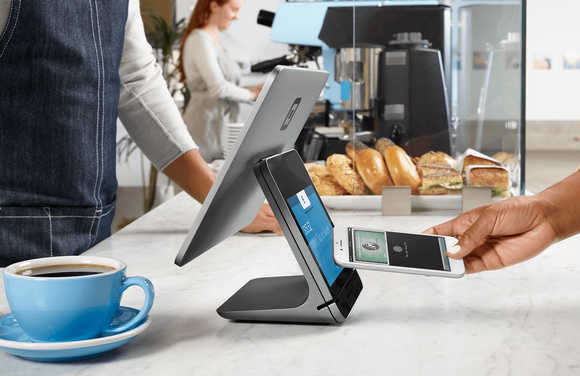
A person paying for a coffee with Square’s contactless payment reader.

2018 could be Square’s best year yet

Square’s fourth-quarter results showed continued strength in its subscription and services products — i.e., products that aren’t based on transaction volume. Revenue from those products not only grew 96% year over year in the fourth quarter, but growth also accelerated.

The growth implies higher attach rates for Square’s services, which is essential to its continued growth. Square’s entire strategy for winning and keeping customers is to develop an ecosystem around payments. Merchants using multiple Square products will experience higher switching costs compared to those that only use it to process card payments. That’s important in a market with fierce competition from other fintech companies like PayPal and Intuit, as well as old-school payment processing companies like Worldpay and Global Payments.

Last month, Square started working on ways to encourage more customers to use multiple products.

Square also provided guidance that indicated that it has solid plans to continue investing for growth. The company expects adjusted revenue growth of 34%, a modest slowdown from the 43% increase the company posted last year.

Importantly, it guided for adjusted EBITDA margin expansion of 5 percentage points for the full year, which is in line with CFO Sarah Friar’s previous comments about balancing growth with profitability. Too much margin expansion is a sign that Square is becoming inefficient with its revenue growth. The company has plenty to invest in, and it should be funneling a lot of money back into growing the business.

Finally, Square shared an update on the progress of Cash App, which now has 7 million active users. Cash App presents a ton of untapped potential, and its ability to grow despite competition from PayPal’s Venmo is quite impressive.

Square’s results in the last half of 2017 and its 2018 guidance are very encouraging. The company is coming into 2018 with a lot of momentum and a solid plan to continue winning market share and increasing attach rates for its other products and services.

Some things still haven’t changed

Square still doesn’t have much of a competitive advantage. As mentioned above, its main strategy to win and retain customers is to get them to use multiple Square products, increasing switching costs. The company has shown progress on that front, but it’s still not at the point where a large portion of its customers are deeply entrenched in the Square ecosystem.

Square’s management refused to provide details on attach rates for its software and services business when asked on the fourth-quarter earnings call.

Meanwhile, Square’s gross margin indicates that it doesn’t have very much pricing power. Square posted a gross margin of 37.9% in 2017. In comparison, Intuit’s gross margin was 80.7% during the same period, as it’s able to lock customers in into its software ecosystem.

Even a deeply entrenched customer isn’t guaranteed to stay. Just look at what happened to PayPal recently.

The valuation remains high

Even after a couple quarters of better-than-expected results, Square remains richly valued compared to its peers.

Company       Enterprise Value-to-Sales Ratio

Square              8.67

Intuit                8.25

PayPal               6.74

Square’s valuation has come down slightly since November, but so has PayPal’s. Analysts are expecting Square to grow revenue much faster than either PayPal or Intuit, so perhaps it deserves a premium multiple.

But consider the fact that Square has yet to prove that it can be profitable, whereas Intuit and PayPal have produced GAAP net income for shareholders and are showing steady growth. That concern is eased by Square’s adjusted EBITDA margin expansion, but it’s still tough to put aside considering it doesn’t have a moat and hasn’t exhibited pricing power.

At a lower valuation than November and a stronger outlook for the future, Square is more appealing than it was a few months ago. But it still seems very risky and most investors interested in the fintech space might do well to invest in PayPal instead.

3 High-Yield Stocks to Hold Forever

Holding a stake in great businesses that regularly pay dividends and then reinvesting those payouts is one of the most dependable paths to long-term wealth creation. The challenge, then, is finding companies that are positioned to sustain a high level of performance and keep that returned income flowing while also shoring up the future of the business.

With that in mind, we asked three Motley Fool investors to identify a top high-yield stock that’s worth holding forever. Read on to see why they picked UBS (NYSE: UBS), International Business Machines (NYSE: IBM), and AT&T (NYSE: T).

A golden piggy bank standing in front of three stacks of golden coins, ascending in size from left to right.

Safe as a Swiss bank — because it is one

Rich Smith (UBS): How high is a “high yield?” Does nearly twice the average dividend payout on the S&P 500 qualify? Because if it does, then UBS Group AG just might be the stock you’re looking for.

UBS pays a 3.9% dividend yield, which seems pretty high to me, given that the average stock on the S&P pays just 2%. Admittedly, right now UBS doesn’t look like it should be paying so much out in dividend checks, as “3.9%” is about 122% more money than UBS actually earned last year. But here’s the thing — and here’s why I think UBS stock might be worth a look despite its high payout ratio and similarly high P/E ratio (currently 61 times earnings).

Last year, UBS’s profits got hit by the one-two punch of a $1.2 billion restructuring charge, and a $4.2 billion income tax bill. That tax bite, however, was much more than UBS had paid in any of the previous five years. In fact, it was more than UBS paid in all of the previous five years combined. As such, it seems likely that last year’s tax hit was a one-time thing related primarily to the effects of tax reform in the U.S., and not likely to repeat in future years. Going forward, I think it more likely we’ll see UBS turn in annual profits closer to the $3.2 billion it earned in 2016 — or even the $6.2 billion it earned in 2015 — than the $1.1 billion it earned last year.

With a corporate history stretching back more than 150 years, UBS is a bank stock built to stand the test of time — and to keep on paying you dividends forever.

A century of dividends

Tim Green (International Business Machines): IBM investors have missed out on the raging bull market in technology stocks. While the Nasdaq 100 index has more than doubled over the past five years, shares of IBM have shed about 25% of their value. A half-decade of slumping revenue kept many investors away from the century-old tech giant.

That decline is now over, with IBM reporting revenue growth in the fourth quarter of 2017 and expecting growth to continue this year. The actions that the company has taken over the past five years or so, including investing in growth businesses like cloud computing and artificial intelligence, are starting to show tangible results. Growth businesses generated $36.5 billion of revenue last year, up 11%, while the cloud business grew by 24% to $17 billion.

A technology company doesn’t survive for more than a century without building up a track record of transformation. IBM’s latest turnaround isn’t its first, and it won’t be its last. This ability to adapt is a key reason to buy and hold the stock.

For dividend investors, another reason to buy and hold the stock is a world-class dividend. IBM’s current quarterly payout of $1.50 per share works out to a yield of 3.8%, and the company is widely expected to raise that dividend this month, making it 23 years in row. IBM has paid a quarterly dividend without interruption since 1916, through the Great Depression, two World Wars, and its near-collapse in the 1990s.

Dividend investors looking for a high yield and decades of consistency could do a lot worse than IBM.

A top telecom dividend play

Keith Noonan (AT&T): With its big yield, history of delivering regular dividend growth, and a non-prohibitive valuation, AT&T is a stock that’s worth building a super-long-term position in. The telecom giant’s yield comes in at 5.7%, and a 34 year history of delivering annual payout growth and massive cash flow suggest there’s a good chance the company will continue to raise its payout.

The company’s stock performance has been tepid in recent years due to pressures in both the wireless and television spaces. Competition from budget priced rivals like T-Mobile has put pressure on mobile service sales and the rise of cord-cutting and skinny bundles is impacting the performance of its DirecTV subsidiary. AT&T has been leveraging its advantage when it comes to bundling mobile, internet, and television services to create meager sales growth, but it’s also taking hits when it comes to its margin.

The good news is that the company may be able to reclaim pricing strength and create new revenue streams with the introduction of 5G networks. 5G is the next generation of wireless internet technology, and it’s on track to deliver dramatic speed increases that will pave the way for better consumer-level service and a range of new technologies including connected cars, augmented-reality hardware, and smart-city devices.

Another positive catalyst on the horizon is its pending acquisition of Time Warner — so long as it survives an antitrust suit from the Department of Justice. If AT&T is allowed to integrate the entertainment company, it’ll diversify into a new space and open up new bundling and advertising opportunities that could do a lot to brighten its long-term earnings trajectory.

Shares trade at just 10 times forward earnings estimates and nine times this year’s projected free cash flow. With its top-notch dividend profile and the company making some smart moves to fortify its business, AT&T looks like a smart long-term play.

Tesla pauses Model 3 production again

As Tesla attempts to meet its own projections for Model 3 production, Buzzfeed reports that it is temporarily shutting down the car’s Fremont, CA assembly line — where a report earlier today claimed it’s undercounting injuries — for four to five days. This follows a similar pause in March, and the company gave the same response now as it did then, saying “These periods are used to improve automation and systematically address bottlenecks in order to increase production rates. This is not unusual and is in fact common in production ramps like this.”

Last year Tesla projected it would manufacture 5,000 of the mass-market aimed EVs per week by the end of Q1 2018, but its production report a couple of weeks ago showed the number at 2,020. CEO Elon Musk has recently pointed out an over-reliance on robots and battery module production at its Gigafactory in Nevada as limiting factors. Now Musk has pointed out July as a potential target, saying that production of AWD models is likely to begin after it hits the 5,000 per week number.

This article originally appeared on Engadget.

Google Maps uses landmarks to provide natural-sounding directions

Most navigation apps give you instructions based on streets or distance. But that’s not really how humans provide directions — they’ll usually point to landmarks that are much easier to spot than a tiny street sign. And Google, apparently, knows this. Users are reporting that Google Maps has started offering directions based on local landmarks. Instead of “turn right at Main Street,” it’ll tell you to “turn right after Burger King.”

It’s not certain just what points of interest Google will use for directions, the regional availability (beyond New York City, at least) or the scale of the introduction. We’ve asked Google if it can shed some light on the situation. If this is more than a small-scale test, though, it could take a lot of the stress out of driving through an unfamiliar town.

This article originally appeared on Engadget.