Archives for April 11, 2018

Avis Is Making Smart Moves, but This Automaker Might Crash the Party Anyway

The automotive industry looks more like the Wild Wild West than ever before. Automakers are developing ridesharing projects, Silicon Valley tech companies are developing driverless technology, and auto dealership groups are developing online selling platforms. Even Avis Budget Group, Inc. (NASDAQ: CAR) has to be commended for its forward-thinking strategy acquiring Zipcar and inking partnerships with the likes of Alphabet’s Waymo, its autonomous car development company. Avis’ recent move is a smart decision, but General Motors (NYSE: GM) might end up crashing the party.

Deal inked with Toyota

On Monday, Avis announced a multi-year deal with Toyota (NYSE: TM) that will add 10,000 vehicles to Avis’ fleet of connected vehicles. The benefit for Avis is using Toyota’s vehicles to improve informatics, fleet management, and operational efficiency. In other words, as Avis transitions from its historical rental business to an information and fleet management as a service (FMaaS) business, more information from partners like Toyota’s proprietary Mobility Services Platform (MSPF) will be critical to figuring out how to develop a lucrative business model.

“We’re a step closer to a fully connected fleet and ultimately moving toward a new future for our business.” said Arthur Orduna, executive vice president and chief innovation officer, Avis Budget Group.

It goes hand-in-hand with Avis’ prior partnership with Alphabet’s Waymo, which gave Waymo’s self-driving fleet access to Avis’ network of store locations in the Phoenix area for maintenance and fleet support. If the business model switches from consumers renting from companies such as Avis, one of management’s options is to adapt its business model to generate revenue from maintaining fleets of driverless vehicles or fleets of rental vehicles owned by ridehailing or ridesharing services.

Will Avis’ idea work?

On paper, Avis’ idea is great and certainly has merit as entire fleets evolve toward driverless vehicle technology and consumers further adopting vehicles as a service. However, General Motors (NYSE: GM) is reportedly working on a slightly different business model that could offer a compelling substitute product for consumers.

According to Bloomberg, GM is piloting a program this summer that will offer consumers a platform to rent out their vehicles when they aren’t in use, although details aren’t yet official. The test will almost certainly run through GM’s smart mobility brand, Maven, and could turn into a full adjacent business if it gains traction.

Consumers in the background seen through windshield of Maven car.

The main differentiation between this new project and Maven’s current ridesharing programs is that GM owns the vehicles in the current program, and it puts the fleet maintenance on the automaker to complete — done itself, or through fleet management services such as Avis. However, GM’s platform will reportedly connect users to one another for vehicle rentals and split the revenue generated from the transaction. That will enable GM to avoid owning the cars in the transaction, which should allow the program to expand very rapidly without adding to its balance sheet.

Just like Airbnb doesn’t want to own tens of thousands of properties to run its business, GM doesn’t want to own those vehicles in a similar, and potentially lucrative, scenario. And consumers on the earning side of the rental equation could find some extra cash when an otherwise idle car only cost the consumer. The consumer on the purchasing side of the equation could find it more convenient location-wise if enough vehicles were available scattered in more areas than a rental service could offer in locations.

Avis should be commended for thinking ahead with its acquisition of Zipcar, and its partnerships that enable its business to transform from pure rental services to fleet management as a service, and maintenance. But General Motors’ platform and peer-to-peer business model could provide a backbreaking substitute service — after all, if consumers renting cars to one another catches on, ridehailing and fleet management will be less necessary. Investors should recognize with the capital and reach of juggernaut Detroit automakers, and the tech savvy Silicon Valley companies developing driverless technology and other services, it’s going to be very difficult for businesses such as Avis to adapt in the years ahead.

3 Things to Expect from Apple Inc.’s 2019 Mac Pro
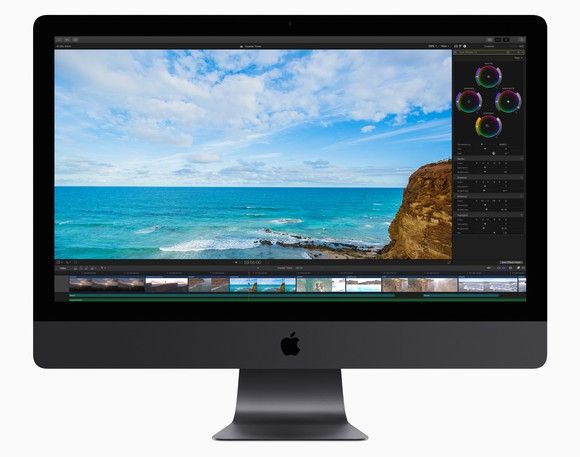
In 2019, Apple (NASDAQ: AAPL) is expected to release a new Mac computer targeted at professional content creators and other power users under its Mac Pro branding.

Apple last introduced a new Mac Pro back in late 2013 and hasn’t significantly updated the machine since.

Apple’s iMac Pro running Final Cut Pro.

The company’s 2019 Mac Pro is, of course, going to represent a huge upgrade from the current, practically antiquated Mac Pro, and should be substantially more powerful than the company’s current iMac Pro all-in-one computers, too.

Here are three things to expect from the updated machines.

1. Ice Lake Xeon processors

Apple’s current iMac Pro computers use Intel’s (NASDAQ: INTC) Xeon W processors, based on the latter’s Skylake architecture. The chips are manufactured using Intel’s 14-nanometer+ technology and come in configurations with up to 18 processor cores.

Since the new Mac Pro is likely to launch in 2019 (likely the second half of 2019, to boot), I expect that the new machines will incorporate future Xeon processors based on Intel’s Ice Lake architecture.

The new Ice Lake chips are expected to be manufactured using Intel’s 10-nanometer+ technology, which should deliver a substantial boost in power efficiency and reduction in chip area, and they’re also expected to sport an all-new processor architecture with performance, efficiency, and feature enhancements.

Apple’s iMac Pro lineup incorporates Intel’s highest-end Xeon W processors, which are designed to be used in systems with a single processor. I expect that future iMac Pro computers will continue to use Xeon W processors, and that the Mac Pro will support up to two future Xeon processors in the same system, for added performance in processor-intensive workloads.

2. Radeon Navi graphics processors

Apple’s current iMac Pro uses Radeon Vega graphics processors from Advanced Micro Devices (NASDAQ: AMD). A Mac Pro targeting a 2019 launch would likely feature graphics processors based on AMD’s upcoming Navi architecture.

Navi is expected to incorporate design enhancements to boost performance and efficiency, and to be manufactured on a much more efficient 7-nanometer chip manufacturing technology (Radeon Vega parts are manufactured using GlobalFoundries’ 14-nanometer technology).

Moreover, I expect that the new Mac Pro will support full add-in cards (and it’ll likely even come in configurations with multiple such cards, for very-high-end graphics work), so the next Mac Pro should be able to support future graphics cards from AMD as well.

3. A huge price tag

If Apple is going to keep the iMac Pro around while also offering the Mac Pro, it seems reasonable to expect that the Mac Pro will be positioned as a premium product relative to even the pricey iMac Pro.

For some context, the iMac Pro starts at $4999 and can be configured to cost more than $13,000. I think the upcoming Mac Pro will start somewhere above $4999, and that configurations of the system will exist with costs solidly north of $20,000.

These will be incredibly niche products targeted at true professionals (consumers who dabble with professional apps could be better off with an iMac Pro). For Apple’s sake, I hope that the company reads the requirements of these professional users properly, and builds a system just for them.

Why Tupperware Brands, SBA Communications, and American Airlines Group Slumped Today

Tuesday was another good day on Wall Street, thanks largely to diminished concerns about trade disputes between the U.S. and China. Chinese leaders made conciliatory comments that suggested that there could be a measured resolution to tensions between the two countries, and market participants took that as an all-clear sign to bid shares higher. Yet some stocks suffered from negative news. Tupperware Brands (NYSE: TUP), SBA Communications (NASDAQ: SBAC), and American Airlines Group (NASDAQ: AAL) were among the worst performers on the day. Here’s why they did so poorly.

Tupperware cuts its guidance

Shares of Tupperware Brands dropped 11.5% after the company announced an update to its guidance for the first quarter. The maker of food storage containers and other kitchen items said that it believes its revenue dropped 2% from the year-ago quarter, which is well below the 1% gain that Tupperware had seen as the low end of the range it had previously expected. The company also cut earnings guidance by $0.14 per share to a new range of $0.87 to $0.92 per share. A larger-than-expected impact from tax reform played a small role, but Tupperware also faced challenges across the globe, with a variety of execution issues hurting sales. CEO Rick Goings said that he has “confidence in how our business will perform going forward,” but shareholders seem less comfortable with that optimistic assessment.

Two people in front of table with roughly 2 dozen Tupperware containers.

SBA fears telecom tie-ups

SBA Communications stock fell 5% as investors assessed the potential impact of consolidation in the telecom industry on the company’s wireless tower assets. News that the No. 3 and No. 4 wireless carriers in the U.S. market could join forces through a merger hit shares of SBA and its peers hard, because fewer wireless companies would mean less competition for space on cellular towers that in turn could reduce the amount of leasing income that SBA and other tower owners are able to collect. After having expected better times due to rising capital expenditures, SBA shareholders are now concerned once again that the company could suffer if the wireless carriers finally get their act together this time and get a deal done.

American Airlines flies a bit lower

Finally, shares of American Airlines Group declined 5%. Conflicting forces rocked the airline, as the stock initially responded positively to a new corporate outlook but then turned downward as oil prices spiked. Crude climbed more than $2 per barrel to go above the $65 mark, raising fears that tailwinds from relatively low fuel costs could go away in the near future. Yet the airline’s investor update included a boost to revenue per available seat mile growth to a new range of 3% to 4% for the quarter, even as it invested in its long-term growth with a big new aircraft order. Investors will have to see how things shake out when American reports final results later this month.

Why This Newly Minted Stock Could Be a Gold Mine for Income Investors

Last fall, big oil giant BP (NYSE: BP) provided income-seeking investors with a new option to consider by completing an initial public offering (IPO) of a vehicle to operate and acquire its U.S. midstream assets. The company, aptly named BP Midstream Partners (NYSE: BPMP), is a master limited partnership (MLP) that currently owns stakes in several of BP’s pipeline assets.

This brand-new income stock offers investors a golden income opportunity. The MLP recently declared its initial distribution, implying a yield of 6.1%. However, it sees that payout rising by a mid-teens annual rate through 2020, with ample growth potential beyond that time frame, which positions it to create meaningful value for investors in the coming years.

Gold nuggets on top of cash.

A built upon a rock-solid foundation

BP seeded its MLP with stakes in several pipelines that provide it with stable cash flow. The most important is BP2, which is an onshore pipeline that moves oil to one of BP’s refineries. While only 12 miles long, the line should supply BP Midstream with 41.8% of its cash flow this year. It’s one of three onshore pipelines the company owns that also moves refined products and diluent, which helps dilute heavy oil produced from Canada’s oil sands. BP Midstream also owns stakes in several pipelines that transport oil and natural gas from offshore facilities in the Gulf of Mexico to the Gulf Coast through a 20% stake in the Mardi Gras system and a 28.5% joint venture interest in the Mars oil pipeline. Mars is the second-largest contributor to cash flow, supplying an anticipated 29.2% of this year’s total. Overall, these assets should provide BP Midstream with steadily increasing cash flow for the next few years due to the long-term contracts and regulated tariffs supporting the pipelines.

Those assets supplied BP Midstream with $23.3 million in cash available for distribution in the fourth quarter, which was enough to cover its high-yielding distribution by a comfortable 1.2 times. Providing further support for that payout is the fact that BP Midstream had only borrowed $15 million of its $600 million in available credit, giving it a microscopic debt-to-EBITDA ratio of 0.6. That’s well below its 3.5 times target, which is less than the 4.0 times comfort level of most MLPs.

Underwater pipelines.

Following a successful blueprint for income growth

BP Midstream’s current portfolio of pipelines should supply it with enough organic cash flow growth to raise its distribution at a 5% to 6% annual rate through 2020. However, it expects to increase the payout at a much faster mid-teens pace by acquiring additional midstream assets from BP. With ample liquidity in its credit facility and a long way from hitting its leverage target, the company certainly has the financial flexibility to start making deals, with the first one anticipated in the second half of 2018. The companies expect to complete one dropdown transaction each year, subject to market conditions.

BP Midstream currently holds the right of first offer on BP’s pipeline assets for seven years. However, BP owns more than just pipelines that it could sell to its MLP and diversify its business in the coming years including storage terminals, loading docks, and its fuels distribution service business. Still, in the near term, the company will likely focus on acquiring pipelines from its parent, including buying the 80% of the Mardi Gras offshore oil and gas pipeline system it doesn’t currently own.

This strategy of acquiring assets from a large parent company to grow an MLP’s payout has worked well over the years. Refining giant Phillips 66 (NYSE: PSX) has been one of the most successful with this strategy since creating Phillips 66 Partners (NYSE: PSXP) in 2013. At that time, Phillips 66 launched an ambitious plan to grow its MLP’s distribution at a 30% compound annual rate through 2018 via a steady stream of dropdown transactions. Phillips 66 Partners is right on target, having increased the payout at a 31% compound annual growth rate since the IPO while maintaining solid financial metrics, including covering the payout with cash flow by a very comfortable 1.33 times last quarter and maintaining a conservative debt-to-EBITDA ratio of 3.2 in 2017. This strategy has also richly rewarded investors in Phillips 66 Partners, which has generated a total return of 89% since its IPO despite a recent sell-off, easily ahead of the S&P 500’s nearly 73% total return over that time frame.

Income with ample upside

BP Midstream Partners already offers a decent yield of more than 6% that it can increase at a mid-single-digit rate over the next few years just from the embedded growth of its current assets. However, what makes it a potential gold mine for income investors is the company’s plan to acquire additional assets from BP. That strategy will diversify its portfolio and provide accelerated income growth potential, which could fuel a market-beating total return for investors in the upcoming years.

Horizon Robotics’ smart security camera uses A.I. for serious facial recognition
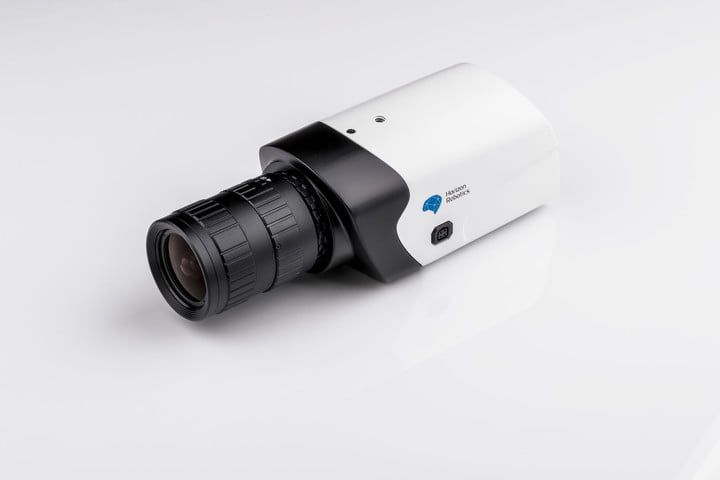
The smart cameras of 2018 are getting smarter still. Startup Horizon Robotics has debuted a new HD smart camera that boasts serious artificial intelligence capabilities and can identify faces with an accuracy of up to 99.7 percent, the company claims. That’s probably better than most humans. The company claims the new HR-IPC2143 smart camera is the “first of its kind with applications in public security for the real-time detection of potential suspects. In less ominous applications, it can identify important customers.

“The smart camera is a reflection of Horizon Robotics’ mission — to provide high-performance, low-power, and low-cost products utilizing cutting-edge artificial intelligence technology,” said Dr. Yu Kai, CEO and founder of Horizon Robotics. “Other companies can only deliver a portion of the equation, but we are able to integrate all these form factors to create a complete business solution rather than just a stand-alone camera.”

The HR-IPC2143 leverages recognition capabilities alongside its local capture to give users facial capture, feature extraction, and facial feature comparison based on deep-learning algorithms. By using an “algorithm + chip + cloud” system architecture, this camera can quickly turn raw video data into actionable insights, with multi-target location detection, multi-target tracking, multi-target recognition, and pedestrian attribute classification. Thanks to its 50,000 feature library, the camera is able to support high-performance facial recognition, as well as process videos at 1920x1080p at 30 frames per second in real time. It also allows the camera to detect, track, and identify up to 200 objects simultaneously, all in a single frame.

The HR-IPC2143 has some pretty impressive surveillance chops, as it can recognize faces even in crowded environments, like packed hallways, entries and exits, and large events. Or, if a store owner wants to identify VIP shoppers as they enter the premises to ensure that they receive special treatment, the smart camera can be leveraged in this way as well.

Key to the camera’s success is the “Sunrise” embedded A.I. computer vision processor, which boasts the Brain Processing Unit (BPU) architecture. This proprietary A.I. processor architecture claims to combine A.I. algorithms with hardware design, and allows the relatively small camera to still perform at its peak. “Compared with previous smart cameras, the ability to capture and identify images simultaneously is a major breakthrough in the field of embedded A.I. in security and commercial applications,” Horizon Robotics noted in a release.

Sleep tight: Airbus wants to fill plane cargo holds with beds

airbus to put passengers in cargo hold zodiac module

Sleeping in the cargo hold of a passenger jet doesn’t sound like a particularly attractive option at first, but once you hear about what Airbus is planning, you’ll soon come around to the idea.

The aviation giant is teaming up with French firm Zodiac Aerospace to design sleeping berths and various room designs that can be slotted into the cargo section of its existing wide-bodied A330 aircraft. Airbus is also exploring the idea of designing them for its A350 XWB aircraft.

In an online post outlining the plan, Airbus said the modules will provide airlines with new opportunities for additional passenger services, “improving their experience while enabling airlines to differentiate and add value for their commercial operations.”

And with the modules able to be quickly swapped out with regular cargo containers as and when required, the system will allow carriers to better utilize space aboard their A330 aircraft, thereby improving the efficiency of their operations.

Images and sketches from Airbus appear to show an open sleeping area, while various rooms offer a range of facilities. These include a “kids and family zone” with a sofa, TV, and even a small slide, and also a conference room to ensure there’s not rest from work even when you’re at 38,000 feet.

airbus to put passengers in cargo hold zodiac module 1

However, as with regular seating areas inside commercial aircraft, it’s likely each airline will be able to configure the compartments in lots of different ways to target particular kinds of customers.

Geoff Pinner of Airbus described the plan for cargo-hold sleeping compartments as “a step change towards passenger comfort,” adding that the company has already received “very positive feedback from several airlines on our first mock-ups.”

Of course, we’d all love to know how much a ticket will cost for such a berth. That’s up to each airline, but the words “not cheap” certainly spring to mind.

Many major international carriers already offer luxury compartments for long-haul flights, though they’re generally much smaller and well away from the cargo hold. Emirates, for example, last year unveiled a new luxury, fully enclosed cabin for first class travelers. The airline described it at the time as a “game-changing” private suite with design features “inspired by the Mercedes-Benz S-Class.”

A few years earlier, however, Etihad Airways started offering an even plusher space that can be accurately described as a flying apartment. “The Residence,” as it’s called, comprises a lounge, bedroom, and bathroom and is fitted inside the airline’s A380 aircraft.

Airbus hopes to start putting passengers in the cargo hold from 2020.