Archives for March 30, 2018

Nike Sees a Clearer Path Towards Higher Profits

Investors have been waiting for over a year to see signs that a turnaround was building at Nike (NYSE: NKE). And last week they got their strongest indication yet that this much hoped-for change was imminent. The sports apparel titan revealed a surprisingly strong profit performance in the fiscal third quarter while forecasting an end to its inventory struggles in the key U.S. market.

CEO Mark Parker and his team held a conference call with analysts during which executives explained their reasons for issuing that optimistic outlook. Below are a few highlights from that presentation.

A jogger checks her smartwatch.

Beating expectations

We exceeded the revenue and gross margin expectations that we set 90 days ago fueled by an unprecedented flow of new products and innovation platforms that we’ll scale over time.
— CFO Andy Campion

Nike’s top-line sales growth held steady at a 3% uptick to edge past management’s target. Profitability, meanwhile, continued its slow march toward an eventual rebound. Gross profit margin shrank by just 0.7 percentage points compared to a 1.2 percentage point decline in the prior quarter and a 1.8 percentage point drop to kick off its fiscal year. In comparison, rival Under Armour’s (NYSE: UA) (NYSE: UAA) gross margin fell by 1.5 percentage points over the holiday season, or slightly worse than its 1.4 percentage point decline for the full 2017 year.

Stabilizing business in the U.S.

While North America declined 6% for the quarter, we expect that the momentum will now reverse the trend.
— Campion

Sales trends worsened slightly in the U.S. market for the quarter. However, executives said the end of the period marked a “significant turn” in demand. This positive shift, combined with Nike’s progress at whittling down retailer inventory, has finally returned the segment to a healthy sales position.
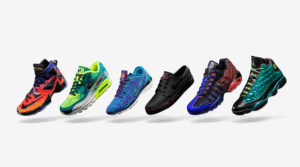
A lineup of Nike shoes.

As a result, the company predicts no revenue decline in the fiscal fourth quarter and a return to growth beginning in the second half of fiscal 2019.

China speeds up

China not only continues to lead Nike in terms of the pace of growth, but also in terms of executing the Consumer Direct Offense.
— Campion

Nike’s global sales footprint has helped it weather the U.S. downturn better than peers like Under Armour, which counts on the domestic market for over three-quarters of its revenue. And China was once again the big standout within that international division. Sales growth shot up to a 19% pace from 15% in the prior quarter and profitability improved as earnings jumped 30%. Executives believe there’s plenty of room for more gains ahead and that success here is proof that its shift toward direct-to-consumer sales will pay big dividends over time.

Looking ahead to 2019

We remain confident we will deliver on the growth and profitability expectations that we have previously communicated.
— Campion

Nike confirmed its fiscal 2018 outlook and said sales growth will stay in the high-single-digit range in the current quarter. Executives said gross profit margin will be flat or up slightly, which would mark the first time in over two years that this metric didn’t tick lower.

Looking further out, management sees a “strong” profitability increase in fiscal 2019 and accelerating revenue gains as the U.S. market returns to growth. That forecast is consistent with the long-term outlook management issued in late October and indicates their turaround plan is coming along as well as investors could have hoped, given the challenging retailing environment.

Is This Key Catalyst for Apple Just Getting Started?

Accounting for 62% of trailing-12-month revenue, Apple’s (NASDAQ: AAPL) iPhone business ranks No. 1 when it comes to its importance to the tech giant’s top- and bottom-line results. Meanwhile, Apple’s fast-growing services business comes in at a formidable second place, representing 13% of total revenue. But it’s Apple’s smallest segment — other products — that arguably represents the company’s most important catalyst for growth.

Sure, other products, which includes revenue from Apple TV, Apple Watch, Beats products, the iPod Touch, and accessories, accounts for just 6% of revenue. But don’t let this small figure make you underappreciate this segment’s value to Apple’s business.

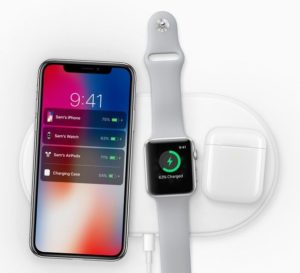
iPhone X, Apple Watch, and Airpods charging on Apple’s AirPower mat

Image source: Apple Watch.

The growth opportunity

Just to pique your interest, here are two startling figures about the business:

  1. When adjusted to exclude the impact of an extra week, other products revenue increased 47% year over year in Apple’s most recent quarter.
  2. Apple Watch revenue, which is included in Apple’s other products segment, climbed 50% for the fourth quarter in a row in fiscal Q1 (Apple Watch unit sales did, too).

But this catalyst may only be just getting revved up. In what’s likely part of an effort to maintain this strong momentum, Apple is reportedly working on two major new products in its other products segment.

In early march, Bloomberg reported that Apple wanted to capitalize on the success it is seeing with its AirPods by launching Apple-branded over-hear headphones aimed at the high-end noise-canceling market. These new headphones could launch as early as the fourth quarter of this year.

More recently, KGI Securities analyst Ming-Chi Kuo, who has a good track record when it comes to Apple product predictions, said (via CNBC) he believed Apple is launching a new version of its Apple Watch this fall. The fourth-generation version will boast longer battery life, a 15% larger display, and “trendy” new design.

All-new Apple headphones and the first Apple Watch with a redesigned form-factor since the device was launched in 2015 could help propel Apple’s other products segment to new heights.

The growth is in wearables

Though Apple’s other products segment includes more than wearable technology like the Apple Watch, AirPods, and Beats products, it’s sales of Apple’s wearables devices that investors should be watching closely when analyzing this segment.

In Apple’s fiscal first quarter, management said total wearables revenue during the period was up 70% year over year, driving home how central these products have been to Apple. “In fact, wearables were the second-largest contributors to revenue growth after iPhone, which is impressive for a business that started only three years ago,” said CFO Luca Maestri.

AirPods laying on an iPhone

Image source: Apple.

Given the other products strong growth recently, the specific data Apple has provided about momentum in wearables, and rumors of some important new wearables product launches, it may not be much longer before Apple’s other products segment begins to rival Apple’s iPad and Mac businesses.

IBM’s New Computer Is How Small?

IBM (NYSE: IBM) sits at a crossroads in its current turnaround, with the company recently returning to year-over-year revenue growth for the first time in 22 quarters, and with top executives outlining the company’s longer-term strategy at a recent investor presentation.

Part of what will power IBM’s growth is good old-fashioned innovation, with the company making big bets on artificial intelligence, blockchain solutions, and quantum computing. IBM hopes investments in these “frontier technologies” will fuel growth as its legacy business lines continue to slowly decline.

At its Think 2018 conference this month, the company unveiled a new innovation that will tie in with its blockchain bet: the world’s smallest computer.

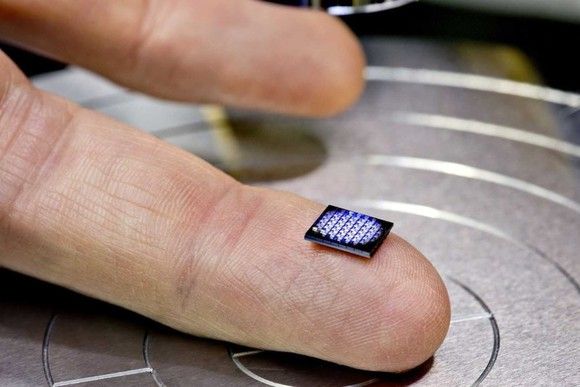
a tiny rectangular computer sits on a person’s middle finger.

Image source: IBM.

A grain of salt

IBM’s new computer is 1 millimeter by 1 millimeter — that’s smaller than a grain of salt! But that tiny package packs a punch: IBM says the new device holds several hundred thousand transistors and has as much computing power as an x86 computer processing unit (CPU) from 1990.

That’s enough to provide valuable monitoring, data storage, and analysis of certain objects, and IBM has designed these tiny computers to attach to physical goods in a supply chain. These near-invisible “tags” will work in conjunction with IBM’s blockchain technology, which will track objects as they move from manufacturers through the supply chain and all the way to the end consumer.

IBM’s blockchain initiative has already found its first significant use cases with these types of applications, working with partners including European shipper Maersk, a food safety consortium with 10 top U.S.-based food suppliers and retailers, and another food safety consortium in China.

The company has said that “the world’s smallest computer is an IBM-designed edge device architecture and computing platform that is smaller than a grain of salt, will cost less than ten cents to manufacture, and can monitor, analyze, communicate, and even act on data.” It’s also noted that “these technologies pave the way for new solutions that tackle food safety, authenticity of manufactured components, genetically modified products, identification of counterfeit objects, and provenance of luxury goods.”

Thus, the combination of these tiny, extremely cheap computer tags and IBM’s blockchain technology could become a formidable product for the global shipping industry.

Shot across Impinj’s bow?

One company that may be threatened by the new product is Impinj (NASDAQ: PI), a producer of radio-frequency identification (RFID) tags. The RFID industry is currently estimated to be at about $5.5 billion, but is expected to grow around 12.3% per year to $17.75 billion in 2027, according to research firm Future Market Insights (FMI). With that kind of growth potential, Impinj had been a darling of the tech market, until last year.

Since around the beginning of 2017, Impinj has had a rough go of it. Its shares have been more than cut in half thanks to slowing growth, and its CFO is leaving the company this week. The company attributed the slowdown to a cyclical pause in customer purchasing. It also maintained its growth potential was intact but “farther out in time.”

Should IBM’s new minicomputers make inroads against RFIDs, it may call into question Impinj’s promises of better days ahead.

Big bets

IBM is making a big bet on blockchain and advanced hardware as part of its growth plans. While the current business has been the victim of technological change and disruption, IBM hopes to strike back with these innovations of its own. The success of these frontier tech products, like this 1-millimeter computer for blockchain, will be key in determining whether IBM’s stock can spring back to life.

Apple, Inc. Will Likely Announce a Dividend Increase Next Month

Once a year, Apple (NASDAQ: AAPL) revisits its capital return program and announces a dividend increase. That time of the year is almost here. Though Apple updated its capital return program on May 2 last year, the tech giant usually announces changes to the program toward the end of April, alongside its second-quarter results. Apple investors, therefore, can expect a dividend increase next month — or in early May at the latest.

Here’s a look at what to expect from Apple’s dividend increase this time around.

Apple Store in Upper West Side New York City

A growing dividend history

Having declared its first dividend over five years ago, the tech giant has finally built up some strong dividend history. Since starting at a split-adjusted $0.38, Apple’s dividend has increased every year, compounding at an average rate of 10.6%. Today, Apple pays shareholders about $3.3 billion per quarter in dividends.

This strong dividend streak means savvy dividend investors have profited nicely. In addition to shares soaring 165% in the past five years, Apple’s dividend yield has remained at 1.5% or higher for most of this period, giving investors plenty of opportunities to buy into a meaningful, rapidly growing dividend.

Apple’s dividend remains attractive (yielding 1.5% right now). Furthermore, Apple’s strong history of double-digit dividend increases suggests investors can expect the iPhone maker’s payouts to keep increasing in the coming years.

What to expect

Investors can expect another annual increase of around 10%.

Fortunately, Apple investors don’t have to count solely on history to extrapolate that the tech giant will keep increasing its dividend; Apple has explicitly said it “plans to increase its dividend on an annual basis.”

In addition, Apple’s low payout ratio supports the case for another dividend increase. Thanks to 22% year-over-year earnings-per-share growth in the trailing 12 months, Apple sports a payout ratio that is beneath the already-low 27% payout ratio one year ago. Paying out just 24% of its annual earnings, Apple has significant room for further increases.

But the most concrete evidence of Apple’s room for dividend growth surfaces when investors take a look at the company’s rock-solid balance sheet and free cash flow statement. Not only does Apple have about $285 billion of cash plus marketable securities on its balance sheet, but it’s currently raking in a whopping $52.3 billion in free cash flow annually. Yet, the company has paid out just $13 billion in dividends in the trailing 12 months.

A person holding the iPhone X on launch day

Sure, there are other things for Apple management could choose to do when it revisits its dividend increase every year. Namely, Apple has historically favored share repurchases over dividends. For instance, Apple spent about $32 billion repurchasing shares in the past 12 months. But recent changes to tax law mean Apple was finally able to repatriate boatloads of foreign cash. Therefore, if there’s any year Apple will almost certainly sustain the strong dividend growth it has served investors in previous years, this is it.

Astro litter-picker launches to help clean up 7,600 tonnes of space junk

The RemoveDebris spacecraft deploying its net – University of Surrey

The world’s most advanced litter-picker will be launched into space next week to clean up floating debris which is threatening satellites and the International Space Station (ISS).

Surrey University has designed a spacecraft which can grab space junk then pull it into Earth’s atmosphere where it is burned up.

The little craft, named RemoveDebris, is due to launch from the Kennedy Space Centre on Monday, on board one of Elon Musk’s SpaceX Falcon 9 rockets.

The spaceship will dock at the ISS first and then deploy on its own on a test mission to snare a small satellite using a harpoon and net.

It is estimated that there are more than 7,600 tonnes of space junk in and around Earth’s orbit – with some moving faster than a speeding bullet, approaching speeds of 30,000 miles per hour, which are a huge threat to satellites and space stations.

In 2016 a small piece of debris chipped a window on the International Space Station.

The spaceship will eventually drop into Earth’s atmosphere and burn up Credit: University of Surrey

Professor Guglielmo Aglietti, Director of the Surrey Space Centre at the University of Surrey, said: “It is important to remember that a few significant collisions have already happened.

“Therefore, to maintain the safety of current and future space assets, the issue of the control and reduction of the space debris has to be addressed.

“We believe the technologies we will be demonstrating with RemoveDebris could provide feasible answers to the space junk problem – answers that could be used on future space missions in the very near future.”

The mission, which has been designed and manufactured by a consortium of leading space companies led by the University of Surrey and funded by the European Commission, is the first concrete attempt to clean up space junk currently orbiting Earth.

The tiny spaceship will perform two experiments to deploy and then capture a small ‘cubesat’ satellite, first using a net, and then using a harpoon.

The spacecraft will then deploy a large dragsail to allow it to fall out of orbit, where it will burn up as it enters Earth’s atmosphere.

There are tens of thousands of pieces of dangerous space junk circling the Earth

Since 1957, more than 5250 launches have led to tens of thousands of tracked objects in orbit around Earth.

But only about 1200 are working satellites – the rest are debris and no longer serve any useful purpose.

Many derelict craft have exploded or broken up, generating an estimated 750,000 pieces larger than 1 cm and a staggering 166 million larger than 1 mm.

Science Minister, Sam Gyimah, said: “Space debris is a growing concern so it’s great to see a British university and our innovative space sector leading the way in the search for solutions.

“It is also a fantastic example of the unique expertise found in the UK’s growing space sector and the value that it adds to international projects.

“The UK Space Agency continues to work closely with industry to develop new technologies and infrastructure to grow our share of the global space market as part of our modern Industrial Strategy.”

The harpoon and net have been designed by Airbus UK.

Aurélien Pisseloup, Space Engineer at Airbus, said: “Airbus has been investing in new technologies for space debris removal in co-operation with space agencies and institutes.

“Contributing to this exciting mission with our expertise and concretely with our harpoon, net experiments and vision based navigation (VBN) moves the international space community one big step forward in tackling space debris.”

The Euroepan Space Agency is currently developing a Space Situational Awareness (SSA) programme to monitor the debris and has called on the world’s space agencies to try to keep Earth’s orbital environment as clean as possible.

Mosquito early warning app detects the insects from their buzz

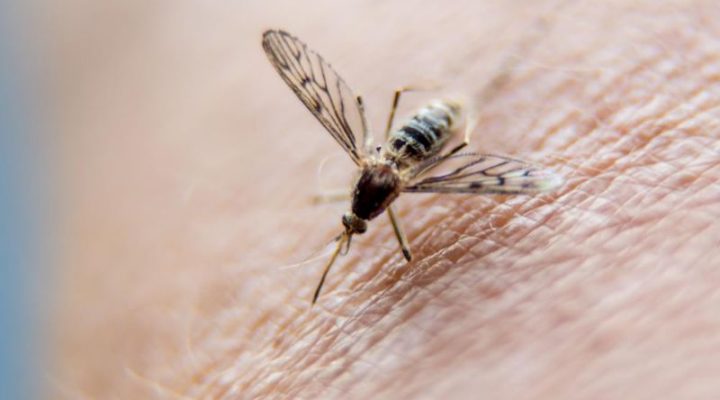
A mosquito on a person’s arm. Photograph: Philippe Huguen/AFP/Getty Images

Artificial intelligence researchers have developed a mosquito early warning system that raises the alarm when the insects are near by detecting the whine of their wingbeats.

The system uses an app that can run on a £20 mobile phone to analyse sounds in the environment and issue a warning if it hears the telltale buzz as a mosquito swoops past.

While the app can already tell when the insects are close, the next step is to make it good enough to identify different species from their audio signatures, and so tell malaria-carrying mosquitoes from less dangerous ones.

“Hopefully this will save lives,” said the project’s Yunpeng Li, who works on machine learning at Oxford University. “If we can identify the species, we can tell people in areas where there is malaria that these mosquitoes are around and that they need to take care, to use bed nets and so on.”

There are more than 3,000 species of mosquitoes in the world, but only about 50 of them, all belonging to the genus Anopheles, spread the malaria parasite at dangerous levels. Following a steep decline in global malaria cases since 2010, reduced investment means infections are on the rise again. In 2016 the disease claimed the lives of 445,000 people globally, with more than 90% in sub-Saharan Africa.

To build the early warning system, the Oxford team recorded mosquitoes in the lab and gathered more audio signatures from the US Centers for Disease Control and Prevention, an army research unit in Kenya and scientists working in the forests of Thailand. They then converted the audio signals into frequency features and trained an algorithm to learn the signature pattern created by mosquitoes in flight.

Preliminary tests with inexpensive phones found that the app could detect the presence of mosquitoes from about 10cm away, depending on background noise. The system is likely to be most effective if the phone is placed in an area that is attractive to mosquitoes, such as next to a lamp.

The whine of a mosquito varies as it grows, but Li believes the algorithm can learn the telltale audio signatures produced by different species. The pitch of a mosquito’s buzz depends on how fast it beats its wings – around 300 times per second is typical – but the tone is accompanied by higher-frequency harmonics. Features such as the wing size and shape feed into the overall sound the mosquito makes.

To boost the accuracy of the early warning system, the researchers will now process 100 hours of recordings in the wild and in labs, including scores of mosquito whines. They are hoping the public will help with the task by listening to two-second audio clips and saying whether or not they can hear a buzzing sound. If they can, the clip will be fed into the algorithm, along with any details the scientists have on the species. Those wanting to take part on the Zooniverse website can train themselves first by listening to examples of mosquito whines.

Ultimately, Li wants the app to do more than protect people against malaria-carrying mosquitoes. With the early warning system, researchers could build up real-time maps of mosquito populations, and scientists in the field could identify mosquitoes more easily. In areas where mosquitoes do not carry diseases, one way of collecting them for identification is to let them bite and then suck them into a trap. “It’s slow and very bloody,” said Li.