Archives for February 24, 2018

5-year-old super saver from Spotsylvania pens book with her dad on saving and investing

Five-year-old Kennedy O’Neal’s morning routine is to eat breakfast at the counter in her kitchen while she counts the change and small bills in the glass jar she uses as a piggy bank.

She guesses she has about $60 in there right now.

That includes $5 she got from the tooth fairy for a top front tooth and $10 for a bottom one—incentive money to pull them out, her dad, Chris O’Neal, clarified.

When Kennedy, who is in kindergarten at Faith Baptist School, finds coins, she adds them to her jar.

“She’s been doing that for years, like since she was a toddler,” O’Neal said.

The dollar bill she gets from her parents for completing her daily chores—making her bed without wrinkles, feeding her 11-month-old baby brother his dinner, sweeping the kitchen and doing her homework—goes in the jar, too.

So does the money her parents asked family members to give her in lieu of toys at birthdays and Christmases.

When the jar gets full, half of the money goes into Kennedy’s savings account at Navy Federal Credit Union.

“She loves the change machine—she likes to guess how much cash will come out of it,” mom Sabrina O’Neal said.

Kennedy will tell you her favorite part about the bank is the lollipops.

She gets to spend the other half of her stash at Toys “R” Us. On her last trip, she bought an L.O.L. Surprise! doll.

Kennedy shares her tips and tricks to get other kids interested in saving and investing in a new book that she wrote with her dad—”The Adventures of Super Kennedy: Saving and Investing.”

To celebrate the book’s release, her family is throwing a free party for the community, with book signings, games, music and prizes, on March 17 at FunLand in Central Park in Fredericksburg.

Chris O’Neal is a self-described “avid real estate investor.” He’s a Realtor and, with his wife, Sabrina, flips houses. In 2015, he wrote a book called “Done Deal: What ‘They’ Never Told You About Money,” in which he gives his ideas for achieving financial freedom.

Kennedy used to go with him to book signings and she caught the book-writing bug.

“She told me, ‘Dad, I want to do my own book,’ ” he said.

“We can write a book,” he told her. “Just figure out what you want to tell people.”

Together, they came up with the idea of a little girl, based on Kennedy, who turns into a superhero on a mission to help other kids learn how to save.

“Every kid can be a superhero these days with help and support from their parents,” O’Neal said.

He and Kennedy worked on the book in the evenings for about a year. They hired an illustrator from California, Romney Vasquez, after going through two other illustrators who didn’t deliver the look they wanted for the book.

“The Adventures of Super Kennedy” is self-published and will be available on Amazon, O’Neal said.

He used to work in the marketing department of a utility company, and though he said the company paid well, he didn’t like the commute and he wanted to be his own boss. He also noticed how many of his coworkers were in their 60s and still working.

“I’d see people who had been working there 30 years and I’d wonder, why haven’t you retired?” he said. “A lot of the time, they were working to pay for their kids’ college.”

O’Neal has other ideas about generating income for Kennedy’s higher education. Using some money from Kennedy’s savings account, he and his wife bought a building in Baltimore for $11,000 that they plan to fix up and rent out.

“That will give [Kennedy] money each month for college,” he said. “The house will pay her for the rest of her life.”

O’Neal said some people might consider investing in rental properties risky.

“My saying is, ‘It’s a risk not taking a risk,’ ” he said.

The O’Neals have their own version of Kennedy’s money jar—a 5-gallon water bottle where they throw coins and small bills that might be in their pockets at the end of a day. They save that money to go toward their vacations.

“We might get $100 that way,” Chris O’Neal said. “It helps.”

His advice for kids who are new to saving is to set a small goal of even $5.

“Once they get that first trip to Toys ‘R’ Us out of the way, [the fun of saving] will be instilled in them,” he said.

Kennedy already knows what she’s going to buy on her next trip to the toy store.

“The new blue LOL! doll,” she said.

PERSONAL FINANCE: Tightening the tax screws

The squeeze on individual taxpayers continued in this year’s budget with increased Vat and fuel levies, almost no fiscal-drag relief and a below-inflation increase in the medical tax credit that whittled away this benefit.

This year’s additional burden comes on the back of a steady increase in income tax and indirect taxes over the past few years.

South Africans’ personal income tax burden has risen from 8.3% of GDP seven years ago to 9.8% in the 2018 tax year, the Budget Review notes.

Add to this consumption taxes such as Vat increasing the price of many purchases by another percentage point, the fuel levy and road accident fund levy increasing the tax on fuel from 35.6% to 38.4%, and a two-percentage-point increase in ad valorem excise duty pushing up the cost of goods such as vehicles and cellphones.

Following an income tax rate increase in 2016 and the introduction of a 45% marginal tax bracket for high earners last year, personal income tax rates were not increased this year.

However, the screws will tighten on all taxpayers as national treasury chose, once again, not to fully address tax-bracket creep. This occurs when a salary increase pushes a taxpayer into a higher tax bracket.

This year even the lower income brackets were granted only partial bracket-creep relief — the bottom three income brackets were raised by a below-inflation 3.1%, while the four higher tax brackets were not adjusted at all.

This will cost personal taxpayers an additional R6.8bn in the 2019 tax year.

Individual taxpayers will also be squeezed for an additional R700m because medical tax credits rose by less than inflation.

They increased by a mere 2.31% (for the first two beneficiaries) and 2.45% (for remaining beneficiaries) — well below the increases in contributions that medical scheme members face, which are typically two to three percentage points above inflation (which was 4.4% for the year to the end of January).

The increases in contributions average 7.75% for nine large medical schemes, according to Grant Thornton Healthcare.

Get a holiday that won’t break the bank

If you love cruises, you likely already know that they are fantastic value for money. Everything you might need is included in one low price, and for the budget-conscious holidaymaker, a cruise is an ideal choice.

There are ways to make your money stretch even further when you book and embark on one of the big ships. Choosing to cruise for your holidays and then finding a great deal on our sale page is step one towards an affordable escape – and the following are a few more things you can do to make your dollars work their hardest.

Get it all prepaid

There’s nothing like the feeling of sailing away knowing that you have already paid for your whole holiday – and taking most impulse purchases out of the equation is the perfect situation for those who like to manage their money carefully. We have a few tips to give you that peace of mind:

If you are likely to drink more than a minimal amount, a drinks package will likely be worth it. These vary between lines, and there are usually a variety of packages which include different drinks. Do some research on the price of drinks and how much you might spend without one.

Many cruise lines operating from Australia have done away with tipping on top of the cruise fare. P&O, Carnival, Royal Caribbean and Princess all include gratuities in the fare for ships based Down Under. Most lines will allow you to pre-pay them if they are not built into the fare. Check this detail with your cruise agent!
Many shore excursions can be paid before you embark, so you have everything squared away and budgeted for – you may just need some local currency for a souvenir and a snack!

Eat inclusive

The specialty restaurants on ships are nice for a special night out, but don’t feel that you are missing out if you don’t try them all! The main dining room on any ship is a great experience, with multiple courses, friendly waiter service and all the bells and whistles of a fine dining meal. You can order as many dishes as you like, and menus vary so you won’t get bored. Mix it up a little with some casual buffet dinners and enjoy never having to take out your wallet – or cruise card.

For more variety, you can often eat in the main restaurant for a seated, formal breakfast or lunch as well as the buffet. What’s more, many ships have a range of smaller eateries which are included in the fare – for example, the delicious taqueria on the Carnival Spirit, the Princess pizzerias or the poolside grills on many ships.

Explore independently or stay onboard

Shore tours are certainly a good and convenient way to discover a destination, but the costs can add up. Thankfully, they are not the only way. Public transport and your own two feet are perfectly suitable for making your way around the central area of a port city, and there are independent tours and shuttles you can use if you feel confident that you will be able to get back to the ship on time. Many destinations have beaches to enjoy which cost nothing, and you may be able to rent snorkel gear from the ship or from local operators. Do a bit of research on the ports you are visiting to compare the cost of going it alone versus booking a shore tour. You may find an autonomous excursion is your best bet!

In fact, getting off the ship is not compulsory. For various reasons – including return visits and wanting to enjoy the peace and quiet of a near-empty ship – many choose to stay onboard during port days.

These are just the three easiest ways to ensure you don’t spend more on your cruise than you need to. Don’t let a price tag put you off from a fabulous holiday – set sail on a budget escape with one of Cruise Sale Finder’s many great cruise deals.

Nifty thrifting: A guide to clothes on a budget

Upcycling your wardrobe can be easy

To many, thrift shopping can seem like an intimidating task. Endless rows of clothes and knickknacks sit in large, fluorescent-lit, musty-smelling rooms.

Once you gain some experience and know what you’re doing, thrifting can be a very fun and rewarding experience. Here are some tips and tricks for mastering the art of thrifting:

Scout out some locations:

Before you go thrift shopping, it is wise to consider where you will actually go. The location of the thrift store will determine a lot about the contents inside. Thrift stores in downtown New York City will not offer the same array as clothing as your local Goodwill in Marion, Indiana.

When finding a thrift shop, always make sure you know a little about the area it’s located in, as this will suggest a lot about the contents inside. You may have to go to multiple stores to find anything worth while.

Practice patience:

“Thrift shopping is like a church potluck, you have to go in not expecting much. There is a chance you can get lucky though,” said sophomore Keaton Clay. Patience is key while thrifting. Most thrift stores have seemingly endless rows of clothes organized by the specific clothing item and color.

If you have a specific item in mind, you can go directly to that section. But, if you don’t have anything in mind, it’s best to just start from the beginning. Set aside at least an hour. Finding quality items can be time consuming, but is worth it in the end.

Be Creative:

Creativity is a good asset to use while thrift shopping. It’s best to keep an open mind and again continue to be patience while trying on all the various clothing items you find. Most thrift stores will have some very unique and fun clothes that can be styled to actually look quite good. Keeping an open mind and being willing to try on various items will determine your success while thrifting.

Try things on:

Sometimes you just want to walk out of the store with whatever you think will work. This is never a good idea with thrift shopping though. Nothing fits the way it appears on the hanger. While it may seem a little gross or annoying to use the dressing rooms in a thrift shop, it will end up saving you from buying pieces that you won’t actually use.

Take a buddy:

Thrift shopping can be intimidating. Take a friend along and ask them what they think of different things. This way you won’t buy anything too crazy. Also, sometimes you find some hilarious stuff hidden in the aisles. Make sure you have someone there with you to laugh about it with.

Don’t settle:

“This advice not only goes for relationships, but thrifting too!” said freshman Grace Schmidt, a regular thrift shopper, “Never purchase anything if you don’t see potential. You can always come back the next week when items have rotated and start again.” If you are uncertain if you would actually use a piece, do not spend money on it. Just because something is cheap, does not mean you should buy it.

Check for sales:

You never know when there will be a sale at your local thrift store. For example, on the first saturday of every month, everything at Goodwill is fifty percent off. Most shops have a decent website and will advertise their sales online. Do your research before you go so you don’t miss a sale.

Thrift shopping is a great way to build intentional community. Find a group of friends and go try on some fun outfits. With a little patience and effort, you too can put together outfits that look brand new at a fraction of the cost. You never know what you might find, so give it a shot!

Is Uber selling its Southeast Asia business to Grab?

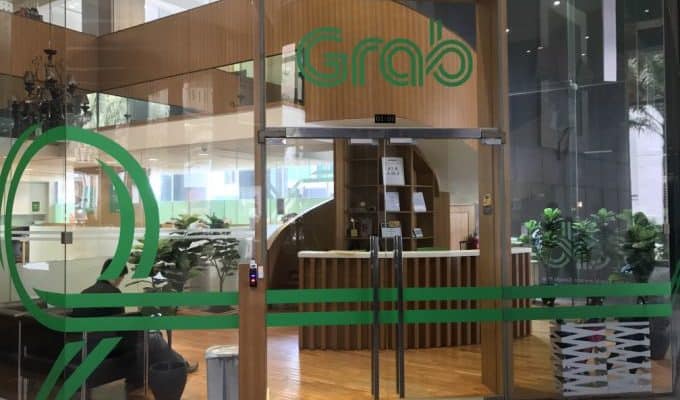
The Grab office in Singapore

If you read the tech press, you might have seen reports that Uber is pursuing a sale in Southeast Asia that would see Grab, its Singapore-headquartered rival valued at $6 billion, acquire Uber’s business in the region.

Rumors of such a tie-in have been rife for a while. Uber sold its China business in exactly such an arrangement in 2016, and it made a similar exit from Russia last year. In both cases, the firm’s motivation was to purportedly shape up for a potential IPO by offloading loss-making units that had lost the local market.

Why not, then, extend that into Southeast Asia and sell to Grab?

There is competition.

Reliable data is hard to come by, but it is fairly widely accepted that Uber, once the leader in Southeast Asia, has dropped behind Grab across the region as a whole, while both companies trial local startup Go-Jek — a unicorn itself, too — in Indonesia, the only market Go-Jek operates in.

There are challenges.

Despite a cumulative population that exceeds six billion people, Southeast Asia’s ride-sharing business did just $5.1 billion last year, according to estimates from a report authored by Google and investment firm Temasek. Uber is not expected to be profitable in the region “in the near future,” CEO Dara Khosrowshahi said last year.

There is the motivation.

Uber and Grab share a common investor in SoftBank. The Japanese firm first backed Grab back in 2014, and it recently pumped in $2 billion in fresh capital alongside China’s Didi Chuxing — the company that bought Uber China and, by virtue of that deal, is also an Uber stockholder. SoftBank, of course, secured a much-publicized investment in Uber in January.

Pitting two of its portfolio together in a loss-making market probably doesn’t make sense to SoftBank at this point.

Someone, somewhere, seems very keen to make a deal happen, and so we have the reports.

Last week, CNBC cited two people “with knowledge of the matter” who said that Uber “is preparing to sell Southeast Asia unit to Grab.”

The news was widely re-reported by a number of other media. But if you skip down to the second line of the original CNBC article, the transaction seems less definitive that the title suggests.

“No deal has been reached yet, and the timing of any such deal is uncertain,” CNBC reporter Alex Sherman wrote.

Uber and Grab both declined to comment on the report when we asked.

The deal can make sense in financial terms, as above, but in practice there are certainly some question marks.

Uber may have fallen behind Grab, but it still has the brand. Uber invented ride-hailing, and it can continue to maintain a sizable market share, if not close the gap with some investment.

The word Uber is already a verb to many people, such is the company’s profile, and that isn’t just limited to the English language. There’s a huge amount of consumer awareness that Uber trades on, even when its competitors push hard with discounts, marketing and other strategies, is very much alive in Southeast Asia.

The market in the region is tipped to grow massively.

The same Google-Temasek report noted that the ride-hailing market in Southeast Asia has grown four-fold since 2015 and it is tipped to reach $20.1 billion by 2025. More generally, Southeast Asia is now the world’s third-largest region for internet users — with more people online than the entire U.S. population — with upwards of 3.8 million people coming online for the first time each month.

It might be hasty for Uber to retreat at this time. Certainly, the chips are down and things have been better, but the game is far from won as it was in China, where Uber had little mainstream recognition and was spending over $1 billion just to try to keep up with Didi.

There hasn’t been much of a reaction to the reports from Uber, but this week Khosrowshahi — who was in India as part of his first Asia tour with Uber — made a series of bullish comments that seemed to reaffirm a commitment to Southeast Asia, according to Reuters.

“We expect to lose money in Southeast Asia and expect to invest aggressively in terms of marketing, subsidies etc,” Khosrowshahi told reporters in New Delhi, adding there is huge potential in the region thanks to a big population and fast internet user growth.

You could, of course, offer a counter argument that Khosrowshahi is playing hard to get or making negotiations with Grab tougher. But the Uber CEO also pointed out to press that Uber is just one shareholder and thus its aims and objective don’t represent the path that the company will take.

From Reuters again:

Khosrowshahi said SoftBank is an investor but Uber, which has a valuation of around $68 billion, will take any final decisions along with the board on mergers and partnerships.

There has certainly been some suspicion that the leaks may be coming from the investor side of Uber/Grab, given the benefits that consolidation might bring. The fact that these leaks have also intensified since SoftBank became interested in an Uber investment, certainly gives credence to that theory.

Indeed, SoftBank board member Rajeev Misra — who joined the Uber board following the investment — told the Financial Times that Uber should focus on Western markets and cut its losses in emerging regions.

Is SoftBank the source of these new leaks? You can draw your own conclusions.

So, while a deal might make some sense on paper, reports of an imminent acquisition seem wide of the mark. That said, this is the ride-hailing industry, and anything can happen.

Samsung saves Opera Max browser app from the deadpool

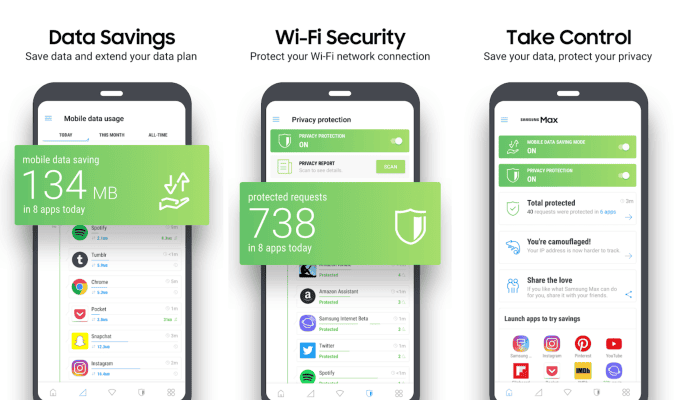
Screenshots of Samsung Max for Android

Opera Max lives on after Samsung acquired the mobile browser to save it from oblivion.

The browser was one of the first data-friendly mobile browsers and it later added privacy-focused settings, including safeguards against insecure WiFi connections and a VPN. The popular app clocked up more than 500,000 installs, but that didn’t stop parent company Opera — which is owned by a consortium of Chinese firms — from announcing its closure last year.

“Opera has now decided to discontinue Opera Max. The product had a substantially different value proposition than our browser products, and represented a different focus for Opera,” it wrote at the time. “We, therefore, focus on our browsers and other upcoming services.”

Step forward Samsung, which said today that it has picked up the service and turned it into ‘Samsung Max’ — as first spotted by VentureBeat.

Opera Max users will get an update that brings them over to the now-Samsung-owned version, while other users can get their hands on the Android app or check the Galaxy Apps store. Bad news though, it’ll only be available on Samsung phones rather than all Android devices as had previously been the case.

In addition, Samsung plans to preload the app on its devices in a number of emerging markets: Argentina, Brazil, Indonesia, Mexico, Nigeria, South Africa, Thailand and Vietnam.

“At Samsung, we’ve been committed to creating inclusive data saving and privacy protection services for all our devices. Because of this, we are now introducing Samsung Max to our mid-range devices as an exclusive and unique service that sets Samsung devices apart from the rest of the smartphone market,” Seounghoon Oh, VP of Samsung R&D Institute India, said in a statement.

It’s unclear how much Samsung paid for the service, if anything at all, but you’d imagine it wasn’t a lot since it was destined for closure.