
Archives for February 1, 2018

Oil drops for a third day; set for strongest January since 2013

FILE PHOTO: Storm clouds gather over Shell’s Pulau Bukom oil refinery in Singapore January 30, 2016.

LONDON (Reuters) – Oil fell for a third day on Wednesday, but remained on track for its biggest gain in January in five years, in spite of data that showed U.S. crude stocks rose more than expected last week and a broader selloff in other commodities, stocks and bonds.

Brent crude , the global benchmark, was down 49 cents at $68.43 a barrel by 1015 GMT, after touching a two-week low earlier in the day. U.S. West Texas Intermediate (WTI) futures were down 39 cents at $64.11.

On Tuesday, U.S. crude fell 1.6 percent to close at $64.50 a barrel, far outpacing a 0.6 percent drop in the price of Brent.

“The extent of the latest pullback in oil prices has taken many by surprise. Whether this weakness will be short-lived or are we witnessing the precursor to a violent downside correction remains to be seen,” PVM Oil Associates strategist Stephen Brennock said.

“Still, what is apparent is that positives are increasingly in short supply for skittish buyers and the early-year optimism is hanging by a thread.”

Prices of WTI and Brent are still on track for a fifth month of gains and Brent is set for its largest percentage increase in the month of January since 2013, with a rise of 2.7 percent.

But as prices have risen, U.S. producers have increased their rig count. Energy companies added 12 oil rigs last week, the biggest weekly increase since March.

“The rig count will only continue to rise and the U.S. system will only become more efficient,” said Matt Stanley, a fuel broker at Freight Services International in Dubai.

“I see a correction on the horizon down towards $60 before the inevitable OPEC minister comes out and talks about new cuts,” he added.

The Organization of the Petroleum Exporting Countries, along with other producers including Russia, has been waging a battle against U.S. shale producers, agreeing to take 1.8 million barrels a day off the market through the end of 2018.

A report from the American Petroleum Institute late on Tuesday showing U.S. crude stocks rose by 3.2 million barrels last week cast a further bearish pall over the market.

U.S. Energy Department data on Wednesday is expected to show an increase in inventories for the first time in 11 weeks. Analysts polled by Reuters forecast an average 100,000-barrel build in crude stocks.

Crude stocks tend to rise in January, but this year they have fallen by more than 12 million barrels, making this the largest drop in the first month of the year in 30 years.
The Best Free Recording Software

Thanks to advances in computer software, it has never been easier to make your own music from home or on the go, rather than in a pricey studio. When it comes to the search for a free and reliable Digital Audio Workstations (DAW) to record music, the internet has a lot to offer, but what is the best free recording software?

Though “freemium” software often lacks the advanced functionality of renowned programs like Pro Tools, it still provides options for recording audio, adding effects, and cutting waveforms, among other basic tasks. Below, we compiled a list of the best free recording software you can download, install, and immediately start using on your computer.

The best

GarageBand

best free recording software garageband01

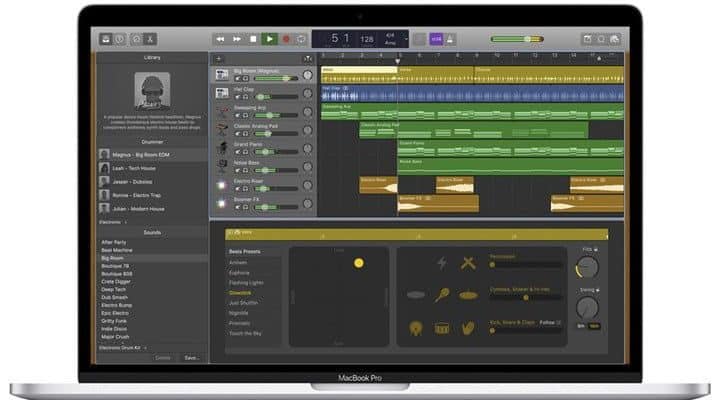
Although MacOS isn’t always the only platform for great software, when it comes to free recording applications, it has the best of the bunch. GarageBand is an Apple exclusive program that gives you a full audio creation suite with features for audio recording, virtual instruments, MIDI-editing, and even music lessons built right in.

Part of the appeal of GarageBand is how simple it is to get going with. Its interface is intuitive and easy to learn and if you want to record something you just plug in your instrument or device and get started. There is a wide array of virtual amps and effects you can use, as well as drum tracks that sound like they were performed by real musicians.

The sound and loop library that’s available for editing into your own tracks is growing all the time and you can even bring in your iOS devices for wireless control of your set up. GarageBand is the most fully featured, free application on this list and while you will need to have an Apple device to run it, you’d be hard-pressed to find a better application that doesn’t force you to get out your credit card first.

The rest

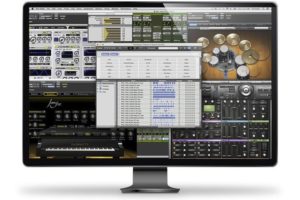
Avid Pro Tools First

Avid produces some of the most popular professional-grade video and audio editing tools in the world, so the fact that you can use a streamlined version of one of its digital audio workstation applications for free and for as long as you want, is quite the treat.

Pro Tools First is a limited version of the main Pro Tools and Pro Tools HD applications, but it’s still pretty capable in its own right. Aimed at singers, songwriters, and musicians who are just getting started with audio recording or want to try out the software before buying, the main limitation is that you can only store projects in the cloud and then, only up to 1GB in total size. Beyond that though, the features are much the same.

You still gain access to 500MB of bundled loops from leading producers, the Xpand!2 multitimbral music workstation with 20 effects and plugins, and the same support for third party-interface systems as the premium versions. You are however limited to just four maximum inputs, four simultaneous audio tracks, 16 instruments, and a maximum sample rate of 32-bit, 96kHz.

One upside of not having quite so many features as the premium editions of Pro Tools, is that Pro Tools First has less strenuous system requirements. It only needs an Intel Core 2 Duo processor, with 2GB of RAM and 15.5GB of install space.

If you do choose to upgrade to the standard or HD version further down the line, they’ll set you back $25 and $83 a month respectively.

Audacity

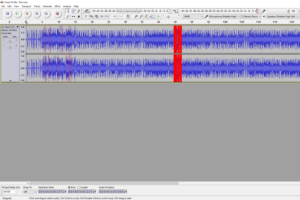
First released in 2000, Audacity has gone on to become one of the most popular pieces of free software around, and for good reason. The open-source program gives users a wide range of options for recording and editing audio, all tied together with a simple interface. Perhaps most importantly, unlike many other free programs, Audacity is not “free for a limited time” or “free with many features locked.” Everything Audacity has to offer is free of charge.

Compared to other notable DAWs such as ProTools and Sound Forge, Audacity’s layout is very minimalist. There are toolbars for navigating a track, editing it, and mixing. When tracks are loaded, they will appear as waveforms, and users can edit specific sections of a track by highlighting the appropriate section of the waveform. Navigating the interface is easy, although it may take time for new users to figure out what every specific tool does. As far as editing goes, Audacity offers a surprisingly robust set of tools for a free program. Users can adjust pitch, bass, and treble, or normalize noise and add effects like reverb and phasing. Audacity even has some tools for analyzing tracks, including frequency analysis.

Of course, no piece of free software is without its shortcomings, and despite Audacity’s many virtues, it has some issues. The most notable problem is that Audacity uses “destructive editing,” which means that when users add effects to a track, they are actually altering the waveform; these changes happen to the original file, so you can’t go back and undo them later. This isn’t necessarily a problem if you’re carrying out simple tasks — such as editing pauses out of a podcast — but more complex actions like mixing might be difficult.

Further, Audacity requires numerous plugins to reach optimal functionality; it cannot export projects as MP3s, for example, unless you install an MP3 encoder. Though, you could just convert the files from MP3 yourself, using external apps. Overall, however, Audacity offers one of the most robust packages available among free recording programs.

Ardour

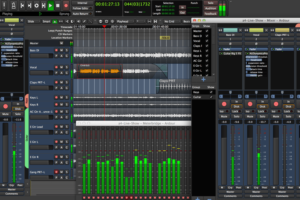
Ardour is an open-source DAW designed for Linux and available for MacOS and Windows. Its developer, Paul Davis, also invented the Jack sound server for Linux and worked previously as one of the original programmers at Amazon.

Ardour features highly versatile multi-track recording features that include the ability to import video for film scoring purposes, to record and edit either non-destructively or destructively, and to prepare any combination of individual tracks for recording. Its use of Jack makes it compatible with a number of outside applications, as well. However, unlike other DAWs, Ardour does not come with any built-in effects or instruments and relies instead on the installation of third-party software.

Zynewave Podium Free

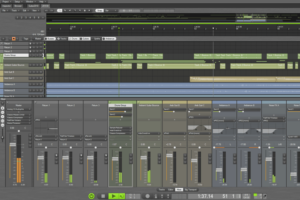
In 2005, programmer Frits Nielson left his position as a user interface designer with TC Electronic to focus his efforts on a recording application he began developing back in the early ‘90s. Nielson started a company called Zynewave and released a program called Podium — a fully functional DAW with a 64-bit sound engine, MIDI capabilities, VST and third-party plugin compatibility, and a number of other advanced functions. It was also priced at a mere $50.

Zynewave now offers a free version of its software called Podium Free. Granted, it comes with some limitations — Zynewave has disabled Podium’s multiprocessing capabilities, which hinders the program’s performance under pressure and its surround-sound playback capabilities. Otherwise, though, Podium Free is identical to Podium, a program that takes some getting used to.

Once users learn how to use it, however, they will find that Podium Free offers an interface that excels in terms of customization, while offering a suite of effects and other features on par with premium DAWs. The program also never times out or displays a nag screen, and Nielson regularly updates the software to fix bugs and known issues.

VirtualDJ Free

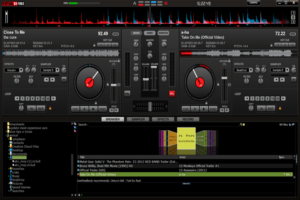
Those looking for an intuitive way to record and mix audio should enjoy the free version of VirtualDJ, which provides users with an easy-to-use interface in which to tweak audio. The first thing new users might notice when launching VirtualDJ is that the interface is modeled after a traditional DJ table. There are two decks to load tracks onto, and numerous dials and sliders for adjusting pitch, volume, and other audio aspects. There are even two “records” that users can scratch and spin if they please. Tracks are displayed as overlapping waveforms at the top of the screen, which allows users to line up two different tracks at precise intervals.

Users coming to VirtualDJ for musical purposes will also find an array of effects to use, including reverb and flanging. The program also allows users to splice samples into their songs; the default samples — which include an air raid siren and a person saying “pump it up!” — are kind of dull, but what is really nice about the program is the ability to create your own samples. The process is straightforward thanks to VirtualDJ’s readable interface, so if you wanted to cut out the chorus of Take On Me, speed it up alongside a hip-hop beat, and throw in some digital bagpipes, for example, you could to do in a matter of minutes.

As good as it is though, VirtualDJ is hardly perfect. The options for editing audio are relatively shallow and the built-in effects are pretty basic, so users looking to really experiment with audio will probably want to look elsewhere. Still, with its very intuitive interface, VirtualDJ is a great tool for aspiring musicians looking to dip their toes into mixing and editing.

50-unit Affordable Housing Project in the Works for Charlottetown

‘It should ease the hopelessness on the waiting list’

The non-profit Kings Square Affordable Housing Corporation has built affordable rental units in the past, but say the latest project would be the organization’s largest yet.

A non-profit housing organization hopes to break ground this spring on the largest affordable housing project it’s ever done.

“It should ease the hopelessness on the waiting list,” said Bill Campbell, president of Kings Square Affordable Housing Corporation.

Campbell says his non-profit housing group hopes to construct a $7-million building with at least 50 units — a mixture of one and two bedroom apartments for seniors and another 20-25 larger units for family housing. He said at least 10 per cent would be designated accessible units for people with disabilities.

Bill Campbell, president of Kings Square Affordable Housing Corporation, says the plan is to have the new affordable housing complex within Charlottetown’s city limits.

Campbell said rents would be a combination of “geared to income” and affordable. Geared to income means people pay 25 per cent of their income for rent. Affordable is defined as much lower than current rents in the city. He hopes a 3-bedroom unit would rent for around $900 per month.

“I feel really good about it, I’m all excited,” Campbell said.

Seed money approved from CMHC

The group has just received a $40,000 grant of seed money from the Canada Mortgage and Housing Corporation. Campbell said that money will go toward planning — “hire architects, try and purchase the land, get our ducks in a row, get all the legal aspects of it done.”

The group has not pinpointed the exact location, but said it will be within Charlottetown city limits.

An apartment building owned by the Kings Square Housing group in Charlottetown.

Campbell said they also have a private investor willing to invest close to $1 million.

Hope for provincial funds

The province has received federal funds to go toward affordable housing. The Kings Square Group hopes to tap into those funds, too. The province is expected to issue a request for proposals in February. Last year, officials said they wanted to build 50 new senior housing units across the Island in the near future.

“We’re looking forward to an RFP request to build,” Campbell said. “We’ll see how our dreams can fit into that.”

The Kings Square Affordable Housing Corporation has a waiting list of about 200 people. Last year, the province also said it had hundreds of people waiting for affordable seniors housing and family housing.

Tight rental market

The over Charlottetown rental market is tight. Canada Mortgage and Housing Corporation recently reported a vacancy rate of just 0.9 per cent.

“We’re on the front lines, we see it, we have to talk to the people who are looking for the housing,” Campbell said.

“They are not just a statistic with us, they are real people, they have real need.”

Why Canada Is The Next Frontier For Shale Oil

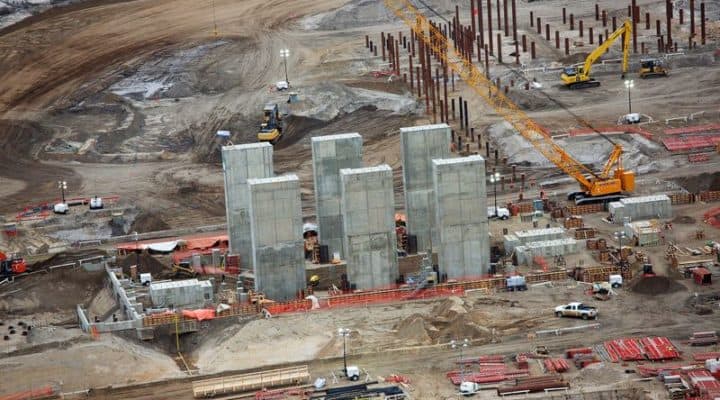
FILE PHOTO: A construction site at the new Suncor Fort Hills oil sands mining operations near Fort McMurray, Alberta, Canada, September 17, 2014.

CALGARY, Alberta (Reuters) – The revolution in U.S. shale oil has battered Canada’s energy industry in recent years, ending two decades of rapid expansion and job creation in the nation’s vast oil sands.

Now Canada is looking to its own shale fields to repair the economic damage.

Canadian producers and global oil majors are increasingly exploring the Duvernay and Montney formations, which they say could rival the most prolific U.S. shale fields.

Canada is the first country outside the United States to see large-scale development of shale resources, which already account for 8 percent of total Canadian oil output. China, Russia and Argentina also have ample shale reserves but have yet to overcome the obstacles to full commercial development.

Canada, by contrast, offers many of the same advantages that allowed oil firms to launch the shale revolution in the United States: numerous private energy firms with appetite for risk; deep capital markets; infrastructure to transport oil; low population in regions that contain shale reserves; and plentiful water to pump into shale wells.

Together, the Duvernay and Montney formations in Canada hold marketable resources estimated at 500 trillion cubic feet of natural gas, 20 billion barrels of natural gas liquids and 4.5 billion barrels of oil, according to the National Energy Board, a Canadian regulator.

“The Montney is thought to have about half the recoverable resources of the whole oil sands region, so it’s formidable,” Marty Proctor, chief executive of Calgary-based Seven Generations Energy, told Reuters in an interview.

Canada’s shale output stands at about 335,000 bpd, according to energy consultants Wood Mackenzie, which forecasts output should grow to 420,000 bpd in a decade. The pace of output growth could quicken and the estimated size of the resources could rise as activity picks up and knowledge of the fields improves, according to the Canadian Association of Petroleum Producers.

Seven Generations and Encana Corp, also based in Calgary, are among leading producers developing the two regions. Global majors including Royal Dutch Shell and ConocoPhillips – who pulled back from the oil sands last year – are also developing Canadian shale assets.

Chevron Corp announced its first ever Canadian shale development in the Duvernay in November. Spokesman Leif Sollid called it one of the most promising shale opportunities in North America. ConocoPhillips sees potential for the Montney to deliver significant production and cash flow to the company, executive vice president of production drilling and projects Al Hirshberg said in November.

Shell will invest more money this year in the Duvernay than any other shale field except the Permian Basin in West Texas, the most productive U.S. shale play, spokesman Cameron Yost said.

“We may learn something in the Permian that becomes applicable in the Montney, and vice versa,” Yost said.

The oil sands boom dates back two decades, when improved technology, rising crude prices and fears of global oil shortages sparked a rush to develop the world’s third-largest reserves. But in the last five years, much of that investment has migrated south as U.S. shale firms pioneered new drilling techniques and flooded global oil markets with cheaper-to-produce crude.

The oil sands currently account for two-thirds of Canada’s 4.2 million barrels per day of crude. They will continue to contribute heavily to Canada’s energy output because oil sands projects, once built, produce for decades.

But the era of oil sands mega-projects will likely end with Suncor Energy’s 190,000 barrel-per-day Fort Hills mining project, which started producing this month.

Canadian energy officials are now counting on shale, also known as “tight” oil, to lure new investment.

“Increasingly we are going to see light tight oil and liquids-rich natural gas forming a key part of Alberta’s energy future,” said Margaret McCuaig-Boyd, energy minister for the province where the oil sands and much of the nation’s shale reserves are located.

A FUTURE IN FRACKING

Oil sands development drove Alberta’s economic growth at a rate of 5.5 percent annually between 2010 and 2014, about twice the national rate. But the oil price crash in 2014 sent the region into a recession and has since prompted producers to scrap at least $32 billion in planned projects.

Oil sands capital spending fell for a third straight year in 2017 while other oil and gas investment rose 40 percent from 2016 to about C$31 billion, according to the Canadian Association of Petroleum Producers. Spending outside the oil sands is expected to grow again this year to C$33 billion, nearly three times the amount predicted for oil sands investment.

Hydraulic fracturing of shale oil and gas can yield quicker returns on smaller investments than extracting tar-like bitumen from the oil sands. Shale production is also less carbon-intensive, addressing a major concern among international investors reluctant to finance what environmental groups deride as the “tar sands”.

“The last decade has been dominated by conversations about the oil sands, and people have maybe missed the opportunities” in shale fields, Encana Chief Executive Doug Suttles told a conference in British Columbia in November. “All these things have a much lower carbon footprint than the average barrel refined today.”

‘ABSOLUTELY HUGE’ POTENTIAL

The Duvernay in central Alberta is a shale play, while the Montney, straddling northern Alberta and British Columbia, is technically a formation of siltstone, a more porous rock. Drilling and extraction techniques are the same, however, and many in the industry use the term shale for both.

Drillers face challenges in both fields because of their distance from key markets, but the high potential of their reserves is unquestioned.

The Duvernay is comparable to the Eagle Ford shale field in South Texas. The Montney is unique, with its enormous gas resources and extremely thick rock formation containing several different levels at which oil and gas can be drilled, said Mike Johnson, technical leader of hydrocarbon resources for the National Energy Board.

Weak prices in an oversupplied natural gas market have hampered development, along with added costs of shipping from the far-flung fields and limited capacity on pipelines. That makes it harder to compete with producers in shale gas plays such as the Marcellus in the northeastern United States.

Meanwhile, proposed Canadian liquefied natural gas export terminals on the west coast, which were expected to provide a huge source of demand, have been canceled or stalled due to weak prices.

Such obstacles, however, have not stopped producers from staking claims in the region. Last year, Alberta oil and gas land sale prices reached levels not seen since 2014 because of a rush to buy land in the Duvernay East Shale Basin.

“The potential is absolutely huge,” said Mark Salkeld, president of the Petroleum Services Association of Canada. “The only thing holding us back is access to market and the cost.”

Millions to be spent on large-scale vehicle-to-grid power project

A consortium led by carmaker Nissan will assess technology that could see EV car owners pump unused electricity back into the National Grid

Almost £10 million is to be spent on a vehicle project that could pave the way for cheaper energy and ease pressure on the National Grid.

The government cash will go on 1,000 vehicle-to-grid (V2G) charging installations to be built by a consortium led by carmaker Nissan.

The £9.8 million project will evaluate bringing electric charging to business fleets, says the Japanese firm.

The chargers will be controlled by a computer program and data collected to understand how the vehicles and electricity networks are affected.

V2G allows electric vehicles to be fully integrated into the electricity grid. Private electric vehicle (EV) owners and businesses with large EV fleets will be able to create mobile energy hubs by plugging their vehicles into the grid.

Nissan EV owners can connect to the grid to charge at low-demand, cheap tariff periods, with an option to then feed back to the grid the electricity stored in their vehicle’s battery, which could generate additional revenue for them.

The cash boost comes after Westminster awarded almost £30 million to V2G projects in its first major investment in the technology.

The consortium will also include V2G infrastructure/aggregator provider Nuvve and distribution network operator UK Power Networks. The research and analysis will be supported by Newcastle University and Imperial College London.

Francisco Carranza, managing director of Nissan Energy at Nissan Europe, said: “Nissan has been saying for a long time that the future is electric. That forward thinking led us to produce the world’s most successful mass-market EV – the Nissan Leaf.

“Today, our electric vehicles are not just transforming the way we drive, but also the way we live.

“We now look at our cars as so much more than products which simply move people from A to B – they are an intrinsic part of the way we consume, share, and generate energy. This will have a fundamental impact on the shift from fossil fuels to renewables.

“To ensure Nissan plays a wider role in the advancement and protection of our cities, our electric V2G-ready vehicles will be used as clean mobile energy units.

“Nissan has also reiterated its bold mission to offer customers free power for their EVs. V2G introduction will change the rules of the game and make energy cheaper for everyone.”

Claire Spedding, head of business development at the National Grid, said: “V2G technology presents a great opportunity to support the growth of electric vehicles and manage the anticipated increase in electricity demand.

“Energy stored in electric vehicles can be fed back into the electricity network to help manage the network at times of high demand and be an additional tool for operating Great Britain’s electricity system.

“One thousand chargers will be installed over the next three years across the electricity networks. Part of the demonstration project will include assessing whether EV owners are incentivised enough financially to provide power back to the grid when required, and help determine if any regulatory or policy interventions are required.

“It’s an exciting project and we’re delighted we’ve been successful in gaining funding to explore the opportunities of V2G technology.”