Archives for November 27, 2017

Why Smart People Take Social Security at 62

Many of us daydream about retiring early — and then assume that we can’t. It’s true that if you’re way behind in saving up for retirement, you may have to toil far longer than you’d like. But early retirement is more possible for many people than they think, and Social Security can be a big help toward that end.

Here’s a look at why you might want to start collecting Social Security at age 62.

two lit candles, one the number six and one the number two
two lit candles, one the number six and one the number two.Image source: Getty Images.


Talking retirement ages

The Social Security Administration assigns each of us a “full” retirement age at which we can start collecting our full benefits. For those born in 1937 or earlier, it’s 65, for those born in 1960 or later, it’s 67, and for those born between 1937 and 1960, it’s somewhere in between.

Regardless of your full retirement age, you’re allowed to start receiving your Social Security retirement benefits early as age 62 or as late as age 70. Most people start collecting Social Security at age 62 — and there are some compelling reasons why you should do the same.

You can make your checks bigger or smaller

The size of your ultimate Social Security checks is not written in stone. You can make them fatter or slimmer through timing. For every year beyond your full retirement age that you delay starting to collect your benefits (up to age 70), your benefits will increase in value by about 8%. Delay from 67 to 70, and you can make your checks fully 24% bigger. If you would have started collecting $2,000 per month ($24,000 per year) at 67, you can instead start with $2,480 per month (or nearly $30,000 annually) at age 70.

That may seem like the obviously smartest thing to do, but it may not be. As the Social Security Administration has explained, “If you live to the average life expectancy for someone your age, you will receive about the same amount in lifetime benefits no matter whether you choose to start receiving benefits at age 62, full retirement age, age 70 or any age in between.” In other words, for those with average life spans, it’s a wash. After all, if you delay starting to collect from age 67 to 70, you will miss out on three years’ worth of payments (albeit smaller ones) — that’s 36 payments.

Meanwhile, if you start collecting at 62, your benefits may be up to about 30% smaller. Don’t let that sway you too much, though. Remember — starting to collect at 62 instead of 70 will give you smaller checks, but you’ll receive eight more years’ worth of checks — 96 more of them.

a torn piece of paper on which is printed have you save enough, next to two red dice

Can you afford to retire early?

While it’s great to start collecting benefits early, will they be enough to sustain you? It depends on how much money you’ll need in retirement. Social Security income is critical to most retirees, but it’s not enough for most folks. The average monthly retirement benefit was recently $1,372, which amounts to $16,464 per year. If your earnings have been above average, you’ll collect more than that — up to the maximum monthly Social Security benefit for those retiring at their full retirement age, which was recently $2,687. (That’s about $32,000 for the whole year.)

You can use the imperfect but still-helpful 4% rule to help you roughly estimate how much income you might get from your nest egg — the various retirement accounts you have. The rule suggests that you can withdraw 4% of your nest egg in your first year of retirement, adjusting future withdrawals for inflation, in order to make your money last through retirement. (It assumes a portfolio that’s 60% in stocks and 40% in bonds, and it’s designed to make your money last through 30 years.) The table below will give you a rough idea of how much you might withdraw in your first year of retirement from nest eggs of various sizes:

Retirement Nest Egg 4% Withdrawal
$100,000 $4,000
$250,000 $10,000
$500,000 $20,000
$750,000 $30,000
$1 million $40,000
$1.25 million $50,000
$1.5 million $60,000

Source: Author calculations.

Note that you might take out smaller withdrawals to play it safer, and you might have some of your nest egg in solid dividend-paying stocks that pay you a certain percentage without requiring the selling of any shares. If you have, say, $400,000 invested in stocks with an average overall dividend yield of 3%, you’re looking at $12,000 in dividend income for the year — $1,000 per month.

If your nest egg isn’t as flush as it should be, you may be able to fatten it up by turbocharging your saving and investing over the next few years. Here’s the kind of additional money you might generate:

Growing at 8% for $10,000 Invested Annually $15,000 Invested Annually $20,000 Invested Annually
3 years $35,061 $52,592 $70,122
5 years $63,359 $95,039 $126,719
10 years $156,455 $234,682 $312,910
15 years $293,243 $439,864 $586,486

Calculations by author.

Why you might want to — or have to — retire early

Since few of us have much of an idea of how long we’ll live, it’s well worth considering retiring early if you can in order to enjoy as many work-free years as possible. Many people don’t even really get to decide just when to retire — fate decides for them. The 2016 Retirement Confidence Survey found that 46% of retirees left the workforce earlier than planned, with 55% citing health problems or a disability as the reason and 24% citing changes at work such as a downsizing or workplace closure.

Better still, the younger you are when you retire, the more active you can be in retirement, at least in the first bunch of years. If you want to play a lot of tennis or want to take up ballroom dancing lessons or plant a big garden or trek up to Machu Picchu, it will be much easier to do when you’re 65 than when you’re 75. Early retirees often can enjoy their retirement more, being younger, healthier, and more able to be active, travel, and so on.

Don’t jump into an early retirement without being sure you can afford it — and don’t forget to factor in healthcare costs, either, as they can be hefty. But if you can swing it, give early retirement some serious consideration. Social Security lets you start collecting monthly checks at age 62, and that’s just what you might want to do.

Here’s how much we’ll spend on holiday gifts this year

The turkey has been gobbled up, the leftovers packed up … so now it’s time to shop! The winter holidays are here, and that means consumers are ready to spend. This year, holiday retail is expected to reach $682 billion, according to the National Retail Federation.

According to a report from NerdWallet, the average consumer will spend $660 on holiday gifts. Baby boomers will spend more than the average, around $800 this season. Millennials plan to spend less—just $431.

Many shoppers will be skipping the malls to surf the web instead. Eighty-four percent say they will shop online for gifts this year (perhaps with a leftover turkey sandwich in hand?).

But don’t expect stores to be completely empty — Black Friday is still a huge shopping day for retailers. Seventy-nine percent say they will go shopping on Black Friday this year, according to a survey by Ebates.

If you’re searching for gift ideas for friends and loved ones, it might be best to stock up on gift cards. According to Ebates, 77% say they’d like a gift card, 46% want new clothes and accessories, and 22% are crossing their fingers for the iPhone X.

If all this shopping has you worried about your budget, you’re not alone! According to Nerdwallet, 56% of consumers took on credit card debt to pay for holiday purchases last year— and 1 in 4 people went over their budget.

Experts recommend putting aside a set amount of money for each person you plan to shop for, along with a list of what you’d like to purchase. Sticking to a plan will help you stay on track, so you can avoid starting the new year in debt.

Cryptocurrency market cracks $300 billion as bitcoin and ethereum flirt with big milestones

  • The market for digital currencies cracked $300 billion for the first time Sunday night.
  • At the same time, bitcoin and ethereum, the two largest cryptocurrencies, were flirting with their own big milestones.

NEW YORK — The market for digital coins cracked $300 billion Sunday night for the first time ever as two of the largest cryptocurrencies eyed significant milestones.

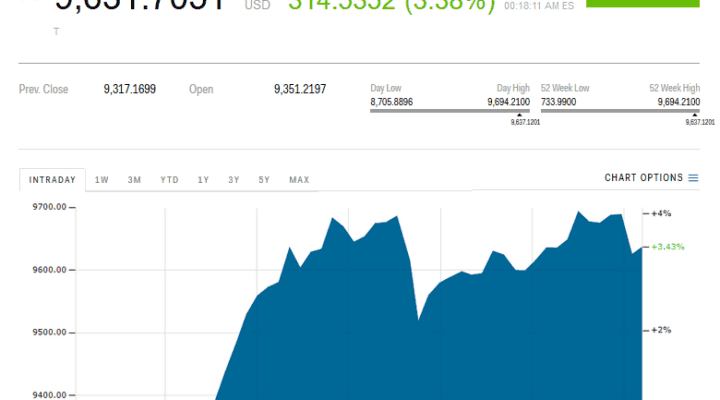
According to data from CoinMarketCap, the market capitalization of the entire crypto-market stood at $303 billion by 12:30 a.m. ET. On Sunday, the two largest digital currencies on the market were flirting with big milestones of their own.

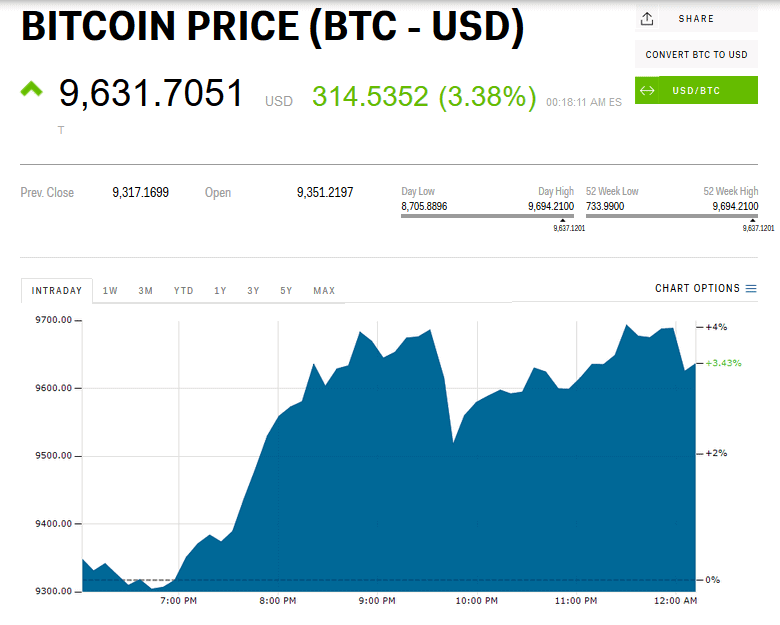
Bitcoin, the largest cryptocurrency with a market cap above $150 billion, was gunning for $10,000 Sunday. It reached an all-time high of $9,694 Sunday evening, according to data from Markets Insider.

Ethereum reached an all-time high of $485 Sunday evening, shy of the much-anticipated $500 mark.

As for the bitcoin spin-outs, bitcoin cash was trading just below $1,650 at 12:30 a.m. ET. And bitcoin gold was trading up more than 2.5% near $380 per coin, according to CoinMarketCap.

Big milestones for the cryptocurrency market appear to be occurring at a faster rate. It took from June to November for the market to go from $100 billion to $200 billion. It took less than a month for the market to balloon from $200 billion to $300 billion.

Capture.PNG

How the FCC’s plan to kill net neutrality affects you

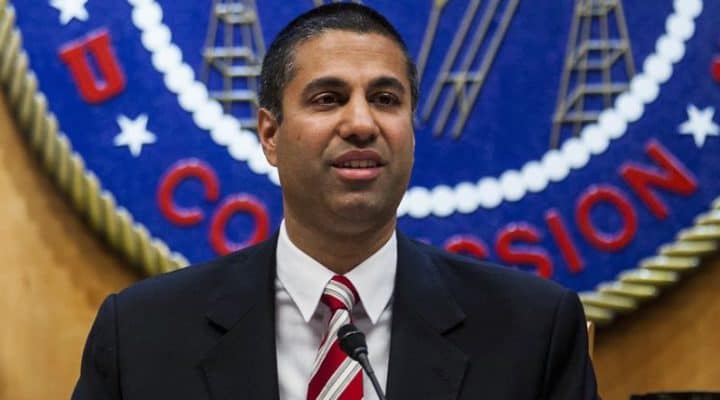
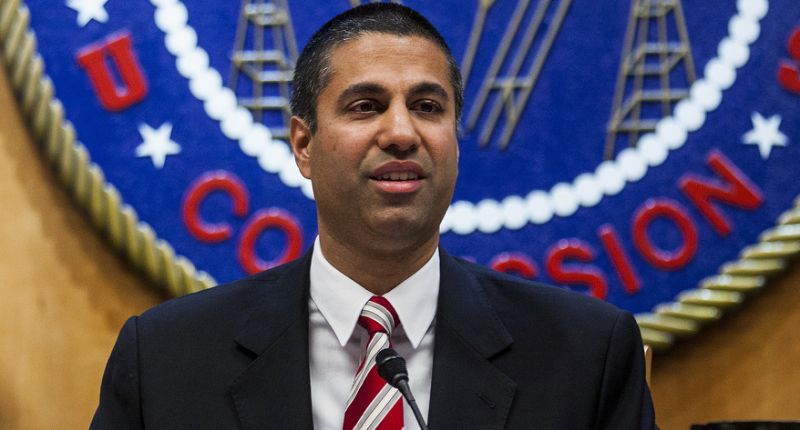
In a major win for the telecom industry, Federal Communications Commission Chairman Ajit Pai announced plans to scrap net neutrality regulations . (HuffPost)


Federal Communications Commission chairman Ajit Pai just put a big item on his holiday wish list: having the FCC destroy the net-neutrality rules that it adopted two years ago.

As Pai said in a statement on the FCC’s site, he will have the commission vote at its Dec. 14 meeting on his “Restoring Internet Freedom Order.” The order would repeal what Pai called “heavy-handed, utility-style regulations” that ban internet providers from blocking or slowing legal sites or charging them for faster delivery of their data.

One of Pai’s colleagues responded almost immediately with a contrary, Thanksgiving-themed take. In a statement, commissioner Mignon Clyburn called Pai’s plan “a cornucopia full of rotten fruit, stale grains and wilted flowers topped off with a plate full of burnt turkey.”

But as Clyburn’s pithy protest noted, a 3-2 Republican majority now controls the FCC. Pai’s repeal plan, due to be released in detail Wednesday, will almost certainly pass.

And while the story certainly won’t end there, there will be plenty of lawsuits fighting the changes, Pai’s move could result mean an Internet of asterisks and dollar signs, where some sites are slower because they don’t pay your provider for priority delivery, while and others pass on those fees to you.

What’s Title II to you?

Pai, who President Trump picked to head the FCC, has never hidden his feelings toward net-neutrality rules championed by his Obama-appointed predecessor Tom Wheeler. He hates them, from their regulatory foundation on up.

In his statement, Pai said the current rules “depressed investment in building and expanding broadband networks and deterred innovation.”

But what he’s really talking about is less the reality of these rules — even under Wheeler, the FCC didn’t get beyond asking some internet providers to explain some “zero-rating” exemptions to their own data caps — than how they could be enforced under a future FCC.

That’s because when the FCC adopted the current regulations, it built them on a legal foundation dating to the 1934 law that created the agency. Title II of that law lets the commission regulate “common carrier” services — meaning ones anybody can sign up for — to ensure they treat everybody’s traffic equally.

So while Wheeler’s FCC voted to set aside Title II provisions allowing it to regulate prices, in theory a future president could put in a new commission that would bring down the heavy hand of the regulatory state.

Why would the FCC bother with this ancient Title II strategy? Because telecommunications firms beat the commission in court every time it tried crafting net-neutrality rules on laws written after the internet’s creation.

The last such suit was filed by Verizon (VZ), which now owns Yahoo Finance’s corporate parent.

Pai suggests that by scrapping Title II, we’ll return to the good old days of Clinton-era “light touch” regulation. But that’s not true: In the 1990s, the FCC not only regulated internet access under that provision but even required phone companies to open their digital-subscriber-line broadband to competitors.

This is really about choice and competition

In place of Title II, Pai would re-classify internet providers under a different branch of telecom law. That “Title I” affords the FCC much less authority but does, Pai said, let it “require Internet service providers to be transparent about their practices so that consumers can buy the service plan that’s best for them.”

In the best-case version of what comes next, Internet providers would spend money now spent on complying with net-neutrality regulations on expanding their networks.

But the head of one of the few firms independently building out gigabit fiber-optic service assessed his net-neutrality costs at zero. “Title II is not a burden in any way,” emailed Dane Jasper, CEO of the Bay Area firm Sonic.

In theory, some might collect extra revenue by charging sites like Netflix (NFLX) and Amazon (AMZN) for priority delivery.

But while those two firms can afford to pay up, they now have such gigantic reach in the market that media mogul Barry Diller scoffed at the idea any telecom firm could push them around in an appearance at a conference in San Francisco last week.

Pai and other opponents of net-neutrality rules also point to data showing lower telecom investment. But major individual firms like Comcast (CMCSA) and AT&T (T) have either kept on spending money or have pointed to lower expenses to build out their networks.

And the internet providers’ own reports to the FCC show progress in giving more Americans greater choices in broadband — even if 58% of us still had only one or zero providers offering meaningfully fast downloads of at least 25 megabits per second.

Up next: Send in the lawyers!

The consumer protection Pai would keep involves a hand-off: First internet providers must document if they block or slow any sites or charge others for paid prioritization, then the Federal Trade Commission could take action against cases of “unfair or deceptive” conduct. Then, statistically speaking, you couldn’t fire that provider anyway unless you could deal with a much slower connection.

And as you may have noticed from the sorry state of consumer privacy in America, the FTC can’t do much even when companies are open about lesser forms of misconduct.

A company must often do something egregious — think of Vizio tracking people’s TV-viewing habits without notice — to get a smackdown from the FTC.

First, though, Pai’s proposal has to survive its own inevitable dates in court. To begin, theAdministrative Procedure Act let people affected by a change in a federal rule challenge that as being arbitrary and capricious.

“We are looking at probably a year for the initial appeal and then another year to wrap up subsequent appeals,” emailed Harold Feld, senior vice president at Public Knowledge.

That easily takes this debate into the next election cycle, which will put in place a Congress that could confirm the FCC’s course or reverse it yet again. You will remember to ask candidates running to represent you about this, right?

Here’s What the World’s Central Banks Really Think About Bitcoin

Here’s What the World’s Central Banks Really Think About Bitcoin

Eight years since the birth of bitcoin, central banks around the world are increasingly recognizing the potential upsides and downsides of digital currencies.

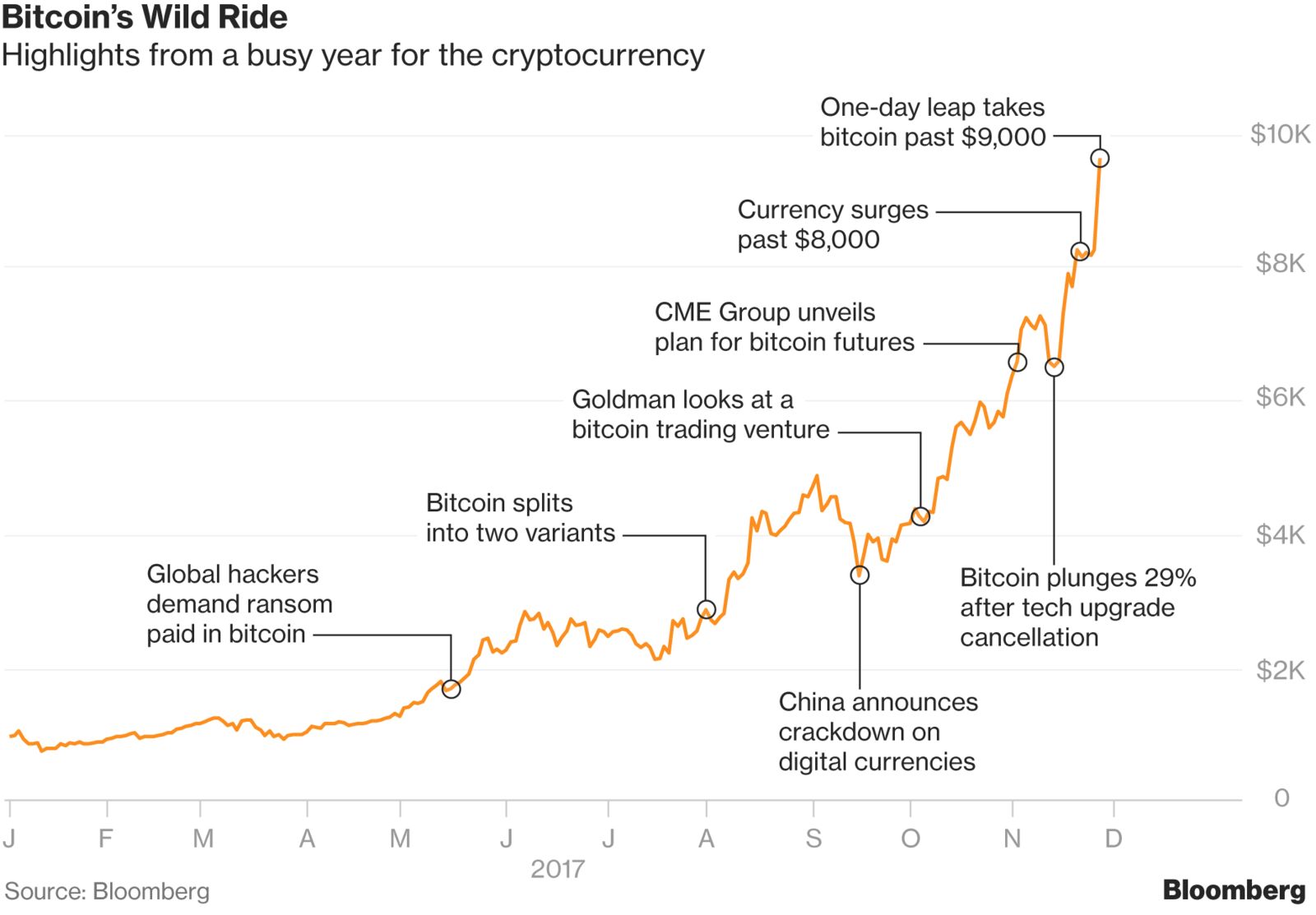
The guardians of the global economy have two sets of issues to address. First is what to do, if anything, about emergence and growth of the private cryptocurrencies that are grabbing more and more attention — with bitcoin now surging toward $10,000. The second question is whether to issue official versions.

Following is an overview of how the world’s largest central banks (and some smaller ones) are approaching the subject:

U.S.: Privacy Worry

The Federal Reserve’s investigation into cryptocurrencies is in its early days, and it hasn’t been overtly enthusiastic about the idea of a central-bank issued answer to bitcoin. Jerome Powell, a board member and the chairman nominee, said earlier this year that technical issues remain with the technology and “governance and risk management will be critical.” Powell said there are “meaningful” challenges to a central bank cryptocurrency, that privacy issues could be a problem, and private-sector alternatives may do the job.

Euro Area: Tulip-Like

The European Central Bank has repeatedly warned about the dangers of investing in digital currencies. Vice President Vitor Constancio said in September that bitcoin isn’t a currency, but a “tulip” — alluding to the 17th-century bubble in the Netherlands. Colleague Benoit Coeure has warned bitcoin’s unstable value and links to tax evasion and crime create major risks. President Mario Draghi said this month the impact of digital currencies on the euro-area economy was limited and they posed no threat to central banks’ monopoly on money.

China: Conditions ‘Ripe’

China has made it clear: the central bank has full control over cryptocurrencies. With a research team set up in 2014 to develop digital fiat money, the People’s Bank of China believes “conditions are ripe” for it to embrace the technology. But it has cracked down on private digital issuers, banning exchange trading of bitcoin and others. While there’s no formal start date for introducing digital currencies, authorities say going digital could help improve payment efficiency and allow more accurate control of currencies.

Japan: Study Mode

Bank of Japan Governor Haruhiko Kuroda said in an October speech that the BOJ has no imminent plan to issue digital currencies, though it’s important to deepen knowledge about them. “Issuing CBDC (central bank digital currency) to the general public is as if a central bank extends the access to its accounts to anyone,” Kuroda said. “As such, discussion about CBDC revisits fundamental issues of central banking.”

Germany: ‘Speculative Plaything’

In a country where lot of citizens still prefer to pay in cash, the Bundesbank has been particularly wary of the emergence of bitcoin and other virtual currencies. Board member Carl-Ludwig Thiele said in September bitcoin was “more of a speculative plaything than a form of payment.” A shift of deposits into blockchain would disrupt banks’ business models and could upend monetary policy, Thiele said. At the same time, the Bundesbank has been actively studying the application of the technology in payment systems.

U.K.: Potential ‘Revolution’

Bank of England Governor Mark Carney has cited cryptocurrencies as part of a potential “revolution” in finance. The central bank started a financial technology accelerator last year, a Silicon Valley practice to incubate young companies. Carney says technology based on blockchain, the distributed accounting database, shows “great promise” in enabling central banks to strengthen their defenses against cyber attack and overhaul the way payments are made between institutions and consumers. He has nevertheless cautioned the BOE is still a long way from from creating a digital version of sterling.

France: ‘Great Caution’

Bank of France Governor Francois Villeroy de Galhau said in June that French officials “advise great caution with respect to bitcoin because there is no public institution behind it to provide confidence. In history all examples of private currencies ended badly. Bitcoin even has a dark side — there were this data attacks.” He said “those who use Bitcoin today do so at their own risk.”

India: Not Allowed

India’s central bank is opposed to cryptocurrencies given that they can be a channel for money laundering and terrorist financing. Nevertheless, the Reserve Bank of India has a group studying whether digital currencies backed by global central banks can be used as legal tender. Currently, the use of cryptocurrencies is a violation of foreign-exchange rules.

Brazil: Support Innovation

The Banco Central do Brasil sees “no immediate risk for the Brazilian financial system” but remains alert to the developments of the usage of those currencies, it said in a statement this month. The bank pledged “to support financial innovation, including new technologies that make the financial system safer and more efficient.”

Canada: Asset-Like

The Bank of Canada’s senior deputy governor, Carolyn Wilkins, who is leading research on cryptocurrencies, said in an interview this month that cryptocurrencies aren’t true forms of money. “This is really an asset, or a security, and so it should be treated that way,” Wilkins said. As others, she viewed distributed ledger technology as promising for making the financial system more efficient.

South Korea: Crime Watch

The Bank of Korea’s focus has been protecting consumers and preventing cryptocurrencies from being used as a tool of crime. Deputy Governor Shin Ho-soon said this month that more research and monitoring was needed.

Russia: ‘Pyramid Schemes’

Russia’s central bank has expressed concerns about potential risks from digital currencies, with Governor Elvira Nabiullina saying “we don’t legalize pyramid schemes” and “we are totally opposed to private money, no matter if it is in physical or virtual form.” For the moment, the Bank of Russia prefers to delay a decision on regulating the financial instruments unless President Vladimir Putin pushes for action sooner. The central bank will work with prosecutors to block websites that allow retail investors access to bitcoin exchanges, according to Sergey Shvetsov, a deputy governor.

Australia: Monitoring Closely

The Reserve Bank is closely monitoring the rise of digital currencies and recognizes the technology underpinning bitcoin has the “potential for widespread use in the financial sector and many other parts of the economy,” head of payments policy Tony Richards said last month.

Turkey: Important Element

Digital currencies may contribute to financial stability if designed well, Turkish Central Bank Governor Murat Cetinkaya said in Istanbul earlier this month. Digital currencies pose new risks to central banks, including their control of money supply and price stability, and the transmission of monetary policy, Cetinkaya said. Even so, the Turkish central banker said that digital currencies may be an important element for a cashless economy, and the technologies used can help speed up and make payment systems more efficient.

Netherlands: Most Daring

The Dutch have been among the most daring when it comes to experimenting with digital currencies. Two years ago the central bank created its own cryptocurrency called DNBcoin — for internal circulation only — to better understand how it works. Presenting the results last year, Ron Berndsen, who was in charge of the project, said blockchain may be “naturally applicable” in the settlement of complex financial transactions.

Scandinavia: Exploring Options

Like the Dutch, some Nordic authorities have been at the forefront of exploring the idea of digital cash. Sweden’s Riksbank, the world’s oldest central bank, is probing optionsincluding a digital register-based e-krona, with balances in central-database accounts or with values stored in an app or on a card. The bank says the introduction of an e-krona poses “no major obstacles” to monetary policy.

In an environment of decreasing use of cash, Norway’s Norges Bank is looking at  possibilities such as individual accounts at the central bank or plastic cards or an app to use for payments, it said in a May report. Denmark has backtracked somewhat from initial enthusiasm, with Deputy Governor Per Callesen last month cautioning against central banks offering digital currencies directly to consumers. One argument is that such direct access to central bank liquidity could contribute to runs on commercial banks in times of crisis.

New Zealand: Considering Future

The Reserve Bank of New Zealand, once a pioneer on the global stage with its early introduction of an inflation target, said Wednesday it’s considering its future plans for currency issuance, and how digital units may fit into those strategies. “Work is currently underway to assess the future demand for New Zealand fiat currency and to consider whether it would be feasible for the reserve bank to replace the physical currency that currently circulates with a digital alternative,” the RBNZ said in what it termed an analytical note.

Morocco: Violating Law

Representing one of the more stringent reactions, the country has deemed that all transactions involving virtual currencies as violating exchange regulations and punishable by law. Cryptocurrencies amount to a hidden payment system, not backed by any institution and involving significant risks for their users, authorities said in a statement this month.

Bank for International Settlements: Can’t Ignore

The central bank for central banks has said that policy makers can’t ignore the growth of cryptocurrencies and will likely have to consider whether it makes sense for them to issue their own digital currencies at some point. “Bitcoin has gone from being an obscure curiosity to a household name,” the BIS said in September. One option is a currency available to the public, with only the central bank able to issue units that would be directly convertible to cash and reserves. There might be a greater risk of bank runs, however, and commercial lenders might face a shortage of deposits. Privacy could also be a concern.

— With assistance by Pooi Koon Chong, Suttinee Yuvejwattana, Siegfrid Alegado, Yinan Zhao, Paul Abelsky, Ahmed Feteha, Mark Deen, Jill Ward, Anirban Nag, Peter Levring, Kati Pohjanpalo, Nick Rigillo, Piotr Skolimowski, Toru Fujioka, and Jiyeun Lee

The stock market rally that won’t quit, JPMorgan says the bear case is missing one critical element

Nothing is invincible, but JPMorgan doesn’t see too much right now that could derail the stock market rally.

And, it’s trying to convey that to a growing number of skeptic clients.

Stephen Parker, head of thematic equity solutions at the firm’s private bank, argues there are hardly any signs of investor euphoria right now — a critical element of a bull market on its last legs.

“This is really a fundamental story. We’re seeing a market that’s being driven by growth, by earnings and by improving expectations,” Parker said recently on CNBC’s “Futures Now.”

But a new wave of stock market highs appears to be breeding fresh bearishness among investors. Parker said nearly every client conversation lately has been beginning with a “laundry list of things that can go wrong.”

“We’d be a lot more nervous if this was taking the form of expanded market multiples showing some signs of froth. But to us, this is a growth story, and we’re seeing the best synchronized global growth since the crisis,” he added.

Parker has been firmly in the bull camp. During a September appearance on CNBC “Futures Now,”he predicted stocks would keep grinding higher. As of Wednesday, the S&P 500 is up 4 percent since then.

To score the biggest profits, Parker is urging investors to look at secular growth stocks such as technology and health care. He also likes cyclical value areas, particularly financials and energy.

And, he views any sell-offs over at least the next 12 months as key buying opportunities, and not a sign that a recession is on the horizon.

“Stay invested and buy any pullbacks,” Parker said.