Archives for June 19, 2017

Does Your Company Have A Winning Strategy?

Almost every business today faces major strategic challenges, but different companies are challenged in different ways. That’s why so much conventional wisdom surrounding strategy — for example, understanding your external environment — can fall short of what a company needs. Winning today requires you to carefully balance your strengths (what you can do incredibly well) against your opportunities (what the market will reward). That complexity requires a level of strategic maturity: the ability to understand what is fundamentally holding you back, and to correct your course accordingly.

A new body of extensive research at Strategy&, PwC’s strategy consulting business, has informed the Strategy Profiler survey, which classifies companies according to the stage they’re at in developing and executing a coherent strategy. The survey takes only three to five minutes to complete, but it can help you see your own company’s strategic maturity more clearly.

We equate maturity with progress on the path to coherence. Companies are coherent when they align their value proposition and distinctive capabilities system with the right marketplace opportunities — and their whole portfolio of products and services. This typically means identifying the few things your company needs to be really good at, and then developing those few complex capabilities until they’re and interlocking. If you can do this, the market rewards you with outsize returns.

These days, most companies recognize the value of this strategic approach, but it isn’t always easy to get from today’s incoherence to tomorrow’s focused strategy. We have identified 11 archetypes, each representing a different level of progress along this path. This analysis incorporated more than 5,000 data points from a previous global study of company decision makers, and from ongoing observations of business strategies. Chances are, your company matches one of these 11 archetypes.

The first three archetypes represent companies that are not concerned about coherence at all. They have not tried to establish focus and consistency in their portfolio of products and services, their capabilities, or value propositions, and they are not visibly moving in that direction:

  1. Strategically adrift companies are either failing or lucky. They don’t have a meaningful strategic direction or a clear view of how they create value. The market generally does not perceive them as being advantaged.
  1. Undifferentiated companies have products and services that compete effectively, but they lack a focused identity that sets them apart. Because individual products are relatively easy to copy, their advantage generally isn’t sustainable.
  1. Underleveraged companies have a relevant strategic direction and good execution; they do many things right. But their strategy lacks coherence — it is based on following multiple directions, even if they fit together poorly. These companies risk losing to more focused competitors.

Two archetypes describe companies that aspire to a coherent strategy but struggle to develop one:

  1. Portfolio-constrained companies offer a diverse group of products and services, which makes it very difficult to agree on company-wide priorities (although they’d like to do so).
  1. Unfocused companies are pretty good at a lot of things, but not great at anything — and thus, although they value coherence, they struggle to choose which capabilities to prioritize.

Four archetypes refer to companies that have developed a coherent strategy but struggle to execute it:

  1. Distracted companies have defined a coherent identity for their company, but they have a hard time resisting diversions. They pursue market opportunities that aren’t in line with their strategy.
  1. Resource-constrained companies struggle to find the funds to execute their strategy. Building differentiating capabilities is difficult and expensive, and the executives at these companies don’t think their financial situation allows them to make the bold moves they need.
  1. Capability-constrained companies lack the knowledge, skills, or technology needed to build out their capabilities to a world-class level, or to scale them throughout the organization.
  1. Overstretched companies have defined a coherent identity for themselves, but it is so far away from the company’s current status — and their ability to enlist customers, employees, and investors on their behalf — that they can’t successfully realize their goals.

The final two categories depict companies that are living a coherent identity:

  1. Coherent companies have a powerful value proposition and a system of a few differentiating capabilities that support that value proposition. Their portfolio of products and services grows successfully because of the strengths they consistently bring to bear.
  1. Supercompetitors use their coherence to shape their future. They apply their capabilities to a broader range of challenges and loftier goals, serve the fundamental needs and wants of their customers, and ultimately lead their industries. These companies are not just playing the game of business well — they’re changing the rules.

This diagnostic Strategy Profiler survey developed by Strategy& takes only a few minutes to complete. It will show you which of these 11 archetypes your company is most closely aligned with — and this, in turn, will indicate how coherent your company is, whether it has a clear approach to winning, and whether you stand out from competitors.

The profiler will also show you how your strategy measures up against that of your peers. You will see your company’s coherence score in comparison to the average score in your industry group, and in comparison to those of your top-quartile competitors.

Which stage is your company at? The answer can help you figure out what is holding you back, and decide where to invest your resources and attention to move closer to the coherent, winning strategy you need.
Shares of Apple are quite oversold

Apple’s shares have become very oversold in the past two weeks as Mizuho and Pacific Crest downgraded the stock from Buy/Overweight to Neutral/Sector Weight, respectively, and tech stocks took a hit. Their main reason centered around iPhone 8 expectations being baked into the stock given their recent strength and that valuation levels while not excessive don’t allow for much upside.

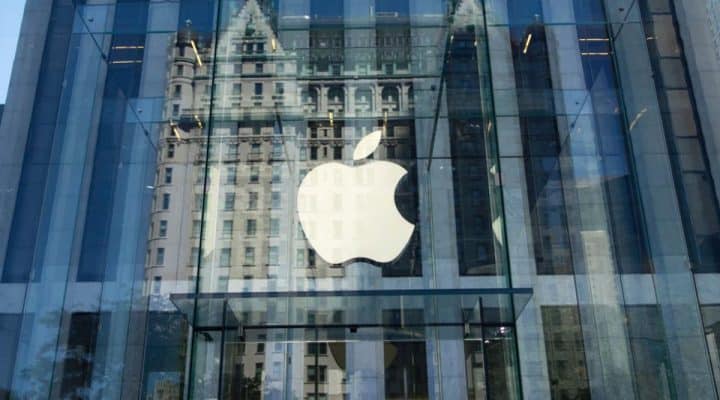
The Apple logo at the entrance to the Fifth Ave. Apple store. Photo credit should read DON EMMERT/AFP/Getty Images

With Apple’s Worldwide Developers Conference over and the next financial update not due until late July the stock will probably move based on sentiment shifts, analysts updates and overall market moves.

Stock has been strong the past year

After falling to a closing low of $92.04 on June 27, 2016, the stock is up 55% to Friday’s close of $142.27. And even after being under pressure last week by falling 4.5% it has still risen 23% since the beginning of the year.

Apple’s shares had a closing high of $156.10 on May 12 and an intra-day high of $156.65 on May 15. They stayed in the $150’s for a month until it along with the FANG and tech stocks took a big hit on Friday, June 9.

Short-term but worthwhile metrics

While only a short-term indicator a stock’s RSI (Relative Strength Index, the top section of the chart below) and MACD (Moving Average Convergence Divergence, bottom section) I believe are worthwhile items to add to a stock investors bag. As can be seen in the chart when Apple’s RSI hits 30 (currently at 30.98) or below and MACD enters negative territory (currently at -5.578) the shares tend to bounce back.

Apple's shares the past three years.

Source: StockCharts.com Apple’s shares the past three years.

Luxury Online Retailer Reebonz Seeks to Raise Up To $150 Million

  • Startup working with banks to engage potential investors
  • Funding to fuel expansion in North Asia, marketplace business

Reebonz Pte, Southeast Asia’s largest online luxury retailer, is planning to raise as much as $150 million to bolster its marketplace business and fund expansion in China, Japan and South Korea.

Reebonz has been working with investment banks including Credit Suisse Group AG and Goldman Sachs Group Inc. since May to engage potential investors, Chief Executive Officer Samuel Lim said. The eight-year-old startup he co-founded was valued at about $300 million in late 2015, making it the most valuable luxury e-commerce startup in Southeast Asia. Its backers already include Vertex Ventures, GGV Capital and Intel Capital.

Samuel Lim. Photographer: Nicky Loh/Bloomberg

“We are looking for the right partners for the next wave of growth,” the 38-year-old Singaporean entrepreneur said in an interview. “They may be strategic groups or long-term private equity funds who have vested interest in growing a luxury online platform.”

He declined to comment on his target valuation. Reebonz is open to various options, he added, including funding from internet or luxury fashion companies that the company can tap to access their networks and accelerate growth.

“Luxury is a growing market and Reebonz doesn’t have many competitors,” said Ajay Sunder, vice president of digital transformation at Frost & Sullivan in Singapore. “They are the first portal people in cities like Singapore go to for luxury.”

Reebonz, whose website and app allow customers to buy new and pre-owned designer bags, watches and other luxury items, is making a big push into marketplace platforms where offline boutiques and individuals can buy and sell items directly.

“As buyers become sellers and sellers become buyers again and again, we will add more and more range of products,” he said. “This allows us to operate as a luxury ecosystem, differentiating ourselves against the mass horizontal players.”

Inside the Reebonz warehouse in Singapore. Photographer: Nicky Loh/Bloomberg

Reebonz opened a $29 million, eight-story headquarters in Singapore last month as it gears up for the next phase of growth. After an opening ceremony, Lim and other co-founders took guests on a tour to showcase the firm’s authentication process, a robotic storage system for Hermes bags, jewelry and watches, as well as a “war room” where the company displays weekly and quarterly targets and performance records on the walls for employees to track.

Reebonz, whose name was derived from ribbons, has 300 employees and offices in Australia, Hong Kong, Indonesia, Malaysia, South Korea, Thailand and Taiwan.

After Whole Foods, will Amazon go after Nordstrom next?

The Nordstrom family’s June 8 decision to look into taking the retailer privateappears remarkably well timed given Amazon.com Inc.’s Friday announcement that it plans to buy Whole Foods Market (Nasdaq: WFM) for $13.7 billion.

The effects of what would be Amazon’s (Nasdaq: AMZN) largest acquisition to date are uncertain. Perhaps Prime members will get discounts on pricey prosciutto and organic produce at the grocery store. This, in turn, would make the $99 Prime annual membership fee more palatable to Whole Foods shoppers who are not currently Prime customers.

In the eyes of Seattle retail consultancy Outcalt & Johnson, the acquisition of Whole Foods is largely about boosting Prime membership, which keeps customers coming back to Amazon. It also shows that Whole Foods is, for the first time, getting into what Pat Johnson says is “real retail,” going well beyond Amazon gradually opening brick-and-mortar bookstores, including announcing plans last month for store No. 10 in Bellevue.

“The (Amazon-Whole Foods) relationship is very simpatico,” Johnson said, because of both companies’ focus on customer service.

She said Amazon appears to be thinking, “if we are going to be getting more into brick-and-mortar retail, we should learn from the people who know about in-store customer service.”

That could lead Amazon to acquire another struggling high-end retailer known for top-notch customer service: Seattle-based Nordstrom (NYSE: JWN), whose headquarters are just down the street from Amazon’s, though Nordstrom representatives have indicated that’s not their plan.

Like Whole Foods, Nordstrom is a high-end retailer that’s struggling due largely to Amazon’s online retailing prowess.

To Johnson’s business partner, Dick Outcalt, the decision last week by the Nordstrom to consider going private augurs Amazon’s intent to acquire Nordstrom. He even thinks Nordstrom family members might have been thinking about this when they announced they are looking into going private. Doing so would remove the spotlight from plans to sell to Amazon.

It would be sad to loyal Nordstrom employees and customers to see the proud, 116-year-old company sold to upstart Amazon. Yet it also would make sense, given how Amazon is pushing into apparel and bringing traditional retailers to their knees.

McDonald’s And 5 Other Huge Brands Say Goodbye To The Olympics

McDonald’s Corp.  (MCD) ended its longtime partnership with the International Olympic Committee as the fast-food chain joins a growing list of U.S. companies pulling advertising from the games, AdAge reported.

Anheuser-Busch InBev (ABV) , Citigroup (C) , Hilton (HLT) , TD Ameritrade (AMTD) and AT&T (T) have all pulled out of the Olympic games in the last year.

Industry experts speculate that some U.S. advertisers have left because of the dramatic time change for the next few games – PyeongChang in 2018, Tokyo in 2020 and Beijing in 2022.

McDonald’s said the decision is part of a global growth plan that has the company reconsidering all parts of the business.

McDonald’s, which has advertised at the games since 1976, signed a contract in 2012 to continue advertising at the Olympics until 2020. The 2018 Winter Games will be their last appearance.

The fast-food giant’s shares rose 0.5% to $151.99 at Friday’s close.

What you need to know in markets this week

After a very busy week that saw the Federal Reserve raise interest rates for the third time since December, Uber issue a long-awaited report about its internal culture, and Amazon (AMZN) announce a blockbuster $13.7 billion deal to acquire Whole Foods (WFM), the calendar in the week ahead should be more tame.

On the economic front, highlights are likely to include reports on existing and new home sales, slated for Wednesday and Friday, respectively. Elsewhere we’ll also get a number of speeches from prominent Fed officials, though we are not scheduled to hear from Fed Chair Janet Yellen.

And on Wednesday, summer will officially begin in the northern hemisphere, with the solstice marking the longest day of the year.

On Friday, Minneapolis Fed president Neel Kashkari, the lone dissenter in the Fed’s vote to raise interest rates on Wednesday, published a post on Medium explaining his decision to vote against a rate hike.

Kashkari wrote that, “For me, deciding whether to raise rates or hold steady came down to a tension between faith and data.”

On the faith side, Kashkari said his view that tight labor markets would push up the cost of labor, and thus the cost of goods, remains intact. The data, however, do not currently support a view that this is set to happen imminently.

“When I’m torn between faith and data, I look at decisions from a risk management perspective,” Kashkari added. And right now, keeping rates low is the less risky option, in this view.

In its latest set of economic projections published this week, the Fed said it expected to raise rates once more this year.

Economic calendar

  • Monday: No major economic data set for release.
  • Tuesday: No major economic data set for release. Fed vice chair Stanley Fischer speaks in Amsterdam.
  • Wednesday: Existing home sales, May (-0.4% expected; -2.3% previously); First day of summer, northern hemisphere
  • Thursday: Initial jobless claims (240,000 expected; 237,000 previously); FHFA home price index, April (+0.5% expected; +0.6% previously); Leading index of economic indicators, May (+0.4% expected; +0.3% previously); Kansas City Fed manufacturing index, June (10 expected; 8 previously)
  • Friday: Markit flash manufacturing PMI, June (52.9 expected; 52.7 previously); Markit flash service PMI, June (53.5 expected; 53.6 previously); New home sales, May (+3.8% expected; -11.4% previously)

Amazon, Amazon, Amazon

In case you missed it, Amazon announced it would buy Whole Foods for $13.7 billion.

The deal, which followed a report in Bloomberg back in April which said Amazon had looked at the organic grocery chain last year, has implications for a number of industries.

For one, shares of basically any retailer that sells food were down sharply on Friday. As malls and department stores and bookstores have found out, when Amazon comes into your industry, things get worse.

Pharmacy stocks were also lower as investors saw Amazon’s aggressive play into the grocery space as a warning sign to the sector — which has yet to really feel the disruption of online retailing — that Amazon may yet look to become a player in the space.

Meanwhile, Amazon’s chief rival — Walmart (WMT) — announced a deal to acquire online menswear retailer Bonobos for $310 million. Walmart, which gets half of its revenue from grocery sales, saw shares fall almost 5% to end the week.

But as Gordon Haskett analyst Chuck Grom said in a note on Friday following news Amazon would buy Whole Foods, “The ramifications for all of retail are seismic — not just retailers that sell grocery, but for everyone.”

For one thing, by buying Whole Foods, Amazon is saying that physical retail is not dead. Whole Foods operates north of 450 stores, according to its latest annual report filed with the SEC. And so while Amazon just became the owner of a major grocery chain that has struggled with growing sales, it also bought a network of 450-odd warehouses, located in many upscale zipcodes across America.

We’ve seen Amazon begin to open physical retail locations, most recently in New York City, making clear that the company thinks in-person shopping is not dead, despite the abandoned retail outlets the company has left in its wake. Its acquisition of Whole Foods is a further affirmation of this view.