Archives for June 19, 2017

Pot stocks: Is now the time to invest in medical marijuana?

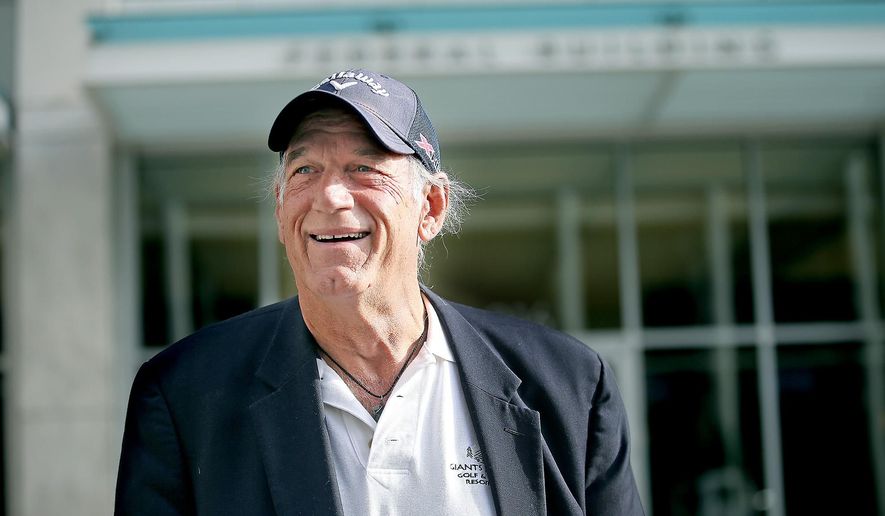
Jesse Ventura

Former Minnesota Gov. Jesse Ventura — author of the new book “Marijuana Manifesto” 

It’s news that might stun those who were young and restless during the 1960s, perhaps. New Frontier Data, and Viridian Capital Advisors — which provide marketing intelligence and investment advice to the emerging “cannabis industry” — have news. Cannabis stock grew by over 236 percent in 2016, they say.

“Cannabis stocks significantly outperformed major indexes in 2016, fueled by speculative investment based on anticipated expansion of new legal markets. In the run up to the election, stocks increased by 207.8 percent and continued to rise, even with an uncertain future under the new administration,” says Giadha Aguirre De Carcer, founder of the data firm. “While recent comments by the Trump administration did have an initial dampening effect on the market, we have seen continued growth relative whereby cannabis stocks are still outperforming other sectors.”

It appears to be a complicated marketplace, though. Federal law after 1956 carried a minimum sentence of two to 10 years for first-time offenders, with a fine of up to $20,000 — this according to a PBS timeline of American marijuana use. It remains against federal law in most states to grow, sell, possess or use marijuana. Twenty-eight states and the District of Columbia allow the sale of medical marijuana, however, and seven states and the District have recreational legislation in place.

Nevertheless, the analysts say there’s robust potential in cannabis-related businesses “that touch the plant” — and in ancillary consulting services aimed at investors and entrepreneurs eager to “seek advice about how to navigate cannabis regulatory environments, to establish business operations, to shape regulatory policy, and to influence political support.”

Meanwhile, former Minnesota Gov. Jesse Ventura — author of the new book “Marijuana Manifesto” — will deliver a keynote address at “Cannabis World Congress & Business Exposition” in New York City in midmonth, an event organized by the International Cannabis Association trade group. The expo also features political strategists Roger Stone and the Rev. Al Sharpton.

“I want to see cannabis legalized in all 50 states within my lifetime, and I will do all I can to help destigmatize it,” Mr. Ventura says. “Aside from being an invaluable medical resource for many Americans, cannabis is about job creation.”

These are the coolest VR games at the world’s biggest video game expo

Sony PSVR.
Sony’s PlayStation VR headset.

There’s no getting around it: virtual reality has stalled out.

After years of gushing previews and bold corporate stage shows, reality seems to have virtual reality. It’s clunky, pricey and still mostly a curiosity. We know that will eventually change — the headsets will slim down, the prices will drop and the experiences will get more exciting — but it’s safe to say that our virtual future is taking a lot longer than many anticipated.

Take a gander around the massive E3 video game conference in Los Angeles this week, however, and you’ll find plenty of proof that game makers are still very much on board the VR hype train. Sony (SNE) prominently displayed a half-dozen VR games during their fancy media briefing, Bethesda went all-in with three VR games based on hugely popular franchises and games for Facebook’s (FB) Oculus and HTC and Valve’s Vive were scattered throughout the show floor.

While Microsoft (MSFT) is playing the waiting game and Nintendo (NTDOY) has yet to dive in, it’s clear VR game development is moving forward quickly, undaunted by tepid hardware sales.

‘Echo Arena’ (Oculus Rift)

Remember the training sequences in Orson Scott Card’s sci-fi classic, Ender’s Game? That’s the gist of “Echo Arena,” a five on five multiplayer game of zero-G indoor frisbee soccer. That’s a lot to think about, but once you’re thrown into a match, “Echo Arena” snaps into focus. Players navigate arenas by slingshotting off walls, course correcting with tiny wrist rockets in an effort to track down a floating ball and hurl it into a goal. It’s just the sort of social experience VR evangelists believe will shape the future of the tech. But more than that, it’s uproarious fun. “Echo Arena” is due out July 20.

‘Starchild’ (PSVR)

The latest from the makers of the Oculus Rift launch hit “Lucky’s Tale”, “Starchild” enjoyed a quick spot during Sony’s big E3 media event on Monday. You don’t really get it, however, until you stare into the gorgeous world of this side-scrolling action-puzzler through a PSVR headset. Unlike many VR games, this beautifully detailed game isn’t about frantic action or cheap frights; it’s a fully-realized diorama in which you guide a tiny space heroine through a colorful, intimidating and mysterious world.

‘DOOM VFR’ (HTC Vive)

Bethesda might best be known as the publisher of sprawling open-world role-playing games, but they were also on the ground floor of the new wave of VR (they recently hammered that point home with a successful lawsuit.) While a VR version of their blazing fast bloodfest “DOOM” sounds like a one-way ticket to nausea town, “DOOM VFR” is pleasantly playable thanks to smart movement options, clean graphics and potent weaponry.

‘Fallout 4 VR’ (HTC Vive)

Two years after sending gamers into the wastelands with the immense RPG “Fallout 4,” developer Bethesda is aiming to give them a new way to explore it. “Fallout 4 VR” isn’t just a quick trip — it’s the full game, but now instead of pressing a menu button to raise your arm-mounted Pip Boy, you literally raise your arm. And if you thought fighting a Deathclaw was terrifying on your Xbox One, try doing it when he’s clawing at your virtual face.

‘Brass Tactics’ (Oculus Rift)

Strategy gaming seems tailor-made for VR, and this game from a former “Age of Empires” designer is proof positive that it’s a great match. Build clockwork armies, manage resources and go to war on a virtual tabletop. Despite the carnage, it’s easy on the eyes (and stomach) and immediately exciting for fans of the genre.

More games news:

America has slower LTE wireless than Canada or Mexico

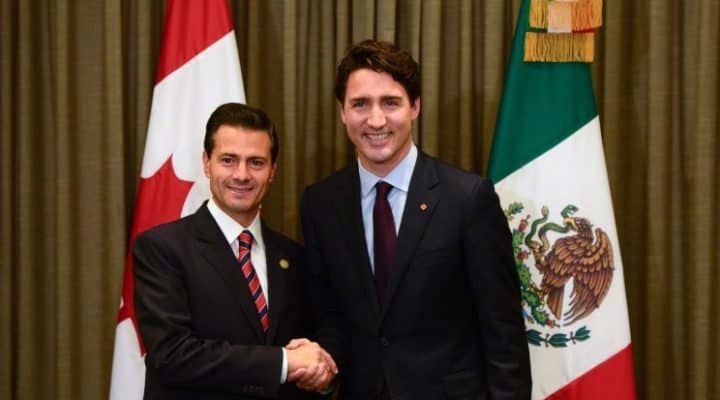
Prime Minister Justin Trudeau meets with Mexican President Enrique Pena Nieto during November's APEC Summit in Peru. Photo from The Canadian Press
Prime Minister Justin Trudeau meets with Mexican President Enrique Pena Nieto during November’s APEC Summit in Peru. Photo from The Canadian Press

A new report on wireless broadband is out, and it may not leave readers cheering “USA! USA!” According to OpenSignal’s study, Mexico, Canada, France, the United Kingdom and more than 50 other countries offer faster LTE cellular data speeds than the U.S.

Still, the latest installment of this biannual survey by the London-based research firm isn’t all bad. OpenSignal’s findings, based on almost 20 million reports collected by its app from 558,260 users in the first quarter of the year, also show that the U.S. is making strong progress in expanding LTE availability to more users, even if it’s not always the fastest.

A need for speed in any language

According to OpenSignal’s data the average LTE download speed in the U.S. was 14.99 megabits per second (Mbps) in the first quarter of 2017. That’s not exactly bad  — it’s an improvement from the 13.95 Mbps average it the survey reported six months earlier. But a wide variety of other countries offered much faster speeds.

A speedier wireless connection means you can download apps faster and share photos quicker, as well as stream Ultra High Definition video and transfer the sort of files that would ordinarily require a wired connection.

Singapore led OpenSignal’s list with an average of 45.62 Mbps, followed by South Korea with 43.46 Mbps and Hungary with 42.61 Mbps.

The next dozen countries all saw average download speeds above 30 Mbps. You can fairly object that most are in one part of Europe or another and therefore don’t require local wireless carriers to cover large expanses like the American West, but Australia still manages 33.76 Mbps while Canada tops out at 30.58 Mbps.

The U.S., meanwhile, lingers in the bottom 20 with 14.99 Mbps. That’s below the worldwide average of 16.4 Mbps and behind Russia (16.64 Mbps), Hong Kong (16.01 Mbps) and Jordan (15.09 Mbps). Sixteen countries trail the States, with India (5.14 Mbps, barely faster than 3G) coming closest in terms of population and area. OpenSignal didn’t post data for China.

Another bandwidth-analysis service, Ookla’s Speedtest.net, posted somewhat consistent numbers in its last round of country-specific figures. It found that LTE-capable phones that could connect to a network in the U.S. averaged 19.61 Mbps over the first six months of 2016. In Canada, LTE phones yielded 25.21 Mbps downloads on average, while in Mexico they managed speeds of 16.19 Mbps.

The other part of the equation: availability

The U.S. might not have the fastest data speeds, but it does have one of the highest “availability” scores — OpenSignal’s term for how much time users stay connected to an LTE network.

We’re fourth in the world with 86.5% availability, after South Korea (96.38%), Japan (93.48%), and Norway (86.6%).

Our nearest neighbors didn’t fare as well. Canada had 81.1% LTE availability and Mexico 69%.

OpenSignal’s data also shows considerable progress for U.S. LTE networks. In November, the company’s data showed domestic LTE availability ranked tenth in the world, at 81.3% and download speeds averaged 13.95 Mbps.

It’s important to note that “availability” doesn’t equal “coverage.” These numbers don’t show that 86.5% of America’s surface has LTE — only that phones running OpenSignal’s apps had LTE signals 86.5% of the time.

Beyond bragging rights

There are two lessons to take away from these data points, and looking up housing costs inSingapore or Seoul should not be either of them.

The first is that competition works. The fear of losing subscribers to rivals has kept the big four U.S. carriers working hard to deliver faster speeds in more areas. And net-neutrality rules that bar internet providers from charging sites extra for faster delivery of their data don’t seem to have held that work back, despite all the forecasts of doom from opponents of open-internet regulations.

The other is that good ideas in telecom policy don’t stop at the water’s edge. We should be willing to look at what other countries have done to speed up broadband access, whether it’sblocking telecom mergers or making it easier for wireless carriers to add capacity — then steal their best ideas without bothering to send a check in return.

6 Consumer Stocks Not Getting Killed By the Amazon-Whole Foods Deal

Many consumer facing stocks are getting killed today because of Amazon’s acquisition of Whole Foods. But not all. Here are some that might surprise you.

A wide variety of stocks are getting killed today after Amazon.com (AMZN) agreed to buy Whole Foods Market (WFM). Grocers like Kroger (KR). Big-box stores like Target (TGT). Pharmacies like CVS Heath (CVS). But it’s also interesting to look at what’s not getting killed.

Restaurant stocks, for instance, as McDonald’s (MCD) has gained 0.9% to $152.48 at 12:59 p.m. today. Luxury retailer Tiffany (TIF) has climbed 1% to $91.45. Handbag maker Coach (COH) has advanced 0.6% to $46.33. And even some department stores.

Yes, department stores. Nordstrom (JWN) has risen 0.7% to $47.31, and even Macy’s (M) has dipped just 0.6% to $22.60, while JC Penney (JCP) is off 0.1% to $4.84. Maybe the market is betting that they’ve already seen the worst, and if nothing else the threat they face is already well known.

That doesn’t stop analysts from having bearish views on them, however. Credit Suisse analyst Christian Buss and team, for instance, release a note today on why the decline of Sears (SHLD) won’t save JC Penney:

Our analysis suggests that Sears revenue donation is providing a moderate near-term boost to sales and earnings ($54M in revenue, and $0.03 in EPS). However, we believe that any further Sears store closings may increase the likelihood that JC Penney will have to accelerate closure of lower-tier mall locations, adding meaningful medium-term revenue and EPS risk of about $150-200M and $0.09. Our analysis of a full Sears closure scenario suggests an $800-900M revenue boost, $130-140M in incremental EBITDA, and $0.40-0.45 in EPS for JC Penney. Unfortunately, even in this scenario, we estimate FY20 revenue and EPS of $12.5B and $0.83, well short of company targets for FY19 of $13.8-14.3B and $1.40-1.55 (a year earlier). As a result, our primary concerns remain: 1) continued weakness in the core apparel business; 2) persistent degradation of store traffic, and 3) diminishing contributions from asset sales.

Weakness, weakness, everywhere.

Medicinal cannabis: Doctors to learn how to prescribe drug at Melbourne course

Brisbane man Michael Stoopman is a cancer survivor who believes the benefits of medicinal cannabis go way beyond palliative care.

Last year he had a large ulcerating tumour eating into his carotid artery in his neck that threatened his life.

Ulcerating tumours rarely heal and doctors told him little could be done other than managing his symptoms. So he started taking cannabis oil.

“Even though I’d been told by over 28 oncologists altogether and four other doctors that there’s no coming back from a tumour that size, it stopped growing,” Mr Stoopman said.

“Then one month later the whole wound closed up.”

Within six months of starting cannabis treatment he was declared cancer free.

Warning: This story contains a graphic image

Palliative care expert at Lifehouse Cancer Hospital in Sydney Judith Lacey said there was insufficient evidence to prove that medicinal cannabis can cure cancer, but that new studies had shown some cancers in mice were effectively treated with cannabis.

“So it’s really interesting looking at the potential benefit for cannabis in controlling cancer cell growth,” Dr Lacey said.

“It’s a really interesting field. People are conducting studies to see if perhaps in the future it may be potentially used for treating some cancer.”

Dr Lacey recently started prescribing medicinal cannabis to help terminally ill patients manage their symptoms.

She said the initial results were very positive — particularly for people suffering from chemotherapy-induced nausea and vomiting.

“The gut feeling is we’re on to something really good and this is going to potentially change the lives of people who are living with cancer,” she said.

Marijuana a complex drug

Dr Lacey is one of about 50 doctors from around the country who will converge on Melbourne to attend an Australian-first training course on how to prescribe medical cannabis.

So why do doctors need specific training?

Michael Stoopman shows his neck where he had a large cancerous ulcer, and five months where the area is healed.

“If I’m prescribing something I really need to understand it and the more I learn about it, the less I know,” Dr Lacey said.

“It’s quite a complex drug or herb and it’s got a lot of nuances in to how to prescribe it.

“People assume that cannabis is one product and it’s actually a really complex collection of plants and species of plants.”

Each cannabis plant has up to 100 different cannabinoids, which are chemical compounds found in marijuana plants.

Dr Lacey said science was still learning about the potential medicinal effects of each cannabinoid.

“There are multiple strains and there are multiple cannabinoids within each strain and you need to have the right drug for the right indication for the right person,” she said.

She said she was optimistic science would soon discover lots of new medicinal uses for cannabis.

“I think this is a really exciting time in medical history,” she said.

Doctors ‘uncomfortable’ with cannabis

Dan Haslam lies in a hospital bed, smiling at the camera as he eats food from a tray.

The training program has been organised by medical cannabis advocate Lucy Haslam.

“Australian doctors don’t have that expertise or experience,” Mrs Haslam said.

“They’re really quite uncomfortable about prescribing cannabis so we want to make them feel comfortable.

“It’s really important that we get international expertise here and guide our doctors.”

Mrs Haslam started campaigning for better access to medicinal cannabis after watching her son, Dan, die from bowel cancer two years ago.

“No medication that was given to him touched his nausea and vomiting until he touched cannabis,” she said.

“It was that miraculous my husband and I looked at each other and said, ‘My God, if this can do this for Dan then this is something that’s worth fighting for’.”

Lucy and Dan Haslam smile at the camera.

Mr Stoopman said the doctors’ training program and three-day symposium would be one of the most important events to understand and advance the uses of medical cannabis in Australia.

“I think Lucy Haslam has done a great job bringing international speakers and doctors together for this symposium,” he said.

Mrs Haslam said she hoped the symposium would lead to more patients having access to medical cannabis.

Van drives through crowd, killing one near London Mosque

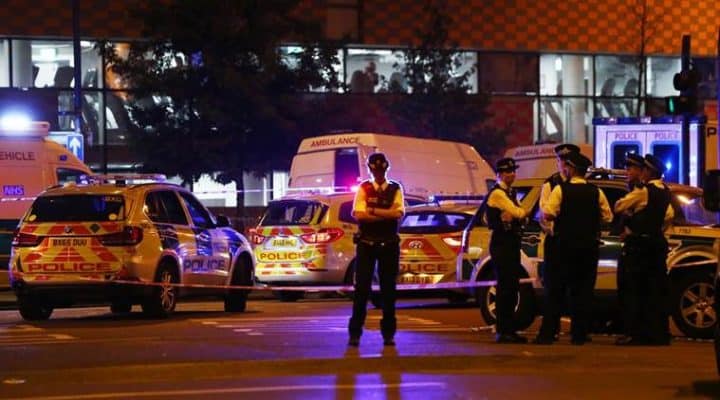
  • At least one person is dead and 10 injured after a van ploughed into worshippers near a mosque in London
  • The driver of the van has been arrested by the police; there are no other suspects
  • British Prime Minister Theresa May says the incident is being treated as a potential terrorist attack
  • Ms. May will chair an emergency meeting Monday morning in London
  • The area has been cordoned off as police continue their investigation

A van ploughed into worshippers leaving a London mosque on Monday, killing at least one person and injuring several in what Britain’s largest Muslim organisation said was a deliberate act of Islamophobia.

The Muslim Council of Britain said the vehicle hit people as they were leaving the Finsbury Park Mosque, one of the biggest in the country. The attack comes during the Muslim holy month of Ramadan, when people attend prayers at night.

British Prime Minister Theresa May said police had confirmed it was being treated as a potential terrorist attack and said she would chair an emergency response meeting later on Monday.

In photos: Van rams Muslim worshippers leaving London mosque

Police said one man was pronounced dead at the scene and that the van driver, 48, had been detained by members of the public before being arrested. The driver would undergo a mental health assessment in due course, police said.

The London Ambulance Service said it had taken eight people to hospital, while two were treated at the scene.

Prime Minister May said her thoughts were with those injured in “this terrible incident”. The leader of the opposition Labour Party, Jeremy Corbyn, said he was “totally shocked”.

London Mayor Sadiq Khan said it was an attack on common values.

“Like the terrible attacks in Manchester, Westminster and London Bridge it is also an assault on all our shared values of tolerance, freedom and respect,” he said in a statement.

Khan said there would be extra police to reassure communities, especially those observing Ramadan.

The Muslim Council said the incident was the most violent manifestation of Islamophobia in Britain in recent months and called for extra security at places of worship as the end of Ramadan nears.

“It appears that a white man in a van intentionally ploughed into a group of worshippers who were already tending to someone who had been taken ill,” the council said in a statement.

Police said they were called just after 12:20 a.m. (2320 GMT Sunday) to reports of a collision on Seven Sisters Road, which runs through the Finsbury Park area of north London.

“From the window, I started hearing a lot of yelling and screeching, a lot of chaos outside. … Everybody was shouting: ‘A van’s hit people, a van’s hit people’,” one woman who lives opposite the scene told the BBC.

“There was this white van stopped outside Finsbury Park mosque that seemed to have hit people who were coming out after prayers had finished.”

The incident comes just over two weeks after three Islamist militants drove into pedestrians on London Bridge and stabbed people at nearby restaurants and bars, killing eight. .

It also comes at a time of political turmoil, as Prime Minister May plunges into divorce talks with the European Union weakened by the loss of her parliamentary majority in a June 8 election.

She has faced heavy criticism for her response to a fire in a London tower block on Wednesday which killed at least 58 people, and for her record on security after a series of attacks blamed on Islamist militants in recent months.

One witness told CNN it was clear that the attacker at Finsbury Park had deliberately targeted Muslims.

“He tried to kill a lot of people so obviously it’s a terrorist attack. He targeted Muslims this time,” the witness, identified only as Rayan, said.

Other witnesses told Sky television that the van had hit at least 10 people.

Miqdaad Versi, assistant secretary general of the Muslim Council of Britain, said the van had deliberately swerved into a group of people who were helping a man who was ill and had fallen to the ground.

“Basically, a van swerved into them deliberately,” Versi told Reuters, citing a witness.

He said the driver had run out of the van but a group of people caught him and held him until police arrived.

Britain has been hit by a series of attacks in recent months, including the van-and-knife attack on London Bridge on June 3.

On March 22, a man drove a rented car into pedestrians on Westminster Bridge in London and stabbed a policeman to death before being shot dead. His attack killed five people.

On May 22, a suicide bomber killed 22 people at a concert by American pop singer Ariana Grande in Manchester in northern England.

The attacks were a factor in campaigning ahead of the June 8 election, with Prime Minister May criticised for overseeing a drop of 20,000 in the number of police officers in England and Wales as interior minister from 2010 to 2016.

She was also criticised for keeping her distance from angry residents during her visit to the charred remains of the 24-storey Grenfell Tower.

She said on Saturday the response to the fire, in which at least 58 people were killed on Wednesday, had been “not good enough”.

The Finsbury Park Mosque gained notoriety more than a decade ago for sermons by radical cleric Abu Hamza al-Masri, who was sentenced to life in a U.S. prison in January 2015 for his conviction on terrorism-related charges.

A new board of trustees and management took over in February 2005, a year after Abu Hamza was arrested by British police, since when attendance has greatly increased among worshippers from various communities, according to the mosque’s website.