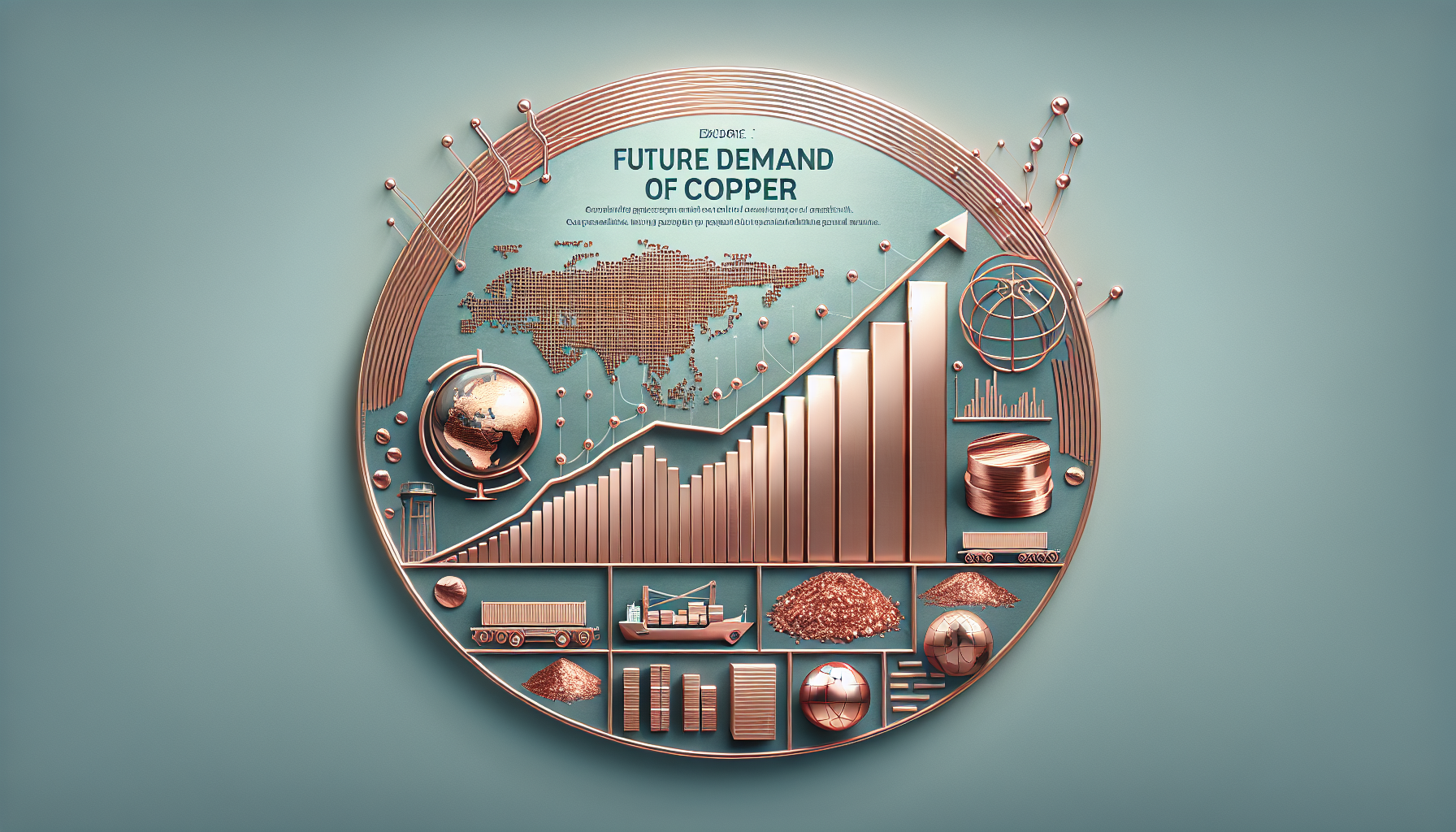
The global copper demand outlook has never looked more promising, with technological advancement and infrastructure development creating unprecedented opportunities for investors and industry stakeholders. As the world’s most essential industrial metal, copper sits at the intersection of renewable energy expansion, electric vehicle proliferation, and digital infrastructure growth, making it a cornerstone commodity for the modern economy.
Current market analysis reveals that the copper demand outlook is being fundamentally reshaped by the accelerating energy transition. Electric vehicles alone require four times more copper than traditional internal combustion engines, while renewable energy systems like wind turbines and solar panels are copper-intensive by design. This structural shift means that copper consumption patterns are evolving beyond traditional construction and manufacturing applications into high-growth technology sectors that show no signs of slowing.
Mining companies are responding aggressively to this evolving copper demand outlook by ramping up exploration activities and capital expenditures. Major producers are investing billions in new extraction technologies and expanding existing operations to meet projected demand increases. However, the industry faces significant challenges, including declining ore grades, environmental regulations, and lengthy permitting processes that can delay new projects by years or even decades.
Technology sector investments are particularly sensitive to copper supply dynamics, given the metal’s irreplaceable role in electrical conductivity and thermal management. Data centers, telecommunications infrastructure, and semiconductor manufacturing all depend heavily on reliable copper supplies. As artificial intelligence and cloud computing continue expanding, the copper demand outlook becomes increasingly tied to technological innovation cycles rather than traditional economic indicators.
Resource investment strategies are adapting to accommodate this shifting landscape, with institutional investors allocating more capital to copper-focused funds and mining equities. The copper demand outlook suggests that supply constraints could persist for years, creating favorable conditions for producers while potentially driving price volatility that benefits sophisticated traders and long-term investors alike.
Geopolitical factors add another layer of complexity to the copper demand outlook, as major producing nations like Chile and Peru account for significant portions of global supply. Trade policies, political stability, and environmental regulations in these regions directly impact global copper availability and pricing. Meanwhile, consuming nations are developing strategic reserve policies and domestic recycling capabilities to reduce supply chain vulnerabilities.
Secondary copper production through recycling is emerging as a critical component of future supply scenarios, though it cannot fully offset primary demand growth. The copper demand outlook indicates that recycled copper will play an increasingly important role, particularly in developed markets where environmental considerations drive circular economy initiatives. However, the quality and availability of scrap copper remain limiting factors for large-scale industrial applications.
Investment opportunities spanning the entire copper value chain are attracting attention from venture capital, private equity, and institutional investors. From mining technology startups developing more efficient extraction methods to companies creating innovative copper alloys for specific applications, the copper demand outlook is spurring innovation across multiple industries. These technological advances could potentially alter supply-demand dynamics by improving extraction efficiency or developing copper-alternative materials for certain applications.
The convergence of technological advancement and resource scarcity positions copper as one of the most strategically important commodities for the coming decades. With the copper demand outlook pointing toward sustained growth driven by irreversible technological trends, investors and industry participants who position themselves early in this cycle stand to benefit from what many analysts consider a generational opportunity in commodity markets.