
Archives for March 26, 2020

Here’s why Suze Orman says it’s better to invest your retirement savings in a Roth 401K if you can

A 401(k) is one of the best ways to save for retirement, but there’s more than one type of employer-sponsored retirement account and knowing the differences can give you more options in the long run.

One of the biggest perks of contributing to a traditional 401(k) is that doing so can save you money on taxes. Any money you put in a traditional 401(k) goes straight from your paycheck before taxes are applied, so it reduces your taxable income.

But financial expert Suze Orman says there’s a better way to invest for your retirement. Instead of investing in a traditional 401(k), Orman recommends investing in a Roth 401(k). Now you’ve probably heard of the individual retirement account option, the Roth IRA, but there’s now a 401(k) version as well that functions in roughly the same way.

With a traditional 401(k), you don’t pay taxes on the income you’re funneling into your investments. But when you retire, you pay taxes when you withdraw money from that account.

With a Roth IRA, you contribute the money after-taxes, so while you don’t get the immediate tax break, you don’t have to pay any taxes when you retire. About 70% of employers offer Roth 401(k)s, according to Plan Sponsor Council of America’s 2019 annual survey of employers.

“In my opinion, you should absolutely be putting every single cent into the Roth version of your retirement account,” says Orman who recently released her new book, “The Ultimate Retirement Guide for 50+.”

Roth retirement accounts offer more options

Why does Orman like Roth retirement accounts so much more? Because they offer more flexibility than a traditional 401(k). With a Roth 401(k), you don’t ever have to take the required minimum distributions. Meanwhile, a traditional retirement account requires you to start taking money out at age 72. If you miss this deadline, or don’t take enough money out, the penalty can be severe: The amount not withdrawn is taxed at 50% rate.

Meanwhile, if you’re planning to leave retirement savings as an inheritance, Orman says a Roth 401(k) is better here, too. What if your kids are in a higher tax bracket than you ever were in, and you leave them money in a traditional 401(k)?

They’re going to lose a lot of that money, Orman says. But with a Roth, they get it without income taxes, she says.

If you don’t have the option to invest in a Roth 401(k) at work, you can always invest in a Roth IRA if you earn under the income limit, Orman says. In 2020, you can put away $6,000 in a Roth IRA if you’re under age 50 (a bit more if you’re older), but you can only make full contributions to these accounts if your individual modified adjusted gross income is less than $124,000 this year ($193,000 for those who are married and filing jointly).

Orman’s advice: If you have a retirement account at work that matches your contribution, invest up to the point of the match. After that, fully fund your Roth IRA.

Plus, with a Roth IRA, you can take out your contributions at any time without penalty, regardless of your age or how long the money has been there. “There are so many advantages for you to do a Roth versus a traditional,” Orman says.

“So please don’t go for the tax write off today so that later on in life you have to pay taxes on a traditional retirement account. Go for a Roth,” Orman says.


iFixit’s MacBook Air teardown confirms 0.5mm thicker keyboard

And questions, again, why Apple ever switched to the butterfly keyboard.

If you’ve been lucky enough to get your hands on the new MacBook Air, you know that the keyboard really is excellent. Thanks to the scissor mechanism, which replaced the hated butterfly keyboard, the keys are noticeably cushier, with more travel. iFixit took a closer look at those keys in its latest teardown and reports that the height difference is about 0.5 millimeters.

“More than anything, that 0.5 mm illustrates the sheer unnecessary-ness of the five painful years that Mac fans spent smashing on unresponsive butterfly keyboards,” iFixit writes. “Knowing that Apple’s thinnest-and-lightest notebook accommodates a scissor-switch keyboard so gracefully makes us wonder what it was all for.”

The keys also lack the silicon barrier that iFixit found in a previous MacBook Pro teardown. Apple first claimed that the barrier was meant to make the keys quieter, but internal documents later revealed that they were intended to “prevent debris from entering the butterfly mechanism.” By ditching the butterfly keyboard, it looks like Apple is able to get rid of the silicon barrier, too.

As far as repairability, the biggest change iFixit found is that the trackpad cables are no longer wedged beneath the logic board, so you can remove the trackpad without removing the board. The same goes for the battery, which is under those trackpad cables. This should make repairs and battery replacements easier and faster. (The battery still sits on stretchy pull tabs.)

Overall, iFixit gave the new MacBook Air a 4 out of 10 for repairability. While that’s not exactly a winning score, it is one point more than the previous generation received.

Google Assistant’s redesigned feed is rolling out on iOS

More Android users should have access to the new interface as well.

Over the last few weeks, Google has been slowly rolling out a redesigned “Snapshot” feed to Assistant on Android devices that makes the updates portion of the app more visual. As of today, it’s also available on iOS.

You can check out the new experience by launching Assistant and then tapping on the inbox icon located near the bottom left of the interface. You’ll then see the redesigned feed, which organizes a variety of information using chronological cards.

You can tap on the cards to expand them and see additional information. Expanding the weather widget, for instance, will display a five-day forecast, with additional prompts to save you the trouble of asking Assistant a question with your voice. Expanding a calendar reminder, meanwhile, allows you to see the description of an upcoming event and a list of attendees. There’s also a shortcut that takes you directly to the invite in Google Calendar.

The new experience also integrates with Google Podcasts. If you pause an episode, you can resume it directly from the top of the screen. At the bottom of the interface, there’s an “Other Important Things” heading, under which you can do stuff like quickly put together a shopping list. Assistant will also highlight things you can in the surrounding area using Maps.

If you weren’t a consistent Assistant user already, the new Snapshot interface likely won’t change your mind on Google’s digital helper. But for those of us who already depend on the AI, the redesigned feed is a nice tweak.

A hacker stole and leaked the Xbox Series X graphics source code

The thief also took code for AMD’s upcoming computer GPUs.

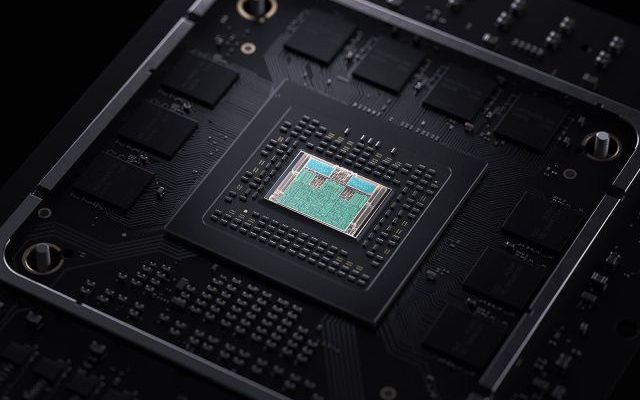
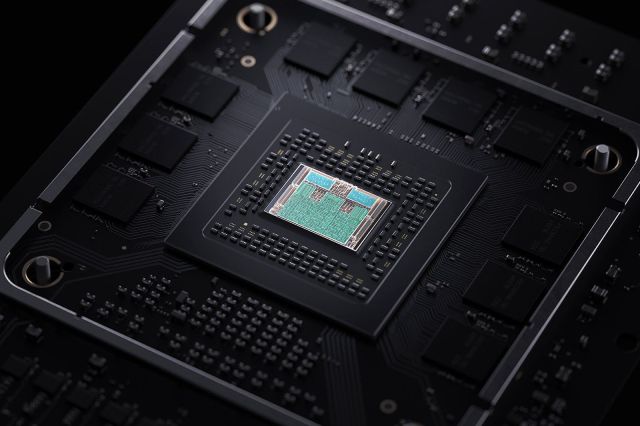
AMD has been having a particularly rough few months, apparently. The chip designer has revealed that a hacker stole test files for a “subset” of current and upcoming graphics hardware, some of which had been posted online before they were taken down. While AMD was shy on details, the claimed intruder told TorrentFreak that the material included source code for Navi 10 (think Radeon RX 5700 series), the future Navi 21 and the Arden GPU inside the Xbox Series X.

The self-proclaimed hacker added that she wanted $100 million for the source code and threatened to “leak everything” if there was no buyer. She reportedly found the GPU data in a “hacked computer” in November, although AMD said it hadn’t been approached until December.

AMD doesn’t appear to be bowing under pressure. It believed the stolen code was “not core to the competitiveness or security” of its products, and said there was an “ongoing criminal investigation.” This shouldn’t affect the launches of the Xbox Series X or other products. Even so, leaks for any sensitive files are still big deals — they suggest a significant lapse in security.

An enterprise SSD flaw will brick hardware after exactly 40,000 hours

Several HPE models are affected.

Hewlett Packard Enterprise (HPE) has warned that certain SSD drives could fail catastrophically if buyers don’t take action soon. Due to a firmware bug, the products in question will be bricked exactly 40,000 hours (four years, 206 days and 16 hours) after the SSD has entered service. “After the SSD failure occurs, neither the SSD nor the data can be recovered,” the company warned in a customer service bulletin.

This type of issue would be terrible for consumers, but it’s catastrophic for the enterprises that buy such drives. According to HPE’s product description, they’re designed for “big data analytics, cloud computing, active archiving, database applications and data warehousing.” HPE sold them as standalone drives, but also as part if its HPE ProLiant, Synergy and other storage products.

A failure would be particularly disastrous in large RAID systems where the drives are usually used. Normally, the data is still protected in a RAID even if one or several drives fail. However, RAIDs are usually built with new drives purchased all at once, and as HPE pointed out, “SSDs which were put into service at the same time will likely fail nearly simultaneously.” If that were to happen, companies would lose huge amounts of data.

The drives in question are 800GB and 1.6TB SAS models and storage products listed in the service bulletin here. It applies to any products with HPD7 or earlier firmware. HPE also includes instructions on how to update the firmware and check the total time on the drive to best plan an upgrade. According to HPE, the drives could start failing as early as October this year.

Cleveland-Cliffs (NYSE:CLF) Trading Up 15% on Analyst Upgrade

Shares of Cleveland-Cliffs Inc (NYSE:CLF) were up 15% on Tuesday after B. Riley raised their price target on the stock from $10.00 to $11.00. B. Riley currently has a buy rating on the stock. Cleveland-Cliffs traded as high as $3.69 and last traded at $3.53, approximately 13,771,981 shares traded hands during mid-day trading. An increase of 11% from the average daily volume of 12,417,806 shares. The stock had previously closed at $3.07.

Several other research analysts also recently weighed in on the stock. Citigroup decreased their target price on shares of Cleveland-Cliffs from $8.00 to $6.00 and set a “neutral” rating for the company in a research note on Wednesday, March 4th. Cfra restated a “strong-buy” rating and issued a $10.00 target price (up from $9.00) on shares of Cleveland-Cliffs in a research note on Thursday, February 20th. ValuEngine downgraded shares of Cleveland-Cliffs from a “hold” rating to a “sell” rating in a research note on Wednesday, March 4th. TheStreet downgraded shares of Cleveland-Cliffs from a “b-” rating to a “c+” rating in a research note on Thursday, January 23rd. Finally, Zacks Investment Research upgraded shares of Cleveland-Cliffs from a “hold” rating to a “buy” rating and set a $8.25 target price for the company in a research note on Thursday, January 16th. One investment analyst has rated the stock with a sell rating, four have issued a hold rating, five have given a buy rating and one has given a strong buy rating to the stock. The stock currently has an average rating of “Buy” and a consensus price target of $9.69.

In related news, CEO Lourenco Goncalves purchased 200,000 shares of the business’s stock in a transaction that occurred on Wednesday, March 11th. The shares were purchased at an average cost of $4.49 per share, with a total value of $898,000.00. Following the completion of the acquisition, the chief executive officer now directly owns 3,565,597 shares of the company’s stock, valued at approximately $16,009,530.53. The transaction was disclosed in a filing with the Securities & Exchange Commission, which is available at the SEC website. Also, Director John T. Baldwin purchased 10,000 shares of the business’s stock in a transaction that occurred on Wednesday, March 11th. The stock was bought at an average cost of $4.43 per share, for a total transaction of $44,300.00. Following the completion of the acquisition, the director now directly owns 133,727 shares of the company’s stock, valued at $592,410.61. The disclosure for this purchase can be found here. Insiders purchased 240,000 shares of company stock worth $1,066,650 over the last ninety days. 1.83% of the stock is currently owned by corporate insiders.

A number of institutional investors and hedge funds have recently bought and sold shares of CLF. Russell Investments Group Ltd. grew its position in Cleveland-Cliffs by 50.9% in the 3rd quarter. Russell Investments Group Ltd. now owns 49,953 shares of the mining company’s stock valued at $361,000 after buying an additional 16,853 shares in the last quarter. Tower Research Capital LLC TRC grew its position in Cleveland-Cliffs by 235.0% in the 3rd quarter. Tower Research Capital LLC TRC now owns 4,848 shares of the mining company’s stock valued at $35,000 after buying an additional 3,401 shares in the last quarter. Virtu Financial LLC grew its position in Cleveland-Cliffs by 173.1% in the 3rd quarter. Virtu Financial LLC now owns 122,241 shares of the mining company’s stock valued at $882,000 after buying an additional 77,484 shares in the last quarter. Carnegie Capital Asset Management LLC grew its position in Cleveland-Cliffs by 3.5% in the 3rd quarter. Carnegie Capital Asset Management LLC now owns 38,868 shares of the mining company’s stock valued at $281,000 after buying an additional 1,307 shares in the last quarter. Finally, Stifel Financial Corp grew its position in Cleveland-Cliffs by 88.9% in the 3rd quarter. Stifel Financial Corp now owns 31,803 shares of the mining company’s stock valued at $225,000 after buying an additional 14,968 shares in the last quarter. 84.00% of the stock is currently owned by hedge funds and other institutional investors.

The stock’s 50-day moving average is $5.87 and its 200-day moving average is $7.24. The stock has a market cap of $865.90 million, a P/E ratio of 3.36 and a beta of 2.10. The company has a current ratio of 2.19, a quick ratio of 1.42 and a debt-to-equity ratio of 5.91.

Cleveland-Cliffs (NYSE:CLF) last posted its quarterly earnings data on Thursday, February 20th. The mining company reported $0.25 earnings per share for the quarter, beating the Thomson Reuters’ consensus estimate of $0.24 by $0.01. Cleveland-Cliffs had a net margin of 14.71% and a return on equity of 100.50%. The company had revenue of $534.10 million during the quarter, compared to analyst estimates of $549.75 million. During the same quarter last year, the firm posted $2.03 EPS. The business’s revenue for the quarter was down 23.3% on a year-over-year basis. On average, equities analysts forecast that Cleveland-Cliffs Inc will post 0.59 EPS for the current year.

The firm also recently disclosed a quarterly dividend, which will be paid on Wednesday, April 15th. Stockholders of record on Friday, April 3rd will be given a dividend of $0.06 per share. The ex-dividend date of this dividend is Thursday, April 2nd. This represents a $0.24 annualized dividend and a dividend yield of 6.80%. Cleveland-Cliffs’s dividend payout ratio (DPR) is 21.43%.

Cleveland-Cliffs Company Profile (NYSE:CLF)

Cleveland-Cliffs Inc operates as an iron ore mining company in the United States. The company operates four iron ore mines in Michigan and Minnesota. It sells its products to integrated steel companies and steel producers in the United States and the Asia Pacific. The company was formerly known as Cliffs Natural Resources Inc and changed its name to Cleveland-Cliffs Inc in August 2017.