

Archives for March 10, 2020

Restaurant Brands International Inc. (QSR) and Sprint Corporation (S)

CAPITAL RESEARCH & MANAGEMENT CO bought a fresh place in Restaurant Brands International Inc. (NYSE:QSR). The institutional investor bought 3.2 million shares of the stock in a transaction took place on 12/31/2019. In another most recent transaction, which held on 12/31/2019, MACKENZIE FINANCIAL CORP. bought approximately 1.9 million shares of Restaurant Brands International Inc. In a separate transaction which took place on 12/31/2019, the institutional investor, CIBC ASSET MANAGEMENT, INC. bought 1.7 million shares of the company’s stock. The total Institutional investors and hedge funds own 83.41% of the company’s stock.

In the most recent purchasing and selling session, Restaurant Brands International Inc. (QSR)’s share price increased by 2.36 percent to ratify at $55.03. A sum of 3452616 shares traded at recent session and its average exchanging volume remained at 2.67M shares. The 52-week price high and low points are important variables to concentrate on when assessing the current and prospective worth of a stock. Restaurant Brands International Inc. (QSR) shares are taking a pay cut of -30.75% from the high point of 52 weeks and flying high of 2.82% from the low figure of 52 weeks.

Restaurant Brands International Inc. (QSR) shares reached a high of $55.22 and dropped to a low of $52.08 until finishing in the latest session at $52.44. Traders and investors may also choose to study the ATR or Average True Range when concentrating on technical inventory assessment. Currently at 1.93 is the 14-day ATR for Restaurant Brands International Inc. (QSR). The highest level of 52-weeks price has $79.46 and $53.52 for 52 weeks lowest level. After the recent changes in the price, the firm captured the enterprise value of $30.2B, with the price to earnings ratio of 23.27.

Having a look at past record, we’re going to look at various forwards or backwards shifting developments regarding QSR. The firm’s shares fell -5.93 percent in the past five business days and shrunk -12.79 percent in the past thirty business days. In the previous quarter, the stock fell -16.07 percent at some point. The output of the stock decreased -26.67 percent within the six-month closing period, while general annual output lost -10.18 percent. The company’s performance is now negative at -13.71% from the beginning of the calendar year.

According to WSJ, Restaurant Brands International Inc. (QSR) obtained an estimated Overweight proposal from the 27 brokerage firms currently keeping a deep eye on the stock performance as compares to its rivals. 1 equity research analysts rated the shares with a selling strategy, 6 gave a hold approach, 17 gave a purchase tip, 2 gave the firm a overweight advice and 1 put the stock under the underweight category.

Sprint Corporation (S) shares on Friday’s trading session, dropped -2.19 percent to see the stock exchange hands at $8.94 per unit. Lets a quick look at company’s past reported and future predictions of growth using the EPS Growth. EPS growth is a percentage change in standardized earnings per share over the trailing-twelve-month period to the current year-end. The company posted a value of -$0.66 as earning-per-share over the last full year, while a chance, will post -$0.23 for the coming year. The current EPS Growth rate for the company during the year is -748.90% and predicted to reach at -35.30% for the coming year. In-depth, if we analyze for the long-term EPS Growth, the out-come was -65.80% for the past five years.

The last trading period has seen Sprint Corporation (S) move -12.01% and 109.86% from the stock’s 52-week high and 52-week low prices respectively. The daily trading volume for Sprint Corporation (NYSE:S) over the last session is 22.09 million shares. S has attracted considerable attention from traders and investors, a scenario that has seen its volume drop -11.45% compared to the previous one.

Investors focus on the profitability proportions of the company that how the company performs at profitability side. Return on equity ratio or ROE is a significant indicator for prospective investors as they would like to see just how effectively a business is using their cash to produce net earnings. As a return on equity, Sprint Corporation (NYSE:S) produces -10.30%. Because it would be easy and highly flexible, ROI measurement is among the most popular investment ratios. Executives could use it to evaluate the levels of performance on acquisitions of capital equipment whereas investors can determine that how the stock investment is better. The ROI entry for S’s scenario is at 0.70%. Another main metric of a profitability ratio is the return on assets ratio or ROA that analyses how effectively a business can handle its assets to generate earnings over a duration of time. Sprint Corporation (S) generated -3.10% ROA for the trading twelve-month.

Volatility is just a proportion of the anticipated day by day value extend—the range where an informal investor works. Greater instability implies more noteworthy benefit or misfortune. After an ongoing check, Sprint Corporation (S) stock is found to be 4.61% volatile for the week, while 4.02% volatility is recorded for the month. The outstanding shares have been calculated 4.20B. Based on a recent bid, its distance from 20 days simple moving average is 3.99%, and its distance from 50 days simple moving average is 39.95% while it has a distance of 37.79% from the 200 days simple moving average.

The Williams Percent Range or Williams %R is a well-known specialized pointer made by Larry Williams to help recognize overbought and oversold circumstances. Sprint Corporation (NYSE:S)’s Williams Percent Range or Williams %R at the time of writing to be seated at 77.78% for 9-Day. It is also calculated for different time spans. Currently for this organization, Williams %R is stood at 81.88% for 14-Day, 22.30% for 20-Day, 20.68% for 50-Day and to be seated 20.68% for 100-Day. Relative Strength Index, or RSI(14), which is a technical analysis gauge, also used to measure momentum on a scale of zero to 100 for overbought and oversold. In the case of Sprint Corporation, the RSI reading has hit 60.53 for 14-Day.

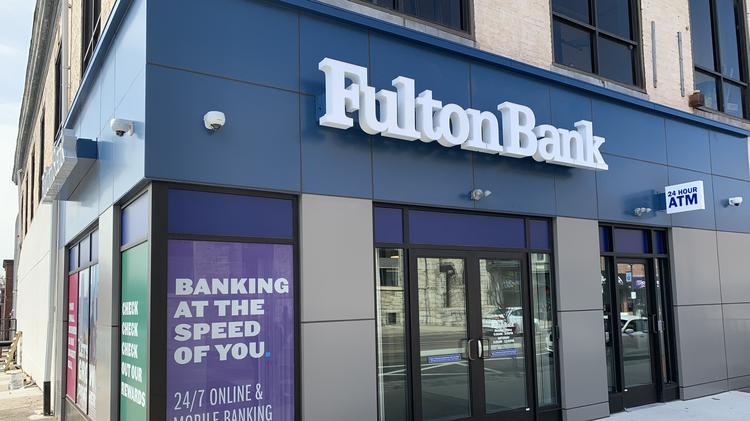
Fulton Financial Corporation (FULT) and Azul S.A. (AZUL)

INVESCO CAPITAL MANAGEMENT LLC bought a fresh place in Fulton Financial Corporation (NASDAQ:FULT). The institutional investor bought 2.3 million shares of the stock in a transaction took place on 12/31/2019. In another most recent transaction, which held on 12/31/2019, HENDERSON GLOBAL INVESTORS LTD. bought approximately 867.8 thousand shares of Fulton Financial Corporation In a separate transaction which took place on 12/31/2019, the institutional investor, WINTON CAPITAL MANAGEMENT LTD. bought 411.6 thousand shares of the company’s stock. The total Institutional investors and hedge funds own 68.20% of the company’s stock.

In the most recent purchasing and selling session, Fulton Financial Corporation (FULT)’s share price decreased by -2.69 percent to ratify at $14.48. A sum of 2308084 shares traded at recent session and its average exchanging volume remained at 889.96K shares. The 52-week price high and low points are important variables to concentrate on when assessing the current and prospective worth of a stock. Fulton Financial Corporation (FULT) shares are taking a pay cut of -19.56% from the high point of 52 weeks and flying high of 1.90% from the low figure of 52 weeks.

Fulton Financial Corporation (FULT) shares reached a high of $14.62 and dropped to a low of $14.08 until finishing in the latest session at $14.29. Traders and investors may also choose to study the ATR or Average True Range when concentrating on technical inventory assessment. Currently at 0.49 is the 14-day ATR for Fulton Financial Corporation (FULT). The highest level of 52-weeks price has $18.00 and $14.21 for 52 weeks lowest level. After the recent changes in the price, the firm captured the enterprise value of $3.67B, with the price to earnings ratio of 10.74 and price to earnings growth ratio of 1.34. The liquidity ratios which the firm has won as a debt-to-equity ratio of 0.17.

Having a look at past record, we’re going to look at various forwards or backwards shifting developments regarding FULT. The firm’s shares rose 0.21 percent in the past five business days and shrunk -15.86 percent in the past thirty business days. In the previous quarter, the stock fell -15.02 percent at some point. The output of the stock decreased -9.06 percent within the six-month closing period, while general annual output lost -10.90 percent. The company’s performance is now negative at -16.92% from the beginning of the calendar year.

According to WSJ, Fulton Financial Corporation (FULT) obtained an estimated Hold proposal from the 7 brokerage firms currently keeping a deep eye on the stock performance as compares to its rivals. 0 equity research analysts rated the shares with a selling strategy, 7 gave a hold approach, 0 gave a purchase tip, 0 gave the firm a overweight advice and 0 put the stock under the underweight category. The average price goal of one year between several banks and credit unions that last year discussed the stock is $16.60.

Azul S.A. (AZUL) shares on Friday’s trading session, dropped -0.92 percent to see the stock exchange hands at $24.66 per unit. Lets a quick look at company’s past reported and future predictions of growth using the EPS Growth. EPS growth is a percentage change in standardized earnings per share over the trailing-twelve-month period to the current year-end. The company posted a value of -$0.18 as earning-per-share over the last full year, while a chance, will post $2.48 for the coming year. The current EPS Growth rate for the company during the year is -24.70% and predicted to reach at 43.10% for the coming year. In-depth, if we analyze for the long-term EPS Growththe scenario is totally different as the current prediction is 27.35% for the next five year.

The last trading period has seen Azul S.A. (AZUL) move -44.65% and 4.89% from the stock’s 52-week high and 52-week low prices respectively. The daily trading volume for Azul S.A. (NYSE:AZUL) over the last session is 1.65 million shares. AZUL has attracted considerable attention from traders and investors, a scenario that has seen its volume jump 229.34% compared to the previous one.

Investors focus on the profitability proportions of the company that how the company performs at profitability side. Return on equity ratio or ROE is a significant indicator for prospective investors as they would like to see just how effectively a business is using their cash to produce net earnings. As a return on equity, Azul S.A. (NYSE:AZUL) produces -20.40%. Because it would be easy and highly flexible, ROI measurement is among the most popular investment ratios. Executives could use it to evaluate the levels of performance on acquisitions of capital equipment whereas investors can determine that how the stock investment is better. The ROI entry for AZUL’s scenario is at 5.00%. Another main metric of a profitability ratio is the return on assets ratio or ROA that analyses how effectively a business can handle its assets to generate earnings over a duration of time. Azul S.A. (AZUL) generated -0.60% ROA for the trading twelve-month.

Volatility is just a proportion of the anticipated day by day value extend—the range where an informal investor works. Greater instability implies more noteworthy benefit or misfortune. After an ongoing check, Azul S.A. (AZUL) stock is found to be 8.31% volatile for the week, while 4.84% volatility is recorded for the month. The outstanding shares have been calculated 110.88M. Based on a recent bid, its distance from 20 days simple moving average is -31.07%, and its distance from 50 days simple moving average is -38.03% while it has a distance of -34.08% from the 200 days simple moving average.

The Williams Percent Range or Williams %R is a well-known specialized pointer made by Larry Williams to help recognize overbought and oversold circumstances. Azul S.A. (NYSE:AZUL)’s Williams Percent Range or Williams %R at the time of writing to be seated at 86.54% for 9-Day. It is also calculated for different time spans. Currently for this organization, Williams %R is stood at 89.81% for 14-Day, 90.47% for 20-Day, 91.70% for 50-Day and to be seated 91.70% for 100-Day. Relative Strength Index, or RSI(14), which is a technical analysis gauge, also used to measure momentum on a scale of zero to 100 for overbought and oversold. In the case of Azul S.A., the RSI reading has hit 17.18 for 14-Day.

Bilibili Inc. (BILI) and BOQI International Medical Inc. (BIMI)

FIDELITY MANAGEMENT & RESEARCH C bought a fresh place in Bilibili Inc. (NASDAQ:BILI). The institutional investor bought 5.5 million shares of the stock in a transaction took place on 12/31/2019. In another most recent transaction, which held on 12/31/2019, YIHENG CAPITAL LLC bought approximately 1.8 million shares of Bilibili Inc. In a separate transaction which took place on 12/31/2019, the institutional investor, MYRIAD ASSET MANAGEMENT LTD. bought 1.5 million shares of the company’s stock. The total Institutional investors and hedge funds own 44.40% of the company’s stock.

In the most recent purchasing and selling session, Bilibili Inc. (BILI)’s share price decreased by -3.57 percent to ratify at $25.68. A sum of 8573323 shares traded at recent session and its average exchanging volume remained at 5.17M shares. The 52-week price high and low points are important variables to concentrate on when assessing the current and prospective worth of a stock. Bilibili Inc. (BILI) shares are taking a pay cut of -12.30% from the high point of 52 weeks and flying high of 94.10% from the low figure of 52 weeks.

Bilibili Inc. (BILI) shares reached a high of $26.15 and dropped to a low of $24.56 until finishing in the latest session at $25.50. Traders and investors may also choose to study the ATR or Average True Range when concentrating on technical inventory assessment. Currently at 1.57 is the 14-day ATR for Bilibili Inc. (BILI). The highest level of 52-weeks price has $29.28 and $13.23 for 52 weeks lowest level. After the recent changes in the price, the firm captured the enterprise value of $8.4B. The liquidity ratios which the firm has won as a current ratio of 2.60 and a debt-to-equity ratio of 0.00.

Having a look at past record, we’re going to look at various forwards or backwards shifting developments regarding BILI. The firm’s shares fell -4.46 percent in the past five business days and grew 14.75 percent in the past thirty business days. In the previous quarter, the stock rose 52.86 percent at some point. The output of the stock increased 89.80 percent within the six-month closing period, while general annual output gained 35.30 percent. The company’s performance is now positive at 37.92% from the beginning of the calendar year.

According to WSJ, Bilibili Inc. (BILI) obtained an estimated Buy proposal from the 23 brokerage firms currently keeping a deep eye on the stock performance as compares to its rivals. 0 equity research analysts rated the shares with a selling strategy, 2 gave a hold approach, 20 gave a purchase tip, 1 gave the firm a overweight advice and 0 put the stock under the underweight category. The average price goal of one year between several banks and credit unions that last year discussed the stock is $175.54.

BOQI International Medical Inc. (BIMI) shares on Friday’s trading session, dropped -3.55 percent to see the stock exchange hands at $4.07 per unit. Lets a quick look at company’s past reported and future predictions of growth using the EPS Growth. EPS growth is a percentage change in standardized earnings per share over the trailing-twelve-month period to the current year-end. The company posted a value of -$2.14 as earning-per-share over the last full year. The current EPS Growth rate for the company during the year is -911.50%.

The last trading period has seen BOQI International Medical Inc. (BIMI) move -66.08% and 295.15% from the stock’s 52-week high and 52-week low prices respectively. The daily trading volume for BOQI International Medical Inc. (NASDAQ:BIMI) over the last session is 1.85 million shares. BIMI has attracted considerable attention from traders and investors, a scenario that has seen its volume jump 144.68% compared to the previous one.

Investors focus on the profitability proportions of the company that how the company performs at profitability side. Return on equity ratio or ROE is a significant indicator for prospective investors as they would like to see just how effectively a business is using their cash to produce net earnings. As a return on equity, BOQI International Medical Inc. (NASDAQ:BIMI) produces -160.30%. Because it would be easy and highly flexible, ROI measurement is among the most popular investment ratios. Executives could use it to evaluate the levels of performance on acquisitions of capital equipment whereas investors can determine that how the stock investment is better. The ROI entry for BIMI’s scenario is at -99.30%. Another main metric of a profitability ratio is the return on assets ratio or ROA that analyses how effectively a business can handle its assets to generate earnings over a duration of time. BOQI International Medical Inc. (BIMI) generated -67.40% ROA for the trading twelve-month.

Volatility is just a proportion of the anticipated day by day value extend—the range where an informal investor works. Greater instability implies more noteworthy benefit or misfortune. After an ongoing check, BOQI International Medical Inc. (BIMI) stock is found to be 23.62% volatile for the week, while 21.70% volatility is recorded for the month. The outstanding shares have been calculated 9.41M. Based on a recent bid, its distance from 20 days simple moving average is 4.73%, and its distance from 50 days simple moving average is 21.75% while it has a distance of 37.61% from the 200 days simple moving average.

The Williams Percent Range or Williams %R is a well-known specialized pointer made by Larry Williams to help recognize overbought and oversold circumstances. BOQI International Medical Inc. (NASDAQ:BIMI)’s Williams Percent Range or Williams %R at the time of writing to be seated at 56.60% for 9-Day. It is also calculated for different time spans. Currently for this organization, Williams %R is stood at 56.60% for 14-Day, 75.68% for 20-Day, 65.81% for 50-Day and to be seated 70.48% for 100-Day. Relative Strength Index, or RSI(14), which is a technical analysis gauge, also used to measure momentum on a scale of zero to 100 for overbought and oversold. In the case of BOQI International Medical Inc., the RSI reading has hit 56.92 for 14-Day.

Stop-work order lifted

Stop work order partially lifted at Cape Breton’s Donkin coal mine

Nova Scotia’s Labour Department says a stop-work order has been partially lifted at the Donkin coal mine in Cape Breton.

Production was shut down Feb. 13 after a rockfall in an area of the mine that saw another roof collapse two weeks earlier.

There were no injuries reported in either incident, which occurred at an intersection between two coal seams inside the underground operation.

The stop-work order remains in effect for that area, but the province’s senior director of inspection compliance says work was allowed to resume Friday in the area of the mine that wasn’t affected by the collapse.

Scott Nauss says Kameron Collieries must now use longer, six-metre bolts to further stabilize the mine’s roof and must also conduct more monitoring of roof conditions.

He says the stop work order will not be entirely lifted until the department receives a report from the company on what caused the rockfall, as well as proposed measures to prevent a recurrence.

The latest rockfalls follow a roof collapse in July 2019, as well as two other rockfalls in December 2018.

TSX sinks 10% in one day

Collapse in oil prices triggers a plunge in energy sector

Canada’s main stock index closed down 10.3 per cent to its lowest level in 14 months as a collapse in oil prices triggers a plunge in the energy sector.

The S&P/TSX composite index lost 1,660.78 points to close at 14,514.24 and the capped energy index was down more than 27 per cent as Cenovus Energy Inc. was down 51.6 per cent.

In New York, the Dow Jones industrial average was down 2,2013.76 points or 7.7 per cent at 23,851.02. The S&P 500 index was down 225.81 points at 2,746.56, while the Nasdaq composite was down 624.94 points at 7,950.68.

The Canadian dollar traded for 73.54 cents US compared with an average of 74.51 cents US on Friday.

The April crude contract was down US$10.15 at US$31.13 per barrel and the April natural gas contract was up seven cents at US$1.78 per mmBTU.

The April gold contract was up US$3.30 at US$1,675.70 an ounce and the May copper contract was down five cents at US$2.51 a pound.