Archives for February 28, 2020

Health savings accounts are crazy bad tax policy

One wonderful thing about my job — and there are many wonderful things — is that people are willing to spend the time to educate me and my colleagues about products not currently on our radar.

Our most recent visitor was focused on health savings accounts (HSA), which allow people covered by high-deductible health insurance plans to save for uninsured medical expenses on a tax-preferred basis.

And what heavenly tax preferences. Contributions made by the employer are exempt from both federal income and FICA taxes (for the record, employer contributions to 401(k) accounts are not exempt from FICA taxes). Similarly, contributions made by employees — if made through an employer Section 125 salary reduction plan — are also exempt from federal income and FICA taxes. (If the employee contributions are outside of a Section 125 plan, they can be deducted from the employee’s federal income tax but are not exempt from FICA taxes.) In addition, any investment earnings on employee/employer contributions accrue tax-free. Withdrawals are also tax-free as long as they are used for medical expenses, which are defined very broadly to include dental, eyeglasses, hearing aids, etc. And, after age 65, participants can withdraw their funds for any purpose and pay ordinary income tax. This last provision makes them equivalent in tax treatment to 401(k) plans and IRAs at a minimum, and the no-FICA tax and no-tax for medical expenses makes HSAs a much better option.

To qualify for an HSA, an individual’s employer must offer a high-deductible health insurance plan. Individuals can also purchase such a plan in the individual insurance market. Qualifications for “high deductible” in 2020 include a minimum deductible of $1,400 for individual coverage and $2,800 for family coverage.

Those qualifying for an HSA in 2020 may contribute up to $3,550 for an individual and $7,100 for a family. Account holders ages 55 and older can contribute an additional $1,000. The contribution limits are indexed annually for inflation. Any unused balances can be carried over from one year to the next without any limit. This provision makes HSAs much more valuable than flexible spending accounts, which have to be exhausted by the end of each year.

My understanding of the rationale behind HSAs is that giving workers very generous tax breaks to save for medical expenses makes it easier for employers to offer high-deductible plans. These high-deductible plans, in theory, encourage people to be more cost-conscious shoppers for medical care and eventually lower the nation’s overall health costs. It’s not clear things are working out quite as intended, however. While some evidence suggests that those with high-deductible plans are less likely to use health care services, a new study indicates that people with larger HSA balances tend to have more health care activity.

In the meantime, who benefits from these generous tax preferences for HSAs? The higher paid, of course. They face higher tax rates, so the exemptions of contributions and investment earnings and tax-free withdrawals are much more valuable to them than to the lower paid. Also, higher earners are more likely to be constrained by the contribution limits on retirement accounts and look to HSAs as an additional means of tax-preferred saving. Indeed, tax return data show that the percentage of households with HSA contributions increases sharply with income. (See figure below.)

In short, as a policy person, HSAs are not where I would pile on tax preferences. Fortunately, to date, HSA balances are tiny — $62 billion — compared with 401(k)/IRA holdings — $16 trillion. If I were in charge, I would dial back the preferences. But, in the meantime, any eligible high earner out there should certainly take advantage of the opportunity.

How to avoid this deadly senior trap

No doubt you’ve heard the phrase “dying of a lonely heart.” It’s true, many people do. In fact, here’s a staggering finding: In terms of dying early, being lonely is worse—two times worse, in fact, than being obese.

That’s how unhealthy being lonely can be.

That’s according to researchers from the University of Chicago, who tracked more than 2,000 people aged 50 and over for more than six years. They found that the average person in the study who admitted being lonely had a 14% greater risk of dying an early death. In terms of mortality, the only thing worse was living in poverty. Sadly, some people fall into both categories.

Why is loneliness such a killer? Numerous studies link being alone—persistently alone and isolated, with little if any contact with family or friends—to everything from heart attacks, strokes, depression and anxiety.

How big of a problem is loneliness among older Americans? Very big, according to another survey on healthy aging, this one conducted by the University of Michigan’s Institute for Healthcare Policy and Innovation. It says that one in four people aged 50 to 80 feel isolated at least some of the time, and one in three lack regular companionship.

Contributing to this isolation, points out the Institute’s Erica Solway, Ph.D., are major life events like retirement, the death of a spouse, children moving away or becoming a long-distance grandparent. All can separate people from loved ones, former colleagues and neighbors who were once integral parts of a person’s daily life.

“Some people may not anticipate the challenges that this might bring for their social environment,” Solway says. “We found that 28% of people reported having social contact with people (e.g. meeting a friend for coffee) outside their home once a week or less, and 13% said it was every two to three weeks or less that they had social contact with people.”

It’s important to make a distinction between solitude and loneliness. Everyone needs time alone, and some enjoy it more than others. But solitude (like staying in to read a book) is a choice, while loneliness (being cut off from others) often is not. Humans are social animals, after all, and over time, the lack of interaction can inflict a physical and mental toll.

“We know there is an association,” says Solway. “But it’s unclear whether the loneliness is effecting the health, or the health is effecting the loneliness.”

But Solway says there’s one health issue that is absolutely driving loneliness, and that’s poor hearing. “We found that people who had fair or poor hearing were more likely to report a lack of companionship and feeling isolated.” Get your ears checked, folks.

Meantime, do things like email, social media and video chats count as social interaction? It’s subjective. For some, a Skype call with a friend or grandchild may be enough to stave off loneliness. Still, holding that grandchild’s hand can’t be beat.

People dealing with one or more of the above-named life events—retiring and moving away, recovering from the loss of a spouse etc.—have remedies. One has four legs and a tail.

“We found that over half of adults 50 to 80 had pets, and a very high percentage of them reported that the pets helped them connect with others,” Solway says. This in turn, can support better mental and physical health.

And pay it forward: consider volunteering somewhere in your community. It’s a good way to meet new people and doesn’t it feel good to help others?

Older Americans with mobility issues might find owning a dog or out-of-the house volunteerism difficult. But there are still things they can do to feel useful—and engaged. How about using your skills to be an online mentor for others? Or hosting tutoring sessions for children? These are just some of the opportunities you can find on AMAVA, an organization that helps people engage with their community. Take a look and you just might find something that fits.

AMAVA focuses on social engagement because, its website says, “it can be more important to wellness than genes, nutrition or fitness. It’s downright scary how dangerous isolation can be.”

Retiring This Year? Here’s What You Need To Do First

After years of planning and saving, it’s finally here: your retirement. If you’ve achieved financial freedom and can afford to stop working full time this year, congratulations!

Retirement planning was no easy task. Now, it’s time to transition from preparing for retirement to being retired. If you’re planning to retire later this year, you should take the following five steps as soon as you can to prepare yourself to flourish financially over the coming years.

1. Maximize your savings. 

If you’re not already doing so, maximize your contributions to your tax-deferred accounts such as your 401(k) or 403(b) plans and traditional individual retirement account, or IRA. You want to make sure you at least contribute enough to get the full employer match. You should also be maximizing your after-tax retirement accounts, such as your Roth IRA or Roth 401(k) plan. The next few months may be the last ones in which you can contribute to these accounts. Retirement contributions require earned income during the year, so if you plan to stop earning money, then you can no longer fund many of your investment accounts.

Additionally, this may be your last year to take advantage of the tax benefits these accounts offer. Traditional IRAs and 401(k) plans, along with brokerage investment accounts and interest income, are all taxable when you withdraw the money. For about half of Americans, even Social Security can constitute taxable income. By setting aside as much as you can this year, you put off having to pay those taxes.

Finally, if your employer is matching any of your contributions, you’ll want to capitalize on that benefit one final time. Since a retirement match forms part of your compensation package, it’s smart to take full advantage of it while you’re still employed.

2. Review Social Security numbers. 

Review all Social Security changes for 2020 to make sure you are getting the most out of your money. The Social Security Administration (SSA) puts out an official Fact Sheet that announces cost-of-living adjustments and relevant Social Security tax rates for the year.

In January, U.S.A Today outlined four changes affecting Social Security recipients in 2020. First, the tax structure altered slightly, and that means about 11.8 million American workers will pay nearly $300 extra in Social Security taxes this year. Second, if you turn 66 this year and continue to earn money, SSA will deduct $1 from your benefits for every $3 you earned over $48,600. Third, the number of Americans paying taxes on their Social Security will increase a little. Finally, the SECURE Act will allow those who turn 70½ after 2019 to delay taking required minimum distributions from their retirement accounts until they are 72. If any of these changes affect you, you need to be prepared.

3. Look at the potential 401(k) conversion strategies. 

It may make sense to convert some or all of your qualified money into a Roth. This strategy can allow you to benefit from some tax advantages. Yes, you’ll owe taxes now, but in the future, you can enjoy your withdrawals tax-free.

If you think this approach may work for you, check with your employer to see if such a conversion is an option, because not every company permits this kind of transfer. If yours doesn’t, you can start making all future 401(k) contributions to a Roth instead of a traditional plan. On the other hand, if you can transfer your current 401(k) to a Roth, be sure to run the numbers on your tax bill first to determine if it’s a good choice for you. Then, set aside enough cash to cover the amount you’ll owe when you file your taxes.

4. Review Medicare changes. 

Medicare offers tremendous benefits to older Americans, but it can be a tricky system to navigate. Before taking yourself off your employer-provided insurance plan, make sure you’re going to pay the right amount for Medicare and not more than you should. Start by going to the Medicare website and checking their annual review guide.

You may also receive notices in the mail during the fall about any changes ahead for your plan in the next year. Be sure to take a look at these, and contact your local Social Security office if you have any questions or concerns. If you need to enroll for Medicare coverage in 2021, you can do that between October 15 and December 7 of this year.

5. Get your estate plan set up. 

An estate plan is not a luxury. It’s a critical part of making sure your family is taken care of according to your wishes. For some people, a simple will takes care of their estate. Other retired adults may benefit from more complex forms of estate planning. An attorney and a financial advisor can offer assistance in these matters.

If you need to build your estate plan from scratch, schedule time now to meet with these professionals. If you already have an estate plan, sit down with your attorney, advisor, executor and family members to review it. You want to make sure all your official documents reflect the best practices in the industry and your own wishes for end-of-life decisions, power of attorney designations and directions for your assets after you are gone.

Many people find their retired years full of meaningful and interesting activities. That’s why it’s important to keep up with your financial planning during the transition between work and retirement so you can make the most of the coming decades.

Samsung is already working to fix the Galaxy S20 cameras

It’s not even out, but reviewers have complained about quality and focus issues.

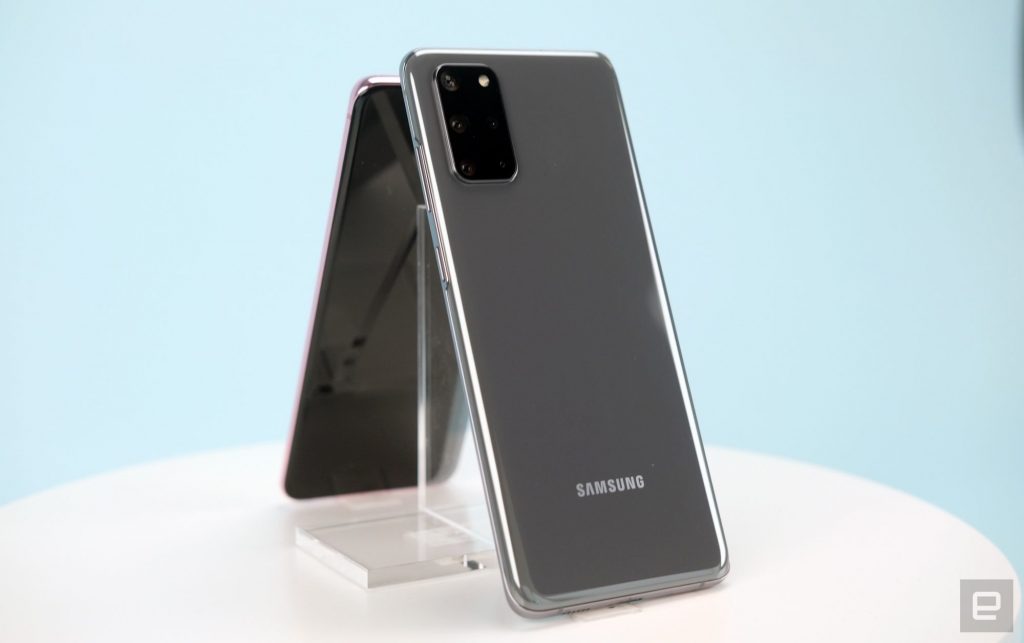
Samsung’s Galaxy S20 is not even on the market yet, but reviewers from publications including PC Mag have already experienced bugs with the cameras. Samsung has now responded, saying that it’s working on a fix. “The Galaxy S20 features a groundbreaking, advanced camera system,” Samsung told The Verge. “We are constantly working to optimize performance to deliver the best experience for consumers. As part of this ongoing effort, we are working on a future update to improve the camera experience.”

Samsung didn’t say what the problems were, exactly, but the Galaxy S20 Ultra indeed has a very advanced camera with a 108-megapixel sensor. It also packs a phase-detect system that’s supposed to make autofocus (AF) quicker and more accurate. However, reviewers have found that it’s slow and in some cases inaccurate, yielding out-of-focus photos. Video is also affected as the system attempts to hunt for focus, causing a wobble in the image. Samsung’s image processing is also reportedly too aggressive, causing excessive smoothing in skin tones.

The Galaxy S20 and S20+ don’t have the same focusing issues as they use a different type of phase-detect system that packs more AF pixels onto the sensor. However, the S20 Ultra is supposed to have the best camera system of the three phones, so it’s surprising that Samsung still hasn’t nailed down the AF and noise reduction algorithms. The company hasn’t said when the fixes will be coming, but the smartphone is due to arrive on March 6th. Engadget’s review is also due shortly, so we’ll have more info on how it’s working right now.

New Powerbeats wireless headphones appear to be on the way

It looks like the successor to 2016’s Powerbeats3 is almost ready.

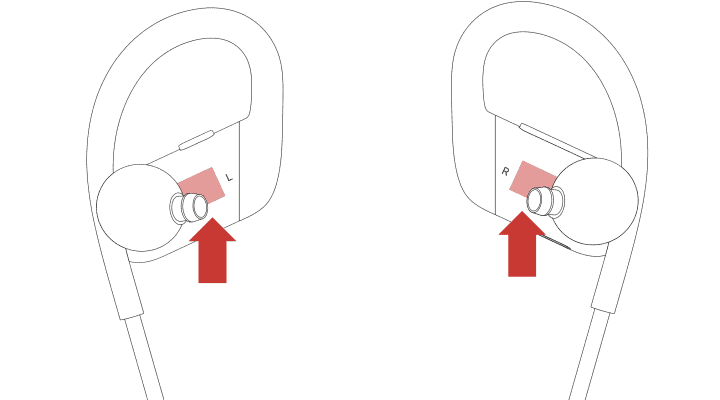
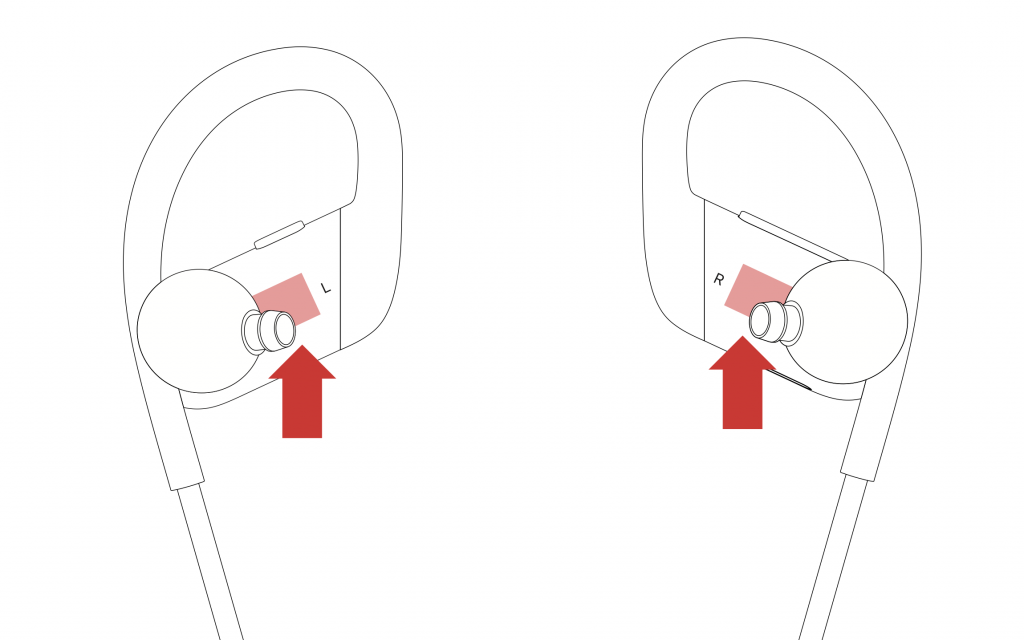
It’s been years since Apple and Beats introduced the Powerbeats3, a $200 set of wireless headphones with ear hooks and a cable connecting the two earpieces together. Since then, Beats released the excellent, totally wireless Powerbeats Pro, but it looks like the company is readying a successor to the older model. A recent FCC filing for Apple shows off a paid of headphones that bears a striking resemblance to the Powerbeats 3, complete with a similar ear hook design and connecting cable.

Given that 9to5Mac discovered references to a “Powerbeats4” model in iOS 13 code back in December, it sounds like these new headphones will indeed be the successor to the Powerbeats3, which came out more than three years ago now. As for what might be new here, the Powerbeats 4 will probably include Apple’s latest H1 chip and “Hey Siri” support, just like the Powerbeats Pro and the two current models of AirPods.

If history is any indication, these headphones will be priced at $200, $50 less than the Powerbeats Pro. But the Pro can often be found on sale for less than its $250 price point, so unless you prefer having a cable connecting your headphones, the Powerbeats Pro still might be the best option for most people. Of course, we’ll have to wait until we hear them and find out more details, like battery life, before rendering final judgement. Given the FCC posting, we shouldn’t have to wait too long to get the full details. We’ve reached out to apple to see if the company has any comment and will update this post if we hear anything.

The $35 Raspberry Pi 4 now comes with double the RAM

Happy birthday, Raspberry Pi.

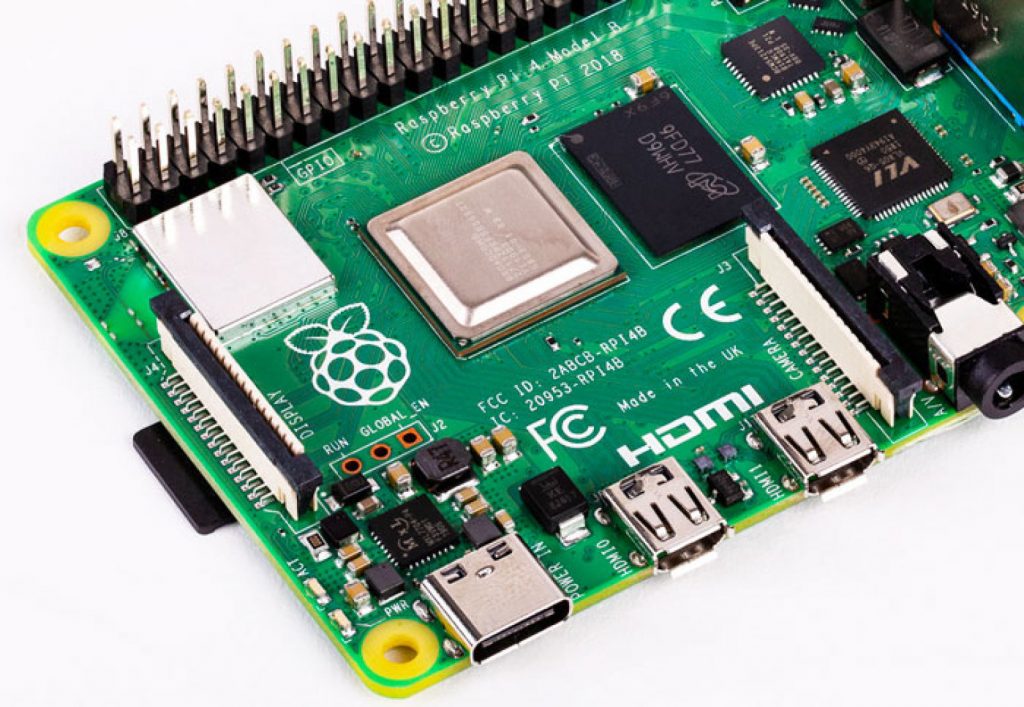
Raspberry Pi is celebrating its eighth birthday, and it’s come a long way in those eight years. Since launching its very first computer back in 2012, the company has sold more than 30 million units. Every year since has brought a newer version with higher specs and better processing power, with the Raspberry Pi 4 Model B arriving in 2019 with 40 times more speed than the humble original. Now, thanks to falling RAM prices, Raspberry Pi enthusiasts can get their hands on the 2GB device for $35 (around £35, depending on where you buy it) — which is the same price as the very first version from eight years ago.

The Pi 4 2GB cost $45 at launch. Compared to the original, though, it has eight times the memory, 10 times the I/O bandwidth, four times the number of pixels on screen and dual-band wireless networking. As the company notes, thanks to inflation, $35 in 2012 is equivalent to nearly $40 today. So effectively you’re getting all these improvements, and a $5 price cut. This is a permanent price cut, though, with the 1GB version remaining at $35, so opting for the larger memory variant is pretty much a no brainer.