
Archives for February 9, 2020

‘Resurrected’ mammoth DNA helps explain why the species went extinct

A 3-D illustration of two cloned Woolly Mammoths grazing in a snow-covered grassy field in a hypothetical scenario.

Reviving the woolly mammoth is still a tall order. However, technology might be far enough along to help explain why the elephant ancestor went extinct in the first place. Scientists have ‘resurrected’ genes from a population of mammoths that survived on a Siberian island until around 4,000 years ago to see what might have contributed to this relic herd dying out. After resurrecting a mammoth’s genes through cells in culture, they compared it against both other mammoths and Asian elephants to look for problematic mutations based on known genetic behavior.

As it turns out, at least one of the island’s mammoths had a string of genetic defects. There were issues with male fertility, neurological development, insulin signalling and even the ability to smell flowers. This suggests the mammoths might have been hurt by their small population size (300 to 500) and isolation from the Siberian mainland, reducing their long-term chances of survival.

This doesn’t provide a full explanation for why woolly mammoths finally died out. Most of them (along with other species) were wiped out by a changing climate that eliminated the tundra they needed to survive. It paints a clearer picture, though, and suggests technology could help solve other prehistoric mysteries.


Facebook buys startup using AI vision to find your location (updated)

Scape’s computer vision technology helps where GPS alone might fail.

Facebook might have just acquired a key ingredient for its augmented reality glasses. TechCrunch has discovered a filing indicating that Facebook has bought Scape Technologies, a London-based startup using computer vision to determine your location beyond the capabilities of GPS alone. Its cloud-based “Visual Positioning Service” translates images into 3D maps that deliver a precise outdoor location across entire cities — important when you need to know exactly where a store is on a street block.

We’ve asked Facebook for comment on the deal, although this doesn’t appear to be an acquihire (where a large company buys a smaller one primarily for its employees). The social network now owns a majority stake, and two of its executives now sit on Scape’s board of directors in place of venture capital representatives.

While it’s not initially clear what Facebook intends to do with scape, the AR glasses may be the best fit. This could help you navigate around town simply by looking at the buildings around you. There are other potential uses, though, such as improving the accuracy of Facebook check-ins when you capture photos and videos. This won’t completely assuage concerns about Facebook’s location tracking habits. However, it could ensure better results in those moments when you really do want Facebook to know your whereabouts.

Update 2/8 3PM ET: Facebook confirmed the acquisition to Engadget, but didn’t go into further detail. “We acquire smaller tech companies from time to time. We don’t always discuss our plans,” a spokesperson said.

Galaxy Z Flip video leak shows a model headed to the US

You can also keep using Samsung’s foldable phone while it’s bent.

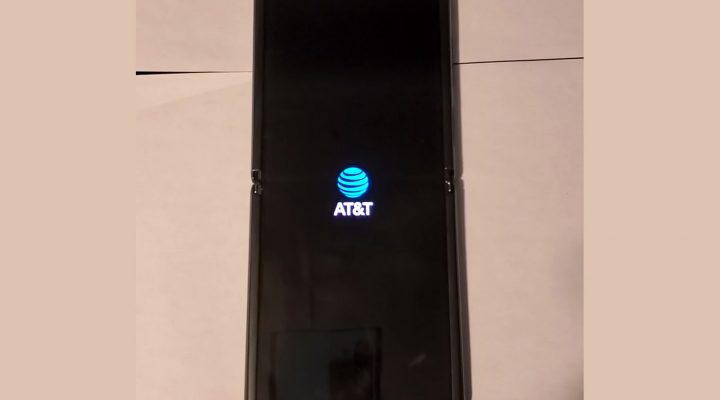
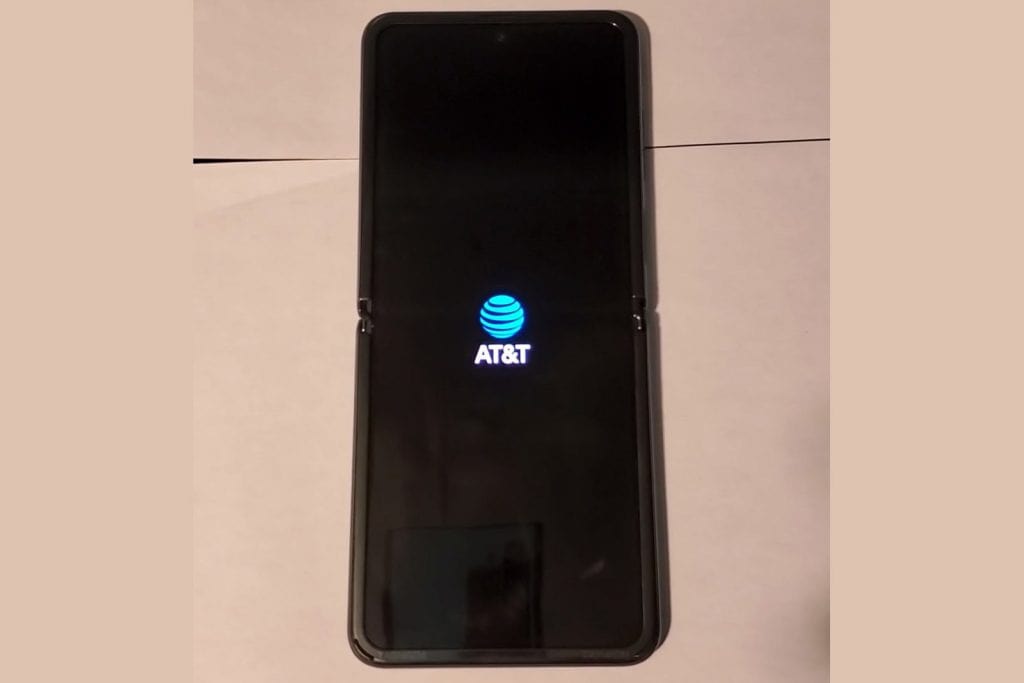
If our earlier photos of the Galaxy Z Flip weren’t enough, don’t worry — yet another leak appears to have shed more light on Samsung’s next foldable phone. GreatDeals SmartPhones has posted a video exploring the clamshell device while providing more details in the process. To begin with, the Z Flip appears destined for the US with a conspicuous AT&T logo during the startup process. While there was a good chance the phone would come to the US (just as the Fold did), this seems to remove what little doubt was left.

The clip also seems to substantiate a number of other claims about the Z Flip, including its use of a Snapdragon 855+ chip, a 6.7-inch screen with an unusual 2,636 x 1,080 resolution and 256GB of built-in storage. And yes, you can continue using the phone if it’s partly bent. It’s also expected to have 8GB of RAM, two rear cameras, a lone hole-punch front camera and a 1-inch external display. There wouldn’t be microSD expansion or a headphone jack.

You might see the Z Flip debut as soon as Samsung’s Unpacked event on February 11th, and previous murmurs have suggested the foldable might be available (or at least, go up for pre-orders) as soon as the 14th. With that said, we wouldn’t rule out a later introduction to avoid stealing the Galaxy S20’s spotlight.

Verizon owns Engadget’s parent company, Verizon Media. Rest assured, Verizon has no control over our coverage. Engadget remains editorially independent.

Moto Razr test gauges the phone’s ability to survive ‘pocket sand’

Want to know what your foldable might look like in a few years?

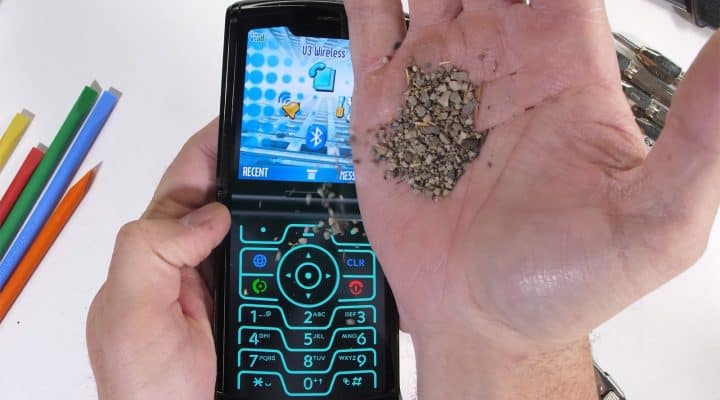
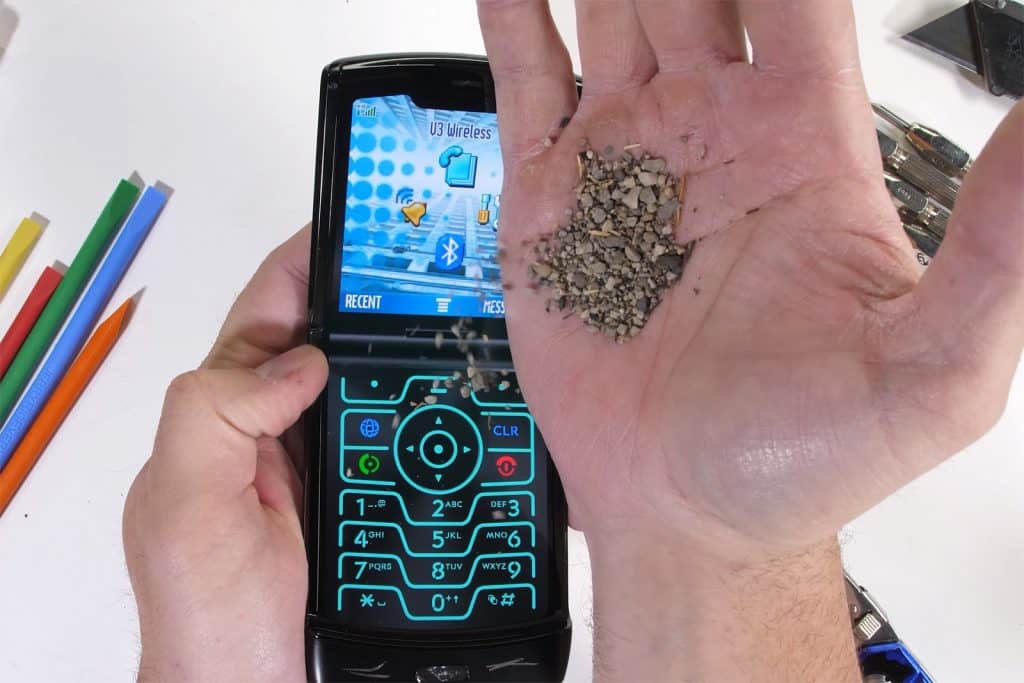
Whether or not you believe the new Moto Razr’s hinge is up to the job, there’s another lingering question: how well does the phone’s foldable screen survive in your pocket? You might have an early answer. JerryRigEverything (aka Zack Nelson) has conducted a durability test that hints at how the phone is likely to fare in a number of brutal conditions. Some are clearly edge cases (few phones will survive a lighter unscathed), but there’s also a “pocket sand” test to see how it might survive years of the debris that always seems to find its way into your pants. The result is better than you’d think, but not perfect. While the screen is fully functional, one piece of debris formed a bump under the screen while others got into the hinge and made less-than-reassuring crunching sounds.

Other tests are more predictable. It’s not hard to scratch the screen’s plastic surface, and you can break the screen if you bend the hinge backward with a “considerable amount of force.”

These are clearly extreme tests, and you won’t necessarily run into similar trouble if you’re cautious. Still, they serve as a reminder that foldable phones are still quite fragile at the start of 2020. There’s a chance that upcoming phones like Samsung’s reportedly glass-covered Galaxy Z Flip are better at surviving in the real world. Until then, though, you’ll want to be gentle.

Unilever NV (NYSE:UN) Shares Sold by Coastline Trust Co

Coastline Trust Co trimmed its position in shares of Unilever NV (NYSE:UN) by 11.8% during the fourth quarter, according to the company in its most recent Form 13F filing with the SEC. The institutional investor owned 9,320 shares of the company’s stock after selling 1,250 shares during the quarter. Coastline Trust Co’s holdings in Unilever were worth $536,000 at the end of the most recent reporting period.

Other institutional investors and hedge funds have also recently bought and sold shares of the company. BlackRock Inc. lifted its position in shares of Unilever by 31.2% in the second quarter. BlackRock Inc. now owns 6,149,176 shares of the company’s stock valued at $373,378,000 after acquiring an additional 1,463,294 shares in the last quarter. Tweedy Browne Co LLC lifted its position in shares of Unilever by 538.7% in the third quarter. Tweedy Browne Co LLC now owns 3,574,701 shares of the company’s stock valued at $214,927,000 after acquiring an additional 3,015,030 shares in the last quarter. Parametric Portfolio Associates LLC lifted its position in shares of Unilever by 11.4% in the third quarter. Parametric Portfolio Associates LLC now owns 2,873,674 shares of the company’s stock valued at $172,507,000 after acquiring an additional 292,943 shares in the last quarter. Coho Partners Ltd. purchased a new stake in shares of Unilever in the third quarter valued at $130,766,000. Finally, Royal Bank of Canada lifted its position in shares of Unilever by 1.4% in the second quarter. Royal Bank of Canada now owns 1,165,321 shares of the company’s stock valued at $70,759,000 after acquiring an additional 16,516 shares in the last quarter. Institutional investors own 8.22% of the company’s stock.

Several analysts have recently issued reports on the company. Liberum Capital upgraded Unilever from a “hold” rating to a “buy” rating in a research report on Monday, December 2nd. Zacks Investment Research downgraded Unilever from a “hold” rating to a “sell” rating in a research report on Saturday, January 11th. Redburn Partners reiterated a “sell” rating on shares of Unilever in a research report on Friday, October 11th. Jefferies Financial Group upgraded Unilever from a “hold” rating to a “buy” rating in a research report on Friday, January 24th. Finally, HSBC downgraded Unilever from a “hold” rating to a “reduce” rating in a research report on Tuesday, January 7th. Five research analysts have rated the stock with a sell rating, three have assigned a hold rating and four have given a buy rating to the stock. The company currently has a consensus rating of “Hold” and a consensus price target of $68.00.NYSE UN traded down $0.29 during trading hours on Friday, hitting $59.67. 981,374 shares of the company’s stock were exchanged, compared to its average volume of 1,612,953. The business’s 50 day moving average is $57.26 and its 200-day moving average is $58.97. Unilever NV has a 12-month low of $53.31 and a 12-month high of $63.62. The firm has a market capitalization of $102.82 billion, a P/E ratio of 21.54, a price-to-earnings-growth ratio of 2.73 and a beta of 0.50. The company has a debt-to-equity ratio of 1.70, a quick ratio of 0.58 and a current ratio of 0.78.

The firm also recently announced a quarterly dividend, which will be paid on Wednesday, March 18th. Investors of record on Friday, February 21st will be given a dividend of $0.452 per share. The ex-dividend date is Thursday, February 20th. This represents a $1.81 annualized dividend and a yield of 3.03%. Unilever’s dividend payout ratio (DPR) is presently 55.60%.

Unilever Company Profile

Unilever N.V. operates in the fast-moving consumer goods industry worldwide. It operates in three segments: Beauty & Personal Care, Foods & Refreshment, and Home Care. The Beauty & Personal Care segment offers skin care and hair care products, deodorants, and oral care products. This segment markets its products under the Axe, Dove, Lux, Rexona, Sunsilk, TRESemmé, Signal, Lifebuoy, and Vaseline brands.

Huntington National Bank Buys 6,583 Shares of Nokia Oyj (NYSE:NOK)

Huntington National Bank raised its holdings in Nokia Oyj (NYSE:NOK) by 161.0% during the fourth quarter, according to the company in its most recent 13F filing with the SEC. The institutional investor owned 10,672 shares of the technology company’s stock after purchasing an additional 6,583 shares during the quarter. Huntington National Bank’s holdings in Nokia Oyj were worth $39,000 as of its most recent SEC filing.

Several other hedge funds have also modified their holdings of NOK. Nuveen Asset Management LLC acquired a new stake in shares of Nokia Oyj in the 2nd quarter valued at $150,436,000. Primecap Management Co. CA acquired a new stake in shares of Nokia Oyj in the 2nd quarter valued at $36,216,000. Amundi Pioneer Asset Management Inc. acquired a new stake in shares of Nokia Oyj in the 1st quarter valued at $9,420,000. Flippin Bruce & Porter Inc. boosted its holdings in shares of Nokia Oyj by 307.5% in the 3rd quarter. Flippin Bruce & Porter Inc. now owns 1,345,712 shares of the technology company’s stock valued at $6,809,000 after purchasing an additional 1,015,465 shares in the last quarter. Finally, Waddell & Reed Financial Inc. boosted its holdings in shares of Nokia Oyj by 14.3% in the 2nd quarter. Waddell & Reed Financial Inc. now owns 6,928,564 shares of the technology company’s stock valued at $34,712,000 after purchasing an additional 867,531 shares in the last quarter. 6.93% of the stock is currently owned by hedge funds and other institutional investors.

A number of brokerages have weighed in on NOK. Charter Equity reaffirmed a “hold” rating on shares of Nokia Oyj in a report on Thursday. Barclays downgraded Nokia Oyj from an “overweight” rating to an “equal weight” rating and set a $3.50 price objective on the stock. in a report on Friday, October 25th. JPMorgan Chase & Co. downgraded Nokia Oyj from an “overweight” rating to a “neutral” rating and cut their price objective for the company from $7.50 to $4.20 in a report on Friday, October 25th. Credit Suisse Group downgraded Nokia Oyj from an “outperform” rating to a “neutral” rating in a report on Tuesday, October 29th. Finally, Canaccord Genuity reissued a “buy” rating and set a $5.50 price objective on shares of Nokia Oyj in a report on Thursday. Two equities research analysts have rated the stock with a sell rating, five have given a hold rating, eight have assigned a buy rating and one has issued a strong buy rating to the stock. The company has a consensus rating of “Buy” and an average price target of $4.67.

NYSE NOK opened at $4.37 on Friday. The company has a market cap of $23.53 billion, a price-to-earnings ratio of -437,000.00 and a beta of 0.23. Nokia Oyj has a twelve month low of $3.33 and a twelve month high of $6.42. The business’s fifty day moving average is $3.92 and its 200 day moving average is $4.39. The company has a quick ratio of 1.05, a current ratio of 1.34 and a debt-to-equity ratio of 0.33.

Nokia Oyj (NYSE:NOK) last announced its earnings results on Thursday, February 6th. The technology company reported $0.17 EPS for the quarter, topping the Thomson Reuters’ consensus estimate of $0.13 by $0.04. The firm had revenue of $7.65 billion for the quarter, compared to the consensus estimate of $7.38 billion. Nokia Oyj had a positive return on equity of 8.31% and a negative net margin of 0.03%. On average, research analysts anticipate that Nokia Oyj will post 0.28 earnings per share for the current fiscal year.

About Nokia Oyj

Nokia Corporation engages in the network and technology businesses worldwide. The company operates in four segments: Ultra Broadband Networks, Global Services, IP Networks and Applications, and Nokia Technologies. It provides hardware, software, and services for telecommunications operators, enterprises, and related markets/verticals, including public safety and Internet of Things (IoT).