Archives for January 4, 2020

Gilead Sciences (NASDAQ:GILD) Upgraded at Oppenheimer

Gilead Sciences (NASDAQ:GILD) was upgraded by equities researchers at Oppenheimer from a “market perform” rating to an “outperform” rating in a report released on Friday.

GILD has been the topic of a number of other reports. Mizuho set a $81.00 target price on shares of Gilead Sciences and gave the company a “buy” rating in a report on Tuesday, October 15th. Credit Suisse Group cut shares of Gilead Sciences from a “neutral” rating to an “underperform” rating and dropped their target price for the company from $67.00 to $63.00 in a report on Friday, December 13th. ValuEngine raised shares of Gilead Sciences from a “sell” rating to a “hold” rating in a report on Wednesday, October 2nd. Cowen reaffirmed a “buy” rating and issued a $85.00 target price on shares of Gilead Sciences in a report on Thursday. Finally, Morgan Stanley set a $75.00 price target on shares of Gilead Sciences and gave the company a “hold” rating in a report on Friday, October 25th. Three equities research analysts have rated the stock with a sell rating, nine have assigned a hold rating, fifteen have issued a buy rating and one has given a strong buy rating to the company. Gilead Sciences currently has a consensus rating of “Buy” and an average target price of $79.17.

Shares of GILD stock traded up $0.05 on Friday, reaching $65.28. The stock had a trading volume of 149,314 shares, compared to its average volume of 6,647,792. The company has a quick ratio of 2.87, a current ratio of 2.96 and a debt-to-equity ratio of 1.11. The firm’s 50-day moving average is $66.10 and its two-hundred day moving average is $65.45. The firm has a market capitalization of $82.27 billion, a price-to-earnings ratio of 10.60, a P/E/G ratio of 3.95 and a beta of 1.12. Gilead Sciences has a 12 month low of $60.89 and a 12 month high of $70.50.

Gilead Sciences (NASDAQ:GILD) last issued its earnings results on Thursday, October 24th. The biopharmaceutical company reported $1.75 earnings per share (EPS) for the quarter, beating the Zacks’ consensus estimate of $1.74 by $0.01. The company had revenue of $5.60 billion for the quarter, compared to analysts’ expectations of $5.61 billion. Gilead Sciences had a net margin of 12.04% and a return on equity of 37.50%. Gilead Sciences’s quarterly revenue was up .1% compared to the same quarter last year. During the same period in the prior year, the firm earned $1.84 EPS. On average, sell-side analysts forecast that Gilead Sciences will post 6.63 earnings per share for the current fiscal year.

In other Gilead Sciences news, EVP Brett A. Pletcher sold 2,095 shares of the stock in a transaction that occurred on Tuesday, November 5th. The shares were sold at an average price of $66.06, for a total transaction of $138,395.70. Following the transaction, the executive vice president now owns 17,826 shares in the company, valued at approximately $1,177,585.56. The sale was disclosed in a document filed with the SEC, which is accessible through the SEC website. Also, EVP Brett A. Pletcher sold 5,677 shares of the stock in a transaction that occurred on Monday, October 28th. The stock was sold at an average price of $63.31, for a total transaction of $359,410.87. Following the transaction, the executive vice president now owns 21,521 shares in the company, valued at approximately $1,362,494.51. The disclosure for this sale can be found here. In the last 90 days, insiders have sold 42,672 shares of company stock worth $2,795,780. Company insiders own 0.20% of the company’s stock.

Large investors have recently made changes to their positions in the business. First Financial Corp IN boosted its position in shares of Gilead Sciences by 286.4% during the 3rd quarter. First Financial Corp IN now owns 541 shares of the biopharmaceutical company’s stock worth $34,000 after acquiring an additional 401 shares in the last quarter. Venturi Wealth Management LLC acquired a new stake in shares of Gilead Sciences during the 3rd quarter worth approximately $40,000. Front Row Advisors LLC boosted its position in shares of Gilead Sciences by 286.0% during the 2nd quarter. Front Row Advisors LLC now owns 691 shares of the biopharmaceutical company’s stock worth $47,000 after acquiring an additional 512 shares in the last quarter. Larson Financial Group LLC boosted its position in shares of Gilead Sciences by 30.7% during the 3rd quarter. Larson Financial Group LLC now owns 826 shares of the biopharmaceutical company’s stock worth $52,000 after acquiring an additional 194 shares in the last quarter. Finally, Reilly Financial Advisors LLC boosted its position in shares of Gilead Sciences by 43.5% during the 3rd quarter. Reilly Financial Advisors LLC now owns 890 shares of the biopharmaceutical company’s stock worth $56,000 after acquiring an additional 270 shares in the last quarter. Hedge funds and other institutional investors own 79.28% of the company’s stock.

Gilead Sciences Company Profile

Gilead Sciences, Inc, a research-based biopharmaceutical company, discovers, develops, and commercializes medicines in the areas of unmet medical needs in the United States, Europe, and internationally. The company’s products include Biktarvy, Descovy, Odefsey, Genvoya, Stribild, Complera/Eviplera, Atripla, and Truvada for the treatment of human immunodeficiency virus (HIV) infection in adults; and Vosevi, Vemlidy, Epclusa, Harvoni, and Viread products for treating liver diseases.

Signet Jewelers (NYSE:SIG) Shares Gap Down to $18.93

Signet Jewelers Ltd. (NYSE:SIG)’s share price gapped down prior to trading on Friday . The stock had previously closed at $17.25, but opened at $18.93. Signet Jewelers shares last traded at $18.68, with a volume of 116,298 shares.

Several brokerages have recently issued reports on SIG. Bank of America lowered their price objective on shares of Signet Jewelers from $20.00 to $16.00 and set a “neutral” rating on the stock in a research note on Friday, September 6th. Telsey Advisory Group raised their target price on Signet Jewelers from $14.00 to $20.00 and gave the stock an “outperform” rating in a research report on Friday, December 6th. ValuEngine raised Signet Jewelers from a “sell” rating to a “hold” rating in a research report on Saturday, December 7th. Wells Fargo & Co cut Signet Jewelers from an “equal weight” rating to an “underweight” rating and set a $12.00 target price for the company. in a research report on Thursday. Finally, Citigroup reduced their target price on Signet Jewelers from $17.00 to $12.00 and set a “sell” rating for the company in a research report on Friday, September 6th. Two equities research analysts have rated the stock with a sell rating, five have issued a hold rating and one has issued a buy rating to the company. The stock presently has an average rating of “Hold” and a consensus target price of $16.00.

The company has a market capitalization of $1.14 billion, a P/E ratio of 5.12, a PEG ratio of 1.04 and a beta of 1.08. The stock has a fifty day simple moving average of $19.06 and a 200-day simple moving average of $16.87. The company has a quick ratio of 0.30, a current ratio of 2.12 and a debt-to-equity ratio of 2.13.

Signet Jewelers (NYSE:SIG) last issued its quarterly earnings data on Thursday, December 5th. The company reported ($0.76) earnings per share (EPS) for the quarter, beating the Zacks’ consensus estimate of ($1.07) by $0.31. Signet Jewelers had a positive return on equity of 20.27% and a negative net margin of 3.09%. The company had revenue of $1.19 billion during the quarter, compared to analysts’ expectations of $1.14 billion. During the same period last year, the business earned ($1.06) earnings per share. The business’s revenue was down .3% on a year-over-year basis. Analysts predict that Signet Jewelers Ltd. will post 3.21 earnings per share for the current fiscal year.

Several large investors have recently made changes to their positions in SIG. Canada Pension Plan Investment Board increased its stake in shares of Signet Jewelers by 65.8% in the second quarter. Canada Pension Plan Investment Board now owns 1,119,035 shares of the company’s stock valued at $20,008,000 after buying an additional 444,017 shares in the last quarter. Maverick Capital Ltd. increased its stake in shares of Signet Jewelers by 138.3% in the third quarter. Maverick Capital Ltd. now owns 761,829 shares of the company’s stock valued at $12,768,000 after buying an additional 442,109 shares in the last quarter. Squarepoint Ops LLC increased its stake in shares of Signet Jewelers by 112.7% in the third quarter. Squarepoint Ops LLC now owns 769,203 shares of the company’s stock valued at $12,892,000 after buying an additional 407,487 shares in the last quarter. Vanguard Group Inc. increased its stake in shares of Signet Jewelers by 4.2% in the second quarter. Vanguard Group Inc. now owns 6,121,445 shares of the company’s stock valued at $109,453,000 after buying an additional 243,959 shares in the last quarter. Finally, Nuveen Asset Management LLC acquired a new stake in shares of Signet Jewelers in the second quarter valued at $3,886,000.

Signet Jewelers Company Profile (NYSE:SIG)

Signet Jewelers Limited engages in the retail sale of diamond jewelry, watches, and other products. As of February 02, 2019, it operated 3,334 stores and kiosks. The company operates through three segments: North America, International, and Other. The North America segment operates stores in malls and off-mall locations primarily under the Kay Jewelers, Kay Jewelers Outlet, Jared The Galleria Of Jewelry, Jared Vault, Zales Jewelers, Zales Outlet, Piercing Pagoda, Peoples Jewellers, Gordon’s Jewelers, and Mappins Jewellers regional banners; and JamesAllen.com, an online jewelry retailer Website.

737 Max pushed back again

Air Canada, WestJet push back return of Boeing 737 Max

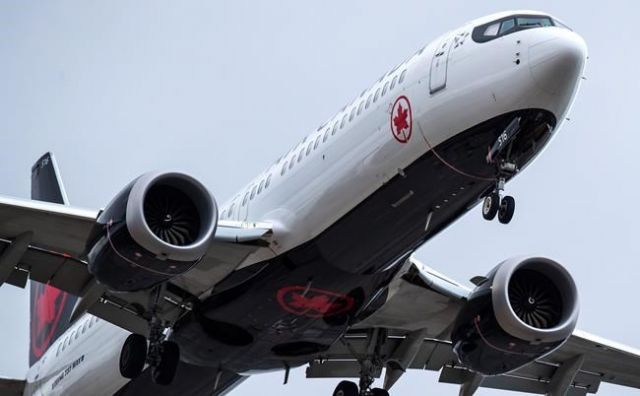
Canada’s two biggest airlines are keeping the grounded Boeing 737 Max off their flight schedules for at least the next two months in a move that could impact passengers already slated for spring getaways and cut down on flight options for travellers looking to book.

Air Canada said it recently opted to push back the return of the Boeing jet through March 31. WestJet said it has pulled its 13 Max planes from the schedule until March 4.

The federal government banned the 737 Max from the skies last March following two fatal crashes in five months that saw the plane grounded worldwide.

The airlines’ decision marks the latest in a series of delays that have reduced revenue and capacity and bumped up costs for the carriers, which have had to spend more on leases for aircraft that are less fuel-efficient.

The 36 Max aircraft was slated to make up one-quarter of Air Canada’s narrow-body fleet by the end of this 2019, with 14 more initially scheduled to arrive this year. WestJet was on track to receive two last year and two in 2020.

Delivery has now been put off pending a green light from regulatory authorities, including the U.S. Federal Aviation Administration.

“Both carriers would have expected by now to have started to harvest and reap the rewards of a transition to that fleet type,” said Robert Kokonis, president of Toronto-based consulting firm AirTrav Inc.

“If it is the case that every individual aircraft has got to be inspected as well, then that’s a long process, because the FAA is lacking in those resources.”

The grounding has not just scrambled schedules and piled on costs, but hampered growth plans.

“WestJet and Air Canada, like a lot of other carriers around the world, have been eyeing the Max…to open up a whole new series of routes that hitherto were not economical for a larger wide-body or were not within the range of a regular narrow-body,” Kokonis said.

Southwest Airlines and American Airlines have scrubbed the once heavily coveted plane from their schedules until early-to-mid April, while United Airlines has put off its return until early June.

“I would be very surprised if either of those March dates are possible,” Kokonis added, referring to Air Canada and WestJet.

Air Canada’s 12 undelivered Max aircraft now sit on Boeing lots, delaying the company’s hiring of pilots — it currently has about 400 Max pilots, relegated to training for the time being.

“We have been continually monitoring the situation and adjusting our schedule accordingly,” Air Canada spokesman Peter Fitzpatrick said in an email.

Attack sends oil higher

Oil prices jump on fears of Iranian retaliation against US

Oil prices are up sharply and major stock markets are falling after U.S. forces in Iraq killed a top Iranian general.

The price of oil surged 3.5% and major indexes were down 0.8% in early trading. The drops came after a bullish start to the New Year and a blockbuster gain in 2019.

The S&P 500 fell 25 points, or 0.8%, to 3,232. The Dow Jones Industrial Average lost 224 points, or 0.8%, to 28,640. The Nasdaq lost 77 points, or 0.9%, to 9,013. Bond prices rose.

News that Gen. Qassem Soleimani, head of Iran’s elite Quds Force, was killed in an air attack at the Baghdad international airport prompted expectations of Iranian retaliation.

During past flare-ups in relations with the U.S., Iran threatened the supply of oil that travels from the Persian Gulf to the rest of the world. About 20% of crude traded worldwide goes through the Strait of Hormuz, where the shipping lane is only 3 kilometres wide and tankers have come under attack this year.

The international benchmark for crude oil jumped 3.7%, or $2.45, to $68.70 a barrel in London trading. The U.S. contract was up 3.6%, or $2.18, to $63.36.

“Revenge will come, maybe not overnight, but it will come and until then we need to increase the geopolitical risk premium,” said Olivier Jakob, head of consultancy Petromatrix, in a note to investors.

He noted that Iran’s response may not be limited to the Strait of Hormuz.

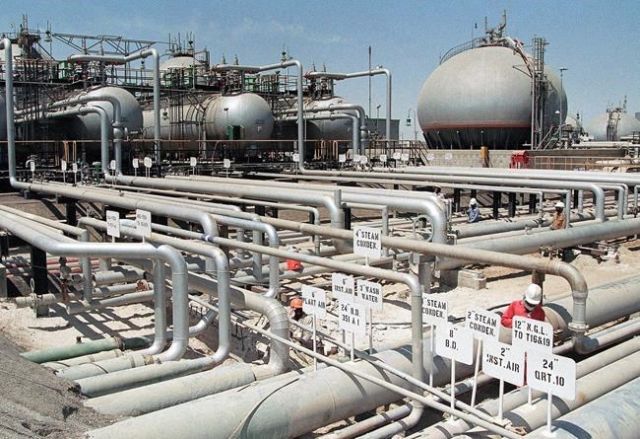
In September, Yemen’s Iran-backed Houthi rebels launched drone attacks on the world’s largest oil processing facility in Saudi Arabia. The strike briefly took out about half of the supplies from the world’s largest oil exporter. The U.S. directly blamed Iran, which denied involvement.

Launching attacks that can’t be easily linked back to Iran limits the chances of direct retaliation.

However, Iran has also directly targeted tankers. This year it seized a British-flagged tanker, the Stena Impero, for several weeks. And it has shot down a U.S. military drone.

About 80% of the crude oil that travels through the Strait of Hormuz goes to countries in Asia, including China, Japan, India and South Korea.

Because the prices of fuels like gasoline generally reflect moves in the market for crude, that could mean higher costs for drivers and airlines, for example. Airline shares were down sharply across the world on Friday.

In the U.S., crude oil accounts for just over 50% of the price of gasoline, according to the U.S. Energy Information Administration.

Extreme avalanche risk

Avalanche risk climbs to extreme on some B.C. mountains

The organization that monitors avalanche risk across much of British Columbia has issued an uncommon “extreme” warning for many slopes in the Sea-to-Sky region north of Vancouver.

Avalanche Canada says in a statement that it “rarely sees” extreme avalanche danger and its website indicates large avalanches are “almost certain” on alpine and treeline sections of slopes in the region that includes Whistler and Garibaldi Provincial Park.

The website says between 40 centimetres and a metre of new snow, coupled with strong wind and warming temperatures will “cause a natural avalanche cycle.”

The risk level is rated as high below the treeline, meaning very dangerous avalanche conditions exist and travel in avalanche terrain is not recommended.

Those risks are expected to remain for the Sea-to-Sky mountains through Saturday and Avalanche Canada says high risk ratings were also in effect Friday for several mountain ranges from the northwest coast to the Alberta boundary.

Two 21-year-old Alaska men died Monday when they were hit by an avalanche while snowboarding with a friend in Tatshenshini-Alsek Provincial Park in the far northwestern corner of B.C.

Canadian car sales fall

Annual sales of Canadian light vehicles fall for first time in decade

Canadian sales of passenger cars and light trucks were down about 3.6 per cent last year compared with 2018, according to industry statistics compiled by Des Rosiers Automotive Reports.

It’s the industry’s first year-over-year decline in more than a decade, but Des Rosiers says 2019 was still the fourth best sales year on record.

Des Rosiers says the total number of vehicles sold last year was 1,914,357, including 109,584 in December.

That’s down from 1,984,992 sales in 2018, including 114,289 in the month of December.

Full-year sales of passenger cars fell 16.1 per cent to 484,687, while sales of light trucks including sport utility vehicles rose 1.6 per cent to 1,429,670.

Des Rosiers says 2019 was a good year for sport utility vehicles, with Canadian sales surpassing the 900,000 units for the first time on record.