Archives for December 26, 2019

McEwen Mining (NYSE:MUX) Shares Gap Up to $1.13

McEwen Mining Inc (NYSE:MUX) (TSE:MUX) gapped up before the market opened on Tuesday . The stock had previously closed at $1.14, but opened at $1.13. McEwen Mining shares last traded at $1.17, with a volume of 91,479 shares traded.

A number of equities analysts have recently weighed in on MUX shares. HC Wainwright reaffirmed a “buy” rating and set a $2.00 price target on shares of McEwen Mining in a research note on Thursday, December 12th. B. Riley reduced their price objective on shares of McEwen Mining from $4.20 to $3.80 and set a “buy” rating for the company in a research note on Thursday, October 17th. Zacks Investment Research downgraded shares of McEwen Mining from a “hold” rating to a “sell” rating in a report on Wednesday, November 6th. Finally, ValuEngine downgraded shares of McEwen Mining from a “buy” rating to a “hold” rating in a report on Thursday, September 26th. One equities research analyst has rated the stock with a sell rating, one has assigned a hold rating and three have given a buy rating to the company’s stock. The company has a consensus rating of “Hold” and an average price target of $2.90.

The firm has a market cap of $413.28 million, a PE ratio of -9.08 and a beta of -0.64. The company has a current ratio of 1.41, a quick ratio of 0.56 and a debt-to-equity ratio of 0.11. The company has a 50 day moving average price of $1.29 and a 200 day moving average price of $1.63.

McEwen Mining (NYSE:MUX) (TSE:MUX) last released its quarterly earnings data on Wednesday, October 30th. The basic materials company reported ($0.03) earnings per share for the quarter, missing the consensus estimate of ($0.01) by ($0.02). The firm had revenue of $32.69 million during the quarter, compared to analysts’ expectations of $36.67 million. McEwen Mining had a negative net margin of 50.01% and a negative return on equity of 11.41%. As a group, equities research analysts anticipate that McEwen Mining Inc will post -0.11 earnings per share for the current fiscal year.

Several hedge funds have recently made changes to their positions in MUX. Tower Research Capital LLC TRC raised its stake in shares of McEwen Mining by 150.9% during the 2nd quarter. Tower Research Capital LLC TRC now owns 14,300 shares of the basic materials company’s stock worth $25,000 after buying an additional 8,600 shares during the last quarter. Squarepoint Ops LLC acquired a new stake in McEwen Mining in the 3rd quarter valued at about $34,000. Virtu Financial LLC increased its holdings in McEwen Mining by 115.5% during the 3rd quarter. Virtu Financial LLC now owns 27,337 shares of the basic materials company’s stock valued at $43,000 after acquiring an additional 14,653 shares in the last quarter. Sunbelt Securities Inc. purchased a new position in McEwen Mining during the 3rd quarter valued at about $57,000. Finally, Pictet Asset Management Ltd. increased its holdings in McEwen Mining by 50.0% during the 2nd quarter. Pictet Asset Management Ltd. now owns 37,098 shares of the basic materials company’s stock valued at $65,000 after acquiring an additional 12,366 shares in the last quarter. Institutional investors and hedge funds own 26.96% of the company’s stock.

About McEwen Mining (NYSE:MUX)

McEwen Mining Inc engages in the exploration, development, production, and sale of gold and silver. It also explores for copper deposits. The company owns 100% interests in the El Gallo and Fenix projects located in Mexico; and the Black Fox Mine and Stock Mill, Grey Fox, and Froome and Tamarack properties in Canada.


United States Steel (NYSE:X) Shares Down 1.1%

United States Steel Co. (NYSE:X)’s stock price traded down 1.1% during trading on Monday . The company traded as low as $11.83 and last traded at $11.79, 449,709 shares traded hands during mid-day trading. A decline of 97% from the average session volume of 13,920,946 shares. The stock had previously closed at $11.92.

Several equities analysts have weighed in on X shares. JPMorgan Chase & Co. cut United States Steel from an “overweight” rating to a “neutral” rating and cut their price target for the company from $26.00 to $14.00 in a report on Monday, September 23rd. Barclays started coverage on United States Steel in a research note on Friday, September 6th. They issued an “overweight” rating on the stock. Exane BNP Paribas assumed coverage on United States Steel in a report on Thursday, November 14th. They set an “underperform” rating and a $10.50 price objective on the stock. Cfra downgraded United States Steel from a “sell” rating to a “strong sell” rating in a research report on Friday, November 1st. Finally, Credit Suisse Group cut their target price on shares of United States Steel from $9.00 to $8.00 and set an “underperform” rating for the company in a report on Thursday, September 19th. Eight investment analysts have rated the stock with a sell rating, ten have issued a hold rating, three have assigned a buy rating and one has assigned a strong buy rating to the company. The company has a consensus rating of “Hold” and a consensus target price of $15.20.

The company has a debt-to-equity ratio of 0.64, a current ratio of 1.42 and a quick ratio of 0.69. The business has a 50-day moving average of $13.31 and a 200-day moving average of $12.88. The company has a market capitalization of $2.02 billion, a P/E ratio of 2.22 and a beta of 3.12.

United States Steel (NYSE:X) last posted its quarterly earnings data on Thursday, October 31st. The basic materials company reported ($0.21) earnings per share for the quarter, beating the Zacks’ consensus estimate of ($0.29) by $0.08. The business had revenue of $3.07 billion for the quarter, compared to analysts’ expectations of $3.04 billion. United States Steel had a net margin of 4.56% and a return on equity of 10.57%. The business’s revenue was down 17.7% compared to the same quarter last year. During the same quarter in the previous year, the business posted $1.79 earnings per share. Sell-side analysts predict that United States Steel Co. will post -0.42 EPS for the current fiscal year.

The company also recently declared a quarterly dividend, which was paid on Tuesday, December 10th. Investors of record on Wednesday, November 13th were issued a dividend of $0.05 per share. The ex-dividend date was Tuesday, November 12th. This represents a $0.20 annualized dividend and a yield of 1.68%. United States Steel’s payout ratio is 3.73%.

Several institutional investors and hedge funds have recently added to or reduced their stakes in the company. Man Group plc bought a new position in shares of United States Steel in the third quarter worth about $874,000. Voloridge Investment Management LLC lifted its holdings in United States Steel by 20.9% during the 3rd quarter. Voloridge Investment Management LLC now owns 906,350 shares of the basic materials company’s stock valued at $10,468,000 after buying an additional 156,893 shares in the last quarter. IHT Wealth Management LLC purchased a new stake in United States Steel in the 3rd quarter valued at about $134,000. Regal Investment Advisors LLC boosted its position in United States Steel by 10.6% in the 3rd quarter. Regal Investment Advisors LLC now owns 18,817 shares of the basic materials company’s stock valued at $217,000 after buying an additional 1,810 shares during the period. Finally, California State Teachers Retirement System raised its stake in shares of United States Steel by 1.3% during the third quarter. California State Teachers Retirement System now owns 287,561 shares of the basic materials company’s stock valued at $3,321,000 after acquiring an additional 3,760 shares in the last quarter. 70.45% of the stock is currently owned by hedge funds and other institutional investors.

About United States Steel (NYSE:X)

United States Steel Corporation produces and sells flat-rolled and tubular steel products primarily in North America and Europe. It operates through three segments: North American Flat-Rolled (Flat-Rolled), U. S. Steel Europe (USSE), and Tubular Products (Tubular). The Flat-Rolled segment offers slabs, strip mill plates, sheets and tin mill products, as well as all iron ore and coke.

6.2 magnitude quake strikes west of Vancouver Island, reportedly felt in Richmond, B.C.

Latest quake comes day after 5 took place more than 100 km from Port Hardy, B.C.

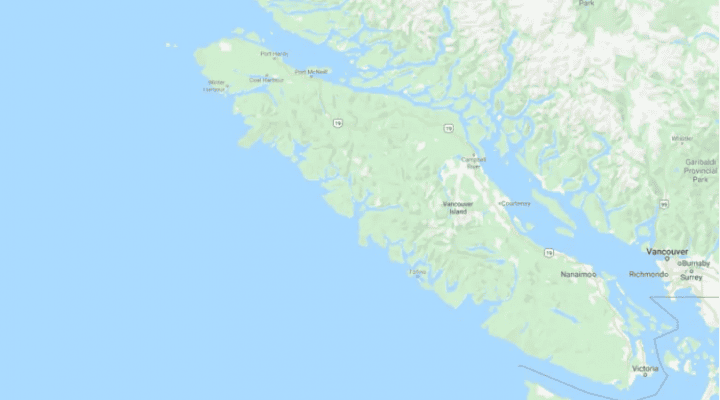
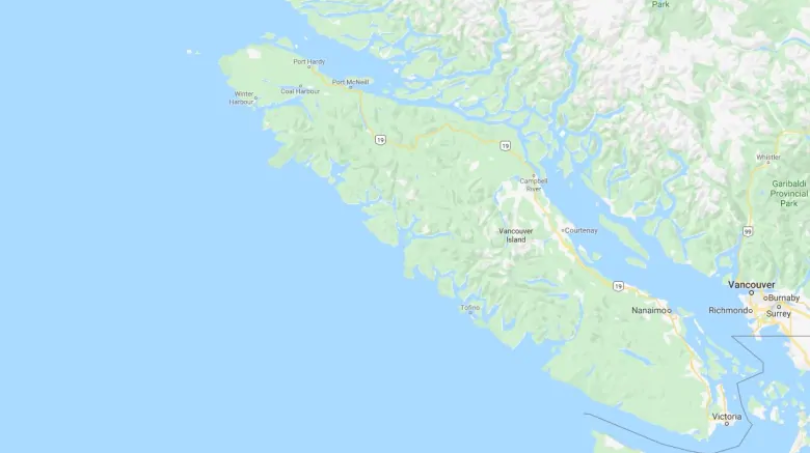
A 6.2 magnitude earthquake struck 188 kilometres west of Port Hardy, B.C., on Tuesday, Earthquakes Canada said.

There were no immediate reports of injuries or damage from the quake, which was 10 kilometres deep. However, Andrew Schaeffer, a seismologist with Earthquakes Canada, told CBC News that there were reports of minor shaking felt in Richmond, B.C.

There is no current tsunami warning in effect, according to the Pacific Tsunami Warning Center.

The latest quake comes a day after five earthquakes struck within seven hours off the northwest end of Vancouver Island on Monday.

Earthquakes Canada said Monday’s tremors measured at magnitude:

  • 5.1 (8:44 a.m. PT).
  • 5.6 (11:13 a.m.).
  • 5.8 (11:49 a.m.).
  • 6.0 (12:56 p.m.).
  • 4.8 (3:38 p.m.).

All five of those earthquakes originated in the Pacific Ocean, more than 100 kilometres off Port Hardy, B.C., at a depth of about five kilometres. He Schaeffer told CBC News on Monday the quakes happened in the Winona Basin, a northern piece of the Juan de Fuca plate that broke off at some point.

Another smaller quake, estimated at magnitude 4.3, was also detected Monday at 9:32 p.m., about 29 kilometres west of the village of Queen Charlotte — and hundreds of kilometres to the northwest of the earlier tremors.

Canada’s new frigates could take part in ballistic missile defence — if Ottawa says yes

Defence expert says the frigates’ design shows Ottawa is keeping ‘the door open’ to BMD

Canada’s new frigates are being designed with ballistic missile defence in mind, even though successive federal governments have avoided taking part in the U.S. program.

When they slip into the water sometime in the mid- to late-2020s, the new warships probably won’t have the direct capability to shoot down incoming intercontinental rockets.

But the decisions made in their design allow them to be converted to that role, should the federal government ever change course.

The warships are based upon the British Type 26 layout and are about to hit the drawing board. Their radar has been chosen and selected missile launchers have been configured to make them easy and cost-effective to upgrade.

Vice-Admiral Art McDonald said the Lockheed Martin-built AN/SPY-7 radar system to be installed on the new frigates is cutting-edge. It’s also being used on land now by the U.S. and Japan for detecting ballistic missiles.

“It’s a great piece, and that is what we were looking for in terms of specification,” McDonald told CBC News in a year-end interview.

An artist’s rendering of the British Type 26 frigate. 

Selecting the radar system for the new frigates was seen as one of the more important decisions facing naval planners because it has to stay operational and relevant for decades to come — even as new military threats and technologies emerge.

McDonald said positive feedback from elsewhere in the defence industry convinced federal officials that they had made the right choice.

“Even from those that weren’t producing an advanced kind of radar, they said this is the capability you need,” he said.

The whole concept of ballistic missile defence (BMD) remains a politically touchy topic.

BMD — “Star Wars,” to its critics — lies at the centre of a policy debate the Liberal government has tried to avoid at all costs. In 2017, Canada chose not to join the BMD program. That reluctance to embrace BMD dates back to the political bruising Paul Martin’s Liberal government suffered in 2004-05, when the administration of then-U.S. president George W. Bush leaned heavily on Ottawa to join the program.

In the years since, both the House of Commons and Senate defence committees have recommended the federal government relent and sign on to BMD — mostly because of the emerging missile threat posed by rogue nations such as North Korea.

Liberals reluctant to talk BMD

The question of whether to join BMD is expected to form part of the deliberations surrounding the renewal of NORAD — an undertaking the Liberal government has acknowledged but not costed out as part of its 2017 defence policy.

Missile defence continues to be a highly fraught concept within the federal government. Defence Minister Harjit Sajjan made a point of downplaying a CBC News story last summer that revealed how the Canadian and U.S. militaries had laid down markers for what the new NORAD could look like, pending sign-off by both Washington and Ottawa.

Asked about Sajjan’s response, a former senior official in the minister’s office said it raised the spectre of “Star Wars” — not a topic the Liberal government was anxious to discuss ahead of last fall’s election.

The current government may not want to talk about it, but the Canadian navy and other NATO countries are grappling with the technology.

Practice makes perfect

Last spring, a Canadian patrol frigate, operating with 12 other alliance warships, tracked and shot down a supersonic target meant to simulate a ballistic missile. A French frigate also scored a separate hit.

For the last two years, NATO warships have practiced linking up electronically in defensive exercises to shoot down both mock ballistic and cruise missiles. A Canadian frigate in the 2017 iteration of the exercise destroyed a simulated cruise missile.

HMCS St. John’s conducts a replenishment at sea during NATO operation Formidable Shield on May 4, 2019. 

At the recent Halifax Security Forum, there was a lot of talk about the proliferation of missile technology. One defence expert told the forum Canadian military planners have been paying attention to the issue for a long time.

The frigate design is an important example.

“I think what they’ve tried to do is keep the door open by some of the decisions they’ve made, recognizing that missile proliferation is a significant concern,” said Dave Perry, of the Canadian Global Affairs Institute. “They haven’t shut the door on doing that and I think that is smart.”

Opponents of BMD, meanwhile, have long argued the fixation by the U.S. and NATO on ballistic missile defence is fuelling instability and giving Russia and China reasons to co-operate in air and missile defence.

Speaking before a Commons committee in 2017, Peggy Mason, president of the foreign and defence policy think-tank Rideau Institute, said the United States’s adversaries have concluded that building more offensive systems is cheaper than investing in defensive ones.

“The American BMD system also acts as a catalyst to nuclear weapons modernization, as Russia and China seek not only increased numbers of nuclear weapons but also increased manoeuvrability,” said Mason, Canada’s ambassador for disarmament from 1989 to 1994, testifying on Sept. 14, 2017.

She also warned that “there would be significant financial costs to Canadian participation” in the U.S. BMD program “given American demands” — even prior to Donald Trump’s presidency — “that allies pay their ‘fair share’ of the collective defence burden.”

Former Conservative MP Lisa Raitt to help run race to replace Andrew Scheer

Role means she won’t be among other former leadership candidates vying for the job

A high-profile Conservative who lost her seat in the last election will help lead the effort to elect a replacement for party leader Andrew Scheer.

The Conservative Party has announced that Lisa Raitt will co-chair the organizing committee for the upcoming leadership race.

That contest was kicked into gear after Scheer announced earlier this month he will resign as soon as a new leader is chosen.

Raitt, along with Dan Nowlan — who oversaw the race Scheer won in 2017 — will be in charge of a group of Tories who will set the rules and timing for the vote.

Raitt ran as well in the 2017 campaign and would later be appointed Scheer’s deputy leader. But she lost her Toronto-area seat in October, a result that underscored the Tories’ dismal election showing in Ontario.

Scheer’s failure to pick up enough votes there and elsewhere in the country to form government spurred calls for him to step down as leader.

He had initially vowed to stay on and fight for his job but overwhelming pressure, along with questions about how he was using party money, led him to reverse course.

Raitt’s position as co-chair of the organizing committee means she won’t be among the former leadership candidates vying for the job again.

Several are mulling a run, including Erin O’Toole and Michael Chong. Other potential contenders include former and current members of Parliament, such as Peter MacKay and Pierre Poilievre, and former Quebec premier Jean Charest.

Bryan Brulotte, a veteran political organizer and businessman, told CBC News’s Murray Brewster that he intends to run.

The Conservative Party says the next steps for the organizing committee will be to determine the time frame for the election and the requirements for applicants.

That will include a potential entry fee and the number of signatures required to support their nomination.

Better year forecast for pot

BC predicts increasing cannabis products, revenue

Premier John Horgan says it’s the best of times for cannabis users in British Columbia, but they could be even better.

Since recreational cannabis became legal in Canada in October 2018, access to marijuana has become a matter of waiting for the mail to arrive or visiting a licensed dispensary, but something’s still missing, says the premier.

Horgan said he wants British Columbia to take better advantage of the province’s worldwide reputation as a producer of top notch, award-winning weed, known as B.C. bud.

“I remember being in Amsterdam and seeing all of the B.C. bud awards that were being given out at the time when the product was illegal, and it’s ironic we seem to be having more Ontario product being distributed in B.C. through the legal market,” Horgan said at a recent news conference.

“We in B.C. have a legendary product and that’s not making its way to the legal market.”

Horgan said he doesn’t want to see the bloom fall off B.C. bud, which is why the province is looking to introduce initiatives that support the talents of pot growers and merchants in the legal market.

Last month, the B.C. government provided $675,000 to help cannabis operators in the Kootenays overcome the barriers to operating in the legal economy.

“For those passionate about the issue, stay tuned,” said Horgan. “We’re going to continue to work as best we can to ensure that the consuming public gets a quality, safe product, and that we reap the benefits that we can of having a long tradition of cultivating cannabis here in B.C.”

But Ted Smith, a long-time Victoria area marijuana activist who participated in challenges of previous cannabis laws in the Supreme Court of Canada and won, said B.C. has allowed large-scale corporate marijuana producers to dominate the market.

“They’re destroying the whole concept of B.C. bud with what they’ve done,” he said. “If they were interested in helping they would not only have done a lot more to make sure that small growers could easily get licences but they would also be having coffee shops and places where people could come and smoke the product.”

The premier said he’s tasked Solicitor General Mike Farnworth with finding ways to allow B.C.’s skilled producers to shine.

“Mr. Farnworth’s seized of that and he’s been talking to small producers across the province who would prefer to have the economic benefit of having jobs here in B.C. cultivating product that’s legal in Canada rather than have us purchasing from Manitoba, Ontario and Alberta,” Horgan said.

Farnworth said he wants to chip away at the black market stronghold on cannabis in B.C. but it will take time.

“In Colorado, it took more than four years for the black market to be reduced to 30 per cent,” he said. “We want to get it down as much as we can. That’s the whole goal behind legalization.”

Farnworth forecasts improved cannabis revenues in the coming months.

“I expect the third quarter sales to be higher than the second quarter sales,” he said. “We sold more in the first week in October than we did in the entire month of October.”

Farnworth said there are now almost 200 approved licences to sell legal cannabis in B.C., which will lead to increased revenues.

“One of the key lessons we learned from Washington and Oregon was, do not look at revenue in the first couple of years,” he said. “This isn’t about revenue. It’s about getting it right.”