
Archives for December 1, 2019

3 Things You Must Do If You Plan to Retire After 65

It seems only natural that with people living longer and expenses rising, the average retirement age would increase. For decades, 62 and 65 were the popular ages to leave the workforce, but now many have a more-distant finish line in mind, and some don’t plan to ever retire. A recently released survey by the Transamerica Center for Retirement Studies found that 55% of women and 53% of men plan to retire after 65 or not at all.

This is reasonable for those struggling to save enough for retirement, but it also comes with risks. You might plan to work indefinitely, but a family, health, or job crisis could force you to retire early. If you hope to remain in the workforce as long as possible, you need to take the following steps today.

1. Prioritize your health

People usually experience more health problems as they age, and this might prohibit you from working even if you want to. It could also cause you to run up costly medical bills that drain your savings faster than anticipated. You may not be able to shield yourself against unexpected injuries, but you can reduce your risk of illness by prioritizing your health at every age.

Eat nutritiously, exercise regularly, and make sure you’re getting enough sleep. Kick bad habits like smoking and learn some healthy ways to beat stress, especially if your job puts you under a lot of pressure. When you become eligible for Medicare, take advantage of its free health screenings to assess your risk for various diseases and identify areas for improvement. Pay attention to oral hygiene, too, to cut down on costly dental bills. 

2. Keep your job skills up to date

Technological innovations sometimes push workers out of their jobs, and downsizing could also threaten your job security. You can’t guarantee that this won’t happen to you, but you can make it less likely. Make yourself valuable to employers and keep your skills relevant, especially if you work in a rapidly changing industry.

Stay on top of changes in your industry and consider going back to school or taking professional development courses. This can make you a more valuable employee and may help raise your pay, which can help you save more for retirement.

Don’t forget about networking, either. It can lead to better positions and it may help you find a new job if you’re forced out of your old one. 

3. Have a backup plan

You still need savings and a plan to fall back on even if you don’t intend to retire. You never know if you’ll have to step out of the workforce to care for a sick family member or for some other reason. Don’t fall into the trap of thinking you don’t need retirement savings or that your Social Security benefits will cover everything your job doesn’t. That might be true, but you’ll pay a steep price if not.

You should still have a retirement account and contribute to it regularly. You can plan to retire after 65 if you want, but understand that if you’re forced to retire sooner, you’ll have to stretch your savings out over more years; you may have to skip some travel or discretionary purchases to cover your living expenses.

If you’d like to avoid this, handle your finances as though you want to retire a little earlier than you actually do. You don’t have to actually retire at that age, but if you feel like you’re ready once you get there or you’re forced out of your job, you’ll have your nest egg to fall back on.

Consider a part-time job if you’d like to continue working but are unable to stay at your current job. Part-time jobs may enable caregivers to continue working, and they let you slowly transition into retirement, which may be preferable to leaving the workforce all at once. Think about the skills you have and the type of work you’d like to do and seek out opportunities that match that. 

You could also start your own business. It doesn’t have to require a lot of time or money; if you have extra property or a spare room to rent out, it could provide several hundred dollars of income each month with little to no effort on your part.

Working into your late 60s, 70s, or beyond is possible, but you have to invest in yourself now for the best shot. If you’ve neglected your health, your job skills, or your retirement plan so far, do something before it’s too late.
Air pollution hurts Canadians’ life expectancy, says UBC study

‘Around 10,000 people are dying prematurely from air pollution,’ says author

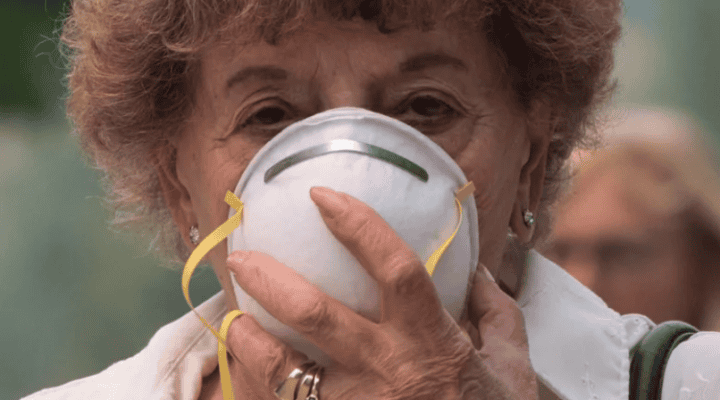
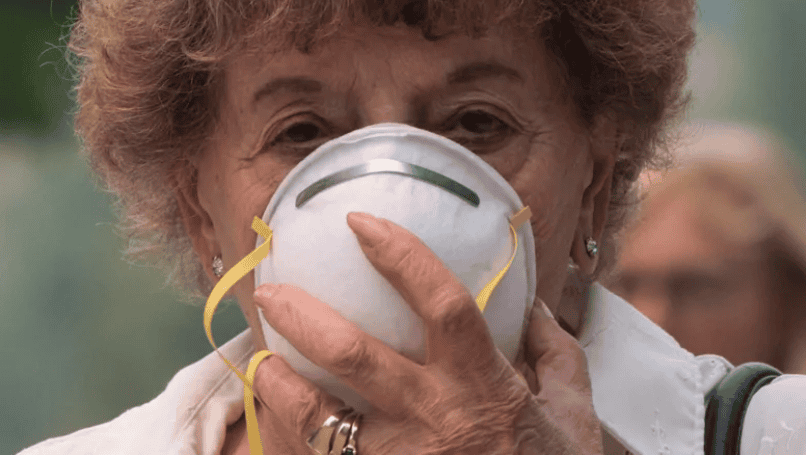
Researchers at the University of British Columbia have discovered that even low levels of air pollution — below national air quality guidelines — are associated with an increased risk of death in Canada.

According to a study published this week in a Health Effects Institute report, there is no safe level of air pollution when it comes to Canadians’ health outcomes.

“Somewhere around 10,000 people are dying prematurely from air pollution every year in Canada,” said Michael Brauer, the study’s lead author and a professor at the university’s School of Population and Public Health. “It’s bigger than the impacts of motor vehicle collisions. It’s bigger than the impact from alcohol abuse.”

Brauer says researchers found at least a five per cent increase in the risk of death when comparing high- and low-pollution areas in Canada.

Even though Canada is one of the few countries that meets World Health Organization air quality guidelines, he says the results are concerning because most Canadians live in more polluted areas, such as large urban centres.

Brauer refers to air pollution as a “silent killer” — even though its effects aren’t obvious, when combined with other factors and health risks, they have a big impact.

“Air pollution affects many of the main causes of death already,” he said. “If somebody dies of a heart attack we actually never know exactly what the cause of that heart attack is, or even of the heart disease that developed that led them to be susceptible to that heart attack.”

Life expectancy lowered by half a year

The study analyzed weather data and pollution-monitoring stations across the country to get an estimate of air pollution for every square kilometre in Canada going back to 1981.

With census results from Statistics Canada, the researchers were able to determine the level of air pollution Canadians were exposed to over time. They then looked at death records and ruled out other factors that affect the risk of dying to establish the correlation between pollution and increased death risk.

The researchers say air pollution is the fourth highest risk factor for death globally and by far the leading environmental risk factor for disease. 

Brauer says, on average, Canadians’ life expectancy is about half a year lower because of air pollution.

“It’s kind of like if you removed air pollution, it’s like snapping your finger and giving everybody with a magic wand an extra half year of your life,” he said. “But obviously for some people it may be more and some people may be less.”

He explains that many larger sources of pollution in Canada have been reduced over the last 40 or 50 years, but cities can still improve air quality by becoming “low-emission zones.” Cities could achieve this in several ways, including charging vehicles a tax for driving into city centres, using congestion charges, or even prohibiting more polluting vehicles from entering cities in the first place.

Remote B.C. ski lodge recognized for efforts to protect endangered whitebark pine

Sorcerer Lodge can only be reached by helicopter and is in ideal spot for trees to grow

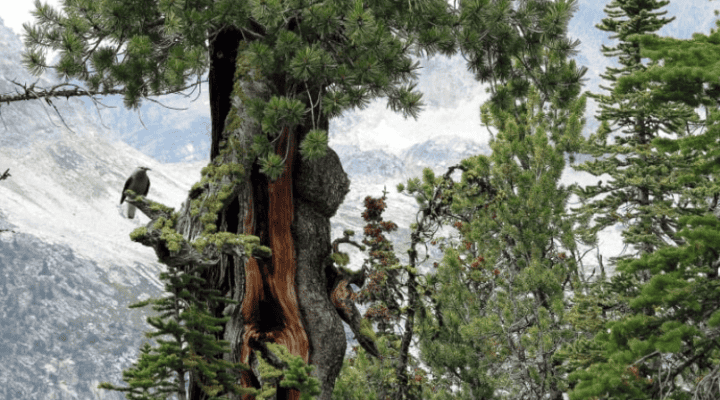
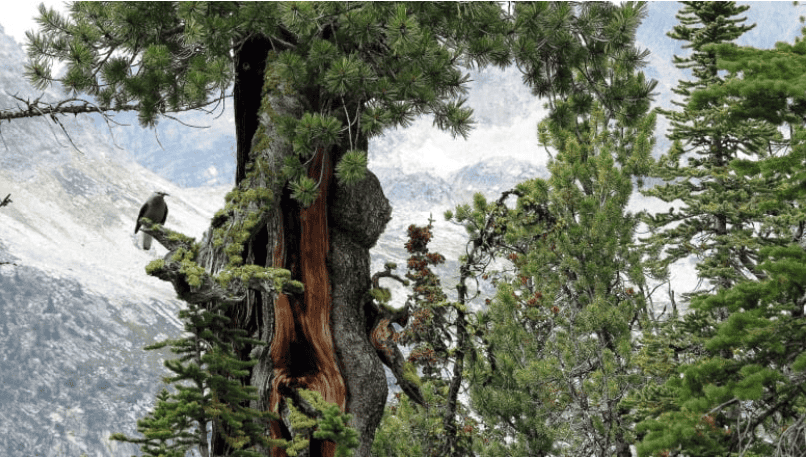
The owners of an alpine backcountry lodge near Golden, B.C., are trying to save the endangered whitebark pine trees that surround their remote mountaintop home. 

The Sorcerer Lodge, which sits at an elevation of 2,050 metres in the Selkirk Mountains and can only be reached by helicopter, is in an ideal spot for the trees to grow. The whitebark pine favours high elevations with lots of sunlight.

“Our trees … are some giant trees. They twist and turn in the branches and don’t grow like you’d expect most trees,” said Tannis Dakin, co-owner of the lodge.

“Every one is completely different. Some of the branches go straight out from the trunk and then dip back down to the ground and back up again. They’re quite the characters and they’re really beautiful.”

The lodge sits at an elevation of 2,050 metres. 

The trees are considered an important source of food for birds, grizzlies and other wildlife, and they also help hold the snowpack at higher elevations.

Dakin and the team at the lodge have been recognized by the Whitebark Pine Ecosystem Foundation for the work they’ve done to protect the trees.

The foundation has named the ski lodge as the first Whitebark Pine Friendly Ski Area in Canada. This means they are considered leaders in preserving these trees and in educating skiers who come to the area.

The branches of whitebark pine trees ‘twist and turn’ and grow in different directions, said Dakin, co-owner of the Sorcerer Lodge. 

“In Canada I think they’re just trying desperately to get the word out about these trees and it helps to have people who live and work within them,” said Dakin. 

The species of tree is considered so at risk that in 2018, Lake Louise Ski Resort in Banff National Park was fined $2.1 million by a provincial judge for cutting down 38 whitebark pine trees five years earlier. 

The resort has since appealed the fine and requested it be reduced to $200,000, arguing the trees they cut down didn’t have a significant impact on the overall whitebark pine population in Canada. A decision in that case has yet to be made.

Protecting the trees

Dakin told Daybreak South host Chris Walker that she first got involved with protecting the trees 12 years ago, when she noticed they weren’t looking very healthy.

She began researching blister rust infection, a fungal infection that has killed a lot of whitebark pine trees, but there were inconsistencies with what she was seeing.

“I was struggling with trying to understand what I was seeing on the ground and what I was hearing and reading because it wasn’t matching,” she said.

Dakin was finding live trees among large patches of dead ones that were still producing cone crops. 

Parks Canada and a team of researchers have been studying the trees to try to find out if some of them are resistant to blister rust. Dakin has been hosting PhD students at the lodge who have been coming to collect samples, and supporting researchers with volunteer labour, helicopter costs and accommodation.

“The research is adding little bits and pieces of the puzzle and I think there might be some hope,” she said.

They are now planting seedlings that appear to be resistant to the infection in an attempt to spread some genetic diversity and increase the population of whitebark pines. 

“I’m hopeful and I think we have to try. There’s really no alternative.”

Weather warnings in effect for parts of Nova Scotia

Up to 40 centimetres of snow expected in some regions

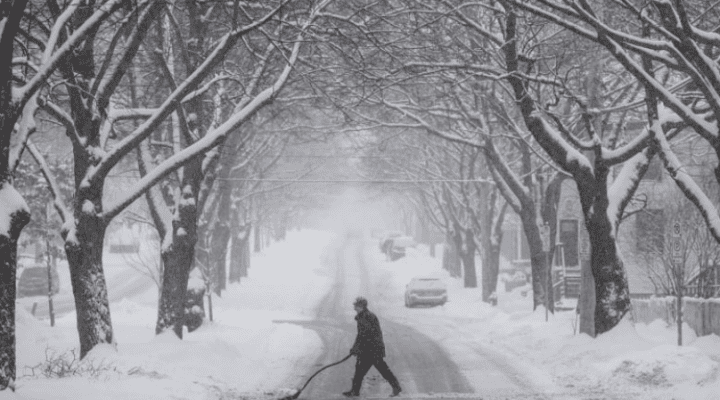
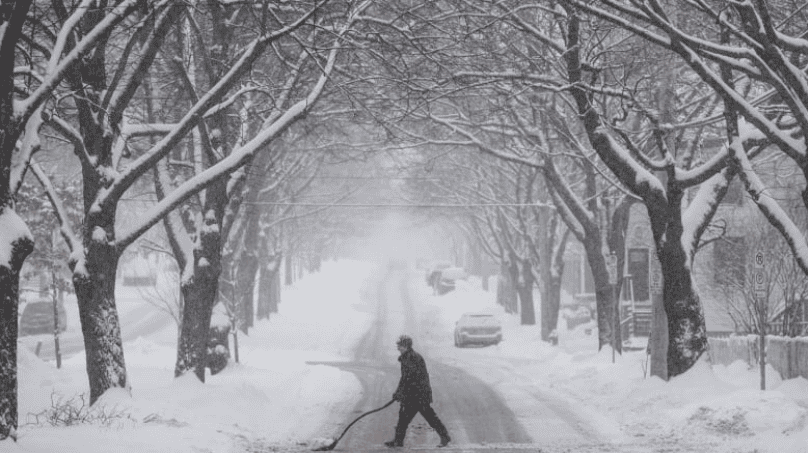
Some parts of Nova Scotia could see up to 40 centimetres of snow by Sunday.

Snow squalls are expected in Victoria County, Pictou County, Inverness County and Antigonish County overnight into Sunday morning, according to Environment Canada’s website.

Snow squall warnings are issued when bands of snow produce intense accumulations and near zero visibility.

There is also a wind warning for Mabou and northern Inverness County with northwesterly winds gusting to 100 km/h expected until late Saturday night.

Environment Canada has also issued snow squall watches for northern Colchester and Cumberland counties and the Cobequid Pass. Up to 10 cm can be expected overnight.

Travel advisories in effect
Some travel advisories have been issued in anticipation of the weather conditions.

Northumberland Ferries is cancelling the 8 a.m. crossing from Prince Edward Island and the 9:30 a.m. crossing from Nova Scotia on Sunday.

Sailings are expected to resume for the 11:15 am. crossing from Prince Edward Island and the 1 p.m. crossing from Nova Scotia.

Marine Atlantic is rescheduling its Saturday evening ferries.

The crossings connecting Port aux Basques and North Sydney scheduled for Saturday at 11:45 p.m. will now depart Sunday at 11:45 a.m., weather permitting.

Ottawa help for BC salmon

Ottawa call for input on slide response, salmon species

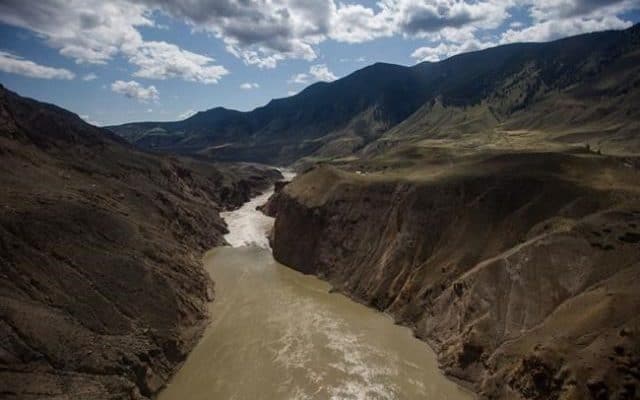
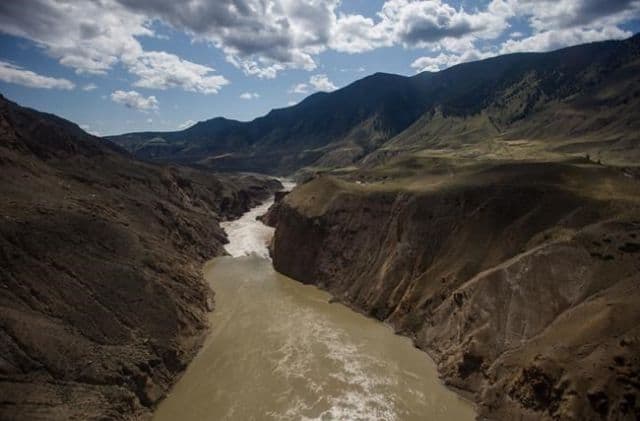
Ottawa is seeking help to avoid what it says could be the extinction of some British Columbian salmon species because of a massive landslide on the Fraser River that sparked a co-ordinated emergency response this year.

Public Services and Procurement Canada, on behalf of the Department of Fisheries and Oceans, issued a request for information this week seeking input from the private sector and other experts to re-establish natural fish passage at the site of the slide.

The Big Bar landslide north of Lillooet, B.C., was discovered in June and initial estimates show 75,000 cubic metres of material was deposited in the river.

The government documents say the request will only be open until Dec. 6, given the “urgency” of the situation, and Ottawa is prepared to spend between $10 million and $30 million on the project.

It’s seeking construction and environmental remediation work to support the break up and removal of rock from the site of the slide during the first available low-water window between December and March.

The documents say the extinction of upper Fraser salmon species could result in economic losses throughout British Columbia and pose risks to the food security and culture of many Indigenous communities along the river.

The slide occurred in the traditional territory of the High Bar and Stswecem’c Xgat’tem First Nations but the government says an additional 140 First Nations may feel the effects.

“Without immediate environmental remediation, many salmon stocks native to the upper Fraser River (a large geographic region of BC) may become extinct,” the document says.

The Department of Fisheries and Oceans says in a statement that it’s still crunching numbers around the fish migration, spawning and mortality data due to the slide.

It could take years of work to reduce the impact of the slide on salmon stocks, it says.

Following the slide, the federal, provincial and local governments worked with local First Nations through a joint command centre to move the fish beyond the barrier, including transporting thousands of fish toward spawning grounds by helicopter.

While some of the slide material has eroded or moved downstream by freshet flows, the largest slide fragments remain in the area “critical” to fish passage, the request for information says.

Work on the project depends on low water levels and the work must be complete before levels rise, which historically happens around March 15, it says.

“Given the unique and specialized nature of this work, remote location, low water window and less than favourable weather conditions, Canada is seeking input for the industry regarding timely and effective solutions, associated procurement strategies as well as any other meaningful feedback it may have to offer in relation to this requirement,” it says.

Interested bidders are encouraged to engage with local First Nations and the government is specifically seeking input form Indigenous businesses.