Archives for November 22, 2019

Here’s Why You Shouldn’t Let Your Savings Account Balance Get Too High

There comes a point when socking away more money in the bank doesn’t make sense.

We all need money on hand for unforeseen expenses — things like automobile malfunctions, home repairs, or unexpected medical bills. In fact, your primary financial goal should be to build an emergency fund with enough cash to cover three to six months of essential living expenses.

But what if you’re able to keep putting money into your savings account beyond the upper limit mentioned above? Is it wise to keep piling up cash in the bank?

Although it’s smart to have a larger emergency fund than usual in some cases, you shouldn’t let your savings account balance climb too high. If you do, you’ll miss out on the opportunity to score a better return on your money.

The problem with keeping too much money in the bank

When you don’t invest, you’re effectively losing out on money, because you don’t give your savings a chance to grow. And that’s precisely what happens when you keep too much money in a savings account. 

Of course, the upside of a savings account is that the money in it is available at any time and that the principal sum you sock away is protected from losses. This isn’t the case when you invest your money. 

When you invest through a brokerage account, there’s always the risk that your account balance will take a dip when market conditions decline or when an investment underperforms. That’s why keeping your emergency fund in stocks is a bad idea — the market is too volatile to make that a safe bet, and if you wind up needing money at a time when the market is down, you risk taking major losses. 

That said, once you’ve socked away enough money to cover six months of living expenses, you shouldn’t continue to put your spare cash in the bank. Instead, you should invest that excess cash so that it grows into an even larger sum. 

Imagine you typically spend $4,000 a month on living expenses and therefore want a $24,000 emergency fund. Now, let’s say you’re able to save up $10,000 more on top of that $24,000. If you put it into a high-yield savings account paying 2% interest (which is consistent with today’s top rates) and leave it alone for 10 years, you’ll grow that $10,000 into $12,190. 

But watch what happens if you invest that money instead. The stock market’s historical average is around 9%, but let’s be a bit more conservative and assume that if you put that $10,000 into stocks and let it sit for 10 years, you’ll score a 7% average annual return instead. In that scenario, you’d be looking at $19,672 rather than $12,190. That’s a sizable difference. 

The gap between a savings account and an investment account gets even wider over time. Leaving that $10,000 to earn 2% in a savings account over 30 years will result in a balance of $18,113. But in a brokerage account invested heavily in stocks, that $10,000 could easily grow to $76,123 over 30 years, assuming a 7% average annual return during that time, leaving you $58,000 richer. 

Now, there may be circumstances under which it pays to save more than six months of living expenses for emergencies. For example, if your income varies and you tend to have periods of low or nonexistent earnings, then socking away nine to 12 months of expenses in the bank could make sense.

But once you’re satisfied that your emergency fund is complete, do yourself a favor and invest the rest of your money. If you’re not comfortable completely loading up on stocks, assemble a diversified portfolio that includes bonds, REITs, or other vehicles. The key is to score a higher return than what even the most generous savings account out there will give you. 

Let’s be clear: A healthy savings account balance will serve you well. Just don’t let that balance get so high that you miss out on wealth-building opportunities. 

Savings account rates are skyrocketing — Earn 23x your bank

Many people are missing out on guaranteed returns as their money languishes in a big bank savings account earning next to no interest. Our picks of the best online savings accounts can earn you more than 25x the national average savings account rate.

Young people are saving more for retirement than Boomers and Generation X — and this is why

Young people are saving more than previous generations, according to a study, flipping the historical trend that saw older savers put the most money aside towards retirement.

This was the stunning finding of a global survey of more than 25,000 investors across 32 countries, by asset manager Schroders.

The study revealed those aged between 18 and 37 – Generation Z and millennials, though the study groups them all as millennials – are saving nearly 16% of their annual income away for retirement, including employer contributions.

Meanwhile, those aged 38-70, incorporating Generation X and baby boomers, were putting aside around 14-15% of their earnings.

Younger investors were also the most likely to be convinced to increase their savings amounts (97%), compared to just 82% of those aged 51-70.

This was despite the fact that young people presented equal or even slightly higher levels of impulsivity to older generations, when it came to the temptation for spending on a treat.

However, Gen Zers and millennials showed higher levels of anxiety when thinking about how to save, with 12% saying these worries led them to putting off thinking or doing anything about saving. This stood at between 7-10% for older generations.

Schroders suggested young people’s greater level of engagement with saving for later life was a sign that people were finally taking on board the message about the importance of putting money aside for retirement.

Sangita Chawla, head of retirement savings at Schroders said that while there wasn’t one specific reason for the uptick in saving for retirement among young people, she thought it could be driven by a financial “scarring”, having seen what has happened to their parents’ pension provisions.

She believed seeing press coverage of the pensions crisis from a young age also had an effect.

“We also see that in some countries where education is free and children are expected to outlive their parents, there is a stronger culture to save,” Chawla added.

Saving around the world

Austria had highest average amount of income saved, at nearly 22%. Investors in Switzerland came in second, stashing away 21% of their earnings on average.

Chawla said cultural attitudes played a role in explaining why these northern European countries saved more than their southern counterparts. For instance, she said there is a “strong aversion to debt in countries like Germany and Austria”, where many people avoid taking out loans.

Savers in India, Belgium and Australia put around 19% of their salary towards retirement annually.

Chawla said there was a strong culture of saving in Asia more broadly but added that in the case of India specifically there is substantially less state provision, so people have no choice other than to look after themselves, meaning they saved more.

In the report, Schroders attributed the higher rate of saving in Australia to be due to the longstanding compulsory pension system, where employers put 9.5% of employees’ gross annual income into their retirement pot. This rate is set to gradually increase and reach 12% by 2025.

In Hong Kong, however, where the average annual contribution is 12%, Schroders pointed out that salary inflation has been unable to match the recent rise in living expenses reducing the disposable income available for people to top up their pension.

Meanwhile, investors in Japan were the most likely to be worried about the amount they had saved, with half of non-retirees citing concerns, which Schroders said was understandable given that 30% of people is already over 60 years’ old.

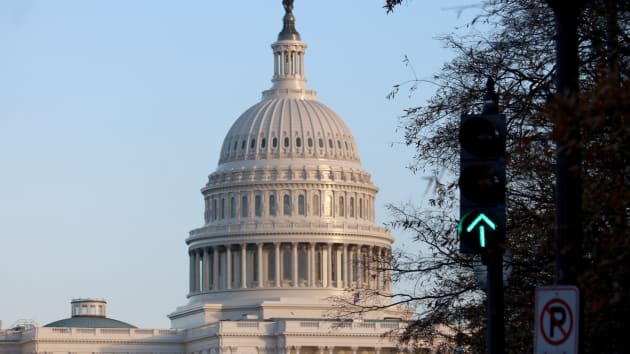
This bill to improve your retirement is stuck in Congress

Despite the partisan noise swirling around the impeachment hearings in Washington, D.C., supporters of at least one bill remain hopeful that the divide won’t derail its passage.

The Secure Act, as the measure is called, aims to increase the ranks of retirement savers and the amount they put away. While it cleared the House in May with broad backing from both sides of the aisle — the vote was 417 to 3 — the bill remains stalled in the Senate.

“Retirement has always been an issue with bipartisan support, and it still is,” said Paul Richman, chief government and political affairs officer at the Insured Retirement Institute, which is one of many groups — both industry and consumer — that support the legislation.

“It’s just getting caught up in the partisan politics in the House and Senate, and that has made it more complex to deal with than it would be in some other political environments,” Richman said.

The Secure Act, if passed by both chambers of Congress and signed into law by President Trump, would bring the biggest changes to the U.S. retirement system since 2006.

Among the provisions are: making it easier for small businesses to band together to offer 401(k) plans, requiring companies to let long-term, part-time workers become eligible for retirement benefits and repealing the maximum age (70½) for making contributions to traditional individual retirement accounts.

Additionally, the measure would raise the age to 72 from 70½, when the dreaded required minimum distributions, or RMDs, from certain retirement accounts must start. The bill would also allow more annuities in 401(k) plans.

It also would require most nonspouse beneficiaries to withdraw money from inherited retirement accounts within 10 years of the original owner’s death instead of spreading out withdrawals across their lifetime.

Bipartisan support hasn’t been enough to get the Secure Act across the finish line.

After the bill passed the House in late May, the Senate moved to pass it under a process called unanimous consent, which would have essentially have fast-tracked the bill to passage — with no changes to it — if all lawmakers agreed.

That didn’t happen: Three Republican senators put “holds” on the bill, which remain in place. And, an effort by Senate Majority Leader Mitch McConnell, R-Kentucky, two weeks ago to consider the bill with both limited debate and amendments also was unsuccessful, with Democrats’ opposing any changes to the bill.

With those routes to passage not working, the Secure Act either has to go through the typical legislative debate process — which would consume floor time that the Senate has little of — or get attached to another bill that lawmakers view as “must-pass” legislation, Richman said.

“There are still a lot of opportunities for it to be attached to something that the Senate wants to move before the end of the year,” he said.

One possibility would be a budget bill. While Congress is expected to approve a so-called continuing resolution this week to keep the government open until Dec. 20, it means lawmakers would need to take action again before then to avoid a partial government shutdown. That could come in the form of another agreement that again temporarily funds the government, or as one large funding bill or several smaller ones that fully fund the 2020 budget (the end of the 2019 federal fiscal year was Sept. 30).

In other words, anyone opposed to the Secure Act at that point would have to oppose the budget bill — or any other, for that matter — that it was attached to. There also could be other must-pass bills, Richman said, including one that makes technical fixes to the 2017 Tax Cuts and Jobs Act, or even a bill that establishes a new North American trade agreement.

Asked by CNBC if there are plans to get the Secure Act passed this year, a spokesman for Senate Majority Leader Mitch McConnell’s office said he has no updates or guidance to provide.

If supporters’ plan of attack doesn’t work, it would mean looking at next year when Congress returns from the winter break. And at that point, the challenges could be greater.

In addition to being an election year, impeachment proceedings could also be a factor. If the Senate receives articles of impeachment from the House at some point in December — which some pundits expect — a trial would consume the Senate’s time in the early part of next year.

Richman sees that as working in the bill’s favor for passage before the calendar flips to 2020.

“Even if the House does send over articles of impeachment in late December, the Senate is talking about a January or February trial,” he said. “So they have time to act on things like the Secure Act this year.”

And could the impeachment process muck up President Trump’s assumed support of the bill?

“We continue to be optimistic that the merits of this bill will weigh in the favor of passage in the Senate and the president signing it,” Richman said.

Personal loans are ‘growing like a weed,’ a potential warning sign for the US economy

Americans are hungry for personal loans that they can use as quick cash to pay for anything from vacations to credit card debt, a potential red flag for the economy.

Personal loans are up more than 10 percent from a year ago, according to data from Equifax, a rapid pace of growth that has not been seen on a sustained basis since shortly before the Great Recession. All three of the major consumer credit agencies — Equifax, Experian and TransUnion — report double-digit growth in this market in recent months.

Experts are surprised to see millions of Americans taking on so much personal loan debt at a time when the economy looks healthy and paychecks are growing for many workers, raising questions about why so many people are seeking an extra infusion of cash.

“Definitely yellow flares should be starting to go off,” said Mark Zandi, chief economist at Moody’s Analytics, which monitors consumer credit. “There’s an old adage in banking: If it’s growing like a weed, it probably is a weed.”

Personal loans are unsecured debt, meaning there is no underlying asset like a home or car that backs the loan if someone cannot repay. The average personal loan balance is $16,259, according to Experian, a level that is similar to credit card debt.

Personal loan balances over $30,000 have jumped 15 percent in the past five years, Experian found. The trend comes as U.S. consumer debt has reached record levels, according to the Federal Reserve Bank of New York.

The rapid growth in personal loans in recent years has coincided with a FinTech explosion of apps and websites that have made obtaining these loans an easy process that can be done from the comfort of one’s living room. FinTech companies account for nearly 40 percent of personal loan balances, up from just 5 percent in 2013, according to TransUnion.

More than 20 million Americans have these unsecured loans, TransUnion found, double the number of people that had this type of debt in 2012.

“You can get these loans very quickly and with a very smooth, sleek experience online,” said Liz Pagel, senior vice president of consumer lending at TransUnion. “We haven’t seen major changes like this in the financial services landscape very often.”

Total outstanding personal loan debt stood at $115 billion in October, according to Equifax, much smaller than the auto loan market ($1.3 trillion) or credit cards ($880 billion). Economists who watch this debt closely say personal loans are still too small to rock the entire financial system in the way $10 trillion worth of home loans did during the 2008-09 financial crisis.

But personal loan debt is back at levels not far from the January 2008 peak, and most of the FinTech companies issuing this debt weren’t around during the last crisis, meaning they haven’t been tested in a downturn.

“The finance industry is always trying to convince us that there are few risks to borrowing and overleveraging is not a problem,” said Christopher Peterson, a University of Utah law professor and former special adviser to the Consumer Financial Protection Bureau. “Overleveraging yourself is risky for individuals and for our country.”

The U.S. economy is powered by consumer spending, and debt helps fuel some of the purchases. Economists are watching closely for signs that Americans are struggling to pay their bills, and personal loans could be one of them.

The most common recipient of a personal loan is someone with a “near prime” credit score of 620 to 699, a level that indicates they have had some difficulty making payments in the past.

“The bulk of the industry is really in your mid-600s to high 600s. That’s kind of a sweet spot for FinTech lenders,” said Michael Funderburk, general manager of personal loans at LendingTree.

Funderburk says they see a lot of consumers who are employed “doing perfectly fine” with their finances, but something unexpected happens such as job loss or a medical emergency and they end up missing a bill or accumulating more debt than they wanted.

The vast majority of customers go to FinTech providers such as SoFi, LendingTree, Lending Club and Marcus by Goldman Sachs for debt consolidation, the lenders say. People run up debt on multiple credit cards or have a medical bill and credit card debt and they are trying to make the payments more manageable. Some seek a lower monthly payment, similar to refinancing a mortgage. Others want to pay off the debt in three years to clean up their credit score.

FinTechs say they are helping people make smarter financial choices. While a credit card allows people to keep borrowing as long as they are under the credit limit, a personal loan is for a fixed amount and must be paid off over a fixed period, generally three or five years. Some online lenders allow people to shop around for the best rate, and most of the main players cap the interest rate at 36 percent to ensure they are not offering any payday loan products.

But there is concern that some Americans get personal loans to tide them over and then continue to take on more credit card or other debt.

Credit card debt has continued to rise alongside personal loans, according to the latest data from the Federal Reserve Bank of New York. TransUnion has recently noticed an uptick in retailers offering personal loans when someone comes to the cashier to buy furniture or holiday toys.

“I have mixed feelings about personal loans. They are superior to credit cards because the payments are fixed,” said Lauren Saunders, associate director of the National Consumer Law Center. “The problem is many people still have their credit card and end up running up their credit card again, so they end up in a worse situation with credit card debt and installment loans on top of it.”

Saunders also notes these loans are mainly regulated by state law, and the rules and watchdog capabilities vary widely by state.

FinTechs say they are using technology to deliver a better deal. One of their big innovations is giving people who take out personal loans a discount if they transfer the cash they get from the loan directly to pay off their bills instead of sending it to their bank account first.

“This has been one of the most successful products we have ever launched. People are trying to do the right thing and they’re getting offered a lower rate if they do balance transfer and direct deposit,” said Anuj Nayar, a financial health officer at LendingClub, a peer-to-peer lender that offers personal loans up to $40,000.

Despite the rapid growth in personal loans lately, borrowers appear to be able to pay back the debt. The delinquency rate for personal loans is 4.5 percent, according to Equifax, a low level by historical standards and well below the 8.4 percent delinquency rate in January 2008.

But as the number of Americans with one of these loans grows, so does the potential for pain if the unemployment rate ticks up and more people find themselves strapped for short-term cash.