Archives for November 10, 2019

Occidental Petroleum Corporation (OXY) Rises 2.74%

Among the biggest risers on the S&P 500 on Friday November 08 was Occidental Petroleum Corporation ($OXY), popping some 2.74% to a price of $40.10 a share with some 13.6 million shares trading hands.

Starting the day trading at $38.65, Occidental Petroleum Corporation reached an intraday high of $40.20 and hit intraday lows of $38.30. Shares gained $1.07 apiece by day’s end. Over the last 90 days, the stock’s average daily volume has been n/a of its 894.48 million share total float. Today’s action puts the stock’s 50-day SMA at $n/a and 200-day SMA at $n/a with a 52-week range of $38.47 to $74.29.

Occidental Petroleum is an independent exploration and production company with operations in the United States, Latin America, and the Middle East. At the end of 2018, the company reported net proven reserves of 2.8 billion barrels of oil equivalent. Net production averaged 658 thousand barrels of oil equivalent per day in 2018, at a ratio of 77% oil and natural gas liquids and 23% natural gas.

Occidental Petroleum Corporation has its corporate headquarters located in Houston, TX and employs 11,000 people. Its market cap has now risen to $35.87 billion after today’s trading, its P/E ratio is now n/a, its P/S n/a, P/B n/a, and P/FCF n/a.

The Dow Jones Industrial Average (DJIA) is the most visible stock index in the United States, but that doesn’t make it the best. In fact, the industry standard for market watchers and institutional investors in gauging portfolio performance is the S&P 500.

The DJIA relies on just 30 stocks as a sample of large- and mega-cap firms, dwarfed by the 500 contained in the S&P 500, and it also weights its returns using an outdated and flawed price-weighting method. The S&P 500’s weighting is based on market cap, making it a much better representation of actual market performance for large- and mega-cap stocks.
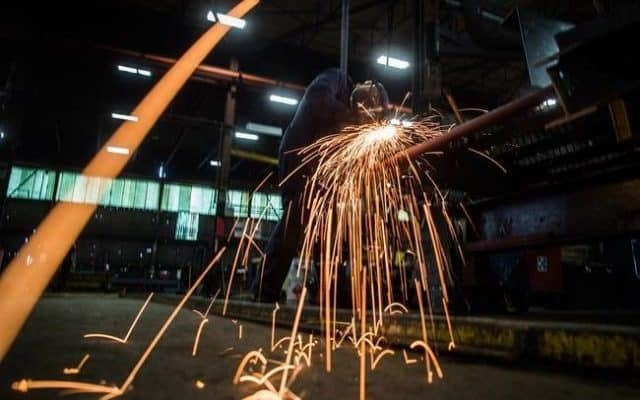
Alberta pushes more drilling

Alberta alters rules on oil production to spur more drilling

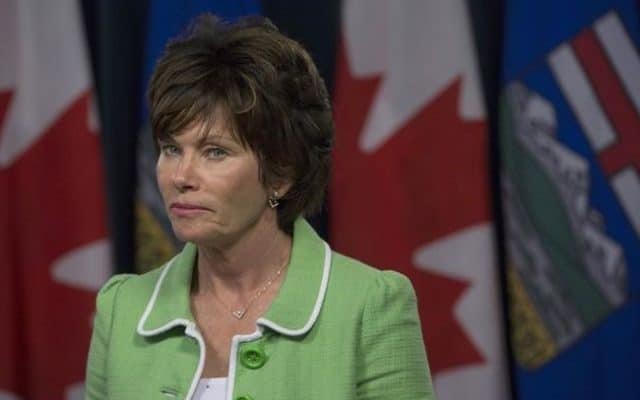
Alberta’s energy minister says the government is adjusting its rules on oil production limits to give producers incentive to drill more conventional wells.

Sonya Savage says, starting immediately, any oil produced from a new well will not be subject to the rules.

Savage says the government expects the change will spur producers to drill hundreds of new wells and that each well will create about 145 jobs.

Due to pipeline bottlenecks, the former NDP government limited the amount companies could produce to prevent a surplus such as the one last year that sharply reduced prices for Alberta oil.

Production from new wells is expected to flow next year and into 2021.

Savage says the expectation is more pipeline capacity and expanded crude-by-rail will handle increased production so as not to have an impact on prices.

1,800 jobs lost in October

1,800 jobs in October, unemployment rate steady at 5.5%

The number of people working in Canada edged lower in October as the manufacturing and construction sectors lost jobs, while the unemployment rate held steady at 5.5 per cent.

Statistics Canada said Friday the economy lost 1,800 jobs in October, following gains of 54,000 jobs in September and 81,000 in August.

The number of full-time jobs fell by 16,100, offset in part by a gain of 14,300 part-time jobs.

Economists on average expected the economy to add a total of 15,900 jobs and an unemployment rate of 5.5 per cent, according to financial markets data firm Refinitiv.

The manufacturing sector lost 23,000 jobs, mostly in Ontario, while the construction sector lost 21,000. Employment in the “other services” industry also fell by 18,000.

The losses were offset in part by an increase of 20,000 jobs working in public administration and 18,000 in finance, insurance, real estate, rental and leasing.

The jobs report comes after the Bank of Canada’s decision late last month to keep its key interest rate on hold at 1.75 per cent.

In making its decision, the central bank said inflation was on target and the domestic economy has held up well in many respects, even though it’s feeling the negative effects of slowing global growth.

Despite the small decline in the number of jobs, wage growth in October held steady. Average hourly wage growth, year-over-year, for all employees was 4.3 per cent for the month, the same as September.

Regionally, B.C. added 15,000 jobs. B.C.’s unemployment rate was 4.7 per cent; in Kelowna it was 4.1 per cent.

On a year-over-year basis, employment was up by 443,000, an increase of 2.4 per cent.

Marine heat wave weakens

Scientists breathe easier as ocean heat wave weakens

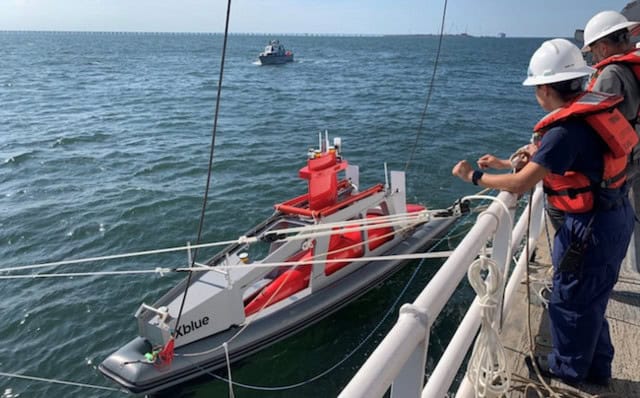
Scientists say a marine heat wave that blanketed a large area of the west coast has weakened, but the potential disruption to ocean life isn’t over yet.

Nate Mantua of the National Oceanic and Atmospheric Administration said the “good news” is that the area of exceptionally warm water is substantially smaller now than it was earlier this year.

And while the area about 1,500 kilometres offshore between Hawaii and Alaska is still seeing high temperatures by historical standards, it is “simply not nearly as large as it was and it is no longer strong in areas near the west coast,” he said.

Scientists have been watching a marine heat wave that developed around June this year and resembled a phenomenon that was nicknamed ‘The Blob,’ which disrupted ocean life between 2014 and 2016.

The heat wave, which resembles a wedge this time, stretched from south of Vancouver Island to Baja, Calif., and offshore towards Hawaii. It raised temperatures by up to 4 C.

Mantua said “many energetic storms and unusually strong winds from the north off the west coast” have cooled surface waters back to near normal temperatures for much of the region.

“On the other hand, the offshore warming is still in place, and by historical standards, it is still a large marine heat wave,” he said in an email.

The latest climate model forecasts from the National Oceanic and Atmospheric Administration’s Climate Prediction Center suggest that the offshore warming will gradually weaken over the next seven months, but even by spring will still be warmer than normal, Mantua said.

Prof. Andrew Trites at the University of British Columbia’s Institute for the Oceans and Fisheries said the marine heat wave is caused when there is not enough wind to churn and cool the water.

“This past summer winds were very, very light — not strong enough for ocean to be mixed the way it used to be in the past. As a result the ocean didn’t cool down the way it was supposed to and it’s holding its heat,” he said in a phone interview.

“It’s not that the ocean got warmer, it’s really that the ocean did not get cooler.”

As a result, some species of tropical fish that are usually seen in tropical waters were found off the west coast, he said.

“One of the fish that I saw a lot of this summer was the sunfish and presumably they are here in higher numbers because the water here was unusually warm this summer and they can tolerate warm temperatures,” Trites said.

Kenney: ‘Fair Deal Panel’

Kenney announces ‘Fair Deal Panel’ for Alberta

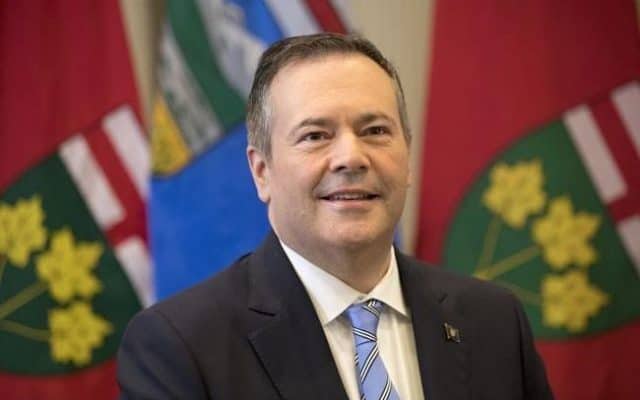
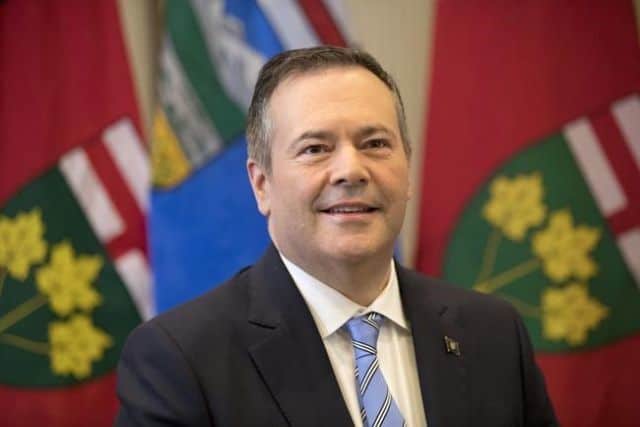
Alberta Premier Jason Kenney announced the creation of a panel that will examine ways to make his province more independent of Ottawa in a speech to the conservative Manning Centre on Saturday in which he rejected separatist arguments.

Kenney’s “Fair Deal Panel,” which will include former Reform Party leader Preston Manning, will consult with Albertans on ideas such as establishing a provincial revenue agency, withdrawing from the Canada Pension Plan in favour of a new provincial agency and establishing a formalized provincial constitution.

The point of the panel, Kenney explained, is to secure a fair deal for Alberta and advance Alberta’s economic interests, such as the construction of energy pipelines.

Kenney noted that several of the ideas are borrowed from Quebec, such as collecting taxes and seeking provincial representation in treaty negotiations that affect Alberta’s interests.

He said that none of the ideas would be implemented without Albertans endorsing them in a referendum.

Kenney told the audience that separating from Canada would landlock Alberta and not make it any easier to get a pipeline built to a coast, but that he sees the fear in Albertans eyes about their economic futures.

“It’s expressed most devastatingly in an increase in the rate of Albertans who have taken their own lives over the past five years. The per capita rate of suicide in Alberta is 50 per cent higher than it is in Ontario,” Kenney said in his speech in Red Deer, adding that economic woes are also contributing to a wave of rural crime and opiod addiction.

“So this literally for many people is a life-and-death question.”

Other members of the panel will include Stephen Lougheed, a businessman and son of former premier Peter Lougheed, as well as University of Alberta law professor Moin Yahya, First Nations leader Jason Goodstriker, Canada West Foundation chair Oryssia Lennie, and some members of Kenney’s United Conservative Party caucus.

Kenney’s speech was the keynote address at the conference, where three of four panels discussed the federal election result and what it meant for Alberta and the West.

In the days that followed the Oct. 21 vote, a simmering separatist movement in Alberta gained momentum under the “Wexit” umbrella, a name seemingly created to mimic the Brexit movement aimed at separating Britain from the European Union.

The group’s founder, Peter Downing, earlier this week filed paperwork with Elections Canada to form a federal Wexit Alberta party that could, in his words, do for Western Canada what the Bloc Quebecois does for Quebec.

Kenney said the status quo isn’t acceptable, but that he and most Albertans don’t want to give up on Canada forever.

“So what is the alternative?” Kenney asked. “Bold action.”

The panel will conduct public consultations between Nov. 16 and Jan. 30. It will complete its report to government by March 31.

Opposition Leader Rachel Notley responded in a statement that Kenney was “intentionally stoking the fires of western alienation in order to advance his own political objectives.”

The NDP leader also noted that Kenney never mentioned withdrawing from the Canada Pension Plan during the provincial election last April.

“Alberta is part of Canada, and Jason Kenney needs to accept that,” Notley said. “This premier needs to cut the theatrics and get back to the job of getting Albertans back to work.”