Archives for October 17, 2019

Inflation hovers at 1.9%

Lower gas prices hold inflation rate steady at 1.9%

The annual inflation rate was 1.9 per cent in September for a second-straight month, keeping the indicator close to the Bank of Canada’s ideal two per cent target.

The new numbers released Wednesday in Statistics Canada’s latest consumer price index report show that price growth was once again held back by lower gas prices.

Inflation has now stayed at 1.9 per cent or higher for seven consecutive months.

Economists on average had expected a reading of 2.1 per cent for September, according to financial markets data firm Refinitiv.

The country’s price picture, on its own, is not applying pressure on the inflation-targeting Bank of Canada to adjust interest rates. The central bank’s next rate announcement is scheduled for Oct. 30.

Statistics Canada said a 10 per cent drop in gasoline prices compared with last year continued to weigh on the overall inflation rate. Gas prices, year-over-year, were down 10.2 per cent in August and 6.9 per cent in July.

Excluding pump prices, the inflation reading for September was 2.4 per cent for a third-straight month.

Upward momentum in price growth was also held back in September by lower costs, year-over-year, for internet access services, tuition fees and telephone services.

Canadians did, however, pay more for mortgage interest costs, vehicle insurance and auto purchases last month compared to the previous year.

Shoppers shelled out 3.4 per cent more for passenger vehicles last month than they did a year earlier as price growth in the category exceeded 2.5 per cent for a seventh-straight month, the report said. Statistics Canada called it the “strongest continuous stretch of growth” in the category since early 2017.

Seafood fraud too common

Oceana Canada study finds more than half of fish mislabelled

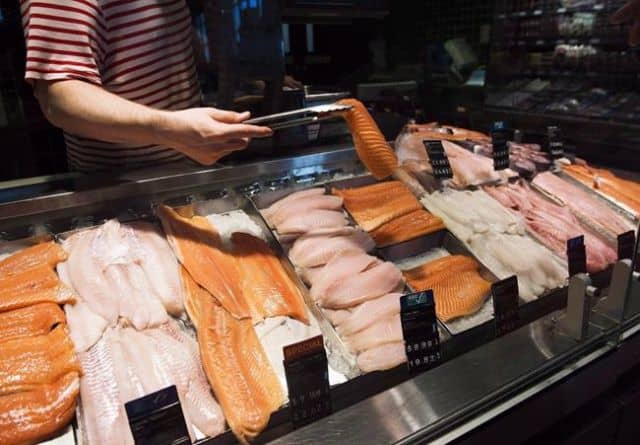
More than 60 per cent of seafood products tested at Montreal grocery stores and restaurants were mislabelled, according to an update of a study that tracks rates of fish food fraud in Canada.

“The numbers reflect that this is an ongoing problem,” said Sayara Thurston, a seafood fraud campaigner with Oceana Canada, which conducted the investigation.

In July 2019, the organization tested 90 samples from 50 locations in Montreal and found that 61 per cent of seafood wasn’t as advertised.

A commercial lab in Guelph, Ont., used DNA barcoding to analyze the samples and determine the identity of each species. It found 31 products were a different species than was claimed, 21 were mislabelled and three contained species not authorized for sale in the country.

The results, when combined with previous investigations since 2017, found 47 per cent of the 472 fish samples to date were mislabelled in Montreal, Victoria, Vancouver, Toronto, Ottawa and Halifax.

A 2018 report found a mislabelling rate of 44 per cent in data from five of the cities, excluding Montreal. Victoria clocked in the highest rate of mislabelling at 67 per cent, while Vancouver’s was the lowest at 26 per cent.

“The truth is that no amount of mislabelling, no amount of fraud is acceptable,” she said. “And so, it’s very problematic to see these numbers.”

Seafood fraud includes swapping cheaper fish and passing them off as more expensive fillets, or putting false, incomplete or misleading information on a label.

Food fraud is not limited to the seafood industry, but is particularly problematic there because of a complicated supply chain. Some companies have even started developing at-home test kits to help conscious consumers determine if they’ve been duped, for example, into purchasing farmed rather than wild salmon.

This type of fraud also presents a potential health risk with consumers possibly exposed “to parasites, allergens, contaminants, aquaculture drugs and pesticides used in industrial farming operations, or natural toxins found in certain species,” according to the report.

The Montreal investigation found that 16 per cent of the fish was substituted with other species. Butterfish or albacore tuna was found to be replaced with escolar, which can cause diarrhoea, vomiting and nausea, and is banned from being sold in some countries.

Seafood fraud also hurts consumers economically when lower-cost fish are swapped with more-expensive varieties. It can also create the impression that some fish are more abundantly available and undermine efforts to curb overfishing and other conservation attempts.

Restaurant operators rely on information received from seafood processors and distributors when labelling menu items, wrote Marlee Wasser, a spokeswoman for the industry group Restaurants Canada, in an email. These businesses want more traceability so they can share “the most accurate information,” she said.

The Canadian Food Inspection Agency, which is responsible for mitigating food safety risks and monitors food fraud in the country, can’t comment on the specifics of the report until it has reviewed it, wrote Cynthia, a spokeswoman for the agency who did not provide her last name, in an email.

The CFIA conducts inspections at import, processing and retail outlets, she said, to help protect consumers from fraud.

“It is industry’s responsibility to properly label seafood and to provide truthful and not misleading information about their foods to consumers,” she wrote, adding the CFIA works closely with industry to help them meet regulatory requirements and takes appropriate action in cases of non-compliance.

Oceana Canada is continuing its call for the federal government to strengthen labelling requirements and boost traceability based on these results.

Ladies and gents no more

‘Ladies and gentlemen’ scrubbed from airline intros

Several Canadian airlines have scrubbed the phrase “ladies and gentlemen” from their in-flight announcements — or are considering the change — replacing the gendered language with non-binary terminology as part of a broader shift toward corporate inclusivity.

Air Transat said in an email it has stopped using the salutation as well as its French equivalent, “Mesdames et messieurs.” Air Canada says it will do likewise, amending its on-board announcements “to modernize them and remove specific references to gender.” Porter Airlines jettisoned “ladies and gentlemen” in 2018.

WestJet Airlines Ltd. and Sunwing Airlines Inc. still include the time-worn phrase in their in-flight announcements, but say they are mulling an edit.

“As our current announcements refer to guests as ladies and gentlemen, we are taking this time to evaluate announcement updates for future inclusion,” said WestJet spokeswoman Morgan Bell in an email.

“We embrace all cultural, religious, racial, ability, gender, age, and sexual orientation dispositions,” wrote a Sunwing spokeswoman, saying the airline has received no negative feedback on the greeting. “However, we will certainly take this into account when we are re-evaluating our procedures in the future.”

In February, major U.S. airlines said they would change their ticketing process so that passengers can identify themselves along non-binary lines, representing a victory for advocates of transgender recognition.

United Airlines announced in March that it would become the first American carrier to offer non-binary gender options across its booking channels, allowing customers to go by the honorific, “Mx.,” and identify themselves as male (M), female (F), undisclosed (U) or unspecified (X), so long as it corresponds to their passport or I.D.

American Airlines, Delta, British Airways and Air New Zealand have all pledged to provide similar options.

Canadian officials followed their U.S. counterparts in June, permitting travellers to choose gender designations outside the traditional “male” and “female” categories on their passports and federal identification documents by opting for an X rather than M or F.

York University linguistics professor Sheila Embleton called the changes “a logical step” in the march toward equity and inclusion.

“I think it’s all just part of wanting people to feel more welcome,” she said.

Tentative deal in GM strike

General Motors, UAW reach tentative deal that could end strike

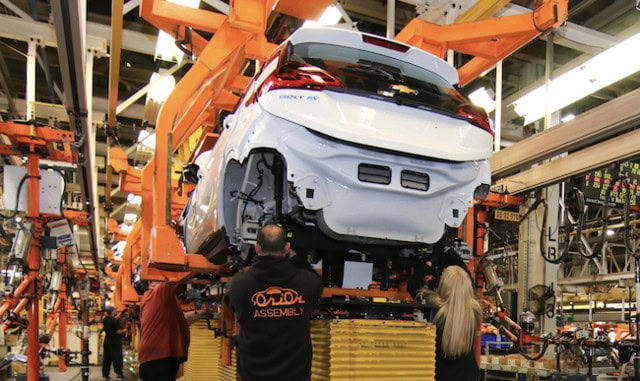
Bargainers for General Motors and the United Auto Workers reached a tentative contract deal on Wednesday that could end a monthlong strike that brought the company’s U.S. factories, as well as some Canadian operations, to a standstill.

The deal, which the union says offers “major gains” for workers, was hammered out after months of bargaining but won’t bring an immediate end to the strike by 49,000 hourly workers. They will likely stay on the picket lines for at least two more days as two union committees vote on the deal, after which the members will have to approve.

The strike closed more than 30 GM plants in the U.S., which created parts shortages that forced an almost complete shutdown of GM’s assembly plant in Oshawa, Ont., and the partial shutdown of its engine plant in St. Catharines, Ont.

The plant shutdowns in Ontario, and subsequent production halts by suppliers to the plants, have left thousands temporarily laid off in the province.

GM Canada spokeswoman Jennifer Wright said the company will look to resume Canadian operations as quickly as possible once an agreement is reached.

Terms of the tentative four-year contract were not released, but it’s likely to include some pay raises, lump sum payments to workers and requirements that GM build new vehicles in U.S. factories. Early on, GM offered new products in Detroit and Lordstown, Ohio, two of the four U.S. cities where it planned to close factories.

The company offered to build a new electric pickup truck to keep the Detroit-Hamtramck plant open and to build an electric vehicle battery factory in or near Lordstown, Ohio, where GM is closing an assembly plant. The battery factory would employ far fewer workers and pay less money than the assembly plant.

“It sounds good,” Clarence Trinity, a worker at GM’s engine and transmission plant in the Detroit suburb of Romulus, Michigan, said of the deal. “But I have to see it in writing or hear from the leaders.”

Trinity said he can’t figure out why it took 31 days for the strike to end. “I don’t understand what General Motors was expecting to get out of us. Maybe they didn’t expect us to strike. Maybe they didn’t expect us to strike this long.”

The union’s bargainers have voted to recommend the deal to the UAW International Executive Board, which will vote on the agreement. Union leaders from factories nationwide will travel to Detroit for a vote on Thursday. The earliest workers could return would be after that.

In past years, it’s taken a minimum of three or four days and as long as several weeks for the national ratification vote. Workers took almost two weeks to finish voting on their last GM agreement, in October of 2015. Then skilled trades workers rejected it, causing further delays.

If approved, the contract agreement would be used as a template for talks with GM’s crosstown rivals, Ford and Fiat Chrysler. Normally the major provisions carry over to the other two companies and cover about 140,000 auto workers nationwide.

Art Schwartz, a former GM negotiator who now runs a labour consulting business, said depending on the contents, the contract could influence wages and benefits at other manufacturers. But he said foreign automakers with U.S. factories, mainly in the South, always give pay raises and shouldn’t be affected much.

“They’re located in low-wage areas and they pay well,” he said. “The people who work there are kings of the locality.”

The strike did show that the union still has power in the auto industry. “I think economically the UAW will do just fine in this agreement,” Schwartz said.

The deal cost workers thousands of dollars in wages, and analysts estimate that GM lost about $2 billion due to the monthlong strike. It’s unclear if GM will be able to make up some of the production lost to the strike by increasing assembly line speeds or paying workers overtime. Many GM dealers reported still healthy inventories of vehicles even with the strike.

If all of the committees bless the deal, it’s likely to take several days for GM to get its factories restarted.