Archives for October 12, 2019

Silvercorp Metals Inc. (SVM:CA) Declines 5.79%

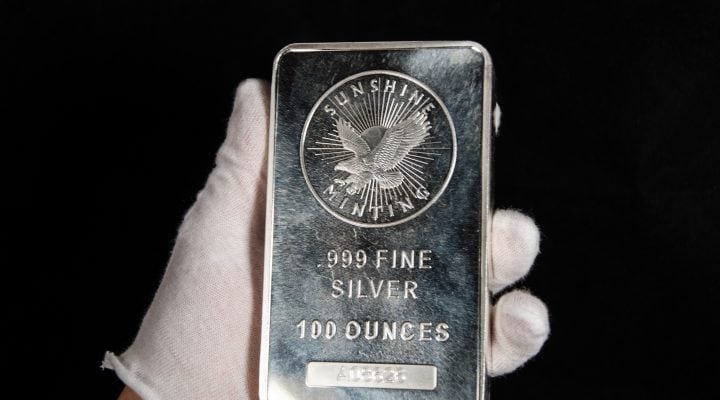
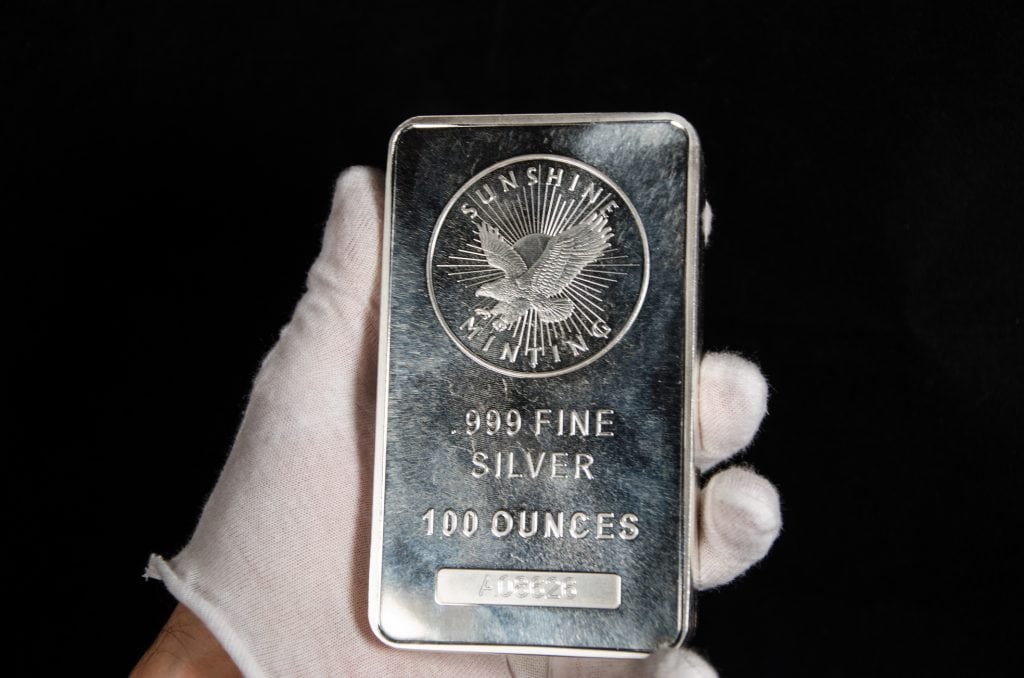
This 100oz Sunshine Mint Silver Bar was shot on a black background & being hand held with a white glove.

It was a tough day for Silvercorp Metals Inc. (SVM:CA) as its stock fell 5.79% to finish the day at $5.04 a share on October 11. That reduces the company’s market cap to 846.11 million on 172.29 million outstanding shares. Silvercorp Metals Inc. is a component of the the S&P/TSX SmallCap Index.

662,968 shares exchanged hands over the course of the day as compared with an average daily volume of n/a over the last 30 days.

Silvercorp Metals Inc is a mineral mining company. It acquires, explores, develops, and mines precious and base metal mineral properties at its producing mines and exploration and development projects in China. Its segments are Mining and Administrative. Its projects include Ying Mine, HPG Mine, TLP Mine, LM Mine in the Ying Mining District, BYP Gold- Lead-Zinc Mine and the Gaocheng project.. Silvercorp Metals Inc. makes its home in Vancouver, BC, and currently has CEO Rui Feng at the helm.

The past 52 weeks have seen the stock trade in a range between a high of $6.15 and a low of $2.43, and it’s currently sporting a 50-day SMA of $n/a and a 200-day SMA of $n/a. The current P/E ratio stands at n/a, with a P/B ratio of 1.8.

Silvercorp Metals Inc. ($SVM:CA) is one of the 200 Canadian small-cap stocks that make up the S&P500/TSX SmallCap Index, the widely recognized benchmark for gauging the performance of the Canadian small-cap market. Similar to the Russell 2000 in the United States, the index is market cap-weighted and consists only of smaller companies. To be a part of the index, a company must have a market capitalization between C$100 million and C$1.5 billion with an average share price of C$1 or more.


L Brands Inc. (LB) Rises 3.92%

Among the biggest risers on the S&P 500 on Friday October 11 was L Brands Inc. ($LB), popping some 3.92% to a price of $17.50 a share with some 5.93 million shares trading hands.

Starting the day trading at $17.09, L Brands Inc. reached an intraday high of $17.98 and hit intraday lows of $17.09. Shares gained $0.66 apiece by day’s end. Over the last 90 days, the stock’s average daily volume has been n/a of its 276.39 million share total float. Today’s action puts the stock’s 50-day SMA at $n/a and 200-day SMA at $n/a with a 52-week range of $15.82 to $38.00.

L Brands is a women’s intimate, personal-care, and beauty retailer operating under the Victoria’s Secret, Pink, and Bath & Body Works brands. The company generates the majority of its business in North America, with about 5% of sales coming from international markets in fiscal 2018. Distribution channels include more than 2,900 stores and online.

L Brands Inc. has its corporate headquarters located in Columbus, OH and employs 88,900 people. Its market cap has now risen to $4.84 billion after today’s trading, its P/E ratio is now n/a, its P/S n/a, P/B -5.18, and P/FCF n/a.

The Dow Jones Industrial Average (DJIA) is the most visible stock index in the United States, but that doesn’t make it the best. In fact, the industry standard for market watchers and institutional investors in gauging portfolio performance is the S&P 500.

The DJIA relies on just 30 stocks as a sample of large- and mega-cap firms, dwarfed by the 500 contained in the S&P 500, and it also weights its returns using an outdated and flawed price-weighting method. The S&P 500’s weighting is based on market cap, making it a much better representation of actual market performance for large- and mega-cap stocks.

Renault ousts CEO

Renault ousts CEO to ‘breathe new life’ into Nissan alliance

French carmaker Renault dismissed its CEO on Friday, an attempt to revitalize its alliance with Nissan, which was shaken by the jailing of the companies’ previous chief, Carlos Ghosn.

The board’s decision to fire Thierry Bollore effective immediately came days after Nissan also named a new CEO, indicating the companies were intent on cleaning house after the scandal over Ghosn.

Bollore had replaced Ghosn after the former CEO was jailed in Tokyo last November on charges of falsifying financial reports in under-reporting compensation and breach of trust. Ghosn, who led both companies and the Nissan-Renault alliance, is currently awaiting trial and denies wrongdoing.

The company said Bollore will be replaced on an interim basis by Chief Financial Officer Clotilde Delbos. Chairman Jean-Dominique Senard will become president during the interim period.

At a news conference to explain the decision to oust Bollore, Senard said it was meant to “breathe new life” into the alliance with Nissan. He said it was made without pressure from the French government or Nissan.

“No one exerted pressure,” he said.

Renault owns 43% of Nissan but their alliance came under strain after Ghosn’s jailing. Renault considered a merger offer from Fiat Chrysler Automobiles that would have created the world’s third-largest automaker, but the talks fell apart due to concern over Nissan’s role.

Bollore told French publication Les Echos ahead of the announcement that the board’s move to oust him came as a surprise. He said he found out Senard wanted him gone from media reports after he flew back to Paris from Tokyo in the early hours of Wednesday.

“The brutality and the totally unexpected nature of what is about to happen is stupefying,” he said, adding “I was always loyal to him.”

GM strike won’t end quickly

UAW, General Motors still far apart as strike drags on

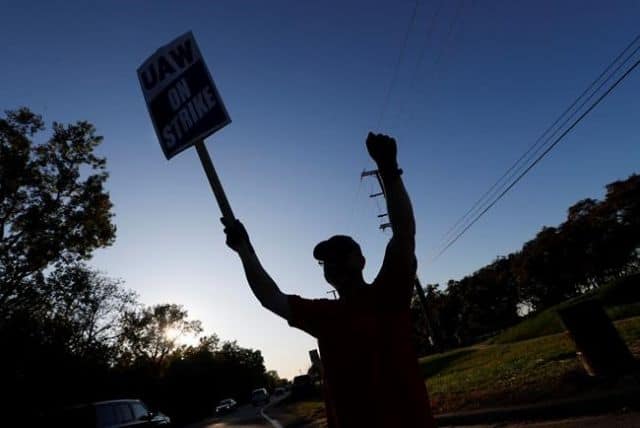
General Motors Chief Executive Mary Barra has stepped into contract talks with striking auto workers, asking the union to wrap up outstanding issues and respond to a company offer made this week.

But in a letter to GM’s top bargainer Thursday, United Auto Workers Vice-President Terry Dittes wrote that there won’t be a response to Monday’s offer until committees working issues are finished. He didn’t know how long that would take.

Details of the Wednesday meeting between Barra and top union bargainers were disclosed in the letter, which was obtained by The Associated Press. It’s an indication that there won’t be a quick end to the nearly monthlong strike by 49,000 workers that has halted production at all of GM’s U.S. factories.

Both sides are separated on major economic issues such as wages and lump-sum payments and better pensions that will be bargained at the “main table” by top negotiators.

Committees are working on issues such as products for factories that GM wants to close, investments in other U.S. factories, and training for union workers to handle future technology, according to Dittes’ letter. They’re also haggling over company-paid legal services for union members and the future of a joint UAW-GM training centre in Detroit, the letter said.

But the company, in a Thursday letter to Dittes, said that GM expected the union to move more quickly and respond to the larger offer before the committee work is done.

“At the meeting, Mary Barra emphasized the need to get a comprehensive response from the union as soon as possible,” wrote Scott Sandefur, GM’s top bargainer.

Dittes wrote that when the committees finish, the union will turn in a comprehensive proposal in response to the company’s offer.

“The completion of those committees is not known at this point,” Dittes wrote, adding that committees have been meeting since 3:30 p.m. Wednesday.

Workers walked off their jobs on Sept. 16 after their four-year contract expired.

Cracks found in 38 jets

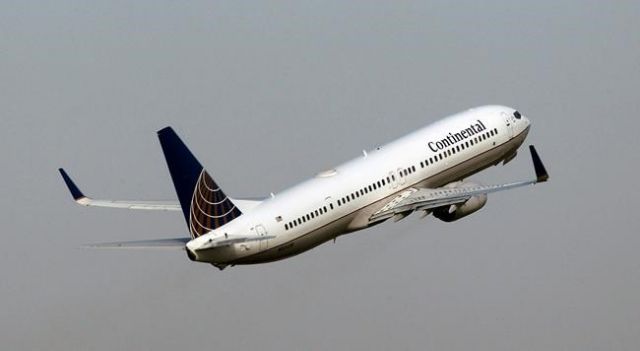
Inspections of some older Boeing jets have turned up structural cracks in more than three dozen of them, raising a new safety issue for the company already dealing with two deadly crashes involving a newer version of the same plane.

Boeing said Thursday that airlines worldwide have inspected 810 planes following an order from U.S. safety regulators. Of those, 38 – or 5% – had “findings” requiring repairs.

Airlines are under orders to inspect certain Boeing 737 NG planes for cracking in a part that helps keep wings attached to the fuselage.

Boeing declined to identify which airlines found problems, but Brazilian carrier Gol said it has grounded 11 planes so far, and U.S.-based Southwest Airlines grounded two.

The NG is a version of the popular 737 that has been produced since the 1990s. Boeing is replacing it with the 737 Max, but those planes have been grounded worldwide since March after two crashes killed 346 people.

The cracks in the NG planes occurred in a part called a pickle fork because of its shape. Cracking in that component was found recently in some 737s being converted from passenger use to cargo jets.

The Federal Aviation Administration gave airlines seven days, ending Thursday, to inspect 737 NGs that had made at least 30,000 flights. A much larger group of planes with slightly fewer flights must be inspected over the coming months.

An FAA spokesman said “a small number” of U.S.-based planes have been removed from service while Boeing works on instructions for repairing or replacing the parts.

Boeing is analyzing airline inspection results, and its technical experts are deciding the best repair plan, a company spokesman said.

Repairs could take weeks. A spokesman for Gol said the grounding of 11 planes would affect about 3% of its customers through Dec. 15.

Worst plastic polluters

Greenpeace calls out Tim Hortons, Nestle for plastic pollution

Greenpeace Canada has released its annual list of the top five plastics polluters, and Tim Hortons and Nestle ranked in the top two spots for the second year in a row.

The environmental organization identified 240 companies in the 2019 branded plastic pollution audit. This year, 39 per cent of the pollution belonged to the top five polluters. In fact, Nestle accounted for roughly 12 per cent of the branded plastic while Tim Hortons accounted for about 11 per cent.

Starbucks ranked in 3rd this year, followed by McDonald’s in 4th. Coca-Cola rounded out the list in 5th.

In addition, house brand-labelled products by Canada’s major retailers were found among the polluting items, such as: Sobeys, Costco, Walmart and Loblaw.

Greenpeace Canada notes that the ranking order did vary from location to location, but that Tim Hortons placed in first in six of the nine locations.

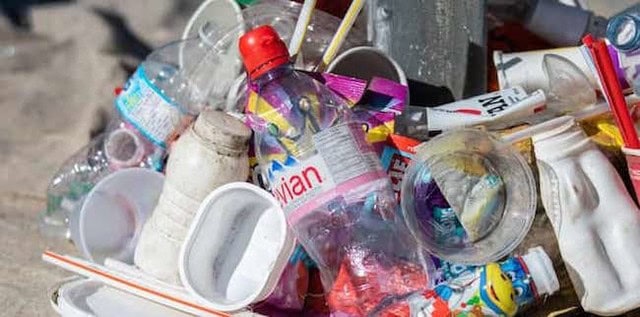
The most commonly collected single-use plastic item categories were: (1) cigarette butts, (2) bottles and caps, (3) wrappers, (4) cups and lids, and (5) straws and stir sticks. Bags, cutlery and other forms of packaging also placed in the top 10.

“Canada’s top plastic polluters are once again the usual suspects. Polluters like Nestle and Tim Hortons are continuing to shift responsibility on consumers, instead of fixing their own broken business models,” said Sarah King, Head of Greenpeace Canada’s Oceans and Plastics Campaign.

“Companies’ responsibility doesn’t end at the point of sale. It’s time these polluters got honest with their customers about the scale of their plastics problem and made a real commitment to solve it through ditching disposables and embracing reuse.”

The organization adds that it also found plastics that are recyclable, contained recycled content or bio-based material during cleanups. Specifically, they found paper straws, compostable packaging and bio-plastic bags, and these were found in the environment in non-biodegraded states. What’s more, all companies that ranked in the top five, “have noted recyclability, recycled content, use of bio-based or paper alternatives as alleged solutions to their plastic footprints.”