Archives for September 28, 2019

Stock markets mixed

Canada’s main stock index fell in late-morning trading as losses in the materials sector, including the big names in the mining sector, weighed on the market.

The S&P/TSX composite index was down 51.04 points at 16,739.36.

In New York, the Dow Jones industrial average was up 84.13 points at 26,975.25. The S&P 500 index was up 4.27 points at 2,981.89, while the Nasdaq composite was down 2.72 points at 8,027.94.

The Canadian dollar traded for 75.64 cents US compared with an average of 75.41 cents US on Thursday.

The November crude contract was up five cents at US$56.46 per barrel and the November natural gas contract was down 4.0 cents at US$2.403 per mmBTU.

The December gold contract was down US$16.30 at US$1,498.90 an ounce and the December copper contract was up 3.15 cents at US$2.6090 a pound.

This report by The Canadian Press was first published Sept. 27, 2019.
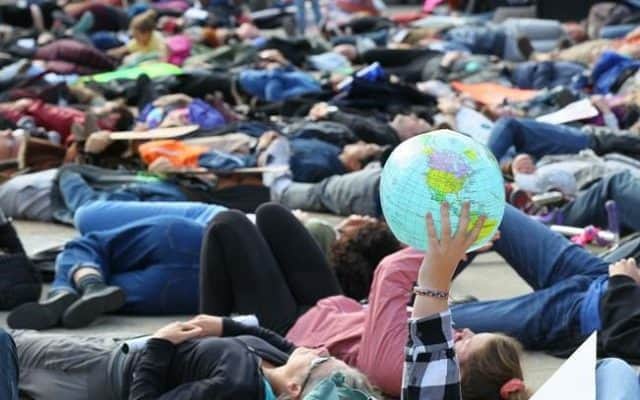
Youth take to the streets

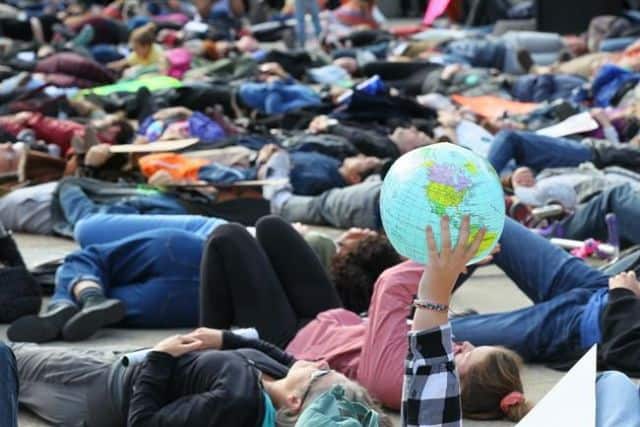
Thousands of Canadians are hitting the streets Friday demanding “widespread, systemic change” to halt the scary impact of a warming planet.

The massive national protest will see students and climate activists and everyday Canadians who want a swifter government response to climate change marching on legislatures and municipal buildings, schools and parks, from St. John’s to Tofino, B.C., and as far north as Inuvik in the Northwest Territories.

Things started off in St. John’s, where a crowd gathered at Memorial University’s clock tower shortly before 11 a.m. local time, some people holding signs protesting the province’s oil extraction industry. The group plans to make its way to the provincial legislature on Confederation Hill.

A number of international movements are coming together Friday for one, massive climate change protest at the end of what they call “Week for Future.” It is a phrase building on the Fridays for Future movement started last year by Swedish teenager Greta Thunberg, whose weekly Friday sit-ins outside the Swedish legislature grew into an global phenomenon.

“As a collective of young people from across the country, we aim to steer Canadian society off our current path of ecological and social catastrophe,” says the mandate of Climate Strike Canada, one of the groups spearheading the marches. “Drastic climate action is the only option for humanity.”

There was another international climate strike day last Friday, and smaller events across the country last spring, but in Canada the major events are taking place today.

More than 46,000 people signalled on Facebook they plan to attend the event in Vancouver, nearly 11,000 for Edmonton, and 5,000 in Halifax.

Some school boards and universities are cancelling classes during the protests, or telling students they will not be penalized for missing class during that time. Other school boards are being criticized for being less than fully supportive. The Winnipeg School Division is encouraging students to participate, but still marking them as absent if they miss class.

Students at Memorial University were offered academic amnesty for absences on Friday, and the province’s English school district said students would be excused from class with a guardian’s permission. Metrobus, St. John’s municipal transit system, is offering free rides between 10 a.m. and 2 p.m. to accommodate participation in the climate strike.

Several retailers and workplaces are closing, at least for the duration of the protests, including Mountain Equipment Co-op, Lush Cosmetics, and Bridgehead Coffee in Ottawa.

Coming as it is in the midst of Canada’s federal election campaign, four of the six mainstream party leaders will be marching. NDP Leader Jagmeet Singh is marching in Victoria. Liberal Leader Justin Trudeau and Green Leader Elizabeth May will both be in Montreal, where the Swedish schoolgirl who started it all will also attend. Bloc Quebecois Leader Yves-Francois Blanchet will also be at the Montreal march.

Conservative Leader Andrew Scheer said there will be Conservative representation at the Montreal march, but he will not be attending any events. He has an announcement planned later Friday in British Columbia. People’s Party Leader Maxime Bernier, the only national party leader to deny climate change is a crisis caused by human activity, is campaigning in his home riding of Beauce in Quebec.

On Monday, Thunberg delivered a scathing rebuke to world leaders at the United Nations climate summit in New York City.

“For more than 30 years the science has been crystal clear,” she told them. “How dare you look away.”

RCMP security backlog

The RCMP was struggling to keep staff security clearances up to date during the time a senior employee allegedly tried to pass secrets to adversaries, an internal Mountie audit shows.

The audit report stressed the importance of regularly reviewing the security status of RCMP employees to guard against the threat of an insider betraying the national police force by sharing sensitive information with the wrong people.

The auditors found all of the RCMP sections across Canada responsible for screening had “a significant backlog” of security updates to do, as well as smaller backlogs of new clearances and upgrades to higher security levels.

Overall, the audit concluded that “risks and gaps” were hampering effective delivery of the security-screening program to the force’s nearly 30,000 employees, 25,000 contractors and more than 17,000 volunteers in over 700 communities.

The little-noticed Audit of Personnel Security, completed in 2016 and quietly made public in edited form last year, takes on new relevance following the arrest this month of RCMP intelligence official Cameron Jay Ortis.

Ortis, 47, is accused of violating three sections of the Security of Information Act as well as two Criminal Code provisions, including breach of trust, for allegedly trying to disclose classified information to an unspecified foreign entity or terrorist group.

RCMP Commissioner Brenda Lucki has said the allegations against Ortis, if proven true, are extremely unsettling, given that he had access to intelligence from domestic and international allies.

The charge sheet lists seven counts against Ortis under the various provisions, dating from as early as Jan. 1, 2015, through to Sept. 12 of this year, when he was taken into custody. He is slated to make his third court appearance today.

“One of the many questions raised by the Ortis case is what internal security measures failed or might have failed,” said Wesley Wark, an intelligence expert who teaches at the University of Ottawa.

“The question of security clearances and security monitoring must be front and centre.”

The RCMP’s personnel security program aims to ensure the reliability and security of people who have access to the force’s information systems, data and premises, the internal audit says.

This is achieved through the force’s security-screening process, which supports the issuance, denial, suspension or revocation of basic RCMP reliability status or, if required by the position, a secret or top-secret security clearance.

A top-secret “enhanced” clearance entails extra screening including a polygraph examination, commonly known as a lie-detector test.

Reliability status and secret clearances are valid for 10 years, while top-secret clearances must be updated every five years.

“Updates are a critical insider-threat mitigation measure,” the audit report says.

Lucki told a Sept. 17 news conference that Ortis held a valid top-secret clearance but said he had not undergone a polygraph test.

Oil and gas missing the boat

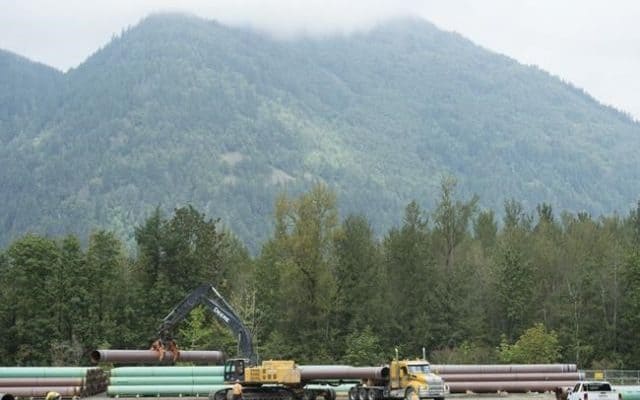
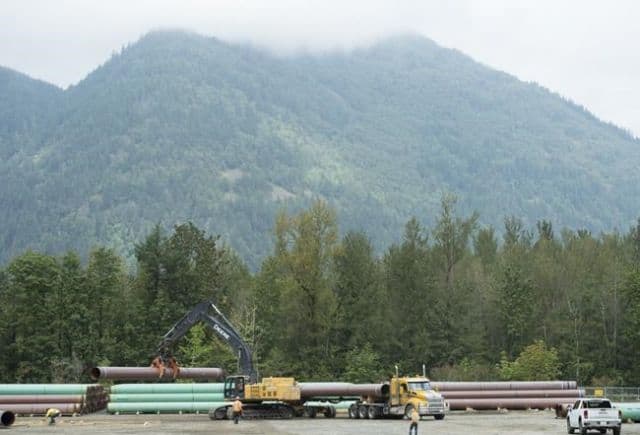
Energy analysts at the Global Business Forum in Banff, Alta., say Canada’s inability to build pipelines to take oil to market and delays in building LNG facilities means it is missing out on opportunities to become a preferred global supplier.

Matt Rogers, a San Francisco-based senior partner with McKinsey and Co., says Canada should be the “advantaged supplier” to North Asia which includes China, Japan and Korea for both crude oil and natural gas.

He says the region’s refineries have been built to use heavy oils with high sulphur content like those produced in the oilsands and the traditional supplier, Venezuela, isn’t keeping up with demand.

Meanwhile, he says liquefied natural gas can be produced more cheaply in Canada than in LNG hubs like Australia because the average temperature is much lower, while Canada also has an advantage because it is closer.

Michael Tran, a New York-based energy strategist for RBC Capital Markets, says Canada missed its chance to be a “first responder” after the drone attacks on Saudi Arabian oil facilities two weeks ago suddenly removed more than five per cent of the world’s oil supply.

He says Canada’s position as holder of the third-largest oil reserves in the world doesn’t prevent it from following the path of Venezuela, where internal geopolitical issues have resulted in what could be a “lost decade” in terms of oil production.

“Canada is struck with a different political issue and it would be wildly unfortunate if Canada was struck with a lost decade,” Tran said, adding the situation can still be repaired.

“We certainly haven’t missed our opportunity. We still have a window to get it right,” he added.