Archives for September 4, 2019

Apple will bring back an iPhone SE-like model in 2020, says Nikkei

The tech giant is reportedly hoping to capture emerging markets with a cheap iPhone.

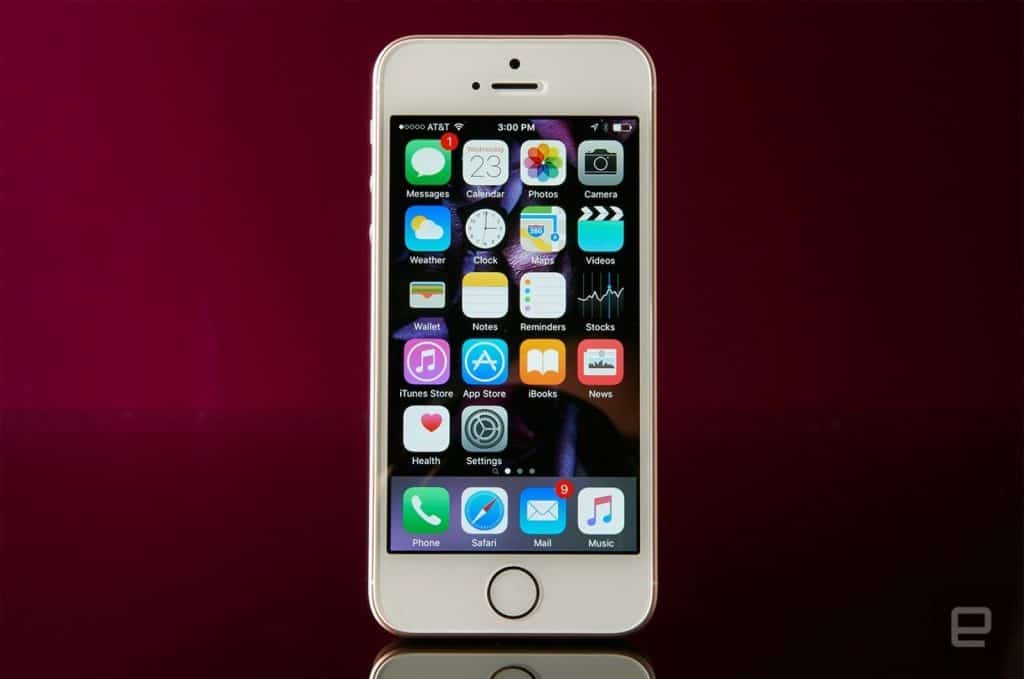
Apple plans to launch a cheap iPhone next spring, according to Nikkei. The company is reportedly releasing a cheap option to capture emerging markets where people usually choose more affordable devices from rival companies like Samsung and Huawei. Apple’s iPhones sales are on a decline, and the tech giant has been making up for it with its growing wearables and services business. A low-cost iPhone could help stop that decline and even give the company’s sales a boost.

As Nikkei has noted, the last time Apple released an affordable option was in 2016: the iPhone SE. Its prices started at $399, though it dropped to $249 after Apple brought it back as a clearance item in the US in January this year. It’s not clear if the upcoming model is the second version of the SE — all the publication said was that it will have a 4.7-inch display like the iPhone 8 and will “share most of the same components with the flagship iPhones this year.” The device will reportedly use a lower-cost LCD, though, to help Apple offer it at a much lower price than even the company’s lower-cost options like the iPhone XR.

Jeff Pu, a veteran tech analyst at GF Securities, told Nikkei that Apple could use the upcoming device to boost its device sales if the new flagships launching on September 10th don’t do well or if their performance slows down by spring 2020.


The ASUS StudioBook One is the first laptop with NVIDIA’s Quadro RTX 6000

It’s “the world’s most graphically-powerful laptop” — for now.

Even with all of its might, the StudioBook Pro X that ASUS announced today isn’t the most powerful StudioBook in terms of graphics. That accolade is reserved for the StudioBook One, with its Quadro RTX 6000 graphics. In fact, ASUS says this is the first (and currently only) laptop to harness the Quadro RTX 6000, and both it and NVIDIA say it’s “the world’s most graphically-powerful laptop.” Well, at least it is for now.

The 15-inch StudioBook One has angled corners where most laptops are rounded. Not everyone is going to be a fan of that design touch. And for such a powerhouse, the machine appears to be pretty thin. The StudioBook One also has 9th-gen Intel Core i9 processors and its 4K UHD display covers the entire Adobe RGB gamut, is Pantone validated and has a 120Hz refresh rate. Unfortunately, that’s all we know for now as ASUS didn’t mention pricing or availability for the StudioBook One just yet.

If a desktop is more your style, ASUS debuted the ProArt Station D490MX as it expands that lineup. Once again, creatives are the target audience here with a 9th-gen Intel i9 processor with up to 64GB DDR memory. You can choose between NVIDIA Quadro RTX 4000 or GeForce RTX 2080 Ti graphics, and there’s dual storage onboard with a 512GB SSD and 1TB hard drive. There’s also two Thunderbolt 3 ports up front, so you don’t have to go messing around back to connect things. The ProArt Station D490MX will be available in Q4.

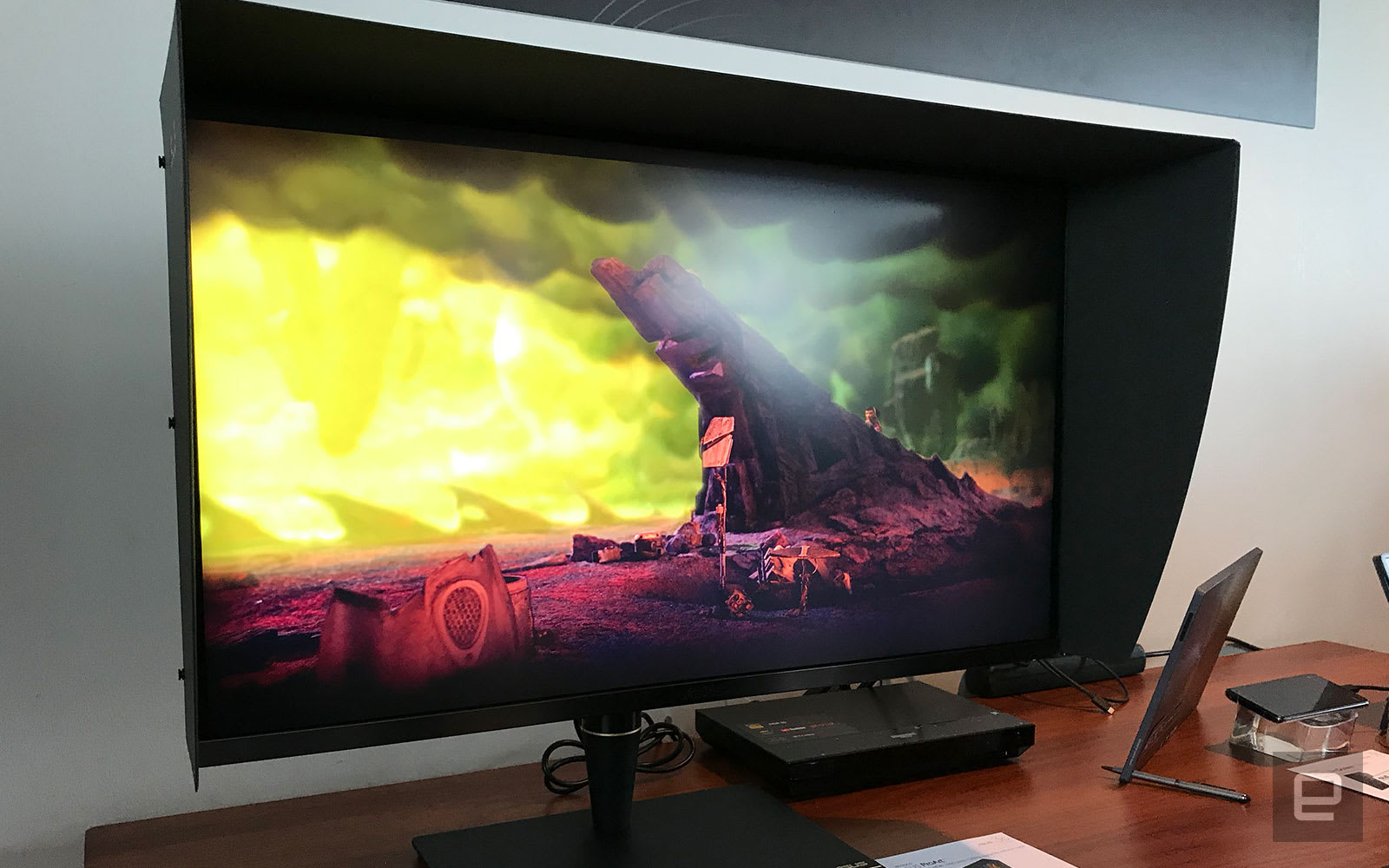
ASUS ProArt PA32UCG display

We’re not done yet. ASUS is adding to its line of ProArt displays with the 32-inch PA32UCG. The company says it’s the world’s first HD1600 monitor with 120Hz refresh rate. The IPS panel offers 4K UHD resolution and mini LED backlighting. ASUS says 1,152 mini LEDs enable a 1,000,000:1 contrast ratio and 1,000 nits of “full-screen sustained brightness.” Thanks to ASUS Smart HDR Technology, the PA32UCG supports HDR 10, Dolby Vision and more. Color accuracy is paramount for these devices, and this one has a Delta-E rating of less than 1 (the closer to zero, the better). It also offers two Thunderbolt 3 ports, one DisplayPort and 3 HDMI ports alongside a USB hub. Again, no word on price, but this will likely be an alternative for creative pros who may be considering the Apple Pro Display XDR.

ASUS is also debuting a new ProArt Creator Center app that will help with things like color calibration and optimizing performance. It will also allow you to monitor the rendering process from your phone. Gone are the days when you feel the need to sit in front of your computer while it does its thing.

This stacked ProArt line is meant to compete directly with Acer’s ConceptD series for creative professionals. They more or less mirror each other spec for spec down the line, though Acer’s ConceptD 9 does have a rotating display hinge — if you’re into that sort of thing.

Update 9/14/19 8:19AM ET: This post has been updated with more info on the StudioBook One.

Roku’s first soundbar doubles as a streaming box

And for you bass freaks, Roku also made a new wireless subwoofer.

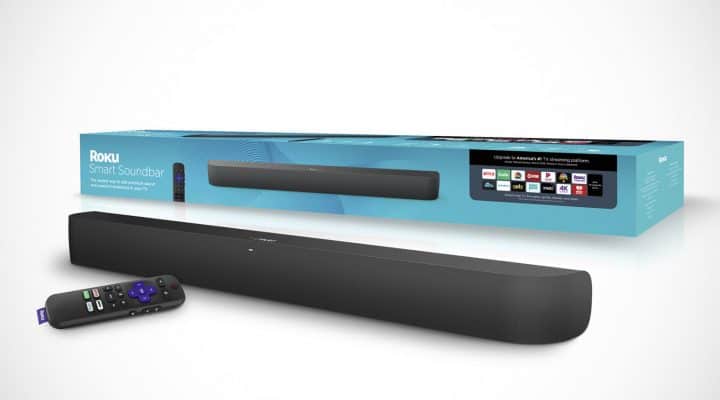
Generally, when I think of Roku, I think of those handy HDMI streaming boxes that turn dumb TVs into smart ones. And sometimes my mind will wander to Roku TVs, smart television sets built by companies like TCL and Sharp that run the company’s Roku OS. The thing is, Roku wants to be more than just an outfit that throws Netflix onto your TV screen. As evidenced by the wireless speakers it released last year and its growing team of audio researchers and engineers, Roku also wants to be the company that makes your streaming media sound great. And that’s where its new Smart Soundbar enters the picture.

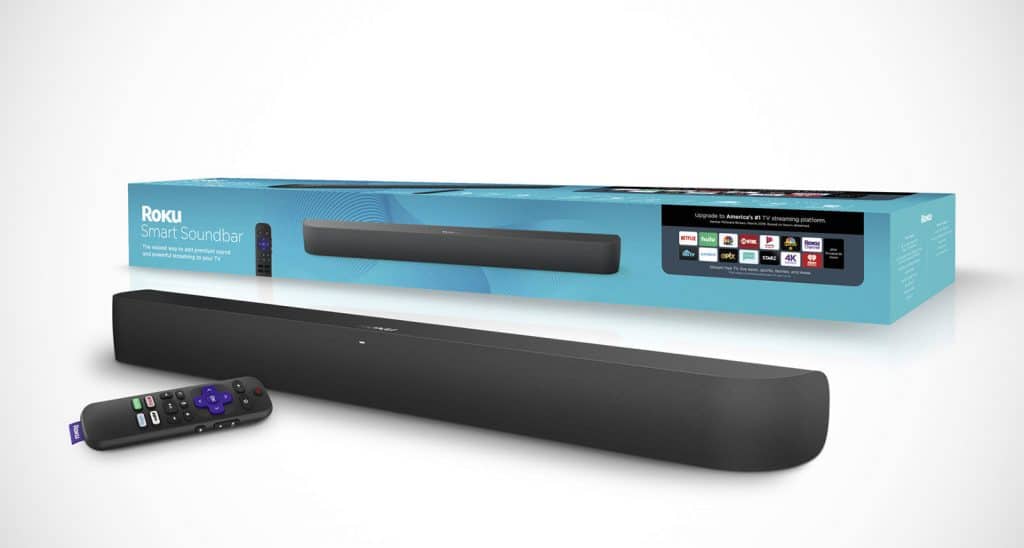
The 32-inch, Dolby-compatible soundbar will go on sale later this year for $180, and it packs four 2.5-inch speakers along with the guts of a Roku Ultra — quad-core processor and all. Unlike last year’s Smart Speakers the Soundbar is meant to drive your television by itself, and thanks to those borrowed components, it can handle streaming video playback at up to 4K resolution. In other words, the soundbar isn’t meant to augment the Roku players you already own as much as replace them outright. The soundbar isn’t alone, either. An additional $180 will also net you a wireless subwoofer that — appropriately enough — looks like a Roku Ultra that went through a late growth spurt. Aesthetics aside, it packs a single, downward-firing 10-inch woofer and its output peaks at 250W.

So, how do these things sound? Well, it’s far from other-worldly, but the soundbar produces surprisingly rich audio with respectable bass. I’ll admit that I showed up to my early morning meeting with Roku still partially asleep, but that didn’t last long once the company’s spokespeople turned up the volume — clips from Blade Runner 2049 shook me up with near-room-filling audio, and bass-heavy tracks pulled from a Spotify playlist felt appropriately punch and aggressive. That’s especially true when you have the sub wirelessly connected to the soundbar. During my demo, the sub was placed on the ground and well to the right of the television, but still pumped out resonant lows without going overboard.

Since the soundbar uses the same chipset and internals as the Roku Ultra, there’s more processing power here than one might expect, and the company’s clever audio software puts it to good use. I’m the sort of person who usually has to watch TV with the subtitles on, and not just because my hearing is sort of terrible. I don’t want to wake up my upstairs neighbors (and their kids) just because I need to turn the volume up to hear conversations that tend to get lost in the mix. Enter Night mode, which attempts to level out your content’s aural peaks and valleys so loud scenes aren’t overbearing and quiet ones get a notable boost. And more importantly for people like me, a Speech Clarity mode does an admirable job of honing in on dialogue and making it louder without makingeverything else louder at the same time.

This is all well and good, but it sort of belies an important point. Yes, Roku’s soundbar and sub sound good, but they’re also dead-simple to set up — just connect the soundbar to a television with an HDMI cable and you’re basically all set. Once plugged in, the sub automatically connects to the soundbar, at which point the soundbar starts figuring out how best to divvy up audio responsibilities. It’s dead-simple, as you’d probably expect from Roku hardware.

All told, the Smart Soundbar and subwoofer seem like great options for people looking to spice up their older, non-smart home theater setups on the cheap. Yes, are there less expensive options out there, including packages that include decent wireless subwoofers. What Roku really has going for it here is the cohesiveness of it all — by shelling out $180 or $360, you’ll have everything you need to bring a beloved older setup into the streaming age.

That said, the Soundbar seems far more useful to anyone who is only now stepping into the realm of smart television. To get the most out of it, you’re locked into using Roku’s software and interface running on the soundbar, even if your television already runs Samsung’s Tizen, LG’s webOS or Amazon’s Fire TV software. Granted, the Roku experience is about as user-friendly as they get, but that’s still a learning curve to keep in mind if you’re coming from an existing smart TV platform.

Things could get a little dicier if you’re already an avid Roku user. Since the Soundbar contains all the hardware and software needed to stream The Good Place to your television, it’ll largely replace any Roku devices you might already have connected. The company says that the Soundbar is smart enough that you could pick up either of your Roku remotes to control the Soundbar’s video output. Still, little tweaks you’ve made to on your original Roku, like how you’ve laid out your channel icons, won’t carry over to the Soundbar. Fortunately, if you’re using an actual Roku TV — that is, a TV running the Roku OS — you can control everything you need to from the interface you’re used to.

Google Calendar will guess your working hours and warn colleagues

Let the system tell your boss you’re not around.

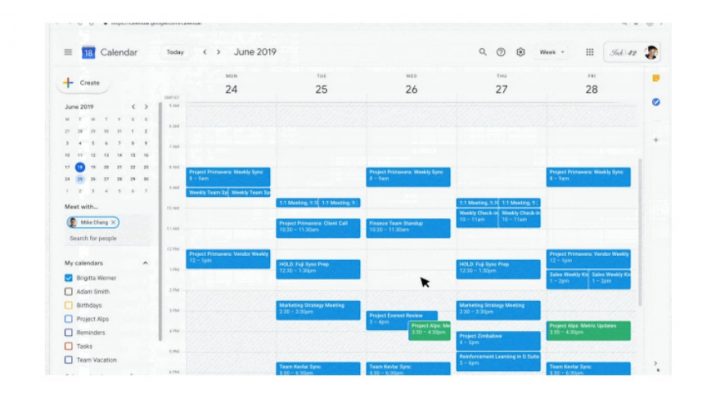
Google Calendar’s Working Hours feature has been around for a while, letting you inform others when you’ll be around for meetings and when you’re unavailable. Previously, you’ll have had to activate it through the app’s settings, but now it’ll be enabled by default, displaying an estimate of your work day availability based on previous appointments (which you can tweak if they’re not quite right).

If you’re creating an event, you’ll get a warning notification that “some people might decline” if you schedule it outside of other people’s working hours, which will be displayed in a new grid view. The idea is to avoid the back-and-forth that comes with finding a meeting time that suits everyone — and to help you better manage your work-life balance without the awkwardness of telling your boss “no.” The updated feature is rolling out to G Suite users now and will be available to free Google Calendar users soon.

Stocks to Watch: Entercom Communications Corp (ETM)

Looking at the recent signals on shares of Entercom Communications Corp (ETM), we can see that the short-term MACD indicator is presently pointing to a Sell. The MACD is typically used to measure bullish or bearish price movements. The MACD signal direction is currently reading Strongest. Switching to another short-term indicator, we have noted that the current 7-day average directional indicator is Sell. This signal may be used to determine the market trend. The 7-day average directional direction is currently Weakest. This signal indicates whether the Buy or Sell signal is getting stronger or weakening, or whether the Hold is leaning towards a Buy or Sell. The 7-day directional strength is Weak. This trend strength indicator measures the signal based on historical performance where minimum would indicate the weakest, and maximum would represent the strongest.

Investors might be looking to rebuild the portfolio as we move into the second half of the year. New investors can be tempted to try to maximize returns by owning one specific sector or be exposed to a fairly large single investment. By diversifying the portfolio, investors might be able to protect themselves from a sudden move against the position. Finding the correct portfolio balance is how many investors choose to approach the markets. This may take some time to master, and there may be some bumps along the way. Investors managing their own money may want to make sure that they know exactly what stocks are in the portfolio at all times. Keeping tabs on portfolio performance can also be a good way to make sure that it is weighted properly.

Investors are often watching stock price support and resistance levels. The support is a level where shares may see a rebound after they have fallen. If the stock price manages to break through the first support level, the attention may shift to the second level of support. The resistance is the opposite of support. As a stock rises, it may see a retreat once it touches a certain level of resistance. After a recent look, the stock’s first resistance level is 3.61. On the other side, investors may be taking note of the first support level which is currently 3.51.

Looking further, we can see that the current 9 day MACD for Entercom Communications Corp (ETM) has been noted at -0.06. This value represents the difference between a short-term and a long-term moving average. A reading above zero may offer a bullish signal, and a value below zero may indicate a bearish signal. Going a little further, we can see that the difference between the most recent close and the close one month ago is presently -2.2. This represents a percent change of -38.19% over that period of time. Taking a look back to the start of the calendar year, we can see that the price change has been noted at -2.15. Investors may be trying to gauge which way company shares will trend in the second half of the calendar year. As companies start reporting quarterly earnings, everyone will be focused on how the actual numbers stack up against analyst estimates. An earnings beat may prod company shares higher, while a miss may stall momentum.

Shares of Entercom Communications Corp (ETM) currently have a standard deviation of +0.08. Standard deviation is defined as a measure of the dispersion from the mean in regards to a data set. When dealing with financial instruments, the standard deviation is applied to the annual rate of return to help gauge the volatility of a specific investment. Tracking the standard deviation may help investors with trying to project if a stock is primed for a major move. The stock’s current pivot is 3.55. The pivot point is frequently used as a trend indicator. The pivot is the average of the close, low, and high of the prior trading period.

Investors often have to make the decision of how aggressive they are going to invest. Some investors looking to make a quick dollar may jump in head first without a plan. This can be dangerous for the health of the portfolio in the long-term. Taking a chance on a risky stock may provide high returns, but investors often need to calculate whether the risk is worth the reward. Managing that risk in turbulent markets may help keep the average investor afloat when the markets inevitably turn sour for an extended period. Doing all the necessary stock research may include keeping a close tab on technicals, fundamentals, relevant economic data, and earnings reports. Investors may have to find a way to keep the rational side from being consumed by irrational behavior when studying the markets.

Stocks to Watch: Epsilon Energy (EPSN)

Investors may be following the shorter-term MACD oscillator on shares of Epsilon Energy (EPSN). The signal is currently pointing to a Sell. The MACD is generally used to measure bullish or bearish price movements. The MACD signal direction is presently reading Average. Moving over to another short-term indicator review, we note that the current 7-day average directional indicator is Sell. This signal may be used to determine the market trend. The 7-day directional strength is Average. This trend strength indicator measures the signal based on historical performance where minimum would represent the weakest, and maximum would indicate the strongest. The 7-day average directional direction is currently Strongest. This signal indicates whether the Buy or Sell signal is getting stronger or weakening, or whether the Hold is heading towards a Buy or Sell.

There are many factors that can affect the health of a company. This is one reason why stock trading can be extremely difficult at times. Because there are always so many things to take into consideration, it may be next to impossible to create a formula that will continually beat the market. Even after all the data has been scrutinized and the numbers have been crunched, the investor still has to make sense of the information and figure out what to do with it. Knowing how to use the information about publically traded companies can end up being the difference between handsome gains and devastating losses.

Shares of Epsilon Energy (EPSN) currently have a standard deviation of -0.03. Standard deviation is defined as a measure of the dispersion from the mean in regards to a data set. When dealing with financial instruments, the standard deviation is applied to the annual rate of return to help measure the volatility of a particular investment. Watching the standard deviation may assist investors with trying to figure out if a stock is primed for a major move. The stock’s current pivot is 3.82. The pivot point is commonly used as a trend indicator. The pivot is the average of the close, low, and high of the prior trading period.

Investors are often focused on stock price support and resistance levels. The support is simply a level where a stock may see a bounce after it has fallen. If the stock price manages to break through the first support level, the attention may shift to the second level of support. The resistance is the opposite of support. As a stock rises, it may see a retreat once it reaches a certain level of resistance. After a recent check, the stock’s first resistance level is 3.86. On the other side, investors may be taking note of the first support level which is 3.79.

The current 9 day MACD for Epsilon Energy (EPSN) has been spotted at 0.11. This value represents the difference between a short-term and a long-term moving average. A reading over zero may provide a bullish signal, and a value under zero may represent a bearish signal. Digging a little deeper, we can see that the difference between the most recent close and the close one month ago is currently -0.01. This represents a percent change of -0.14% over that period of time. Taking a look back to the start of the calendar year, we can see that the price change has been noted at -0.55. Investors may be trying to gauge which way company shares will trend in the second half of the calendar year. As companies start reporting quarterly earnings, everyone will be focused on how the actual numbers stack up against analyst estimates. An earnings beat may prod company shares higher, while a miss may stall momentum.

Successful stock market traders and investors don’t usually just become that way overnight. There are often many years of experience behind those winning trades. The amount of data available to investors these days is staggering. Investors have to be able to focus on the provided information and decide which data should be followed and prioritized. Many investors will be keeping a watchful eye on the next round of company earnings reports. As companies start to report quarterly numbers, investors may be able to sift through the data and make some projections on how the stock will perform over the next few quarters.