

Archives for August 2, 2019

Stock to Watch: Atmos Energy Corp (ATO)

Checking up on some indicators, we can see that Atmos Energy Corp (ATO)’s last month opinion signal is 100% Buy. This is the combined signal for the previous month when applying a wide array of studies based on price movement. Using these same guidelines, the signal for last week stands at 100% Buy, and 100% Buy for the previous trading session. Investors may also be interested in the strength and direction of the opinion signals.

The opinion direction is currently Strongest. This is a measurement over the past three trading sessions that provides an indication of whether the latest recent price movement is following the signal. A Buy or Sell signal with a “Strongest” direction indicates that the signal is gaining strength. The opinion strength signal is presently reading Maximum. This is a longer-term gauge verse the historical strength.

Investors often closely follow fundamental and technical data. Even with all the evidence, it can be tough to determine if the economy and the markets are preparing for a whole new breakout run. With the recent trend resulting in a series of new all-time record highs, investors will have to put the pieces together to try and gauge how long the second longest bull market in history will continue. Some professionals are still wondering if the next recession is looming, and if a bear market is right around the corner. Investors commonly strive to locate the highest probability of success. The next goal may be to capitalize on what could become the most interesting part of the record bull market. Investors will most likely be concentrating on what has proven to work in the past, which may offer a better idea as to how successful the strategies will be heading into the second half of the year and beyond.


Tracking current trading session activity on shares of Atmos Energy Corp (ATO), we can see that the stock price recently hit 109.04. Since the start of the session, the stock has topped out with a high of 110.06 and bottomed with a low of 108.23. Going further, we note that the company’s current book value is 47.12. The book value is the per share value of a company based on its equity available to common shareholders for the trailing 12 months.

Shifting the gaze to some longer-term technical indicators, we can see that Atmos Energy Corp currently has a 60-day commodity channel index signal of Buy. The CCI indicator is typically used to scope out overbought and oversold levels. The 100-day moving average verse price signal is Buy.

Investors often closely follow fundamental and technical data. Even with all the evidence, it can be tough to determine if the economy and the markets are preparing for a whole new breakout run. With the recent trend resulting in a series of new all-time record highs, investors will have to put the pieces together to try and gauge how long the second longest bull market in history will continue. Some professionals are still wondering if the next recession is looming, and if a bear market is right around the corner. Investors commonly strive to locate the highest probability of success. The next goal may be to capitalize on what could become the most interesting part of the record bull market. Investors will most likely be concentrating on what has proven to work in the past, which may offer a better idea as to how successful the strategies will be heading into the second half of the year and beyond.
Stock to Watch: Kinder Morgan (KMI)

Checking up on some indicators, we can see that Kinder Morgan (KMI)’s last month opinion signal is 100% Buy. This is the combined signal for the previous month when applying a wide array of studies based on price movement. Using these same guidelines, the signal for last week stands at 56% Buy, and 56% Buy for the previous trading session. Investors may also be interested in the strength and direction of the opinion signals.

The opinion direction is currently Weakest. This is a measurement over the past three trading sessions that provides an indication of whether the latest recent price movement is following the signal. A Buy or Sell signal with a “Strongest” direction indicates that the signal is gaining strength. The opinion strength signal is presently reading Average. This is a longer-term gauge verse the historical strength.

Investors often closely follow fundamental and technical data. Even with all the evidence, it can be tough to determine if the economy and the markets are preparing for a whole new breakout run. With the recent trend resulting in a series of new all-time record highs, investors will have to put the pieces together to try and gauge how long the second longest bull market in history will continue. Some professionals are still wondering if the next recession is looming, and if a bear market is right around the corner. Investors commonly strive to locate the highest probability of success. The next goal may be to capitalize on what could become the most interesting part of the record bull market. Investors will most likely be concentrating on what has proven to work in the past, which may offer a better idea as to how successful the strategies will be heading into the second half of the year and beyond.

Tracking current trading session activity on shares of Kinder Morgan (KMI), we can see that the stock price recently hit 20.62. Since the start of the session, the stock has topped out with a high of 20.62 and bottomed with a low of 20.62. Going further, we note that the company’s current book value is 15.23. The book value is the per share value of a company based on its equity available to common shareholders for the trailing 12 months.

Shifting the gaze to some longer-term technical indicators, we can see that Kinder Morgan currently has a 60-day commodity channel index signal of Hold. The CCI indicator is typically used to scope out overbought and oversold levels. The 100-day moving average verse price signal is Buy.

Investors often closely follow fundamental and technical data. Even with all the evidence, it can be tough to determine if the economy and the markets are preparing for a whole new breakout run. With the recent trend resulting in a series of new all-time record highs, investors will have to put the pieces together to try and gauge how long the second longest bull market in history will continue. Some professionals are still wondering if the next recession is looming, and if a bear market is right around the corner. Investors commonly strive to locate the highest probability of success. The next goal may be to capitalize on what could become the most interesting part of the record bull market. Investors will most likely be concentrating on what has proven to work in the past, which may offer a better idea as to how successful the strategies will be heading into the second half of the year and beyond.

BCE beats expectations

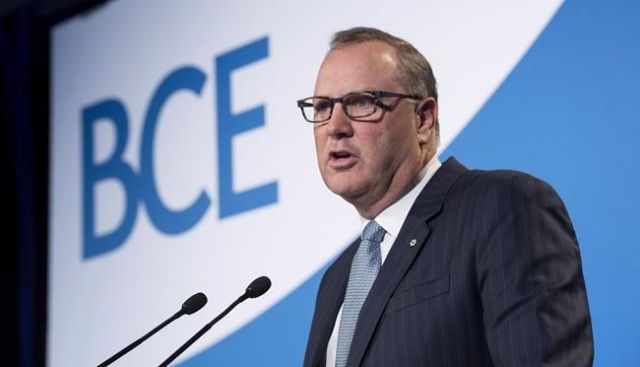
Telecommunications giant BCE Inc. says its second-quarter earnings increased by eight per cent from the same time last year, driven by strong subscriber growth including some of its best wireless customer acquisitions since 2001.

The owner of Bell Canada, CTV and numerous other businesses says its net income attributable to shareholders in the most recent quarter was $761 million, or 85 cents per share, up from $704 million in the same quarter of 2018.

Operating revenue was up 2.5 per cent to $5.93 billion from $5.8 billion in the year-ago period. Its adjusted earnings, which exclude one-time items, were up nine per cent to $847 million, or 94 cents per share.

Analysts expected adjusted earnings of 90 cents per share and $5.9 billion in revenue during the quarter, according to financial markets data firm Refinitiv.

The Montreal-based wireless, internet, cable and media company reports 185,667 total net customer additions in wirelesss, retail internet and IPTV segments, a growth of 25.5 per cent from the same quarter a year ago.

In its wireless segment, which operates under the Bell, Virgin and Lucky brands, BCE added 149,478 customers, up 30.6 per cent compared to the year-ago period, and the best performance for a second quarter since 2001.

The company added 102,980 postpaid and 46,498 prepaid wireless subscribers in the quarter, besting analysts expectations.

Bell’s media segment — which owns TSN and an indirect stake in the Toronto Raptors — also performed well. Revenue was up 6.4 per cent, as a record 7.9 million viewers tuned to Bell stations to watch the NBA team win its first-ever championship.

“We significantly increased net new subscribers to our wireless, retail Internet and IPTV services, achieved our fourth consecutive quarter of growth in business markets, and again led the Canadian media industry in audience expansion and programming innovation,” BCE president and chief executive officer George Cope said in a statement.

Analyst Aravinda Galappatthige of Canaccord Genuity said the addition of 103,000 postpaid customers was “a strong result considering recent softness in volumes across the market.”

He had estimated Bell would add 94,000 net postpaid subscribers during the quarter, a decline from last year due to generally slower subscriber growth and fewer additions from a major federal contract that Bell won in 2018.

RBC Capital Markets had a similar estimate of 95,000 net additions to its postpaid subscriber base, plus 26,000 net additions to its prepaid wireless services, prior to the announcement.

The Big Three telecom players have been competing hard for wireless customers in recent months on two new fronts: no overage fees for exceeding monthly data limits and financing plans for buying new devices.

Bell, and competitors Rogers Communications Inc. and Telus Inc. began selling no-overage fee wireless data plans for the first time in June, adopting a strategy that Freedom Mobile has used for more than a year.

Bell appears to be winning more competitors than its biggest rival Rogers, which last month said net additions to its postpaid wireless services were down sharply from the same period of 2018. The company added 77,000 postpaid subscribers, compared with 122,000 a year earlier, and below a consensus estimate of 89,000.

Most recently all three have introduced new financing options that allow customers to spread the cost of new devices over several years.

Bombardier invests in rail

Bombardier Inc. revised its profit forecast for 2019 as it announced hundreds of millions in spending to ramp up capacity at its train-making unit following earnings that fell below analysts’ expectations.

The news triggered a 15 per cent drop in the transportation giant’s share price to $1.93 in mid-morning trading on the Toronto Stock Exchange.

The Montreal-based company plans to spend an additional US$250 million to US$300 million this year to ensure on-time project delivery, upping investment in manufacturing and engineering at Bombardier Transportation, its biggest division.

“We are making the necessary investments to ensure we have the right resources and capacity to deliver stronger, sustainable financial performance in the years ahead,” chief executive Alain Bellemare said on a conference call with investors Thursday.

Bombardier continues to struggle with a handful of contracts in Switzerland, Germany and the United Kingdom, part of the US$33.6 billion backlog at its rail unit, which saw adjusted core earnings fall 37 per cent year over year to US$146 million last quarter.

The company bumped down its core adjusted earnings guidance for 2019 to between US$1.2 billion and US$1.3 billion, from US$1.5 billion and US$1.65 billion.

The announcement came as the company, which also makes aircraft, reported a US$36-million net loss and a US$47-million adjusted loss for the second quarter ended June 30.

The loss, reported in U.S. currency, amounted to four cents per diluted share before adjustments and compared with a year-earlier profit of $70 million or two cents per share.

Bombardier’s adjusted loss for this year’s second quarter was also equal to four cents per share, twice as much as the average analyst estimate, according to financial markets data firm Refinitiv.

Revenue was $4.31 billion, up one per cent compared with $4.26 billion in last year’s second quarter and above analyst estimates.

Analysts had estimated an adjusted loss of two cents per share and revenue of $4.09 billion, according to Refinitiv.

Last month, Bombardier announced it would lay off half of the 1,100 workers at its Thunder Bay, Ont., manufacturing plant.

Two of the plant’s major contracts — for the Toronto Transit Commission streetcars and Metrolinx GO Transit rail cars — are slated to wind down by the end of the year.

SNC slashes dividend

SNC-Lavalin Group Inc. delivered more harsh news to investors Thursday, cutting its quarterly dividend for shareholders by 80 per cent as the engineering giant grapples with a $2.12-billion net loss in its second quarter.

The dividend drop to two cents per share from 10 cents per share came after a third straight quarter of losses and amid a major strategic shift under the company’s new CEO, whose predecessor left in June following the controversial handling of a high-profile court case that has embroiled the Trudeau government.

SNC-Lavalin’s share price fell seven per cent to $19.51 in midday trading Thursday, its lowest level since January 2005.

On a conference call, interim chief executive Ian Edwards admitted “there is no question that SNC-Lavalin is experiencing some difficult challenges.”

“In recent quarters we have provided guidance on our financial results that we did not deliver. This is unacceptable. It’s unacceptable to me and it’s unacceptable for our stakeholders who place trust in the company to do what we say we will do,” he said.

Edwards last week announced the company is quitting the competitive field of fixed-price contracts — where general contractors eat any cost overruns — and pivoting toward a more stable business model that revolves around engineering services.

On Thursday he said the volatility and cost issues associated with so-called lump-sum turnkey projects were “the root cause of the company’s underperformance.”

Edwards also reiterated his aim of “exploring all options” for SNC’s resources segment, including selling its flagging oil and gas business — which shrank to 25 per cent of revenue last year from 44 per cent in 2016 — a “high” near-term priority.

SNC-Lavalin still has a $4.6-billion backlog on fixed-price resource and infrastructure contracts to wrap up. The two areas — which include oil and gas projects and mine construction in the Middle East as well as two rail projects in Canada — cost the company about $280 million in the latest quarter due to higher expenses.

SNC-Lavalin’s renewed focus on engineering and design is already bearing fruit. It won engineering, consultant and planning contracts in the United Arab Emirates and southern U.S. last month, which “show SNC continues to be successful in winning work outside of Canada,” analyst Frederic Bastien of Raymond James said in a research note.

Thursday’s dividend cut dents earnings at Quebec’s Caisse de depot, SNC’s largest investor whose nearly 20 per cent stake has dropped in value by nearly $875 million since the beginning of the year. The pension fund manager’s nearly 35 million shares will now bring in about $2.8 million less in dividends each quarter, an $11.2-million hit annually.

Last week the Caisse took the rare step of publicly rebuking the firm, saying its recent performance “requires decisive and timely action” by the board.

On top of a daunting shift in strategy, the company faces a trial after allegedly paying $48 million in bribes to officials under Moammar Gadhafi and defrauding Libyan organizations of some $130 million between 2001 and 2012.

SNC-Lavalin was at the centre of a drawn-out political controversy earlier this year following accusations by former attorney general Jody Wilson-Raybould that top government officials pressured her to overrule federal prosecutors in the Libya case and negotiate a deferred prosecution agreement, a kind of plea deal that would have seen the firm pay a fine rather than face prosecutors.

CMHC sees ‘moderate overvaluation’ in Canada’s housing market, but little vulnerability overall

Despite the preponderance of construction cranes in the downtown core, the CMHC says there’s little evidence of overbuilding in Toronto’s real estate market.

Quarterly report finds pockets of concern, but overall lower level of risk

After waving a red flag of warning about Canada’s housing market for more than two years, Canada’s national housing agency says the overall level of vulnerability has inched down from high to moderate over the past six months.

That’s one of the main takeaways of a quarterly report from the Canada Mortgage and Housing Corporation on Thursday, in which the housing agency looks at some of Canada’s biggest housing markets and assesses their risk level based on four factors:

  • Overheating: when the number of home sales significantly outpaces the number of new listings.
  • Price acceleration: when prices rise quickly, which can be a sign of speculative activity.
  • Overvaluation: when prices are higher than incomes, mortgage rates and local rents can justify.
  • Overbuilding: when there is a higher-than-normal vacancy rate for rentals, or a higher-than-normal amount of new buildings that have yet to sell.

The agency looks at these factors, tabulates them, and gives each market a colour-coded grade for how worried it is. Green means there’s little evidence of a problem, yellow means there’s some reason for concern, and red means there is a high risk.

Nationally, the CMHC gives the housing market a yellow. It’s the second quarter in a row for that rating, after assessments for the previous two and a half years found there to be a high level of concern overall. Across the country, the CMHC says there’s little evidence of widespread overheating, price acceleration, or overbuilding. But there’s enough overvaluation to warrant a yellow flag.

“Moderate evidence of overvaluation continues to be the only sign of vulnerability for Canada as a whole,” CMHC’s chief economist Bob Dugan said. “Imbalances between house prices and housing market fundamentals have narrowed with declining home prices in the resale market and a growing pool of potential first-time home buyers.”

While the national picture is looking OK, there are regional pockets of major worry in various places across the country.

The CMHC’s grading system found moderate reason for concern overall, with pockets of higher risk in some places. 

Regina was given a red warning flag for overbuilding, while Victoria, Hamilton and Toronto’s markets were also given a red overall because they all scored solid yellows in every category except that one. “However, conditions for these factors are showing signs of easing in all three centres,” the CMHC said.

Vancouver used to be on the red flag list, but came off it in the past quarter, mainly because prices have come down a little even as fundamentals have improved — in the CMHC’s estimation. While the city’s real estate is still moderately overvalued, there’s little evidence of the other three categories, which is why it was a yellow flag overall.

Moving east from B.C., Edmonton, Calgary, Saskatoon, Regina and Winnipeg all scored yellows overall, mainly because of overbuilding. Otherwise, it’s almost all green except for some modest overvaluation in Winnipeg.

Across central and eastern Canada, Ottawa, Montréal, Québec City, Moncton, Halifax and St. John’s were all deemed low risks overall, although Montréal and Moncton were singled out for overheating, while St John’s is showing signs of overbuilding.

Overall, the agency says the real estate market is looking a little better mainly because average prices are ticking down, even as incomes and population levels keep rising.

“Combined with declining home prices in the resale market, these dynamics contribute to maintaining the average estimate of overvaluation near zero,” the CMHC said.