
Archives for August 1, 2019

Stocks to Watch: Nielsen (NYSE:NLSN) Updates FY 2019 Earnings Guidance

Nielsen (NYSE:NLSN) updated its FY 2019 earnings guidance on Wednesday. The company provided earnings per share guidance of $1.70-1.80 for the period, compared to the Thomson Reuters consensus earnings per share estimate of $1.72. The company issued revenue guidance of $6.485-6.485 billion, compared to the consensus revenue estimate of $6.48 billion.

A number of research firms have recently weighed in on NLSN. ValuEngine downgraded shares of Zynerba Pharmaceuticals from a buy rating to a hold rating in a research note on Tuesday, May 28th. Zacks Investment Research downgraded shares of Horiba from a hold rating to a sell rating in a research note on Wednesday, May 22nd. One research analyst has rated the stock with a sell rating, six have assigned a hold rating and five have issued a buy rating to the company’s stock. Nielsen presently has an average rating of Hold and an average target price of $27.36.

Shares of Nielsen stock opened at $22.90 on Wednesday. The stock’s fifty day simple moving average is $23.08. The stock has a market cap of $8.37 billion, a PE ratio of 13.24, a PEG ratio of 1.24 and a beta of 0.91. Nielsen has a 1-year low of $21.51 and a 1-year high of $28.50. The company has a quick ratio of 1.07, a current ratio of 1.07 and a debt-to-equity ratio of 2.76.

Nielsen (NYSE:NLSN) last issued its quarterly earnings results on Tuesday, April 30th. The business services provider reported $0.35 earnings per share for the quarter, topping the Thomson Reuters’ consensus estimate of $0.27 by $0.08. The business had revenue of $1.56 billion for the quarter, compared to analysts’ expectations of $1.57 billion. Nielsen had a negative net margin of 11.46% and a positive return on equity of 15.52%. The company’s revenue was down 2.9% compared to the same quarter last year. During the same quarter last year, the company posted $0.40 EPS. On average, equities research analysts expect that Nielsen will post 1.58 EPS for the current fiscal year.

Nielsen Company Profile

Nielsen Holdings plc, together with its subsidiaries, operates as a measurement and data analytics company. It operates in two segments, Buy and Watch. The Buy segment provides retail transactional measurement data, consumer behavior information, and analytics primarily to businesses in the consumer packaged goods industry.

Stocks to Watch: Snap (NYSE:SNAP) Downgraded by Stifel Nicolaus

Snap (NYSE:SNAP) was downgraded by equities researchers at Stifel Nicolaus from a “buy” rating to a “hold” rating in a note issued to investors on Tuesday, July 23rd, Stock Target Advisor reports.

Several other research firms have also recently issued reports on SNAP. Barclays lowered their price objective on shares of Waters from $218.00 to $210.00 and set an “equal weight” rating for the company in a research report on Wednesday, April 24th. Rosenblatt Securities assumed coverage on shares of Twitter in a research report on Tuesday, July 23rd. They issued a “neutral” rating and a $38.00 price objective for the company. BTIG Research boosted their price objective on shares of Snap from $15.00 to $20.00 and gave the company a “buy” rating in a research report on Tuesday, June 18th. Credit Suisse Group raised shares of Laredo Petroleum from an “underperform” rating to a “neutral” rating and set a $2.83 price target for the company in a research report on Tuesday, July 9th. They noted that the move was a valuation call. Finally, Canaccord Genuity set a C$16.50 price target on shares of Detour Gold and gave the stock a “buy” rating in a research report on Wednesday, April 24th. Three analysts have rated the stock with a sell rating, twenty have assigned a hold rating and twelve have given a buy rating to the stock. Snap has an average rating of “Hold” and an average target price of $14.88.

SNAP traded up $0.22 on Tuesday, hitting $17.15. The company had a trading volume of 406,148 shares, compared to its average volume of 34,963,756. Snap has a 52-week low of $4.82 and a 52-week high of $18.36. The business has a fifty day simple moving average of $15.03. The firm has a market cap of $24.23 billion, a price-to-earnings ratio of -17.66 and a beta of 1.08. The company has a debt-to-equity ratio of 0.15, a current ratio of 4.53 and a quick ratio of 4.53.

Snap (NYSE:SNAP) last announced its earnings results on Tuesday, July 23rd. The company reported ($0.19) earnings per share for the quarter, beating the Zacks’ consensus estimate of ($0.21) by $0.02. The business had revenue of $388.02 million during the quarter, compared to the consensus estimate of $358.16 million. Snap had a negative net margin of 77.54% and a negative return on equity of 46.46%. The business’s revenue for the quarter was up 48.0% on a year-over-year basis. During the same quarter last year, the firm earned ($0.14) earnings per share. On average, analysts anticipate that Snap will post -0.71 earnings per share for the current year.

In other news, insider Jeremi Gorman sold 31,108 shares of the business’s stock in a transaction that occurred on Thursday, May 16th. The shares were sold at an average price of $11.33, for a total transaction of $352,453.64. Following the completion of the sale, the insider now owns 2,902,488 shares in the company, valued at approximately $32,885,189.04. The sale was disclosed in a legal filing with the Securities & Exchange Commission, which can be accessed through this link. Also, CEO Evan Spiegel sold 2,780,306 shares of the business’s stock in a transaction that occurred on Friday, July 26th. The stock was sold at an average price of $18.01, for a total transaction of $50,073,311.06. Following the sale, the chief executive officer now owns 69,958,498 shares of the company’s stock, valued at approximately $1,259,952,548.98. The disclosure for this sale can be found here. Over the last 90 days, insiders have sold 5,628,552 shares of company stock valued at $86,833,634.

Several institutional investors have recently made changes to their positions in SNAP. Sumitomo Mitsui Trust Holdings Inc. acquired a new position in shares of Snap in the 2nd quarter valued at $36,518,000. Miracle Mile Advisors LLC increased its holdings in shares of Snap by 1,687.3% in the 1st quarter. Miracle Mile Advisors LLC now owns 1,429,858 shares of the company’s stock valued at $15,757,000 after acquiring an additional 1,349,858 shares during the period. KCL Capital L.P. acquired a new position in shares of Snap in the 1st quarter valued at $12,122,000. Marshall Wace North America L.P. acquired a new position in Snap in the 1st quarter valued at $8,059,000. Finally, FMR LLC increased its stake in Snap by 2.8% in the 4th quarter. FMR LLC now owns 22,150,589 shares of the company’s stock valued at $122,050,000 after buying an additional 606,983 shares during the period. 25.87% of the stock is currently owned by institutional investors and hedge funds.

Snap Company Profile

Snap Inc operates as a camera company in the United States and internationally. The company offers Snapchat, a camera application that helps people to communicate through short videos and images. It also provides Camera, a tool to personalize and add context to Snaps; Friends Page that allows creating and watching stories, chatting with groups, making voice and video calls, and communicating through a range of contextual stickers and Bitmojis; and Discover that helps surfacing the stories and shows from publishers, creators, and the community, based on a user’s subscriptions and interests.

Canada’s GDP grows

The Canadian economy grew for a third consecutive month in May, rising 0.2 per cent overall as 13 of 20 sectors advanced, Statistics Canada reported Wednesday.

The growth in gross domestic product was above analyst estimates of 0.1 per cent growth and showed renewed strength in manufacturing, which rebounded from an April dip, as well as continued growth in construction.

Douglas Porter, chief economist at BMO Capital Markets, said May’s growth was slightly more positive than the month’s numbers indicate because Statistics Canada also revised April’s number to 0.33 per cent growth from 0.26 per cent.

“The above-expected GDP gain is all the more impressive since it overcame declines in each of wholesale, retail, utilities, and oil and gas output (oilsands production pulled back six per cent from April),” Porter wrote in a commentary.

He said the slight upward revision to April and the “sturdy” details in May put a “relatively healthier glow on the economy’s spring-time performance.”

TD senior economist Brian DePratto said the May report underscores the strength of a recovery from a weak start to 2019, but noted that manufacturing and real estate were “coming back to life after earlier setbacks.”

“That said, a recovery is a recovery, and with upward revisions to the April report, we upgrade our second quarter GDP growth tracking again, to 3.0 per cent annualized,” DePratto wrote.

Porter agreed that growth for the second quarter will be close to three per cent.

“That compares with (BMO’s) call of 2.5 per cent, and the (Bank of Canada’s) latest official estimate of 2.3 per cent for the quarter,” Porter wrote.

Statistics Canada’s GDP report said wholesale trade fell 1.4 per cent in May, after four months of growth, with all subsectors contracting except building material and supplies (up 0.4 per cent).

Retail trade contracted 0.4 in May, the first month-over-month decline since last summer, while the mining, quarrying and oil-gas extraction sector contracted 0.8 per cent after a 5.5 per cent increase in April.

Oil and gas extraction decreased 2.5 per cent in May, after two months of growth. Excluding oilsands, crude petroleum and natural gas extraction rose 1.1 per cent.

Mining, excluding oil and gas extraction, was up for a third consecutive month with a gain of 2.7 per cent.

Metal ore mining was up 2.6 per cent, non-metallic mining was up 2.1 per cent, led by an export-driven gain in potash (up 3.0 per cent). Coal mining was up 8.3 per cent on higher exports of metallurgical coal, Statistics Canada said.

Fully electric transit on way

BC Transit is charting a course to a fully electric fleet by 2040.

The Crown corporation announced Tuesday it will replace nearly 1,200 buses and add another 350 over the next decade in an effort to reduce emissions.

That course starts with the deployment of 10 battery-based heavy-duty electric buses in fiscal year 2020-21, which were purchased with federal and provincial government funds.

Two years later, the Crown corporation will only purchase electric heavy-duty buses for its fleet, followed by exclusively purchasing electric high-capacity buses, light-duty buses and medium-duty buses in subsequent years.

BC Transit says nearly 150 electric vehicles are already on order. Through to fiscal year 2028-29, the organization plans to gradually replace nearly 1,200 buses, an effort that will more than halve its greenhouse gas emissions in 10 years, and beat its 2040 provincial reduction target a decade early.

When coupled with efforts to convert vehicles to low carbon technologies – such as compressed natural gas – the measure will cut the organization’s 2018-19 emissions by more than 80%.

BC Transit says it is looking to add 34 medium-duty and 68 heavy-duty compressed natural gas buses to its existing fleet of 128, which currently operate in the regional district of Nanaimo and within the City of Kamloops.

“British Columbia’s largest and fastest-growing source of carbon pollution is the transportation sector,” said B.C. Minister of Transportation and Infrastructure Claire Trevena, in a news release.

The plan builds on a federal and provincial funding commitment of $79 million announced earlier this month. The funds will support the purchase of 118 new buses for Victoria and B.C.

As next steps, BC Transit will work with the Ministry of Transportation and Infrastructure on anticipated funding requirements for its low carbon program. It will also work with BC Hydro to determine the readiness of B.C. infrastructure to support electric fleets across B.C.

Farm trade wars hurting

Canada’s largest agriculture equipment dealer says it is scrapping its aggressive growth strategy in part because of farmer pessimism it blames on unsolved international trade disputes.

Rocky Mountain Dealerships Inc. cited the federal government’s inability to solve trade battles with China, India and Saudi Arabia as it reported second-quarter financial results that fell well short of analyst expectations.

It is reporting net earnings of $750,000, or four cents per share, on revenue of $195 million in the three months ended June 30, versus earnings of $6.06 million or 30 cents on revenue of $303 million in the same period of 2018.

Analysts had expected net earnings of $2.6 million, or 18 cents per share, on revenue of $269 million, according to financial markets data firm Refinitiv.

The Calgary-based company says it has decided to abandon a plan announced in May 2018 to increase annual revenues to at least $1.5 billion by 2023, due to a poor North American farm business climate and a lack of availability of attractive acquisition targets.

It says farm confidence has tumbled because of factors such as China’s ban on Canadian canola and pork, India’s increased tariffs on lentil imports and Saudi Arabia’s decision last year to stop buying Canadian wheat and barley.

“While some industry fundamentals remain solid, unfortunately, political and macroeconomic issues continue to create significant uncertainty for Canadian farmers and our business,” said CEO Garrett Ganden in a news release.

“The inability of the Canadian government to make meaningful progress toward improving international trade relations with several key partners only exacerbates this uncertainty.”

Bank of Canada unlikely to follow any Fed interest rate cut

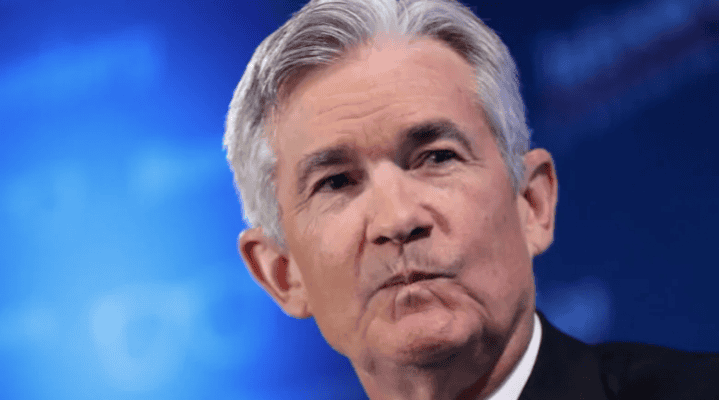
Federal Reserve Board chair Jerome Powell is expected to cut the Fed’s benchmark interest rate to prevent an economic slowdown.

U.S. central bank expected to drop interbank lending rate by 25 basis points

The U.S. Federal Reserve is widely expected to cut its interest rate Wednesday for the first time in over a decade — a big step, though one unlikely to pull Canada’s central bank out of its holding pattern any time soon.

The Bank of Canada sent signals earlier this month that the Canadian economy is very much on its own path and, at least in the short term, has no reason to follow any move by the Fed to lower rates.

One thing appears certain — Bank of Canada governor Stephen Poloz and his team will dissect the Fed’s explanation behind the decision.

“What’s going to matter most to markets, to economists, to global central banks is not what the Fed does on Wednesday — but why the Fed moves,” said Frances Donald, managing director and chief economist for Manulife Investment Management.

When Canadians look south of the border, Donald said, they should care deeply about whether the Fed is cutting rates to deal with weak inflationary pressures or because it predicts the economy is heading into a recession.

“The reason for that is because if the U.S. economy suffers a recession, so too will Canada — with an approximate six- to 12-month lag,” Donald said.

“So, governor Poloz will be watching very carefully.”

Earlier this month, Fed Chairman Jerome Powell signalled a U.S. rate cut was likely due to slowing global growth and trade wars. He’s set to announce the Fed’s monetary policy at a news conference at 2:30 p.m. ET.

The benchmark lending rate is currently set to a range between 2.25 per cent and 2.50 per cent, and it could be brought down to a target range of 2 per cent to 2.25 per cent.

A rate reduction by the Fed would be the first since the Great Recession of 2008. It would come at a time when the U.S. economy is still in decent shape — unemployment numbers are as low as they’ve been in decades and American consumer confidence has looked strong.

The U.S. is facing external challenges related to the global economy and trade conflicts. At home, inflation has been running below target and central banks can drop interest rates as a way to lift consumer prices.

Craig Alexander, chief economist for Deloitte, said the expected rate cut should be viewed as “taking out insurance on the economic expansion” and not a sign Powell sees a larger downturn on the way.

The two central banks didn’t move in lockstep with rates going up, so they don’t need to move in lockstep with rates coming down​

– Economist Craig Alexander

“I don’t think the economic indicators, at this point, are flashing that a recession is upon us,” Alexander said.

He doesn’t see any urgency for the Bank of Canada to follow the Fed’s lead.

“The two central banks didn’t move in lockstep with rates going up, so they don’t need to move in lockstep with rates coming down,” Alexander said.

“One could argue that the Fed went farther faster and now it’s going reverse some of that, so there isn’t the pressure on the Bank of Canada to respond.”

The Bank of Canada should also be careful about “expending ammunition” that could be used later to deal with a downturn, he said.

Alexander added that a rate cut by the Fed could bring benefits to trade-dependent Canada by bolstering U.S. and foreign demand. It could also put additional upward pressure on the Canadian dollar.

Bank of Canada rate at 1.75%

Earlier this month, the Bank of Canada kept its interest rate at 1.75 per cent for a sixth-straight policy meeting. Canadian economic growth has shown signs of re-emerging after it nearly stalled in late 2018 and early 2019.

The bank, however, showed no urgency at the July meeting to make a policy change even though the Fed had already signalled its intention to lower the U.S. rate.

Carolyn Wilkins, the Bank of Canada’s senior deputy governor, explained at the time that the U.S. and Canada were at different points in the economic cycle.

“The fact that Canada is picking up while the U.S. economy is slowing sounds like a divergence. In fact, it’s a process of convergence,” said Wilkins, noting Canada’s interest rate was already lower than the Fed’s.

“The United States is slowing to a more sustainable pace, while Canada is moving back up to its trend growth… By the second half of this year, growth should be similar in both economies as they converge on their respective potential level of activity.”