
Archives for July 31, 2019

5 Reasons to Get a Part-Time Job

Many people take part-time jobs because they struggle to find full-time work and believe they have no choice. But in plenty of cases, candidates actually want part-time work, as opposed to a full-time job. In fact, jobs website FlexJobs reports that more people today are interested in part-time work than in freelance work. If you’ve previously shied away from a part-time job, here are a few good reasons to consider one.

1. You’re not sure what you want to do with your career

Maybe you recently graduated college and aren’t sure which field is suitable for you. Or maybe you’ve already spent some time in the workforce, but haven’t pinpointed your ideal role. Working part time is a great way get exposure to different industries, especially if you can manage a couple of part-time jobs at the same time. And once you figure out what you’re meant to do, you can try making that part-time job permanent.

2. You don’t want to overcommit your time

Maybe you’re a parent whose children go to school for a limited number of hours each day. Or maybe you have other loved ones who rely on you for care. Working part time is a great way to generate a little income in the face of ongoing obligations. And doing so won’t just give you a modest paycheck. FlexJobs reports that working even just a few hours a week can have positive emotional-health benefits.

3. You’re still in school

Whether you’re in college or are pursuing a graduate degree, you can’t afford to take a job that’ll detract from your studies. Enter the part-time role. Even if you manage to swing only a few hours each week, it’ll give you some extra money for essential bills and leisure alike. And you might pick up some skills that help you academically.

4. You’re nearing retirement, or are already there

Many older workers hang on to their jobs because they’re not quite ready emotionally or financially to call it quits. But if working 40 hours or more per week is something you feel you can no longer manage, then it pays to consider part-time work. Not only will it allow you to keep earning money, but it could also make for a smoother transition into retirement. Along these lines, it pays to work part time if you’re already retired. The extra money is good, but more so than that, having a job to go to could help you avoid getting bored.

5. You want to position yourself for a full-time role

Maybe you don’t have the skills needed to get the full-time job you want. Or maybe you’ve never really held a job before, and are scared to go from that extreme to a full 40 hours or more of weekly employment. In either event, having a part-time job for a bit can help better prepare you to work full time, especially if you’re able to gradually increase your hours.

There are plenty of good reasons to work part time, and plenty of companies hiring for part-time positions. So dust off your resume, because the sooner you land that gig, the sooner you get to reap the benefits.

Workers Remain in High Demand; Wages Inch Up

Job openings rose by 4.6% in July while median base pay increased by 1.9% compared to the same period in 2018, according to Glassdoor’s monthly market report. That marks a bounce back in openings from earlier in the year. In March, openings had slowed to only 0.1%. Overall job postings on Glassdoor sit at 5.85 million, a number near historic highs.

“The job market sends mixed signals as it cools amid the longest economic expansion on record in the United States,” said Glassdoor Senior Economist Daniel Zhao in a press release. “Pay gains remain sluggish, but wages still rose 1.9% annually in July. Overall, the good times are not over just yet for workers.”

Medical careers saw some major increases in wages.

Pay rising slowly

Having a lot of unfilled jobs can lead to companies paying more to lure in workers. That’s happening but not to any great extent. Median pay rose 1.9% in July, which is similar to what has happened in each of the past three months. That’s not a terrible number, but it’s below the 2.6% average the U.S. saw in the second half of 2018.

“Stubbornly low pay growth gives breathing room for the Federal Reserve to cut rates without worrying about inflation,” wrote Zhao in the report. “But it is concerning that the tight labor market and high demand for talent are still not translating into faster pay growth for American workers.”

Some jobs, of course, have seen wages rise faster than others. Manufacturing jobs have seen rising wages due to a shortage of experienced workers, even as trade troubles have put tension on that sector. In addition, many lower-wage jobs have seen increases, helped by 21 states and Washington D.C. raising their minimum wage in the past year.

Top 10 Job Titles with Fastest Pay Growth

Job TitleMedian Base PayYoY %
Pharmacy Technician$31,7246.4%
Machine Operator$40,7045.4%
Warehouse Associate$44,1124.4%
Security Officer$36,1244.1%
Field Engineer$72,9744.1%
Sales Representative$49,5243.7%
Customer Service Representative$38,2433.7%
Truck Driver$55,1953.6%
Production Manager$69,5783.5%
Physical Therapist$76,3753.5%

What does this mean for you?

As a worker, you may think it makes sense to go after a job in a field where wages are rising quickly. In reality, many high-paying jobs are actually in fields where growth has been slow.

Top 10 Job Titles with Slowest Pay Growth

Job TitleMedian Base PayYoY %
Business Development Manager$68,987-3.3%
Maintenance Worker$41,228-3.1%
Attorney$97,422-1.7%
Human Resources Manager$69,636-1%
Pharmacist$126,442-0.7%
Financial Advisor$54,5170%
Solutions Architect$106,9130.2%
Customer Service Manager$54,6780.3%
Professor$87,3410.3%
Programmer Analyst$70,2110.5%

Aside from maintenance worker, every position on the list above pays above July’s median annual pay rate of $53,062. As a worker picking a profession it’s important to look at the average salary for that position along with expected demand.

It’s better to make $87,341 as a professor than making less than half of that as a pharmacy technician even if that position continues to see wage increases. Of course, wages aren’t everything. It’s also important when picking a career (or changing professions) to look at where the jobs are. A truck driver in Texas may have a higher standard of living than a tech worker living in San Francisco.

Read This Before Borrowing From Your 401(k)

Sometimes, we run into situations where we’re desperate for money. Maybe your car broke down out of the blue. Maybe you lost your job, and don’t have emergency savings in the bank to tide yourself over until a new one comes along. If you’re sitting on a sizable 401(k) plan, you may be tempted to borrow money from your own retirement fund rather than take on outside debt or continue to struggle. But that’s a risky move that could hurt you in the long run.

How 401(k) loans work

The money in your 401(k) plan can’t be withdrawn prior to age 59-1/2. If you remove funds before reaching that age, you’ll be hit with a 10% early withdrawal penalty on the distribution you take.

A 401(k) loan works differently. When you take out a 401(k) loan, it’s not considered an early withdrawal because you’re only borrowing that money temporarily.

You can typically borrow up to $50,000 from your 401(k), or 50% of your vested savings balance — whichever is less. Some plans, however, have slightly different borrowing rules. Once you take out a 401(k) loan, you’ll be required to repay that principal amount plus interest. Now when you take out a bank loan, you repay interest to a bank. With a 401(k) loan, you pay that interest to yourself. And that may not seem like such a bad thing.

Here’s the problem, though: You’re usually required to pay back a 401(k) loan within five years. That may be doable if you borrow a modest amount, but if you borrow $50,000, it gets a lot harder. And if you don’t manage to repay your 401(k) loan on time, it will be treated as an early distribution, which means you’ll face the dreaded 10% penalty discussed earlier.

Another thing — if you separate from the employer sponsoring your 401(k), you’ll generally have just 90 days to repay your 401(k) loan. If you don’t, you’ll face that 10% penalty.

Also, keep in mind that many 401(k) plans won’t allow you to make additional contributions until your loan is paid off in full. Now if you’re so desperate for cash that you had to borrow from your 401(k), new contributions on your part may not be possible anyway. But if your employer offers a match for funding that account, and you’re barred from making contributions for several years, you could easily wind up leaving free money on the table.

When you need to borrow money

Before you take out a 401(k) loan, it pays to explore different borrowing options. If your credit is strong, you might snag a competitive rate on a personal loan, and if that’s the case, you may be better off going that route and leaving your 401(k) alone.

Similarly, if you have enough equity in your home, you could try borrowing against it. Home equity loans don’t have to be used for home-related projects or repairs; they can actually be used for any purpose. And they’re fairly easy to qualify for, since your home is used as collateral. In fact, you might score a more favorable rate on a home equity loan than on a personal loan, depending on your circumstances.

Of course, there’s also the option to borrow money in the form of credit card debt, but that’s really not ideal, as you’ll likely spend a fortune on interest. If that’s your only option, then you may be better off taking out a 401(k) loan rather than racking up a hefty credit card balance.

Let’s be clear: You’re better off borrowing from your 401(k) than taking an early withdrawal from it. And in some cases, a 401(k) loan may be your most affordable move when you need to borrow money. Just be aware of the drawbacks of borrowing against your retirement savings, and if you do take out a 401(k) loan, make sure you understand what its repayment terms entail.

5 Mind-Blowing Statistics About the Richest 1%

The richest 1% know the secrets to building wealth, and nothing makes that more evident than the statistics about how they stack up to the 99% that most of us belong to. Though we may never join them, many of us can’t help but be curious about how these wealthy folks live. Here are five surprising statistics about the richest 1% along with some tips on how to increase your own net worth.

1. It takes an annual income of $421,926 to join the 1% in the U.S.

When we think of the 1%, we often think of people raking in seven figures a year, but it only takes the comparatively modest figure of $421,926 to join the 1% in the U.S., according to data from the Economic Policy Institute (EPI).That’s an average of about $35,161 per month or about $1,156 per day.

Being in the 1% of your state may cost more or less than this, though. Connecticut residents will need to earn a whopping $700,800 per year to join this elite group while Mississippi residents can join the 1% with a mere $254,362 in annual income.

2. The richest 1% earn 26.3 times more than the bottom 99%.

The average one-percenter can expect to earn almost $1,317,000 per year, according to the EPI study. By contrast, the average 99-percenter brings home just $50,107 per year. That puts the average 1% income about 26.3 times higher than the average income for the rest of the country.

This ratio also varies by state. New York has the largest income inequality gap with the top 1% taking home 44.4 times what the bottom 99% earn in that state. Alaska has the lowest income inequality gap. Its 1% only earns 12.3 times what its bottom 99% earn.

3. The top 1% holds 42.5% of the national wealth.

The wealthiest 1% of U.S. residents — about 3.29 million people — hold 42.5% of our national wealth, while the remaining 325.7 million people share the remaining 57.5%, according to Inequality.org.

No other country in the world has so much wealth concentrated in the hands of the few. In the Netherlands, which had the next-largest income inequality gap according to the Inequality.org survey, the 1% only holds 28% of the country’s wealth.

4. The 1% earn 20% of the nation’s income each year, but pay 37% of the taxes.

While the 1% may hold over 40% of the nation’s wealth, they only earn about 19.7% of all income in the U.S. each year. But they pay 37.2% of all the nation’s taxes, according to 2016 data from the Internal Revenue Service. Many argue they should pay even more taxes, but few realize how much they’re already paying.

5. You might be among the richest 1% in the world.

Few of us will ever join the richest 1% in the nation, but we may already be among the richest 1% in the world without even knowing it. It only takes an annual income of $32,400 to join the world’s richest 1%, according to Global Rich List. It would take workers in poor nations like Zimbabwe 31 years to earn this amount. Something to think about next time you’re envious of those who have more money than you.

You may never join the 1%, but you can still grow your wealth

You don’t need to join the 1% to feel wealthy or to improve your living situation. Even an extra $100 or $200 per month can make a difference in your life, and it could bump up your annual salary by a few thousand dollars too.

There are more opportunities than ever to grow your wealth. You could go the traditional route and work overtime or pursue promotions at your existing job, or you could try something new by starting a side business. This might be driving for a ridesharing service, walking dogs, or selling handmade items online.

Investing is one of the best ways to grow your wealth, and it doesn’t have to require a lot of work or research. With the rise of robo-advisors, you don’t have to know much about investing to get started. You could also consult with a financial advisor who can offer individualized recommendations based on your goals and timeline. Just make sure you choose a fee-only advisor, not a fee-based advisor. Fee-based advisors can earn commissions for recommending certain investments that may or may not suit you.

Money is always going to be a part of our lives and we’ll probably always be somewhat envious of the 1% who don’t have to worry about it. But with diligence and planning, we too can grow our wealth and begin to live a more luxurious life.

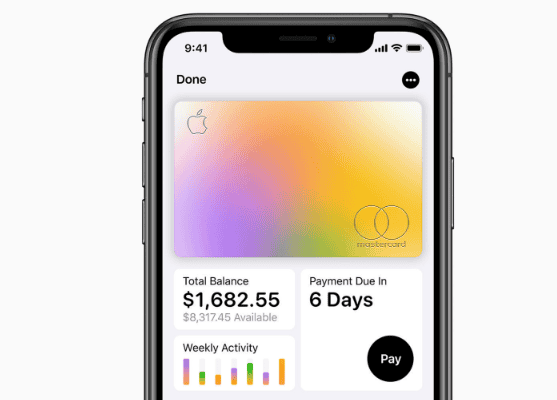
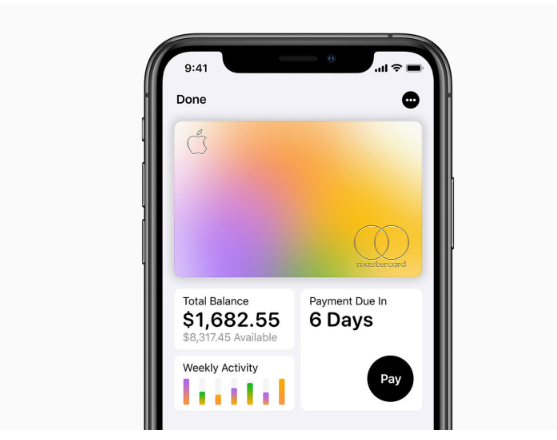
Apple Card rolls out in the US this August

It’s all about that titanium credit card, isn’t it?

The rumors of an imminent Apple Card launch were on the mark. As part of Apple’s latest earnings call, CEO Tim Cook confirmed that the iPhone-centric credit card will be available in the US sometime in August. He didn’t provide a specific date or other launch details, although Apple has already explained a fair amount about it — you sign up for the card from an iPhone, and can use it either through Apple Pay or through a flashy titanium card that will be mailed to you for free within a few days.

Goldman Sachs, the company powering the card, has previously talked about expanding to other countries following the US debut.

The hooks, apart from the tight iPhone integration, are the lack of late fees combined with a cashback program that offers extra rewards for Apple purchases and daily cash deposits you can use far more quickly. While it doesn’t always compare favorably to other cards (you can get higher general cashback rates in a few cases), Apple is betting that the ease of use and flexibility will win people over.

Google’s Android Auto update makes launching and using apps safer

Navigation info is now everywhere.

Until recently, infotainment systems were sort-of-useful at best or plagued with horrendous interfaces at their worst. The introduction of Android Auto and CarPlay got automakers to finally start thinking about how people use touchscreen devices. Google and Apple took what they knew about touchscreens, voice assistants and media, creating easy-to-use interfaces.

Automakers wised up and now most have systems that no longer try the patience of drivers while delivering useful information. With that in mind, Google has updated Android Auto (rolling out now) to compete with the latest from carmakers. This latest update is great, UI-wise, but more importantly, it makes sure that Google’s greatest asset to the car — Google Maps — is front and center.

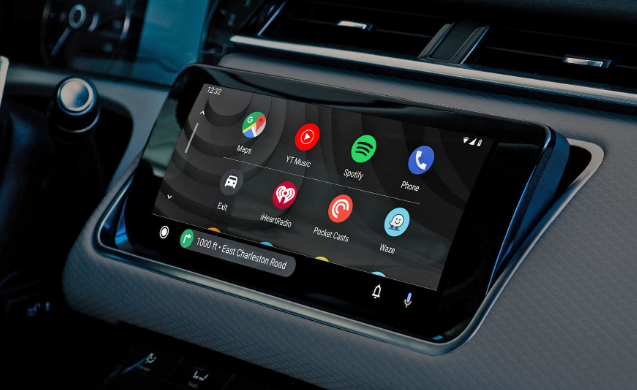
Now wherever you are in Android Auto and following a route, the information is shown along the lower portion of a car’s display — no more launching Spotify and wondering if you’re about to miss a turn while choosing a playlist.

I found the route information sitting at the bottom of the screen easy to read and incredibly helpful while driving around the Bay Area. A quick tap on the bottom of the display brought me back to Google Maps which also has an updated, easier-to-read font.

Having one of the most used features (navigation) available at all times is a safer solution than having drivers tapping to switch between features.

I also found adding additional destinations along my route to be easier too, thanks to Google Assistant which is available via the “Hey Google” wake word or tapping the tiny microphone icon.

Google Assistant also handles the launching of apps found in the new app launcher screen. The weird, notification-style layout of the home screen is gone. Instead, Android Auto’s home screen now resembles a tablet with all your apps in one place.

If you have a lot of Android Auto compatible apps I can see where this screen could get crowded. It’s not exactly ideal, but if you use the Google Assistant to launch and control apps as I did, you should be fine.

Google isn’t alone updating its in-car system. Apple’s CarPlay is getting its own update when iOS 13 officially lands on iPhones in the fall of this year. Like Android Auto, it’s forgoing the single-feature-on-a-screen UI and serving up information from more than one feature.

Behind the wheel, safety should be first and foremost. Touchscreens — while nice — can sometimes be a distraction. Without the ability to build up muscle memory or have something tangible to touch, drivers can be pulled from the act of driving to looking for the correct app or feature to press. The latest version of Android Auto reduces that issue by making sure that navigation is always there and nearly everything else is a voice command away.