Archives for July 28, 2019

Stocks to Watch: Nemaska Lithium (TSE:NMX) Shares Down 3%

Nemaska Lithium Inc (TSE:NMX) shares were down 3% during mid-day trading on Thursday . The stock traded as low as C$0.32 and last traded at C$0.32, approximately 162,640 shares traded hands during mid-day trading. A decline of 93% from the average daily volume of 2,348,038 shares. The stock had previously closed at C$0.33.

Several equities analysts recently issued reports on NMX shares. BMO Capital Markets set a C$50.00 price objective on Parkland Fuel and gave the company an “outperform” rating in a research report on Tuesday, May 28th. National Bank Financial boosted their price objective on TRANSAT AT from C$8.50 to C$13.00 and gave the company a “sector perform” rating in a research report on Friday, May 17th. Finally, Cormark decreased their price objective on Nemaska Lithium from C$0.55 to C$0.40 in a research report on Monday, July 22nd.

The company has a current ratio of 3.09, a quick ratio of 3.04 and a debt-to-equity ratio of 98.93. The stock has a 50-day moving average of C$0.27. The stock has a market capitalization of $258.51 million and a PE ratio of -6.51.

Nemaska Lithium (TSE:NMX) last released its quarterly earnings results on Wednesday, May 15th. The company reported C($0.01) earnings per share for the quarter. Equities analysts predict that Nemaska Lithium Inc will post -0.04 earnings per share for the current year.

Nemaska Lithium Company Profile (TSE:NMX)

Nemaska Lithium Inc operates as a developing chemical company in Canada. The company focuses on integrating activities from spodumene mining to the commercialization of lithium hydroxide and lithium carbonate. It owns 100% interests in the Whabouchi property that consists of 33 claims covering an area of 1,716 hectares located in the Eeyou Istchee/James Bay area of Quebec province.


Fresh wave of foreign buyers

Since the foreign buyer tax was first introduced in Metro Vancouver in 2016, and then extended in 2018, the percentage of overseas buyers has plummeted, according to B.C. government figures.

And, since further market-cooling measures have been introduced, at both federal and provincial levels, there has been a decline in the benchmark detached home price of about 11 per cent.

So measures to cool the market have arguably “worked” – if slowing sales and reducing home prices was the goal. But has it now presented an opportunity for a fresh wave of overseas buyers to come in? Perhaps, if those buyers are really motivated. And the recent political unrest in Hong Kong could well be enough to create that momentum.

It seems that potential property buyers from Hong Kong – are showing considerable interest in Canadian property. With widespread protests over the erosion of its autonomy by the Chinese government, and the resulting global trade tensions, it’s not surprising that Hong Kong residents are considering the safest harbours in which to extract and park their money.

According to a recent Bloomberg article, Metro Vancouver real estate agents are seeing a significant uptick in interest from Hong Kong buyers, with more Hong Kong than Chinese people at open houses. That’s quite the reversal from a few years ago.

The foreign buyer tax of 20 per cent is unlikely to be a major deterrent to a motivated overseas buyer. The 11 per cent price decline for a typical detached house – which is likely to be a steeper decrease for higher-priced luxury homes – takes care of much of that tax burden.

What’s more, the Hong Kong dollar is stronger against the Canadian dollar than it was a year ago, despite the political unrest. A $3 million home in Vancouver today would cost a Hong Kong buyer just under 18 million Hong Kong dollars, compared with 19.5 million a year ago. That’s a discount of 7.6 per cent. Not to mention the fact that the same $3 million home might have cost $3.8 million a year ago, which at currency rates of the time would be 24.5 million Hong Kong dollars. So the reduction to 18 million HK dollars is actually a 26 per cent discount – more than outweighing the foreign buyer tax.

Military arrives in Northern Manitoba to help search for homicide suspects

The military’s air support for the RMCP has landed in Gillam, Man., to help police with the massive hunt for the two B.C. homicide suspects.

RCMP is canvassing door-to-door, suspects may have changed their appearance

The Canadian military has landed in Gillam, Man., with an aircraft to help join the search for two young homicide suspects in Northern Manitoba.

“Just another big shock to this community. To have the RCMP presence is one thing but military that’s stepping it up another level,” said Gillam Mayor Dwayne Forman.

The Department of National Defence confirmed that a Royal Canadian Air Force CC-130H Hercules aircraft from 435 Transport and Rescue Squadron in Winnipeg will assist with an aerial search.

The statement said an RCMP officer will be on board the aircraft to direct the search and said this remains an RCMP-led effort, with the Royal Canadian Air Force in a support role. The RCMP will determine the area for the air search.

RCMP officers have started going door-to-door at every home and building in the Gillam area. They’re doing the same on the Fox Lake Cree Nation. Police are hoping this will help drum up new leads to help with the investigation.

Police are also searching large abandoned buildings like the Keewatinohk Converter Station Camp near Gillam, which has over 600 rooms.

Intense search
Police started scouring the woods around Gillam, Man., and Fox Lake Cree Nation for Kam McLeod, 19, and Bryer Schmegelsky, 18, after a burnt-out vehicle driven by the pair was found near Fox Lake Monday.

The Gillam area is an isolated region of bog and bush with one access road.

Police have said Schmegelsky and McLeod may have changed their appearance to try to evade the intense search that includes officers from several jurisdictions searching on foot, with dogs and using drones.

The Port Alberni, B.C., men are suspects in the shooting deaths of a tourist couple in northern B.C. last week, and have been charged with second-degree murder of Leonard Dyck, a botany lecturer at the University of British Columbia..

The Assembly of Manitoba Chiefs said Saturday that it has requested help from the Bear Clan Patrol, a neighbourhood watch group based in Winnipeg.

A statement from the assembly said the group is co-ordinating teams to fly to First Nations communities including Fox Lake Cree Nation, York Factory First Nation, and War Lake First Nation.

“The patrol groups will provide a sense of security to our First Nations communities that are now facing a great deal of uncertainty. As we roll out this strategy, we ask that all community members continue to co-operate with the RCMP. If anyone spots these two young men, please contact the RCMP right away — do not put yourself at risk. Keep your doors locked and your kids close,” Acting Grand Chief of the Assembly of Manitoba Chiefs Sheldon Kent said in the statement.

‘Being there for communities’
This is the first time in its history that the Bear Clan Patrol has travelled to remote First Nations to act as “ambassadors” in a hunt for fugitives. The patrol group, which was created to keep the peace and assist residents in inner-city communities in Winnipeg, has expanded its reach to the northern portion of the province to back up Manitoba Mounties as they begin canvassing the homes of Gillam residents.

“We’re not quite sure what it’s going to be like,” said James Favel, executive director of Bear Clan Patrol. “We’re going to go up there, and we’re going to provide ambassador services … be present in the community,” Favel said.

“It’s just about being there for the communities. That’s our main focus.”

Mounties said on Saturday there have been no new sightings of the suspects and no information to indicate the men have fled the area, though RCMP remain open to the possibility.

‘Mixed emotions’
Many residents remain on high alert for the two men. “I’m still keeping an eye as I’m driving around, I’m still looking in the bush line thinking in areas they could be hiding,” Mayor Forman said.

But not everyone is convinced they’re still around Gillam.

“I think it’s still a very mixed emotions between different people … I still feel that it’s a high possibility that they’re in the area,” Forman said.

On Friday, the RCMP said someone may have inadvertently helped the men leave the area, but stressed there have been no confirmed sightings of the two since they were seen in the Gillam area on Monday. Police have said there have been no reports of local stolen vehicles since then.

The public across the country has been urged to keep a careful watch out for the pair.

Confederation LRT has reached ‘substantial completion,’ city says

The City of Ottawa and the independent certifier have agreed that Rideau Transit Group (RTG) has reached ‘substantial completion’ in Confederation Line LRT construction and testing.

12-day simulation do-or-die time for delayed Confederation Line

The City of Ottawa says it agrees the Confederation Line is substantially finished, a milestone that triggers a period of intensive testing and a pay out of almost $60 million.

Rideau Transit Group (RTG) filed its notice of “substantial completion” on Monday for review by the city and an independent certifier. On Saturday afternoon, Mayor Jim Watson tweeted that they agreed with the consortium’s assessment.

The testing will start on Monday.

The decision had originally been expected for Friday.

Watson’s office said the mayor was not available for an interview Saturday.

Milestone met
A memo from city staff said the city and the independent certifier agree that the substantial completion milestone has been met.

That triggers a pay out from the city to RTG of $59.4 million.

The memo said the construction and testing for the Confederation Line are complete and the system should effectively be ready for public use.

The team conducting the trial run will consist of representatives from RTG, RTG’s maintenance wing (RTM) and the city. The independent certifier will also take part in the testing stage.

Trains will be running more or less as they would when they’re in service during this period. However, people shouldn’t expect to see the trains constantly running, according to the city, because many systems will be tested.

May require start-over
If there is a major problem, the 12-day trial period must start again.That means while it’s feasible the trial could be completed as early as about Aug. 7, that will only happen if it all goes flawlessly. The trial run could take significantly longer, threatening to derail Mayor Jim Watson’s promise that the handover will take place by Aug. 16.

The city and OC Transpo will do another four weeks of preparation, meaning the earliest the first passengers get on the new LRT is mid-September.

Transportation Safety Board deploys investigative team to site of deadly floatplane crash

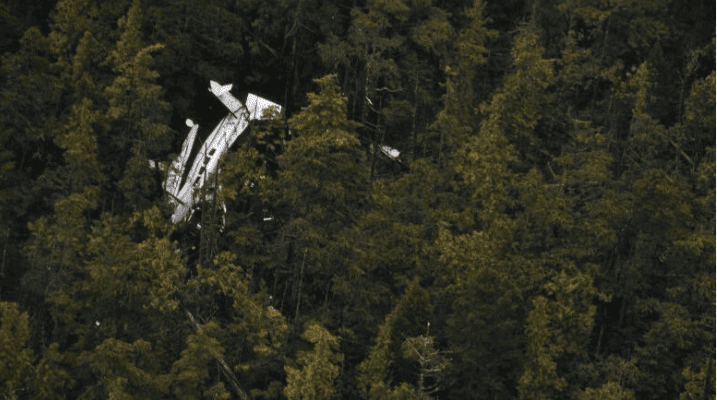
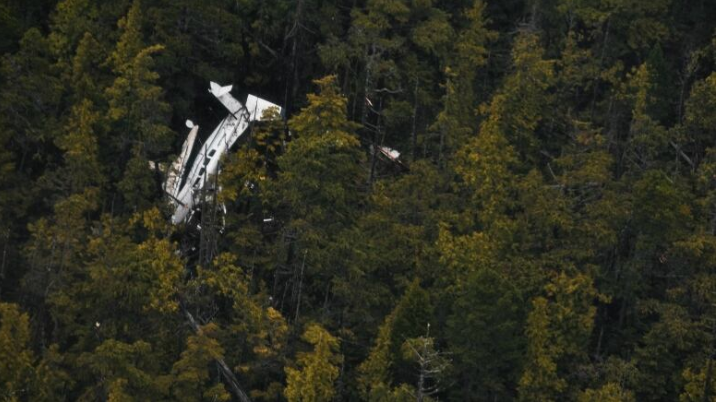
A photo of the crash site on Addenbroke Island, B.C., taken from a CC-115 Buffalo on the afternoon of Friday, July 26

4 dead, 5 others in hospital after crash north of Vancouver Island on Friday

The Transportation Safety Board of Canada (TSB) has deployed a team of investigators to the site of a seaplane crash that killed four people and injured five north of Vancouver Island on Friday.

The Cessna 208, a charter plane operated by Seaair Seaplanes, crashed just after 11 a.m. PT on Addenbroke Island, about 100 kilometres north of Port Hardy, B.C.

Two of the survivors are in critical condition and were airlifted to Vancouver, while three others are in serious but stable condition, according to B.C. Emergency Health Services. 

The flight left Vancouver and was en route to Calvert Island, a largely uninhabited island which is roughly the size of Saltspring Island, and marks the start of B.C.’s inside passage.

Eric Peterson is president of the Tula Foundation and the Hakai Institute, which conducts research on B.C.’s coast. He said his institute, and a summer fishing lodge — the Hakai Land and Sea Fishing Club — are the two primary destinations on the island.

Peterson said that no one from the Hakai Institute was involved in the crash.

The plane was not destined for the lodge, a representative for the company said. 

“We’re devastated by the fact there was a crash,” said Peterson, adding that there are generally three flights per week to the remote island, known for its “rugged and quite dramatic” landscape.

“We’re regularly in and out. We know Seaair very well — we know the management, we know the pilots, we know all the people and we have huge respect for their professionalism and their safety record,” he said.

The Hakai Institute monitors weather conditions through stations dotted across the island, some which are quite close to the site of the crash.

Data sent to CBC by Peterson shows that around the time of the crash, 6.35 centimetres of rain fell within one hour in the area.

“It is the rain coast — but this was harder rain than anyone had seen, so it was very intense rain,” said Peterson.

Lt. Chelsea Dubeau with the Joint Rescue Co-ordination Centre in Victoria said on Friday that the weather and remote location made the rescue challenging.

Randy Hanna, the president of Pacific Seaplanes, which also operates chartered flights to the central B.C. coast, said the area is marked by “low, coastal terrain influenced heavily by marine air.”

“The weather is tricky — you have to have your wits about you and stay informed. Most modern aircraft is equipped with extensive global positioning systems and flight tracking equipment and software and that’s how we communicate to and from our main bases in remote areas like this,” he said.

Hanna described the people who fly small aircrafts in B.C.’s remote areas as “some of the highest skilled pilots in the world.”

RCMP said on Saturday that while the investigation is in its early stages, no foul play is suspected.