Archives for July 6, 2019

Stocks to Watch: Dream Global Real Estate Investment Trust (TSX:DRG.UN) Up +2.19%

Dream Global Real Estate Investment Trust (TSX:DRG.UN) stock finished trading at +2.19%, bringing the stock price to $14.00 on the Toronto Stock Exchange. The stock price saw a low of $13.81 and a high of $14.01.

The company’s stock was traded 1,106 times with a total of 286,653 shares traded.

Dream Global Real Estate Investment Trust has a market cap of $2.71 billion, with 193.74 million shares in issue.

Dream Global Real Estate Investment Trust is a real estate investment trust primarily engaged in the acquisition, ownership, and operation of properties in Europe. The company’s portfolio is mainly composed of office and mixed-use spaces. Dream Global REIT’s German office properties represent the majority of its holdings in terms of total square footage. The firm derives nearly all of its revenue in the form of rental income. The urban German markets of Hamburg, Dusseldorf, Berlin, and Cologne generate the majority of the company’s total revenue. Dream Global REIT’s largest tenants include German postal service providers, international law firms, city governments, technology companies, and financial services firms.

Stocks to Watch: Nestlé S.A. (SWX:NESN) Valuation in Focus

Nestlé S.A. (SWX:NESN) has an ERP5 rank of 6340. The ERP5 Rank is an investment tool that analysts use to discover undervalued companies. The ERP5 looks at the Price to Book ratio, Earnings Yield, ROIC and 5 year average ROIC. The lower the ERP5 rank, the more undervalued a company is thought to be.

With the stock market still reaching new heights, investors may be wondering how long the good times will keep rolling. It may be tempting to sell some winners to lock in profits at these levels. Of course, nobody can predict how long the market run will continue, but having a plan in place for the possibility of a downturn might be well worth it. Investors may want to regularly check the balance of the portfolio. There might be a few names in the portfolio that have recently taken off to the upside. This may disturb the equilibrium of the portfolio. Investors may need to be prepared to shuffle some profits into other sectors in order to stay in balance. Being able to ride out unexpected spikes or dips may involve keeping a regular watch on economic data and the overall stability of global markets. Investors who are able to avoid panic selling may be able to more efficiently analyze the data necessary to make informed decisions. Having a cool and collected approach may end up being one of the most important traits that the average investor could develop. Finding the proper methods to stay patient when the markets are in a frenzy might just help the investor ride out extended periods of flux and uncertainty.

The Q.i. Value of Nestlé S.A. (SWX:NESN) is 37.00000. The Q.i. Value is another helpful tool in determining if a company is undervalued or not. The Q.i. Value is calculated using the following ratios: EBITDA Yield, Earnings Yield, FCF Yield, and Liquidity. The lower the Q.i. value, the more undervalued the company is thought to be.

The EBITDA Yield is a great way to determine a company’s profitability. This number is calculated by dividing a company’s earnings before interest, taxes, depreciation and amortization by the company’s enterprise value. Enterprise Value is calculated by taking the market capitalization plus debt, minority interest and preferred shares, minus total cash and cash equivalents. The EBITDA Yield for Nestlé S.A. (SWX:NESN) is 0.052362.

The Earnings to Price yield of Nestlé S.A. (SWX:NESN) is 0.034224. This is calculated by taking the earnings per share and dividing it by the last closing share price. This is one of the most popular methods investors use to evaluate a company’s financial performance. Earnings Yield is calculated by taking the operating income or earnings before interest and taxes (EBIT) and dividing it by the Enterprise Value of the company. The Earnings Yield for Nestlé S.A. (SWX:NESN) is 0.040738. Earnings Yield helps investors measure the return on investment for a given company. Similarly, the Earnings Yield Five Year Average is the five year average operating income or EBIT divided by the current enterprise value. The Earnings Yield Five Year average for Nestlé S.A. is 0.042314.

The FCF Yield 5yr Average is calculated by taking the five year average free cash flow of a company, and dividing it by the current enterprise value. Enterprise Value is calculated by taking the market capitalization plus debt, minority interest and preferred shares, minus total cash and cash equivalents. The average FCF of a company is determined by looking at the cash generated by operations of the company. The Free Cash Flow Yield 5 Year Average of Nestlé S.A. (SWX:NESN) is 0.031047.

Price Index

We can now take a quick look at some historical stock price index data. Nestlé S.A. (SWX:NESN) presently has a 10 month price index of 1.31835. The price index is calculated by dividing the current share price by the share price ten months ago. A ratio over one indicates an increase in share price over the period. A ratio lower than one shows that the price has decreased over that time period. Looking at some alternate time periods, the 12 month price index is 1.33000, the 24 month is 1.30687, and the 36 month is 1.45484. Narrowing in a bit closer, the 5 month price index is 1.20522, the 3 month is 1.10103, and the 1 month is currently 1.02192.

Returns

Looking at some ROIC (Return on Invested Capital) numbers, Nestlé S.A. (SWX:NESN)’s ROIC is 0.301077. The ROIC 5 year average is 0.312389 and the ROIC Quality ratio is 17.453391. ROIC is a profitability ratio that measures the return that an investment generates for those providing capital. ROIC helps show how efficient a firm is at turning capital into profits.

Nestlé S.A. (SWX:NESN) has a Price to Book ratio of 5.162559. This ratio is calculated by dividing the current share price by the book value per share. Investors may use Price to Book to display how the market portrays the value of a stock. Checking in on some other ratios, the company has a Price to Cash Flow ratio of 19.232361, and a current Price to Earnings ratio of 29.219526. The P/E ratio is one of the most common ratios used for figuring out whether a company is overvalued or undervalued.

Nestlé S.A. (SWX:NESN) presently has a current ratio of 0.95. The current ratio, also known as the working capital ratio, is a liquidity ratio that displays the proportion of current assets of a business relative to the current liabilities. The ratio is simply calculated by dividing current liabilities by current assets. The ratio may be used to provide an idea of the ability of a certain company to pay back its liabilities with assets. Typically, the higher the current ratio the better, as the company may be more capable of paying back its obligations.

The Price to book ratio is the current share price of a company divided by the book value per share. The Price to Book ratio for Nestlé S.A. SWX:NESN is 5.162559. A lower price to book ratio indicates that the stock might be undervalued. Similarly, Price to cash flow ratio is another helpful ratio in determining a company’s value. The Price to Cash Flow for Nestlé S.A. (SWX:NESN) is 19.232361. This ratio is calculated by dividing the market value of a company by cash from operating activities. Additionally, the price to earnings ratio is another popular way for analysts and investors to determine a company’s profitability. The price to earnings ratio for Nestlé S.A. (SWX:NESN) is 29.219526. This ratio is found by taking the current share price and dividing by earnings per share.

Dealing with the ups and down of the stock market is something that most investors will encounter at some point. Everyone wants to feel that thrill of seeing that big winner soar, and nobody wants to see that loser keep sinking. Figuring out how to best approach the stock market can take up a lot of time and energy. There are many strategies that investors can use when purchasing stocks for the portfolio. Some of these strategies may be riskier than others. Determining a comfortable level of risk appetite may be highly important for the individual investor. It is important to remember that there are no guarantees in the stock market. New investors may have to learn that there is rarely any substitute for hard work and tireless research. Many investors jump in head first and find this out the hard way. Realizing that there is no guaranteed strategy for stock picking might help the investor stay focused and grounded while building up the portfolio.

Eneas Creek in rough shape

The District of Summerland may be getting some help from the provincial government in repairs needed to Eneas Creek after two years of flooding.

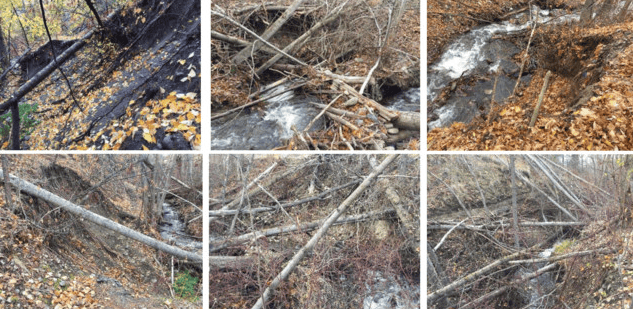
Back-to-back years of flooding in 2017, 2018 for the creek running from Garnet Lake, directly through the community to Okanagan Lake near Peach Orchard Beach has left the waterway in rough shape.

The municipality has identified six projects on the creek eligible for provincial disaster relief worth a combined $577,300, according to a report going before council next week.

The reconstruction of Centennial Trail, which was partially scoured out in the flooding and removal of danger trees in the area will cost an estimated $192,000. Lock blocks need to be removed and creek banks reinforced in Peach Orchard Campground.

Erosion must be repaired along Peach Orchard Road, deposited material needs to be removed from the Okanagan Lake outlet and creek capacity will be improved near Garnet Ave.

If the district receives the maximum provincial funding local taxpayers will still be on the hook for $115,460.

About $45,000 worth of design and environmental work is needed before the application can be submitted, so council will vote Monday whether to pull that money from the capital reserve and revise this year’s budget.

The funds for the actual repairs will come out of the 2020 budget.

Numerous other repairs recommended for the creek earlier this year, including several to be carried out by private landowners, will need to be tackled further down the road. The total bill for the needed repairs and flood mitigation work is estimated to be $2.5 million.

Be safe on the water

Vernon RCMP are patrolling the streets in cars, on bikes and by foot, but they are not limited to the land.

They will also be on the water again this summer.

The RCMP Marine Unit will continue the voluntary vessel safety pre-check using RCMP volunteers at Paddlewheel Park boat launch.

“This initiative will help speed up our checks on the water,” said Cst. Baldoff, one of the RCMP members patrolling the lakes around Vernon.

Trained RCMP volunteers will assist the marine unit by allowing boaters to complete a pre-launch inspection of the items required under the Canada Shipping Act, 2001 along with its regulations governing pleasure craft.

The check is entirely voluntary and those who do so will received documentation that their craft has already been inspected if they are stopped on the lake by RCMP.

“This is a preventative measure that not only assists the RCMP, but gives the vessel operator the opportunity to correct any deficiencies prior to getting on the water,” said Regan Borisenko, Crime Prevention Co-ordinator.

“There are significant fines under the Canada Shipping Act that will surprise you when issued a ticket on the water.”

Failure to have the required pleasure craft licence on board is a $250 fine.

Operating a vessel with safety equipment not in good working order or not readily accessible and available for immediate use not having enough approved life jackets on board is $200.

“Some boating offences can result in fines to both the operator of the boat and to the person who allowed the operation of the boat. An example of this would be allowing someone under the age of 16 to operate your PWC,” said Borisenko.

Volunteers will also be checking for zebra and quagga mussels at Paddlewheel Park boat launch.

Boat suspected of having the invasive mussels could be quarantined.

California hit by 6.9 quake

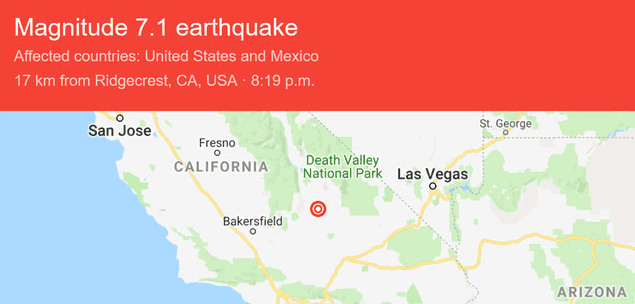
A magnitude 6.9 earthquake jolted Southern California and was felt as far away as Mexico Friday night, but no major damage was reported.

The quake, which initially was reported as magnitude 7.1, would be the largest temblor in the region in 20 years and was centred in the same area as a 6.4 quake that hit a day earlier.

The shaker at 8:19 p.m. was centred 11 miles from Ridgecrest, a Mojave Desert town 150 miles (240 kilometres) away from Los Angeles that saw building damage, fires and several injuries from the earlier quake.

Officials in San Bernardino County reported homes shifting, foundation cracking and retaining walls coming down. One person suffered minor injuries and was being treated by firefighters, they said.

Lucy Jones, a seismologist with the California Institute of Technology’s seismology lab, tweeted that the quake was part of the sequence that produced the earlier quake.

The new jolt was felt in downtown Los Angeles as a rolling motion that seemed to last at least a half-minute. Reports said the quake rocked chandeliers and rattled furniture as far away as Las Vegas, and the U.S. Geological Survey said it was felt in Mexico as well.

Brian Humphrey of the Los Angeles Fire Department told KNX-AM radio says more than 1,000 firefighters were mobilized, but there were no immediate reports of damage or injuries.

The press box at Dodger Stadium lurched for several seconds, and fans in the upper deck appeared to be moving toward the exit. Enrique Hernandez of the Dodgers was at-bat in the bottom of the fourth when the quake occurred. He stepped out of the batter’s box, but it wasn’t clear if that was because of the quake.

An NBA Summer League game in Las Vegas was stopped after the quake. Speakers over the court at the Thomas & Mack Center continued swaying more than 10 minutes after the quake.

The quake came as communities in the Mojave Desert tallied damage and made emergency repairs to cracked roads and broken pipes from the earlier quake.

Hours earlier, seismologists had said that quake had been followed by more than 1,700 aftershocks and that they might continue for years. However, that quake would now be considered a foreshock to the Friday night temblor.

Andrew Lippman, who lives in suburban South Pasadena, was sitting outside and reading the paper when Friday’s quake hit.

“It just started getting stronger and stronger, and I looked into my house and the lamp started to sway. I could see power lines swaying,” he said. “This one seemed 45 (seconds)… I’m still straightening pictures.”

Damage from Thursday’s quake appeared limited to desert areas, although the quake was felt widely. The largest aftershock — magnitude 5.4 — was also felt in Los Angeles before dawn Friday.

At an afternoon news conference, a seismologist had said the odds of a quake of magnitude 6.0 or larger happening in the next few days was only 6 per cent and dwindling.

Earlier Friday, Ridgecrest Regional Hospital remained closed as state inspectors assessed it, spokeswoman Jayde Glenn said. The hospital’s own review found no structural damage, but there were cracks in walls, broken water pipes and water damage.

The hospital was prepared to help women in labour and to give triage care to emergency patients. Fifteen patients were evacuated to other hospitals after the quake, Glenn said.

The quake did not appear to have caused major damage to roads and bridges in the area, but it did open three cracks across a short stretch of State Route 178 near the tiny town of Trona, said California Department of Transportation district spokeswoman Christine Knadler.

Those cracks were temporarily sealed, but engineers were investigating whether the two-lane highway was damaged beneath the cracks, Knadler said. Bridges in the area were also being checked.

The Ridgecrest library was closed as volunteers and staff picked up hundreds of books that fell off shelves. The building’s cinderblock walls also had some cracks, said Charissa Wagner, library branch supervisor.

Wagner was at her home in the small city of 29,000 people when a small foreshock hit, followed by the large one, putting her and her 11-year-old daughter on edge.

“The little one was like, ‘Oh what just happened.’ The big one came later and that was scarier,” she said.

The earthquake knocked over a boulder that sat atop one of the rock spires at Trona Pinnacles outside of Ridgecrest, a collection of towering rock formations that has been featured in commercials and films, said Martha Maciel, a Bureau of Land Management spokeswoman in California.

Meanwhile, the nation’s second-largest city revealed plans to lower slightly the threshold for public alerts from its earthquake early warning app. But officials said the change was in the works before the quake, which gave scientists at the California Institute of Technology’s seismology lab 48 seconds of warning but did not trigger a public notification.

“Our goal is to alert people who might experience potentially damaging shaking, not just feel the shaking,” said Robert de Groot, a spokesman for the U.S. Geological Survey’s ShakeAlert system, which is being developed for California, Oregon and Washington.

The West Coast ShakeAlert system has provided non-public earthquake notifications on a daily basis to many test users, including emergency agencies, industries, transportation systems and schools.

Late last year, the city of Los Angeles released a mobile app intended to provide ShakeAlert warnings for users within Los Angeles County.

The trigger threshold for LA’s app required a magnitude 5 or greater and an estimate of level 4 on the separate Modified Mercali Intensity scale, the level at which there is potentially damaging shaking.

Although Thursday’s quake was well above magnitude 5, the expected shaking for the Los Angeles area was level 3, de Groot said.

A revision of the magnitude threshold down to 4.5 was already underway, but the shaking intensity level would remain at 4. The rationale is to avoid numerous ShakeAlerts for small earthquakes that do not affect people.

“If people get saturated with these messages, it’s going to make people not care as much,” he said.

Construction of a network of seismic-monitoring stations for the West Coast is just over half complete, with most coverage in Southern California, San Francisco Bay Area and the Seattle-Tacoma area. Eventually, the system will send out alerts over the same system used for Amber Alerts to defined areas that are expected to be affected by a quake, de Groot said.

California is partnering with the federal government to build the statewide earthquake warning system, with the goal of turning it on by June 2021. The state has already spent at least $25 million building it, including installing hundreds of seismic stations throughout the state.

This year, Democratic Gov. Gavin Newsom said the state needed $16.3 million to finish the project, which included money for stations to monitor seismic activity, plus nearly $7 million for “outreach and education.” The state Legislature approved the funding last month, and Newsom signed it into law.

Edmonton loses 600 jobs, Calgary sees major gains as oil sector begins to awaken

Between May and June, Edmonton lost 600 jobs, according to the latest labour force figures from Statistics Canada. And in Alberta, we’re also starting to see a shift. What’s happening in Calgary is seen as a foreshadow to what we can expect here.

City of Edmonton chief economist John Rose said the two cities always trend differently, because Edmonton is a public sector town, while Calgary relies on the oil patch.

“There’s a tendency for Edmonton to kind of cruise along, steady as she goes, whereas Calgary goes up and down and up and down on a much more cyclical basis depending on what’s going on in the energy sector.”

Edmonton lost 600 jobs, while Calgary gained 7,500, mainly in the energy sector.

With things picking up in Calgary, Rose said that will eventually echo in Edmonton.

“What we’re beginning to see is a slow steady recovery in things like manufacturing, professional services, logistics and transportation as activity begins to return to the energy sector,” he said.

The good trend in Edmonton is those who do have jobs are seeing improvements.

“We’ve seen a steady, very robust growth in full-time employment,” Rose said. “Employers are continuing to shift workers from part-time to full-time positions. That’s a good thing. But we did see a very modest loss in jobs, about 600 jobs.”

He also sees steady growth from here on in to the end of the year, however more people will enter the market looking for work, meaning those numbers will balance off.

“I anticipate as we go through the second half of 2019 you’ll see an improvement in employment in Edmonton, net new job gains going forward, but unfortunately that seven per cent unemployment rate is probably going to be stuck there because there’s a lot of people entering the labour force.”

According to the city, gains in trade, health care, and information, culture and recreation were more than offset by reduction in accommodation and food services, educational services and financial services.