
Archives for July 5, 2019

Vernonites describe quake

A Vernon family vacationing in Las Vegas must have thought they were in the Elvis suite at their hotel Thursday morning.

Shayla Carson, her sister Thi and her mom Nisay were sleeping on the 12th floor of their hotel when they were “all shook up.”

“We got woken up by… I thought somebody was shaking our bed,” Carson said.

“We woke up, and we were looking around, and we realized the entire hotel room was waving. It wasn’t rumbling, it was wavering. It was kind of scary.

The 6.4-magnitude quake struck at 10:33 a.m. in the Mojave Desert, about 240 kms northeast of Los Angeles, near the town of Ridgecrest, California. It is the strongest quake to hit the region in 20 years. The United State Geological Survey initially said it measured at a 6.6 magnitude.

Quake rattles So-Cal

Carson said the shaking felt like it lasted 20 or 30 seconds.

“We noticed that the clothes hangers in the closet were rattling and shaking pretty vigorously,” she added.

“My mom went out into the hallway and noticed there was a lot of other people in the hallway and the manager was coming through saying that an earthquake did, in fact, happen and the elevators would be shut down.”

Carson said it was pretty crazy to be woken up like that.

“We thought maybe people were partying so hard for the fourth of July that it was shaking our room,” she said.

There was no visible damage to the hotel, although Carson said some ceiling tiles likely became dislodged on the main floor in the main casino room.

“We did notice some guys on ladders in the big casino part of the hotel,” Carson said. “There looked to be some stuff hanging down from the ceiling and it looked like they were trying to fix that.”

This trip was Nisay’s first time travelling in 30 years, and Shayla said it will be a memorable trip.
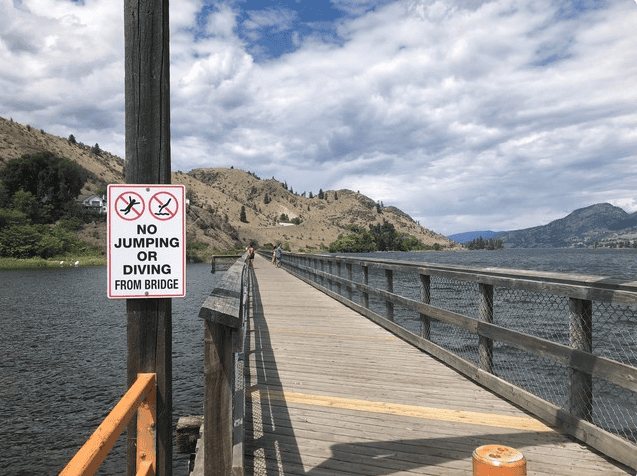
Trestle jumping returning

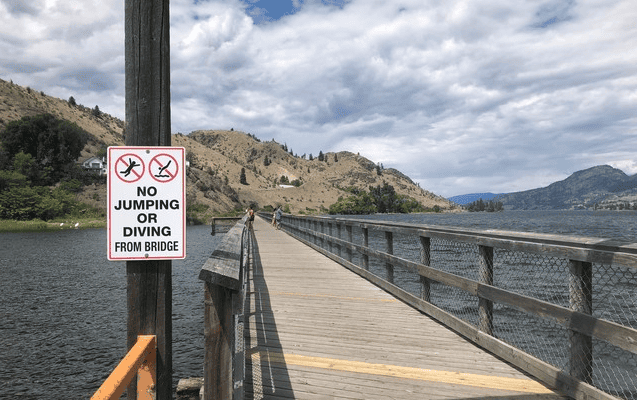
The future of a popular jumping and diving spot off the KVR Bridge in Okanagan Falls was the subject of heated debate at Thursday’s Regional District of Okanagan Similkameen meeting, resulting in the board going against staff wishes to close off the spot, and instead allowing jumping to continue at citizens’ own risk.

The trestle bridge jumping platform was originally installed by members of the community and has been in operation for decades. Public outcry was swift when it was suddenly closed off by the RDOS in recent weeks.

Okanagan Falls/Area D regional director Ron Obirek stood up with an impassioned speech against an RDOS staff recommendation that the platform be permanently sealed off for liability and safety reasons.

“People were jumping in a very safe place for 50 or more years. It’s a long standing habit, with no incidents of harm,” Obirek said. “There was no community consultation, no respect or value given to the community input, knowledge, experience, expertise. Instead we have reports from a lawyer in Vancouver.”

Obirek argued that in the days since the closure, conditions have actually gotten less safe. He passed out large printed photos to his fellow directors of people climbing over the guard railings to jump and lining up blocking accessible pathways elsewhere on the KVR to find a spot to leap into Skaha Lake.

“[People] are not happy, and I get to hear it,” he said, brandishing a thick pile of printed-off emails from his constituents, adding that a lot of the messages “are not polite.”

The bottom line, he said, is that blocking off the jumping point won’t stop the popular behaviour.

“The suggestion that we should make it less safe when we know people are going to jump, and that this somehow will make us less liable, is ridiculous,” Obirek said. “I’m a lawyer, I will tell you, if somebody goes over that railing and gets injured, I would argue this board is more liable for their mismanagement of this risk, not less.”

He indicated re-opening the trestle for recreation with upgraded ladders and a self-closing gate would be his preferred path, and found support from some members of the board, but pushback from others. Penticton director Jake Kimberly said he had “concerns” of people getting injured or drowning.

“These risks really scare me, when you’re looking at it, and with all due respect to the emails that have been received, those people are not aware of those risks, as such,” Kimberly said. “As much as they want to say ‘We love the recreation aspect of it,’ yeah, great, but are you aware of the risks that the Regional District’s going through?”

Board chair Karla Kozakevich confirmed that any potential penalties from injury lawsuits would be shared by the entire Regional District, not just Area D, which gave director Sue McKortoff of Osoyoos pause.

“If we are all going to be liable if something happens, then I can’t support allowing that to happen,” she said.

Obirek let his own concerns with the proceedings be known.

“My frustration is I may be the only person here who’s been there and looked at it,” he said.

Director Julius Bloomfield of Penticton sided with Obirek, saying “some people want to have fun.”

“Where does this stop? If somebody’s walking along the KVR Trail and trips over and breaks an arm, are we going to close down the KVR Trail?” he asked rhetorically. “Accidents do happen and that’s why we have insurance.”

After over an hour of debate, the group decided to ignore staff’s recommendation to remove the gate, jumping platform and ladder. They instead crafted a motion to “re-open the trestle for public recreation,” and put in a proper gate and upgrade the ladder from the water as well as adding signage indicating use is “at your own risk.”

“We’re not advertising it for jumping, we’re going to warn people about the risk, we’re just opening it back up,” Kozakevich said.

The motion passed with only directors Spencer Coyne and Bob Coyne of Princeton and McKortoff opposing.

City staff said the trestle would be re-opened “as soon as possible” following the passing of the motion, but they need to converse with the provincial government first as the trestle bridge is owned by the province and used by the RDOS under specific conditions of it being a fully rail-lined trail.

Wildfire forces evacuation

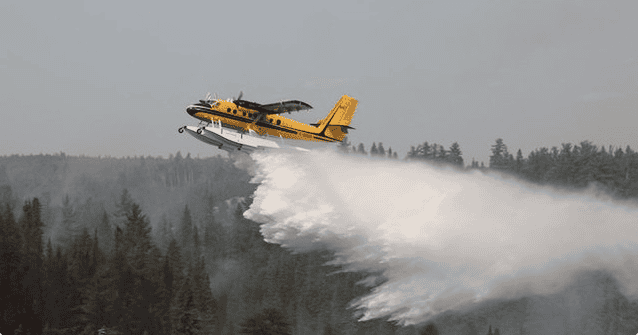
A raging forest fire in northwestern Ontario has prompted the full evacuation of the First Nation community of Keewaywin, authorities said on Thursday.

More than 200 residents considered vulnerable had already been flown this week to Sioux Lookout, Ont., as the fire moved closer, while roughly 200 more were being sent to another city Thursday.

Joe Meekis, a former long-time chief of Keewaywin — which has about 450 residents — called the situation scary.

“The community is threatened,” Meekis said in an interview from Sioux Lookout. “Everybody has to get out.”

Known as Red Lake Fire Number 23, the blaze which is now about 546 square kilometres began as a small fire a week ago about 40 kilometres from the community. Earlier this week, the winds picked up and it “grew really fast,” Meekis said.

Smoke began drifting into the community, prompting residents to close windows and doors, and shut down air conditioners.

Ultimately, the chief declared an emergency and the initial transfer of babies, pregnant women, and children under five and their families began. On Tuesday and Wednesday, a total of 227 people were flown about 330 kilometres south to Sioux Lookout, which has declared its own state of emergency aimed at defraying the cost of helping the arrivals.

Volunteers in the town were helping provide access to snacks, supplies and information, as well as responding to requests from the evacuees, a spokesman said.

“All evacuees are being housed at a local hotel, and a local restaurant is providing all of the meals,” said Brian MacKinnon, the town’s manager of corporate services. “(However), Sioux Lookout is presently at capacity with respect to the number of evacuees we can host.”

As a result, the more than 200 remaining evacuees were being flown to Timmins, Ont., on Thursday, leaving just a skeleton crew in the community for security purposes, Meekis said.

“They’re moving people today, as we speak,” Meekis said.

By noon Thursday, the fire was 10 kilometres southwest of the Keewaywin boundary, which is 12 kilometres from the town itself, according to the provincial Ministry of Natural Resources.

Jonathan Scott, an information officer with Aviation, Forest Fire and Emergency Services, said an incident management team was on site looking for “aerial ignition opportunities” in which fires are deliberately set to take the blaze to natural barriers and slow its spread. Crews and equipment were also in the area.

Who’s paying oilsands foes?

The Alberta government is holding a public inquiry into funding of environmental campaigns it says have prevented the province’s resources from getting to new customers.

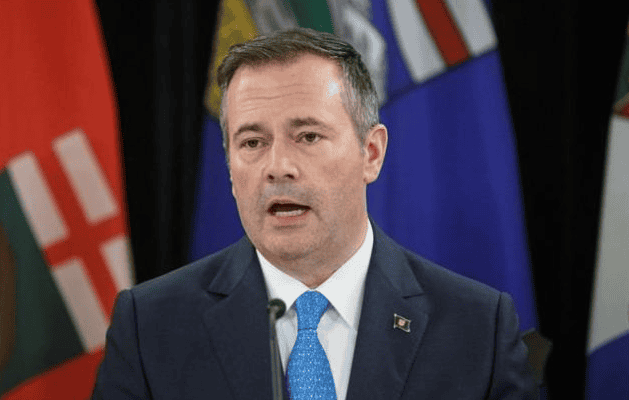
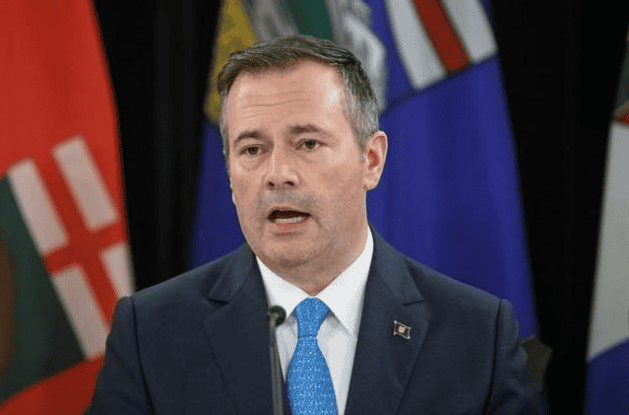
Premier Jason Kenney says forensic accountant Steve Allan has been named to lead the inquiry, which has a budget of $2.5 million.

Allan is to submit his final report to the government in a year.

He is to interview witnesses, do research, and hold a public hearing if deemed necessary.

Kenney says environmental groups funded by deep-pocketed U.S. charities have been deliberately trying to landlock Alberta resources for years.

He blames those groups for the demise of several coast-bound pipelines that would have helped oilsands crude get to markets besides the United States.