
Archives for July 3, 2019

Amazon Alexa keeps your data with no expiration date, and shares it too

A US senator asked questions, and Amazon provided answers you might not want to hear.

If you have hangups about Amazon and privacy on its smart assistant, Alexa, you’re not alone. Even after Amazon sent answers to a US senator who had questions about how the tech giant retains voice data and transcripts, the lawmaker remains concerned about Alexa’s privacy practices.

Sen. Chris Coons, a Democrat from Delaware, sent a letter to Amazon CEO Jeff Bezos in May, demanding answers on Alexa and how long it kept voice recordings and transcripts, as well as what the data gets used for. The letter came after CNET’s report that Amazon kept transcripts of interactions with Alexa, even after people deleted the voice recordings.

The deadline for answers was June 30, and Amazon’s vice president of public policy, Brian Huseman, sent a response on June 28. In the letter, Huseman tells Coons that Amazon keeps transcripts and voice recordings indefinitely, and only removes them if they’re manually deleted by users.

Huseman also noted that Amazon had an “ongoing effort to ensure those transcripts do not remain in any of Alexa’s other storage systems.” But there are still records from some conversations with Alexa that Amazon won’t delete, even if people remove the audio, the letter revealed.

Privacy concerns aren’t just limited to voice assistants, not with smart technology finding its way into more household items like doorbells and locks. And tech companies aren’t always up front about what kind of data they collect or how much control you have over it.

“The American people deserve to understand how their personal data is being used by tech companies, and I will continue to work with both consumers and companies to identify how to best protect Americans’ personal information,” Coons said in a statement.

When reached for comment, Amazon referred to the letter for details.

In the letter to Coons, Amazon noted that for Alexa requests that involve a transaction, like ordering a pizza or hailing a rideshare, Amazon and the skill’s developers can keep a record of that transaction. That means that there’s a record of nearly every purchase you make on Amazon’s Alexa, which can be considered personal information.

Other requests, including setting reminders and alarms, would also remain saved, Huseman noted, saying that this was a feature customers wanted.

“Customers would not want or expect deletion of the voice recording to delete the underlying data or prevent Alexa from performing the requested task,” Huseman said in his letter.

That feature raised concerns among privacy advocacy groups, which discovered that Alexa’s “Remember” feature didn’t delete information stored unless people called Amazon’s customer service to delete the entire profile. Amazon said it’s since fixed the issue and called it a bug.

The answers didn’t exactly inspire confidence in Amazon for Coons.

“Amazon’s response leaves open the possibility that transcripts of user voice interactions with Alexa are not deleted from all of Amazon’s servers, even after a user has deleted a recording of his or her voice,” the lawmaker said in a statement. “What’s more, the extent to which this data is shared with third parties, and how those third parties use and control that information, is still unclear.”

Amazon said it uses the transcripts for training its voice assistant, and also so customers can know what Alexa thought it heard for voice commands. Those transcripts aren’t anonymized — Amazon explained that they’re associated with every user’s account.


About one in three Americans think they have 5G

A recent survey finds that millions of people are potentially confused about their phones and the cell service they have.

It’s not just Uncle Larry who’s confused. Potentially millions of people don’t appear to understand whether their smartphone is capable of running on 5G wireless technology, or whether they’re even surfing with it now or not.

Decluttr, a phone refurbishment service, surveyed 2,000 US smartphone owners in late May and found that about a third of respondents believed they had a device capable of 5G wireless connections. Of them, 40% were Apple iPhone owners (Apple hasn’t yet released a 5G iPhone), and 31% owned a Samsung device (Samsung’s Galaxy S10 5G phone only went on sale a couple months ago, for $1,300). Moreover, 62% of those who thought they had a 5G-capable device say they’ve noticed improved mobile service.

The data is the latest sign of confusion over the next-generation wireless technology, which has only become available in some large cities like New York, Chicago, London, Sydney and Seoul. CNET’s own tests in 13 cities found the technology is living up to some of its hype, with speeds better than many people’s wired home internet connections. But coverage is spotty and inconsistent for now.

“Blazing speeds, a responsive network, and extensive coverage make up 5G’s Holy Grail,” wrote CNET’s Jessica Dolcourt. “And while carriers want to act fast to build out their networks, the customer should move slower. You may not have much of a choice if 5G isn’t live in your area.”

And for those who don’t, there appears to be a bit of confusion. Some of that is sown by the carriers themselves. AT&T, for example, has begun marketing “5G E” service, a rebranding and upgrade of its existing 4G LTE service, promising faster speeds. Some tests found AT&T’s 5G E was slower than competing 4G service. And in April, AT&T settled a false advertising suit with its competitor Sprint, which accused AT&T of “numerous deceptive tactics to mislead consumers” about 5G.

All that confusion appears to have taken a toll on the consumers that Decluttr surveyed, who may be overestimating the technology in their devices. Among those the firm surveyed, 46% of all customers on AT&T, 40% of those on T-Mobile and 27% of people on Verizon also believed they had a “5G capable” device.

“Whilst 5G may be the word on everyone’s lips, many Americans don’t truly understand this upgrade to the mobile network,” Decluttr said in a statement.

Representatives for Apple, Samsung and the various US carriers didn’t immediately respond to requests for comment.

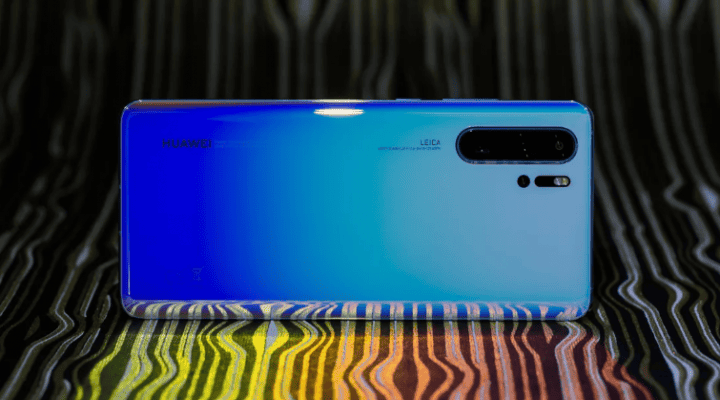
Huawei isn’t sure about using Android in future phones

The company is reportedly waiting for US Commerce Department approval to use Google’s OS after President Trump decided to ease restrictions on Huawei.

Huawei apparently doesn’t know yet whether it can use Google’s Android operating system in future mobile devices. This comes in the wake of President Donald Trump’s decision over the weekend to relax restrictions on US companies selling equipment to the embattled Chinese phonemaker.

A Huawei executive said the company “will wait for guidance from the Department of Commerce” regarding Android, Reuters reported Monday. The Commerce Department is in charge of implementing the Trump administration’s restrictions.

Google briefly cut the phonemaker off from updates to its mobile OS after Trump’s executive order last month, but soon revived the relationship on a temporary basis.

Huawei has raised national security concerns in the US due to its relationship with Chinese government and suspicions that its gear could be used to spy on companies and other countries. Huawei has repeatedly denied this.

Huawei, in a statement emailed to CNET, acknowledged Trump’s most recent decision but said it has “no further comment at this time.” On Sunday, National Economic Council Chairman Larry Kudlow said that Huawei hasn’t been granted a “general amnesty” and that US companies can only sell widely available products to the company.

Reports suggest Huawei has a backup plan in case Google cuts it off permanently. It apparently has created its own OS, codenamed Hongmeng, and invited Google Play Store developers to publish apps on its own AppGallery digital store.

The Commerce Department didn’t immediately respond to a request for comment.

NASA Orion aces safety test after ‘launching a rocket off a flying rocket’

The Orion spacecraft has completed its final safety test. Next stop is the moon.

NASA has cleared the final hurdle in testing its Orion spacecraft with the completion of the Ascent Abort-2 flight test. The success marks an important milestone for the crew capsule that will put humans back on the moon, demonstrating its safety in an emergency abort scenario.

Launched from Cape Canaveral Air Force Station early Tuesday morning, AA-2 was designed to push the capsule’s abort system to its limits with a full-stress test. And while full results of the test are still to be revealed, the capsule was jettisoned from the launch vehicle approximately 55 seconds post-launch, leaving a brilliant trail in the sky. Seconds later, the capsule landed in the ocean with an impressive splash that could be heard more than three miles away.

It was a humid morning in Florida, but Orion, perched on top of a solid-fuel rocket and encased in a fairing assembly, launched right on schedule at 4 a.m. PT. The capsule used for the test operated like a dummy spacecraft, weighted to resemble the real thing, but in effect was just an Orion-shaped box. It was positioned at the bottom of the upside-down golf tee-shaped Launch Abort System.

As it launched, we didn’t quite see the dazzling flurry of fire and flame we’ve become accustomed to with SpaceX launches but, of course, it wasn’t meant to be that way. This was a small test lasting only 3 minutes, aimed at ticking off a fundamental crew safeguard of the moon-bound craft.  

“Our Launch Abort System is a key safety feature of the spacecraft,” said Orion program manager Mark Kirasich prior to the test. “It will protect the crew members who fly on-board Orion during the most challenging part of the mission, which is the ascent phase.”  

Speaking to CNET in Florida shortly after the launch, Charlie Precourt, a former NASA space shuttle astronaut and head of the propulsion division at Northrop Grumman (the company that built the rocket systems for the abort test), said this was far from a simple test procedure. 

“I like to describe it as launching a rocket off of a flying rocket,” he said. “It’s tough enough to fly a rocket off a still launch pad — the launch pad for our launch abort system is actually a moving rocket at very high speeds, so it’s a very complicated set of computer algorithms that guide the firing of the motor.”

Compare that to the abort procedures in place during the shuttle era. On his four shuttle missions from 1993 to 1998, Precourt said, an abort would have required using the remaining thrust to guide the shuttle back into a gliding trajectory, and astronauts would have needed to “jump out the side like paratroopers.”

Now with Orion, which NASA is dubbing “the safest spacecraft ever built,” a safe abort at launch won’t involve jumping out the window. 

“It’s a dramatic improvement,” said Precourt. “It certainly expands the scenarios where we can get the crew back, when in the past we wouldn’t have been able to.”

screen-shot-2019-07-02-at-12-00-46
The 7 a.m. PT launch was an uncrewed test designed to replicate a real one.

Less than a minute into the flight, the abort sequence was initiated. By that time, the spacecraft had reached Mach 1.3 and hit 31,000 feet in altitude, just a few thousand feet lower than most commercial airliners fly. At that point, the abort motor fired and the crew module blasted away from the launch vehicle, escaping the chasing rocket before falling back to Earth. Once the LAS oriented itself in midflight, it ejected the Orion capsule into the ocean and blasted away. Orion did not contain any parachutes, so it came hurtling back toward the ocean and is set to sleep with the fishes. 

NASA has already run a number of high-end computer simulations that aim to stress-test the capsule to see how it fares during an abort. The data collected from the real flight will be analyzed in conjunction with those tests, thanks to a dozen data recorders that were jettisoned every 10 seconds as Orion began free-fall into the sea. 

screenshot-20190702-210118-youtube
The spacecraft hit 31,000 feet in altitude when the abort sequence was initiated.

Ascent Abort-2 was the last of three tests designed to evaluate the Orion capsule. Although emergency aborts are rather rare in crewed rocket launches, one did occur earlier this year when a Russian Soyuz rocket malfunctioned during ascent. That emergency resulted in a ballistic descent for NASA astronaut Nick Hague and Russian cosmonaut Aleksey Ovchinin. “We have to prepare for this even though its a low likelihood of happening,” fellow astronaut Randy Bresnik noted in a prelaunch briefing.

The capsule is slated to fly, for the first time, aboard NASA’s next-generation rocket, the Space Launch System, in July 2020. That first flight will be uncrewed and last for approximately 25 days, with the Orion capsule spending around 10 days in orbit around the moon. Success in that mission will pave the way for the Artemis program to ready itself for first human spaceflight missions in 2022.

Stock Price Activity Watch For The Travelers Companies, Inc. (NYSE:TRV)

Investors may be taking a closer look at shares of The Travelers Companies, Inc. (NYSE:TRV). Sometimes the stock market can be frustrating, even for the most experienced investors. Even when a stock looks good and results are meeting expectations, the market may decide to shift otherwise. This may lead to feelings of uncertainty and cause some second guessing. Investors may be following historical price data to gain some further insight on where the stock has been and where it may be headed. After a recent look, the stock has been seen trading near the $151.42 mark. Looking back over the past 4 weeks, shares have moved 3.15%. Over the last 5 days, the stock has seen a change of -0.39%. Looking at the last 12 week period, we note that the stock has moved 11.44%. Since the beginning of the calendar year, we note that shares have changed 26.45%. Investors will often track the current stock price relative to its 52-week high and low levels. The 52-week high is currently 153.13, and the 52-week low is resting at 112.63. When shares are trading near the 52-week high or 52-week low, investors may narrow the focus to see if there will be breakout.

Stock market reversals can occur at any time. When these corrections happen, the investing world may be quick to make over the top predictions. Looking at the current health of the overall stock market, it is important to remember that market corrections can be quite normal in bull market runs. Investors may use a down day to buy some names they may have had their eye on. As we near the next earnings season, everyone will be checking to see how companies have performed over the previous quarter. Investors and analysts will both be eagerly watching to see if the company can meet and beat projections.

Tracking the current quarter consensus EPS estimate for The Travelers Companies, Inc. (NYSE:TRV), we have noted that the number is currently 2.31. This estimate is using 7 contributing analysts polled by Zacks Research. For the last quarter, the company posted a quarterly EPS of 2.83. Sell-side Wall Street analysts study companies and provide their opinions of where the stock might be going in the future. A lot of weight is given to analyst estimates, and earnings beats or misses revolve around these predictions. Sometimes these estimates are very close to the actual, and other times they are not. When a company announces actual earnings results, a large surprise factor can result in increased volatility. If a company beats estimates and posts a positive earnings surprise, the stock may see a near-term bump in price. On the flip side, a negative surprise may move the stock lower. Based on the unknown, many investors may choose to trade with caution around earnings releases.

Analysts have set a target price on shares of The Travelers Companies, Inc. (NYSE:TRV). The current consensus price target is $146.2. Wall Street analysts often provide price target projections on stocks that they cover. Price target projections can be created using a wide variety of methods. Many investors will closely track stock target prices, especially when analysts make updates. A thorough research report will generally offer detailed reasoning for a certain target projection. Some investors may watch sell-side targets very closely and use the information to help with their own stock research.

Sell-side analysts have the capability of providing stock ratings for companies that they cover. According to analysts polled by Zacks Research, the current average broker rating on shares of The Travelers Companies, Inc. (NYSE:TRV) is 2.83. This average rating includes analysts who have offered Sell, Buy and Hold ratings on the stock. This rating falls on a numeric scale from 1 to 5. A score of 1 would indicate a Buy recommendation, and a score of 5 would represent a Sell recommendation. Out of all the analysts offering ratings, 5 have pegged the stock a Strong Buy or Buy, based on data provided by Zacks Research.

Individual investors have a lot to study when dealing with the stock market. New investors may start out thinking that with enough capital, they can easily start securing substantial gains. While equity market investing can help individuals build wealth, it can also be highly risky. Market education may be an extremely important part of any investor’s game plan. Knowing exactly where the money is invested and why it is invested there, may be a big help when reviewing portfolio performance down the line. Any investor who takes the reins and decides to make their own decisions should realize the importance of a well-rounded stock market education.

Stock Radar: Watching the Numbers for TFS Financial Corporation (NASDAQ:TFSL)

Taking a quick look at some possible support and resistance levels on shares of TFS Financial Corporation (NASDAQ:TFSL), we can see that the 52-week high is currently 18.07, and the 52-week low is currently 14.3. When shares are trading close to the 52-week high or 52-week low, investors may be watching for a move through either level. Checking in on recent action, we note that the stock has been trading near the $17.9 level. Investors may also want to keep an eye on historical price activity. During the past 12 weeks, the stock has moved 9.21%. Looking further back to the start of the calendar year, we can see that shares have moved 10.97%. Over the past 4 weeks, shares have seen a change of 4.13%. Over the last 5 trading days, the stock has moved 1.99%. Investors will be monitoring stock activity over the next few sessions to try and decipher which way the momentum is leaning.

When it comes to investing in stocks, the question of risk will eventually need to be addressed. Of course, there are no guarantees when investing in the stock market. With this in mind, investors can proceed with a plan that helps minimize risk while still providing the opportunity to experience large profit potential. Each investor may have a different financial situation or tolerance for risk. There is often a fine line between being too aggressive or too conservative with equity investments. Finding that balance between the two extremes may be exactly what the earnest investor strives to do when tackling the markets.

Analysts have set a target price on shares of TFS Financial Corporation (NASDAQ:TFSL). The current consensus price target is $17.5. Wall Street analysts often provide price target projections on stocks that they cover. Price target projections can be created using a wide variety of methods. Many investors will closely track stock target prices, especially when analysts make updates. A thorough research report will generally offer detailed reasoning for a certain target projection. Some investors may watch sell-side targets very closely and use the information to help with their own stock research.

Sell-side analysts have the capability of providing stock ratings for companies that they cover. According to analysts polled by Zacks Research, the current average broker rating on shares of TFS Financial Corporation (NASDAQ:TFSL) is 2. This average rating includes analysts who have offered Sell, Buy and Hold ratings on the stock. This rating falls on a numeric scale from 1 to 5. A score of 1 would indicate a Buy recommendation, and a score of 5 would represent a Sell recommendation. Out of all the analysts offering ratings, 1 have pegged the stock a Strong Buy or Buy, based on data provided by Zacks Research.

Tracking the current quarter consensus EPS estimate for TFS Financial Corporation (NASDAQ:TFSL), we have noted that the number is currently 0.08. This estimate is using 1 contributing analysts polled by Zacks Research. For the last quarter, the company posted a quarterly EPS of 0.07. Sell-side Wall Street analysts study companies and provide their opinions of where the stock might be going in the future. A lot of weight is given to analyst estimates, and earnings beats or misses revolve around these predictions. Sometimes these estimates are very close to the actual, and other times they are not. When a company announces actual earnings results, a large surprise factor can result in increased volatility. If a company beats estimates and posts a positive earnings surprise, the stock may see a near-term bump in price. On the flip side, a negative surprise may move the stock lower. Based on the unknown, many investors may choose to trade with caution around earnings releases.

Many active investors will use technical analysis when conducting stock research. Technical analysis involves studying trends and trying to predict which trends will continue into the future. Many technical traders will rely on charts to help provide the information they desire. Some technicians will use one or two technical indicators while others will combine many different ones. There are plenty of indicators out there that can be studied. Figuring out which indicators are the most reliable can be a tricky endeavor. Traders may want to try out various combinations in order to identify the ones that seem to provide the best advantage, even if it is a small one.