Archives for May 31, 2019

Cdn garbage coming home

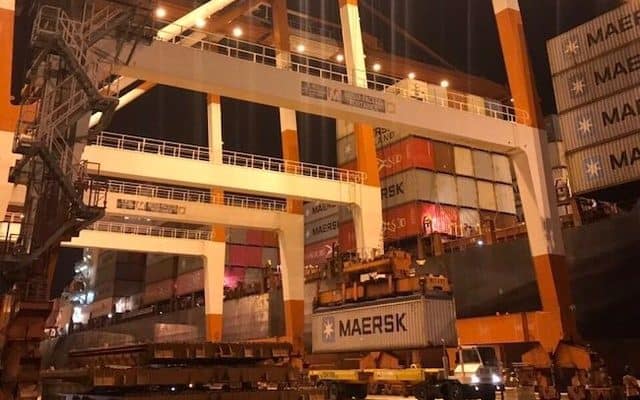
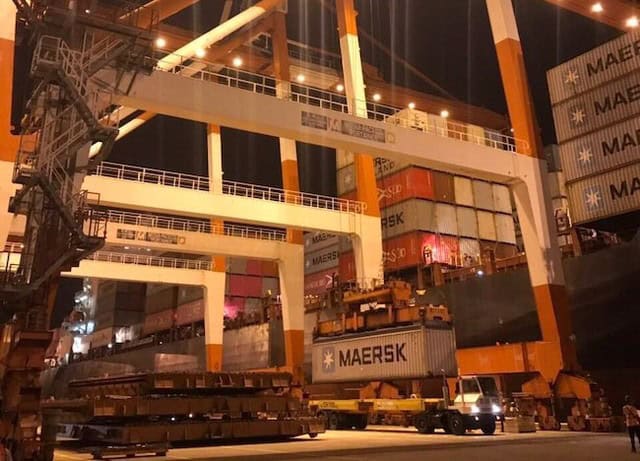
Sixty-nine shipping containers of fetid Canadian trash are being loaded onto a container ship in the Philippine port of Subic today.

Philippine Foreign Secretary Teddy Locsin posted video and photos to his Twitter account showing the containers being loaded onto MV Bavaria.

The ship is expected to depart for Vancouver later today. Canada has previously said it expected the garbage to be back on Canadian soil by the end of June.

Canadian officials from the embassy in Manila are monitoring the loading.

A Canadian official confirmed the ship is hired under the $1.14-million contract Canada signed with the Canadian arm of French shipping giant Bollore Logistics to bring the garbage back to Canada. He said the containers were fumigated and cleaned before being loaded.

The garbage has become a diplomatic nightmare for the Canadian government as Philippine President Rodrigo Duterte makes an example out of Canada for trying to dump its trash on his country. It has also become a symbol of the shadiness of the global recycling industry which sees millions of tonnes of plastics meant for recycling ending up in garbage dumps and incinerators overseas.

The Canadian containers arrived in the Philippines in 2013 and 2014 falsely labelled as being full of recycling plastics. Philippine customs authorities inspected the containers and discovered about two-thirds of the contents to be ordinary household garbage, including electronic waste and used diapers.

There were 103 containers and about 2,500 tonnes of waste originally, but 34 containers have been disposed of locally in the Philippines, despite the objections of local environment groups.

The EcoWaste Coalition in the Philippines and RightOnCanada issued a statement Thursday calling the return of the garbage a “victory for the rule of law, morality and the environment.”

Aileen Lucero, national co-ordinator of the EcoWaste Coalition, said she feels “jubilant” that the six-year battle to get the garbage returned is finally over.

“The Philippines is not the world’s dumpsite,” she said. “Never again shall we allow other countries to trash our dignity, our people’s health and the environment.”

The Philippines began emptying the containers in July 2015 but stopped following a public outcry.

The Liberals have been negotiating with the Philippines about the garbage for the last three-and-a-half years, finally agreeing to bring the remaining waste back and pay for the shipments in April, after Duterte threatened to “declare war” on Canada. When a May 15 deadline for the trash to leave came and went without action, the Philippines recalled its ambassador and consuls general until the trash was gone.


Life expectancy stalls

Statistics Canada has released data showing life expectancy stopped increasing for the first time in four decades as young men and women died at higher rates, mostly due to opioid-related overdoses in British Columbia, followed by Alberta.

The agency says life expectancy did not go up from 2016 to 2017 for either men or women after an upward trend from the mid-1990s to 2012, but overall gains then started to stall, even as older Canadians lived longer.

It says the declines were most notable in B.C., where life expectancy fell in 2017 for the second year in a row, especially for young men between the ages of 20 and 44.

StatsCan says that while older men are living longer from factors including improved cancer outcomes, drug-related deaths of young men almost completely offset those gains while a similar pattern emerged among young women, but to a lesser extent.

The agency says death rates due to overdose were 2.1 times higher for men and 1.6 times higher for women in 2017 compared with 2015 but those are likely underestimates because the cause of death in some cases has not yet been determined due to ongoing investigations.

Statistics Canada says 4,108 overdose deaths were recorded in Canada in 2017, and nearly 1,100 of those involved people between the ages of 30 and 39.

Last Merritt mill cuts shifts

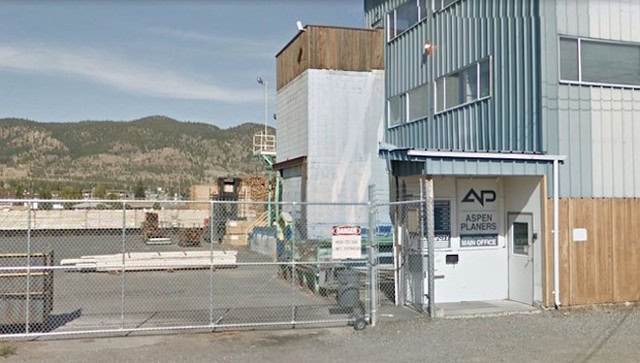
Merritt workers are the latest casualties of a slowdown in forest industry production, as Aspen Planers Ltd. announced Thursday its sawmill will reduce operations from two shifts per day to one.

“Due to the ongoing lack of access to logs, increased log costs and weakening lumber markets, Aspen Planers will curtail production and reduce operations to one shift per day starting Monday, June 3,” says Bruce Rose, Aspen Planers’ executive vice-president.

“The decision to curtail production does not reflect the commitment or hard work demonstrated by our employees,” says Rose. “Our decision to reduce production is a result of the challenging industry conditions in B.C.”

The announcement comes on the heels of Tolko closing its mill in Quesnel this month. Business In Vancouver reports it is estimated that six to eight sawmills in B.C. will need to permanently shut down due to a shrinking annual allowable cut.

Aspen Planers employs 1,100 employees throughout B.C., with operations in the Southern Interior, Surrey, Port Moody and on Vancouver Island.

“As the major employer in this area, we have a responsibility to our employees, our community, and the hundreds more that depend upon Aspen Planers for their economic livelihood here in Merritt and other areas including Savona and Lillooet,” says Rose.

Aspen Planers is the last sawmilling company in Merritt.

Bank of Canada sees rising business investment, says economy solid

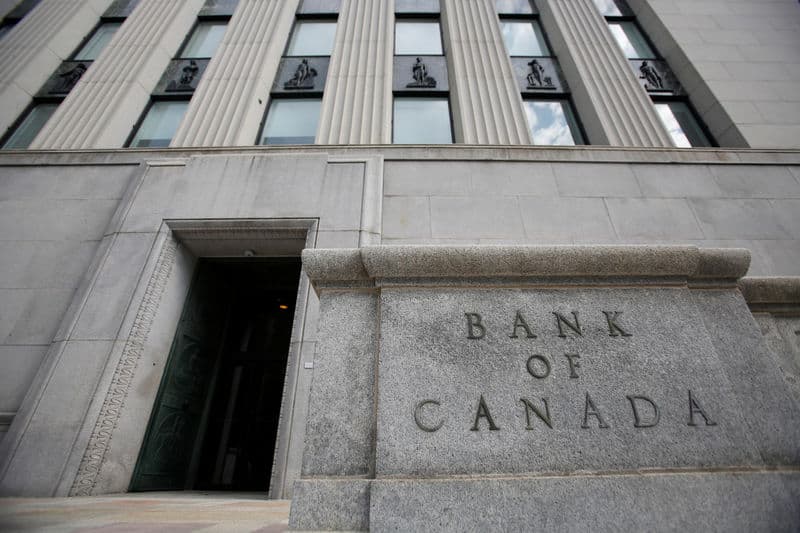
CALGARY, Alberta – The Bank of Canada said on Thursday that business investment should expand gradually overall but expressed concerns over increased trade frictions between the United States and the European Union.

Carolyn Wilkins, the bank’s senior deputy governor, said the expanded investment should be led by firms outside the oil and gas sector, which has been hit hard by low prices and transport constraints.

“The growing investment in other sectors will show up in the headline numbers more clearly,” she told a business audience in Calgary, Canada’s energy capital, adding that attractive financing costs and government incentives should help.

The bank held its main overnight interest rate steady as expected on Wednesday, saying there was evidence that a recent economic slowdown was temporary.

The bank raised rates five times between July 2017 and October 2018 but has not changed them since then, citing household debt levels, low oil prices and trade tensions.

Despite these challenges, “Canada’s economic performance has been relatively solid” over the last couple of years, she said, citing record low jobless levels and healthy wage growth.

Asked later by reporters whether the bank had wanted to push back against predictions by some analysts that its next move would be a rate cut, Wilkins said nothing had changed overall since April 24, the date of the most recent rate decision before Wednesday’s announcement.

“Financial conditions are accommodative and from an overnight rate perspective, they are exactly the same as they were in April,” she told a news conference.

Wilkins said the wild card in the bank’s projections was the current trade war between the United States and China, adding that “we see the potential for more friction” between Washington and the European Union.

Canada has been caught up in the conflict between the United States and China, which is blocking imports of Canadian canola seed. “A big part of the bank’s work” ahead of updated economic forecasts in July would be understanding the implications of various trade tensions, said Wilkins.

The bank’s governing council spent some time discussing the signals it should take from “a very flat, or in some cases, inverted yield curve”, which she said partly reflected a change in tone by many central banks.

“They nonetheless also reflect a concern about the prospects for growth that is not reflected across other asset classes. We continue to be attentive to these signals,” she said.