Archives for May 25, 2019

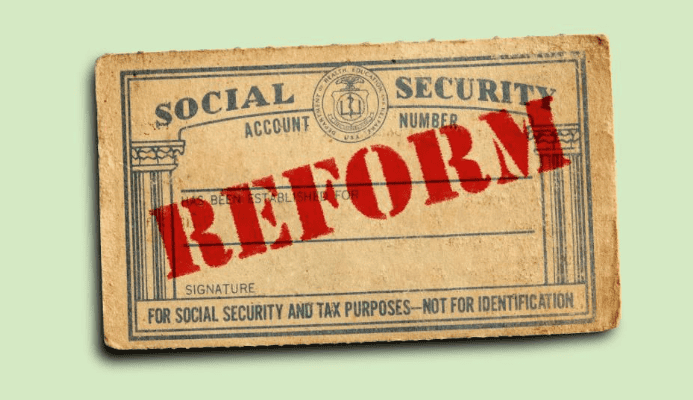
How The Latest Report On Social Security’s Solvency Changes Your Retirement Plan

Each year the trustees of Social Security issue a report on Social Security’s financial condition to Congress and the public. The 2019 report came out a few weeks ago, and you can find the 2019 report here.

The report sparks and lot of headlines and discussion about the fate of the program and those who depend on it. After a few days the discussion ends, and people move on to other topics.

This year’s report seemed to spark a little more discussion and concern. Unfortunately, the conclusions many people reached are wrong. You can’t depend on Congress to take action, but most people can depend on some amount of Social Security retirement benefits. You also probably need to make some changes in your retirement plan.

Social Security has two trust funds. The important trust fund for most of us is the Old-Age and Survivors Insurance trust fund (OASDI). This is the one that covers retirement and survivor’s benefits. There’s another trust fund for disability benefits.

Every year the key headline for the media is the latest estimate of the year the OASDI is projected to drain its reserves, which usually is referred to as Social Security “running out of money” or “going broke.” This year’s estimate for the life of OASDI’s reserves is the same as it was last year. The OASDI trust fund is estimated to be depleted in 2034. That’s only 15 years away.

The annual cost of the program is expected to exceed all its income in 2020 for the first time since 1982. The cost is expected to exceed income every year for the next 75 years. (Each year the projections are made only for the next 75 years.) The cost of the program has exceeded its non-interest income since 2010.

While those are the main points, there’s a lot of misunderstanding about exactly what they mean and how people should respond. Since the report was issued, I’ve talked to people of different ages who believe that their and everyone else’s Social Security benefits will end in 2034.

That’s not what the report says.

First, it’s important to note that the projections are based on a lot of estimates of economic growth, salary levels, tax collections, inflation, and other factors. If the estimates are too pessimistic, the trust fund will last longer.

Second, the report says that the trust fund, or reserves, will be depleted by 2034. You might recall that for decades Social Security taxes exceeded the benefits paid. The trust fund lent that excess money to the Treasury, which gave the trust fund special bonds. The trust fund will be depleted when all those bonds are cashed in.

Third, and most importantly, each year the program will continue to receive Social Security taxes indefinitely. Those taxes will help pay benefits each month.

The trustees estimate that these taxes will be sufficient to pay 77% of the promised OASDI benefits for at least the next 75 years.

The bottom line is that Social Security won’t die. But changes will be made, and your retirement plan should have some flexibility so you can respond to the most likely changes if they are made.

People already receiving Social Security retirement benefits are likely to be sheltered for the most part. The exceptions probably will be beneficiaries Congress considers to be affluent. It’s possible that beneficiaries above a certain income level will face an outright benefit reduction, known as means-testing. Some financial advisors say that anyone with a retirement income of $250,000 or higher should assume their Social Security benefits will be eliminated. Congress frequently uses a benchmark near that level to define the wealthy.

That’s probably the most drastic of the potential changes, but it wouldn’t surprise me if Congress imposes this kind of means-testing on people already receiving benefits. The longer Congress waits to act, the more likely it is the changes will affect those in or near retirement.

There’s a higher probability that the formula for paying income taxes on Social Security benefits will be adjusted so that higher-income beneficiaries have more of their benefits taxed. Instead of a maximum of 85% of benefits being included in gross income, 100% of benefits will be included in gross income at some high income levels.

Congress might even impose a special tax rate or surtax on Social Security benefits of higher-income beneficiaries that essentially reduces or eliminates their benefits.

To be safe, I’d assume that if your income is high enough for some of your Social Security benefits to be taxed today, your future plans should assume 100% of the benefits will be included in gross income and subject to income taxes starting around 2034.

I think there’s also a high probability there will be a reduction in the annual cost of living allowance (COLA). The COLA already is less than general inflation. The trustees’ report assumes benefits grow one percentage point less than general inflation each year.

Congress easily could adjust the COLA formula (as it did in the 2017 tax law for many other inflation adjustments) so that benefits increase less each year than they do under the current formula. This change likely would apply to all beneficiaries, and I think it would take effect immediately after it is enacted.

People who are years from retirement now are likely to pay higher payroll taxes during the rest of their working years. They’re also likely to see the benefit formula adjusted so that they receive lower retirement benefits than under the current formula.

The bottom line is that Social Security retirement benefits aren’t going away. But after 2034 the system can pay only about 77% of promised benefits, if the trustees’ assumptions are accurate.

The bulk of that gap will be closed by affluent retirees. Affluent retirees receiving benefits at the time changes are made could face some combination of lower benefits and higher taxes. Future retirees should expect a combination of higher taxes during their working years and lower retirement benefits, with the changes affecting higher income people more than others. All current and future Social Security beneficiaries are likely to receive lower COLAs.

Because of Social Security’s financial condition, you need a cushion in your retirement plan. Most people should assume they’ll incur a combination of lower benefits and higher taxes equal to at least 20% of their estimated or current Social Security benefits. The higher your income and net worth, the higher that percentage should be.


The End Of Risk-Free Retirement

In the last 150 years, we’ve had a number of innovations that radically changed the way we live.

You can tick off the list: electricity, the automobile, refrigeration, TV, the Internet. But one innovation rarely makes those lists. It is just as significant if not more so…

Retirement.

The idea that people can stop working in their fifties or sixties and then enjoy 20+ years of relative leisure is actually quite new.

For most of human history, most people worked as long as they were physically able to and died soon after.

Our inventions often have a dark side that can come to haunt us. They may be applied to wage war… or to create reality TV.

Are we going over to the dark side with retirement? Maybe not, but we’re surely heading in that direction.

When Retirement Was Risk-Free

Saving money for retirement has never been easy for the average worker, but at least it was feasible. Until 2000 or so, anyone could lock in risk-free 5% or higher yields in bank certificates of deposit.

Suppose you saved all through your career and accumulated a million dollars. It was a simple matter to put it all in CDs, Treasury bonds, or tax-free muni bonds and generate $50,000 a year in current income.

Living costs were lower last century, too. Add in Social Security and you could enjoy a comfortable if not extravagant retirement. Your million-dollar principal would remain intact and could go to your children upon your death.

And this was relatively easy to do. It didn’t require any financial sophistication or even a brokerage account.

The hardest part was saving the million dollars in the first place, but you could get by with much less if you drew down the principal over a 20- or 30-year period.

Better yet, you could do this with no risk, just by keeping your money in FDIC-insured banks. You might have to split it between a few different banks to stay within the limits.

Some extra paperwork, but easily done.

Younger readers may think I just described a fantasy world. I assure you, it was very much a reality not so long ago.

Ask your grandparents if you don’t believe me. However, you may find them in a state of shock today because they thought the fantasy would last forever.

Indeed, their financial planner probably told them they could count on drawing down 5% of their portfolio per year to live on.

That’s because the income from the investments in their portfolio would more than make up for the drawdown.

None of This Is Possible Today

Neither you nor a massive pension plan acting on your behalf can generate enough risk-free income to assure you a comfortable retirement.

Why not?

Because our monetary overlords decreed that it should be so. Retirees and their pensions are being sacrificed for what now passes as “the greater good.”

Because these very compassionate overlords understand that the most important prerequisite for successful future retirements is economic growth. And they think that an easy monetary environment is the necessary fertilizer for that growth.

So, when they dropped rates to zero some years ago, they believed they would soon be able to raise them again – and get people’s retirements back on track – without risking future economic growth.

The engine of growth would fire back up, and everything would return to normal.

So much for the brilliant plan.

Millennials Unrealistic About Homeownership, Retirement

You want to buy a home, but you haven’t been saving for one. You want to retire near the typical retirement age, but you haven’t been saving for that, either. Don’t worry, the homeowner and retirement fairies will be pulling up to your door soon to deliver a truckload of cash.

Absurd, isn’t it? Nobody believes in homeowner or retirement fairies – but a sizable number of Americans act like they do.

A recent Business Insider and Morning Consult survey found that 25% of millennials who expect to retire between the ages of 66 and 75 don’t have any retirement savings at all. Over half of all millennials (52%) have no retirement savings account, but 46% of that group expect to retire between 56 and 75 and 12% of them expect to retire before age 55.

A separate Morning Consult survey revealed that 36% of millennials don’t currently save for retirement, and 31% of those who do only save between 1% and 10% of their monthly income for retirement.

Millennial homeownership goals are equally shaky. Approximately 31% of millennials who expect to own a home haven’t started saving for it yet.

At least millennials (ages 22-37) are young enough that they have time to recover. Members of Generation X (ages 38-53) have less time to correct a poor savings approach, and baby boomers (ages 54-72) are almost out of savings time.

As with millennials, almost half (47%) of Gen-Xers don’t have a retirement account. A similar percentage of the savers (48%) have less than $50,000 in their savings account. Maybe that’s why 10% of Gen-Xers think they will never retire. That’s the highest percentage of any generation, even more than the baby boomers nearing retirement age.

A separate MetLife survey presents a similarly gloomy picture of Gen-Xers and retirement. MetLife found that 18% of Gen-Xers don’t expect to retire, compared to 12% of baby boomers and 14% of millennials. Almost half (48%) of Gen-Xers were living paycheck to paycheck.

For sheer delusion, it’s hard to beat the 12% of baby boomers who don’t already own a home and want to purchase one but aren’t saving for it. At the very best, they’ll probably be taking on significant debt heading into retirement because of smaller down payments. At worst, the math simply doesn’t add up and their realistic opportunity for homeownership has passed.

Every generation has blind spots when it comes to saving for homeownership or retirement – even yours. We all have scenarios that we don’t like to contemplate, but the situation won’t improve without a realistic assessment.

How’s your down payment situation? Are your retirement funds on track? If you’re running short on one or both, you’ll need a better plan than fairies or lottery winnings. Hard work lies ahead.

Set a target dollar value and a date to buy a home or retire and work backward. How much will you have to save each month to reach your goal?

Next, review your budget (or create one if you don’t have one). Look for ways to cut expenses and pay down debt or bring in extra income. You can’t save for anything if you spend more than you make each month. If you want to reduce your interest payments and lower your debt, join MoneyTips and use our free Debt Optimizer tool.

If you can’t realistically make that goal, it’s time to change it. Perhaps you can buy a smaller home or work a few more years to achieve your goal. MoneyTips is happy to help you get free mortgage and refinance quotes from top lenders.

Planning and hard work will help you meet your retirement and homeownership goals. Fairies and lottery tickets will not.

Consumer Watch: How women can become more aggressive in personal finance

More millennial women are interested in an active role in their finances, but they may still be waiting too long to get started. When we’re talking money, the stats are not on most women’s side– from earning less on average to waiting longer to invest, but some changes can help make sure you have a more solid financial future than the women before you.

Traditionally, some women might expect to depend on their male spouse for financial decisions, but Tori Dunlap, founder of Her First 100k, says that is a mistake. Personal finance affects women differently because there is a pay gap for women on average and women also tend to wait longer to invest their money or don’t invest at all.

“Women on average also live 7 years longer than men, so we are expected to take less money, have it grow at a slower rate, and live longer using that money,” says Dunlap.

Dunlap says that right now is the right time to jump in. If you want to educate yourself before you start, you can use free or inexpensive tools like podcasts and books. It’s ok to start small, but do it as soon as you can. You can also try your hand at robo advisors– a more inexpensive way to try investing first hand with help.

If you have a retirement account, guess what? You are already investing.

“A lot of people think, “oh I have my 401k but I am not investing,’ you are, you are investing. The key with a 401(K) is that it is provided by your employer, and it’s a huge benefit. It is an even bigger benefit if your employer is going to match a portion,” says Dunlap.

That means you should do everything you can to contribute up to the match, so you don’t leave any money on the table.

Mark Zuckerberg apparently tried to buy Panic, the creator of Playdate

If the company had responded, the handheld, hand-cranked console probably wouldn’t exist.

Buried in Edge Magazine’s exclusive feature on Playdate, is an interesting revelation. Apparently, Mark Zuckerberg once expressed interest in buying Panic, the developers behind the new handheld, hand-cranked console. Perhaps even more intriguing, Panic co-founder Cabel Sasser didn’t respond. He didn’t want to be part of another Silicon Valley software company gobbled up by a giant.

Panic has worked on various, clever Mac and iOS apps for years — including Transmit, a file transfer protocol, and Firewatch, an adventure video game that’s available for Mac. So it’s not unreasonable that Zuckerberg would reach out. But, as Sasser told Edge Magazine, “Any time I see a company in the software world pop up and make something, that’s super interesting to me. Then they’re immediately acquired by someone else and you never hear from them again. That voice is gone. And it kills me.”

Had Sasser responded to Zuckerberg and sold, it’s unlikely the Panic developers would have created Playdate. If nothing else, Panic produced a truly unique device — in addition to being hand-cranked (thanks to Teenage Engineering), the console will receive new games weekly. Had the company sold, it could have forfeited the opportunity to do something so original. As Sasser said to Edge, “Maybe that’s why we’re put on this planet: to be an example of like, you can move slowly. Make sure you have enough money in the bank, make something good and see what happens. You don’t have to go for world domination.”

First American security flaw leaked 885 million real estate documents

The documents include sensitive data, such as Social Security numbers and bank information.

First American Financial Corporation left as many as 885 million real estate documents dating as far back as 2003 exposed, according to Krebs on Security. The company, one of the largest real estate title insurance firms in the US, has already fixed the vulnerability as of Friday afternoon after the security researcher notified it of the flaw. Before the patch rolled out, however, anybody armed with a link to one of the documents hosted on its website could simply change a single digit in the URL to access somebody else’s files. The documents didn’t require a password or any kind of authentication.

Due to the nature of its business, those files include a variety of sensitive information, including bank account numbers and statements, mortgage and tax records, Social Security numbers, wire transaction receipts and drivers license images. Ben Shoval, the real estate developer who discovered the vulnerability and who told Krebs about the issue, also said that small business clients might’ve even given First American access to internal documents.

After Shoval contacted Krebs about the issue earlier this week, the security researcher confirmed that the company’s website was returning documents simply by changing digits in the URL. First American ultimately switched off the part of its website that served those files by around 2PM on May 24th. Krebs clarified however, that he has no information suggesting the exposed files were harvested. It’s also unclear when the vulnerability first showed up, though Krebs discovered that it’s been around since at least March 2017 after taking a dive into archive.org.

Best scenario is that no bad actor paid attention to the company’s website, because those documents could be mined for sensitive data to sell in the dark web and could be used for convincing phishing schemes. A spokesperson told the researcher that the real estate giant is currently determining if the flaw affected its customer information in any way (emphasis ours):

“First American has learned of a design defect in an application that made possible unauthorized access to customer data. At First American, security, privacy and confidentiality are of the highest priority and we are committed to protecting our customers’ information. The company took immediate action to address the situation and shut down external access to the application. We are currently evaluating what effect, if any, this had on the security of customer information. We will have no further comment until our internal review is completed.”