Archives for May 20, 2019

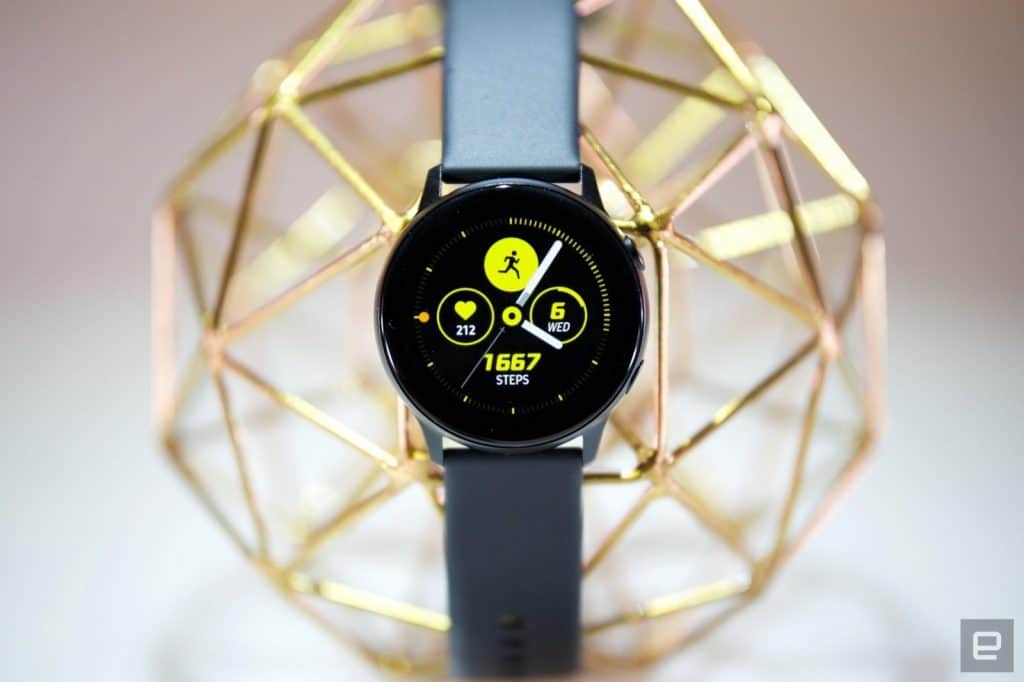
Samsung brings Galaxy Watch Active features to older smartwatches

You’ll get the slicker interface and improved health features.

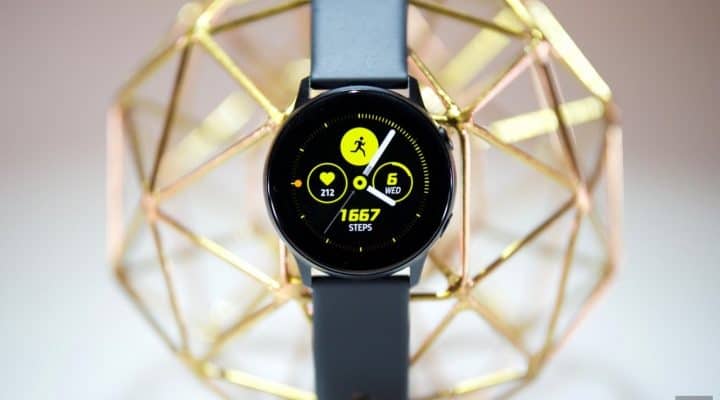
You don’t have to spring for the Galaxy Watch Active to put Samsung’s latest software features on your wrist. The company is rolling out an update that brings the Active’s One UI interface, health features and other optimizations to the regular Galaxy Watch, Gear S3 and Gear Sport. You should now have a livelier, easier to parse interface that matches One UI on more recent Galaxy phones. There’s more control as well, with settings that can toggle waking on touch, the Goodnight mode and the frequency of Daily Briefings. Some of the Active’s watch faces are also available to download if you’ve been pining for them since the newer wearable’s February premiere.

On the health side, you now have faster, simpler workout tracking through both the Samsung Health app and the widget. It now tracks outdoor swimming, too. You’ll find Apple Watch-style high heart rate alerts and more detailed sleep tracking that compares your average to your age group. And when you launch Samsung Health, you’ll see the Daily Activities screen right from the start to keep tabs on your progress.

Your watch might even last longer. There are promises of better battery life, in part through more aggressive memory management that closes background apps and tweaks settings. You can fine-tune other settings, such as the brightness and screen timeout. While these features won’t be so hot if you aren’t enthused with One UI’s memory management, they could be helpful if you’re determined to get through a weekend without recharging your wristwear.


Facebook Research is developing touchy-feely curious robots

We’re tantalizingly close to AI with all five senses.

As a social media platform with global reach, Facebook leans extensively on its artificial intelligence and machine-learning systems to keep the site online and harmful content off it (at least, some of the time). Following its announcement at the start of the month regarding self-supervised learning, computer vision, and natural language processing, Facebook on Monday shared details about three additional areas of research that could eventually lead to more capable and curious AI.

“Much of our work in robotics is focused on self-supervised learning, in which systems learn directly from raw data so they can adapt to new tasks and new circumstances,” a team of researchers from FAIR (Facebook AI Research) wrote in a blog post. “In robotics, we’re advancing techniques such as model-based reinforcement learning (RL) to enable robots to teach themselves through trial and error using direct input from sensors.”

asdf

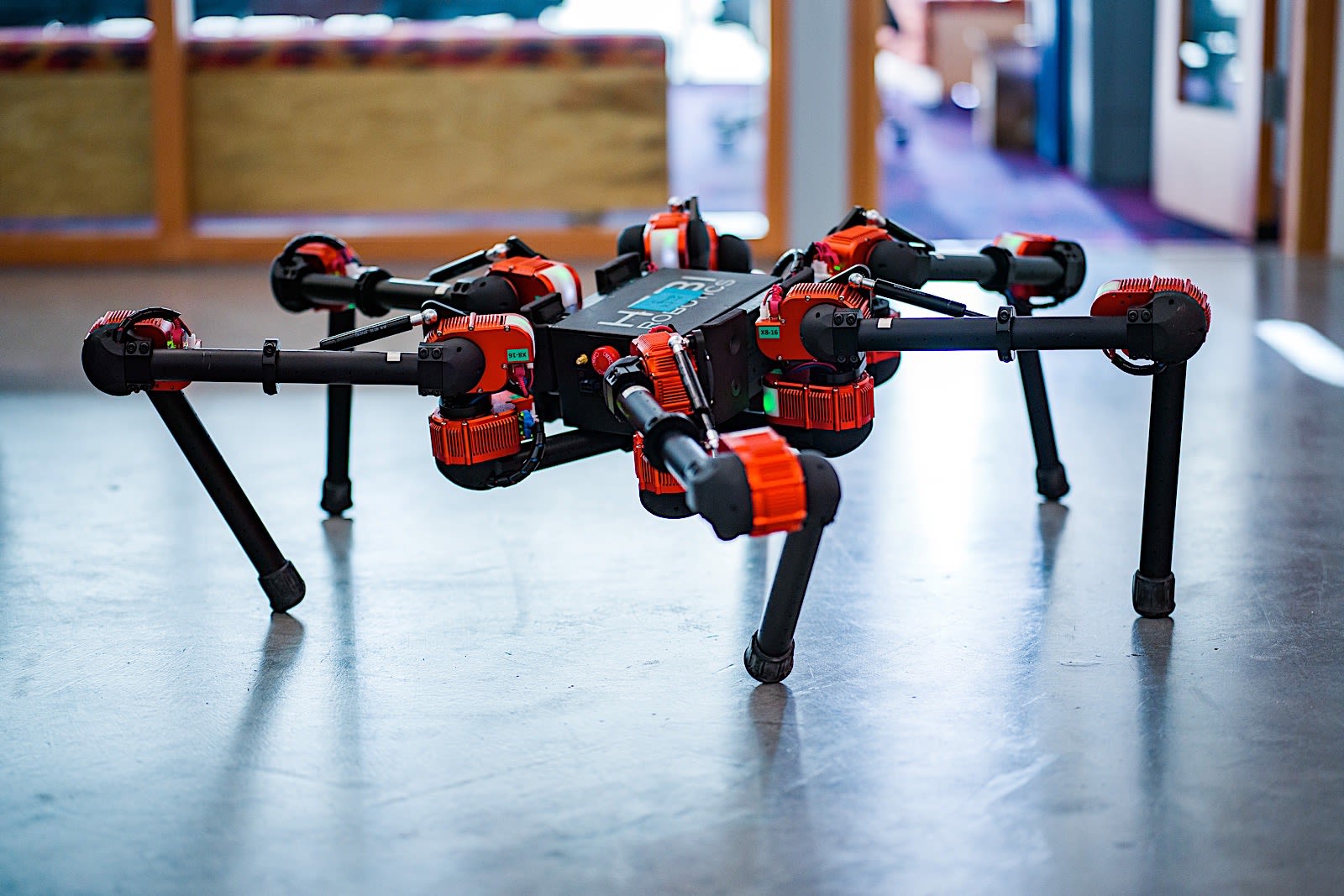
Specifically, the team has been trying to get a six-legged robot to teach itself to walk without any outside assistance. “Generally speaking, locomotion is a very difficult task in robotics and this is what it makes it very exciting from our perspective,” Roberto Calandra, a FAIR researcher, told Engadget. “We have been able to design algorithms for AI and actually test them on a really challenging problem that we otherwise don’t know how to solve.”

The hexapod begins its existence as a pile of legs with no understanding of its surroundings. Using a reinforcement-learning algorithm, the robot slowly figures out a controller that will help it meet its goal of forward locomotion. And since the algorithm utilizes a recursive self-improvement function, the robot can monitor the information it gathers and further optimize its behavior over time. That is, the more experience the robot gains, the better it performs.

This is easier said than done, given that the robot is expected to figure out not only its location and orientation in space but its balance and momentum as well — all from a series of sensors located in the machine’s knees. By optimizing the robot’s behavior and focusing on getting it walking in as few steps as possible, Facebook taught the robot how to “walk” in a matter of hours, rather than days.

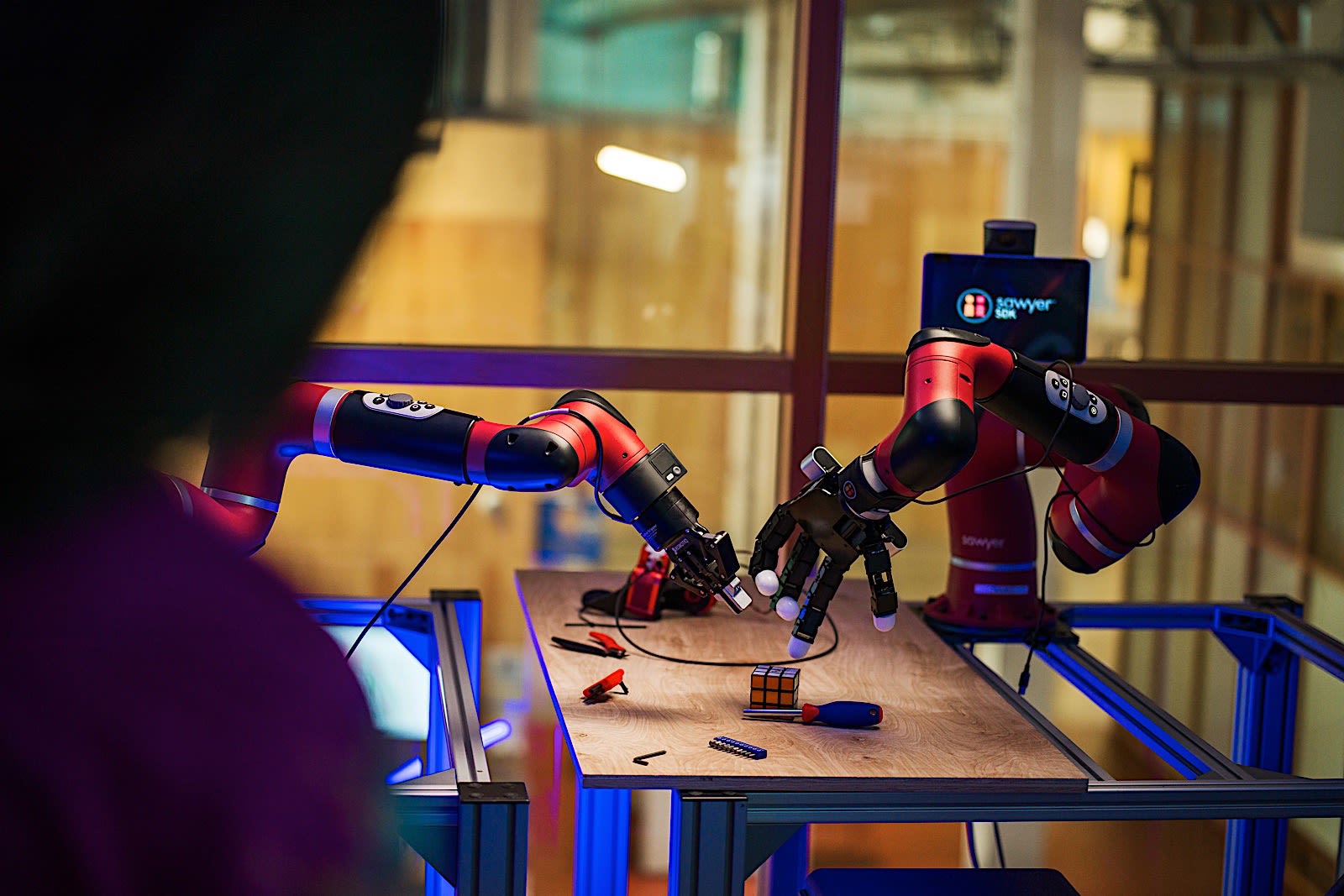
But what’s a hexapod to do once it figures out how to move? Go exploring, obviously. But it’s not so easy to induce wanderlust in robots that are typically trained to achieve a narrowly defined goal. Yet this is exactly what Facebook is trying to do, with some help from its colleagues at NYU and a robotic arm.

asdf

Previous research into imparting a sense of curiosity onto AI has focused on reducing uncertainty. Facebook’s latest efforts strive for the same goal but do so in a more structured manner.

“We actually started with a model that doesn’t know much about itself,” FAIR researcher Franziska Meier told Engadget. “At this point, the robot knows how to hold its arm, but it doesn’t actually know what actions to apply to reach a certain target.” But as the robot learns which torques need to be applied to move the arm into the next target configuration, it can eventually begin to optimize its planning.

“We use this model that tells us this, to plan ahead for a number of time steps,” Meier continued. “And we try to use this planning procedure to optimize the action sequence to achieve the task.” To prevent the robot from optimizing its routines too highly and getting caught in a loop, the research team rewarded the robot for actions that resolved uncertainty.

“We do this exploration, we actually learn a better model faster, achieve the task faster, and we learn a model that generalizes better to new tasks,” Meier concluded.

Finally, Facebook has been hard at work teaching robots how to feel. Not emotionally, but physically. And it’s leveraging a predictive deep-learning model originally designed for video. “It’s essentially a technique that can predict videos from the current state, from the current image and an action,” Calandra explained.

The team trained the AI to operate directly using raw data, in this case a high-resolution tactile sensor, rather than through a model. “Our work shows that such policies may be learned entirely without rewards, through diverse unsupervised exploratory interactions with the environment,” the researchers concluded. During the experiment, the robot was able to successfully manipulate a joystick, roll a ball and identify the correct face of a 20-sided die.

“We show that we can essentially have a robot manipulating small objects in an unsupervised manner,” Calandra said. “And what it means in practice is… we can actually predict accurately what’s going to be the output of [a given] action. This allows us to start planning into the future. We can optimize for the sequence of actions that will actually yield the desired outcome.”

Combining visual and tactile inputs could greatly improve the functionality of future robotic platforms and improve learning techniques. “To build machines that can learn by interacting with the world independently, we need robots that can leverage data from multiple senses,” the team concluded. We can only imagine what Facebook has in store for this. However the company declined to comment on potential practical applications for this research in the future.

This week in tech history: Google Assistant is born

It’s hard to believe it’s only three years old.

It’s only been three years since Google first introduced the Google Assistant, the AI-powered helper through which the company wants users to access its vast stores of information. There are at least two reasons it feels like it’s been around much longer. The first is that even before the Assistant arrived, you could say “OK Google” to Android phones and get quality voice-enabled search and access to content on your device. On the surface, the Assistant felt like a logical extension of those features, not something new.

Beyond that familiarity, though, Google Assistant feels older than three years because it’s probably the most important product the company has launched in recent memory. It didn’t feel like that at first, but with the benefit of hindsight we can see that the Assistant ties into almost everything the company does — which is fitting given Google’s mission to “organize the world’s information and make it universally accessible and useful.” The Assistant is the primary way Google thinks it can make all that data “universally accessible.”

Google did take its time rolling out the Assistant, though. It was announced at the I/O developer conference alongside the Google Home smart speaker, a pair of products meant to challenge Amazon’s successful Alexa-and-Echo combo. But Google Home didn’t ship until the fall, and the Assistant’s first introduction was in the ill-fated Allo chat app. Allo never took off, so its Assistant integration seemed as much as anything like a low-pressure way for Google to start publicly testing the service.

But when the Home speaker and the first Pixel smartphone arrived in the fall with Google Assistant on board, things started to take off. The Assistant wasn’t initially as good as Alexa at running a smart home, but Google quickly closed the skills gap by getting hundreds of brands on board with its platform. And the massive amount of information Google catalogs meant that the Assistant was quite smart right off the bat, particularly at knowing what’s relevant to its users.

The Assistant has also been one of Google’s best-supported products from both a hardware and software perspective. There are now multiple smart speakers and smart displays that can run the Assistant (that’s from both Google and third-party hardware makers) and it also runs on basically any Android or iOS device. Google has added its features into more of its apps, like Google Maps, and it works with Android Auto, Android TV and Wear OS devices too. At this point, the Assistant can be found on almost any hardware you can think of.

It would take far too long to run down the many new tricks it has gained in the last few years, but suffice to say that Google’s always adding more capability. One of the more impressive newer features is interpreter mode, which lets the Assistant serve as the middle-man between two people speaking in different languages. There’s also the creepy-but-intriguing Google Duplex feature, which lets the Assistant call a restaurant and book a table for you. It can also automatically check you into a flight, give you personalized recipe recommendations. Hell, it can even start up your Instant Pot.

That’s without mentioning the improvements Google announced a few weeks ago at its I/O developer conference. Among those are a much fasterAssistant that takes up less space on your phone, a boon for lower-end devices. It’ll also be more personalized than ever, an appropriate update given that the company originally pitched the Assistant as “your own personal Google.”

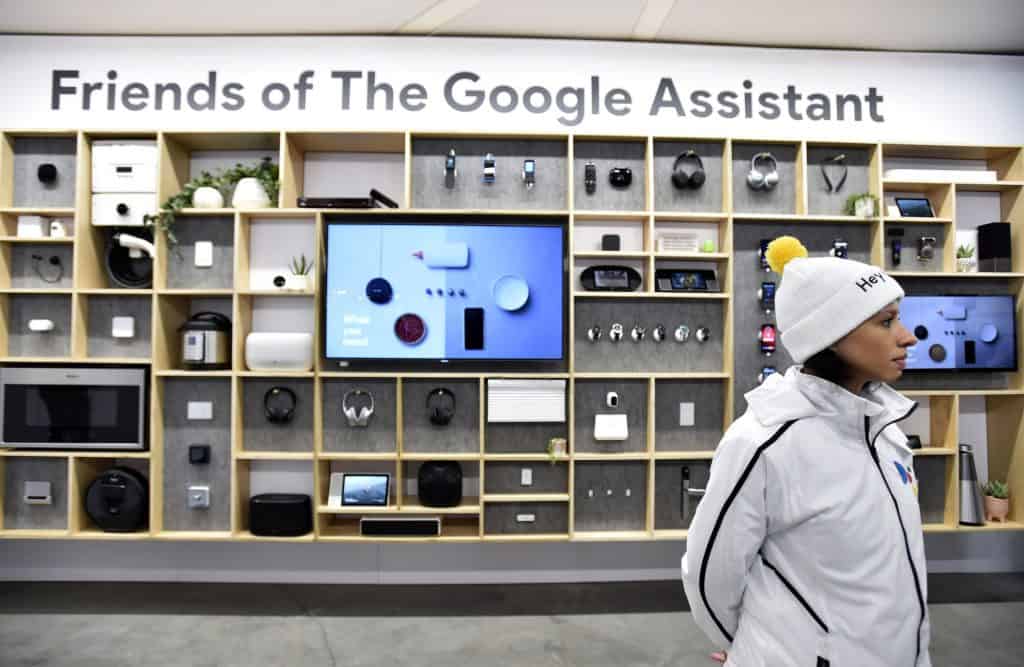
Of course, one can’t mention the Google Assistant without acknowledging that it requires you to give up even more of your personal information to Google. As people finally start to push back and desire more privacy, Google’s making it easier to manage the vast trove of information it has about you. But even with privacy concerns being top of mind, don’t expect Google to pull back on prioritizing the Assistant. In just a few short years, it’s become one of the company’s defining products. If you’re still not convinced, just recall the enormous showcase the company has built in the parking lot of CES the last two years. It’s all about the Assistant, and Google doesn’t want you to forget it.

EVgo is installing fast chargers at Chevron filling stations

They’ve seen which way the wind is blowing.

EV infrastructure company EVgo has teamed up with Chevron to install fast chargers at select filling stations in California. The chargers, with up to 100 kW of capacity, are now running at Menlo Park and under construction at other locations in Los Angeles and Bay Area communities including Aliso Viejo, Manhattan Beach and Venice. “EVgo is helping everyone — including traditional fueling stations — take advantage of the benefits of EV adoption,” EVgo CEO Cathy Zoi said in a statement.

With an EVgo fast charger, you can get about 90 miles of range in 30 minutes, and they work with any EV that accepts DC Fast Charging. Its charging network is one of the larger ones in the US, and the company recently teamed up with GM to offer new Chevy Bolt owners free charging for a limited time. Having them at conventional gas stations is particularly convenient for highway travelers, who can take care of meals and bathroom breaks while their vehicle charges up.

Since customers won’t be buying fuel, service station owners haven’t exactly been motivated to install chargers. However, that’s slowly changing — for instance, one of the largest suppliers of gas dispenser recently invested in Tritrium, and EV charging company. And gas stations can make a cut on the electricity and sell snacks to customers, as I discovered when touring France’s charging infrastructure in a Renault Zoe.

Stocks to Watch: Focus on MGM Growth Properties LLC (MGP), TC Energy Corporation (TRP)

The price of MGM Growth Properties LLC (NYSE:MGP) went down by $-0.27 now trading at $31.89. Their shares witnessed a 25.06% increase from the 52-week low price of $25.5 they recorded on 2018-12-24. Even though it is still -4.42% behind the $33.3 high touched on 2019-04-16. The last few days have been good for the stock, as its price has grew by 0.89% during the week. It has also performed better over the past three months, as it added around 1.82% while it has so far climbed around 11.5% during the course of a year. The stock of MGP recorded 20.75% uptrend from the beginning of this year till date. The 12-month potential price target for MGM Growth Properties LLC is set at $34.88. This target means that the stock has an upside potential to increase by 9.38% from the current trading price.

35 institutions entered new MGM Growth Properties LLC (NYSE:MGP) positions, 121 added to their existing positions in these shares, 58 lowered their positions, and 24 exited their positions entirely.

MGM Growth Properties LLC (MGP) trade volume has increased by 1.22% as around 753,763 shares were sold when compared with its 50-day average volume of traded shares which is 744,694. At the moment, MGP is witnessing a downtrend, as it is trading -0.48% below its 20-day SMA, 0.31% above its 50-day SMA, and 7.22% above its 200-day SMA. The company runs an ROE of roughly 4.2%, with financial analysts predicting that their earnings per share growth will be around 20.83% per annum for the next five year. This will be compared to the 16.9% increase witnessed over the past five years.

The first technical resistance point for MGM Growth Properties LLC (NYSE:MGP) will likely come at $32.12, marking a 0.72% premium to the current level. The second resistance point is at $32.35, about 1.42% premium to its current market price. On the other hand, inability to breach the immediate hurdles can drag it down to $31.5, the lower end of the range. MGP’s 14-day MACD is 0.07 and this positive figure indicates an upward trading trend. The company’s 14-day RSI (relative strength index) score is 49.68, which shows that its stock has been neutral. The 20-day historical volatility for the stock stands at 13.73 percent, which is low when compared to that of the 50-day’s 15.02 percent.

The shares of TC Energy Corporation (NYSE:TRP) has increased by 1.12%, and now trading at $48.69 on the Wall Street in the intra-day deal, with their shares traded now around 1,330,082. This is a decline of -100,306 shares over the average 1,430,388 shares that were traded daily over the last three months. The stock that is trading at $48.69 went higher by 40.8% from its 52-week low of $34.58 that it attained back on 2018-12-26. The stock recorded a 52-week high of $49 nearly 3 days ago on 2019-05-17.

TRP stock has performed well over the past 30 days, as it added 4.17% while its price climbed by 36.39% year-to-date (YTD). Looking at the last few days, it has been good for the stock, as it rose 3.77% over the last week. The stock’s 12-month potential target price is now at $54.51. This means that the stock price might likely increase by 11.95% from its current trading price. 8 out of 12 Wall Street analysts which represents 66.67% rated the stock as a buy while the remaining 16.67% rated it as a hold, with 16.67% of analysts rating it as a sell.

TC Energy Corporation (NYSE:TRP) has been utilizing an ROE that is roughly 15.5%, with stock analysts predicting that the company’s EPS for the next five years will go up by 1.94% per year, following the 9.1% raise that was witnessed during the past five years. The stock at the moment is on a uptrend, trading 2.98% above its 20-day SMA, 5.17% above its 50-day SMA, and 14.44% above its 200-day SMA. In percentage terms, the aggregate TC Energy Corporation shares held by institutional investors is 60.2%. 61 institutions jumped in to acquire TC Energy Corporation (TRP) fresh stake, 227 added to their current holdings in these shares, 163 lowered their positions, and 49 left no stake in the company.

The stock’s 9-day MACD is 0.87 and this positive figure indicates an upward trading trend. The company’s 9-day RSI score is 77.84, which shows that its stock has been overbought. The 20-day historical volatility for the shares stand at 11.11 percent, which is more when compared to that of the 50-day’s 10.01 percent. On the daily chart, we see that the stock could reach the first level of resistance at $49.12, sporting a 0.88% premium to the current level. The next resistance point is at $49.56, representing nearly 1.76% premium to the current market price of TC Energy Corporation (TRP). On the other hand, failure to breach the immediate hurdles can drag it down to $47.58, the lower end of the range.

Stocks to Watch: Autonation, Inc. (AN) and Ensco Rowan PLC (ESV) on the Marquee

The price of AutoNation, Inc. (NYSE:AN) went up by $0.32 now trading at $40.05. Their shares witnessed a 21.99% increase from the 52-week low price of $32.83 they recorded on 2019-03-15. Even though it is still -29.81% behind the $51.99 high touched on 2018-06-22. The last few days have been good for the stock, as its price has grew by 0.63% during the week. It has also performed better over the past three months, as it added around 2.48% while it has so far retreated around -14.62% during the course of a year. The stock of AN recorded 12.18% uptrend from the beginning of this year till date. The 12-month potential price target for AutoNation, Inc. is set at $41. This target means that the stock has an upside potential to increase by 2.37% from the current trading price.

29 institutions entered new AutoNation, Inc. (NYSE:AN) positions, 108 added to their existing positions in these shares, 122 lowered their positions, and 40 exited their positions entirely.

AutoNation, Inc. (AN) trade volume has decreased by -31.61% as around 669,854 shares were sold when compared with its 50-day average volume of traded shares which is 979,470. At the moment, AN is witnessing a downtrend, as it is trading -0.07% below its 20-day SMA, 7.78% above its 50-day SMA, and 2.41% above its 200-day SMA. The company runs an ROE of roughly 14.9%, with financial analysts predicting that their earnings per share growth will be around 8% per annum for the next five year. This will be compared to the 7% increase witnessed over the past five years.

The first technical resistance point for AutoNation, Inc. (NYSE:AN) will likely come at $40.31, marking a 0.65% premium to the current level. The second resistance point is at $40.56, about 1.26% premium to its current market price. On the other hand, inability to breach the immediate hurdles can drag it down to $39.56, the lower end of the range. AN’s 14-day MACD is -0.82 and this negative figure indicates a downward trading trend. The company’s 14-day RSI (relative strength index) score is 56.16, which shows that its stock has been neutral. The 20-day historical volatility for the stock stands at 31.76 percent, which is high when compared to that of the 50-day’s 28.39 percent.

The shares of Ensco Rowan plc (NYSE:ESV) has decreased by -2.78%, and now trading at $10.86 on the Wall Street in the intra-day deal, with their shares traded now around 5,377,204. This is a rise of 417,894 shares over the average 4,959,310 shares that were traded daily over the last three months. The stock that is trading at $10.86 went higher by 1.78% from its 52-week low of $10.67 that it attained back on 2019-05-13. The stock recorded a 52-week high of $38.04 nearly 223 days ago on 2018-10-09.

ESV stock hasn’t performed well over the past 30 days, as it lost -25.97% while its price plunged by -23.74% year-to-date (YTD). Looking at the last few days, it has been tough for the stock, as it tumbled -7.26% over the last week. The stock’s 12-month potential target price is now at $24.84. This means that the stock price might likely increase by 128.73% from its current trading price. 18 out of 28 Wall Street analysts which represents 64.29% rated the stock as a buy while the remaining 35.71% rated it as a hold, with 0% of analysts rating it as a sell.

Ensco Rowan plc (NYSE:ESV) has been utilizing an ROE that is roughly -8.4%, with stock analysts predicting that the company’s EPS for the next five years will go down by 0% per year, following the -17.5% drop that was witnessed during the past five years. The stock at the moment is on a downtrend, trading -19.87% below its 20-day SMA, -28.76% below its 50-day SMA, and -50.54% below its 200-day SMA. In percentage terms, the aggregate Ensco Rowan plc shares held by institutional investors is 52.8%. 42 institutions jumped in to acquire Ensco Rowan plc (ESV) fresh stake, 162 added to their current holdings in these shares, 195 lowered their positions, and 84 left no stake in the company.

The stock’s 9-day MACD is -0.44 and this negative figure indicates a downward trading trend. The company’s 9-day RSI score is 27.21, which shows that its stock has been oversold. The 20-day historical volatility for the shares stand at 68.85 percent, which is more when compared to that of the 50-day’s 59.82 percent. On the daily chart, we see that the stock could reach the first level of resistance at $11.21, sporting a 3.12% premium to the current level. The next resistance point is at $11.57, representing nearly 6.14% premium to the current market price of Ensco Rowan plc (ESV). On the other hand, failure to breach the immediate hurdles can drag it down to $10.51, the lower end of the range.