Archives for May 16, 2019

Ladies, Take These 7 Steps to Own Your Financial Future

Women are the economic engines of more than half of American households. Most will live longer than their male counterparts. And in their lifetimes, four out of five will be solely responsible for their finances.

When thinking about women and financial confidence, it’s important to acknowledge that women are increasingly in the driver’s seat when it comes to financial power. Consider this:

  • 60% of women are in the labor force, with 40% in managerial and professional jobs.
  • The proportion of women with college degrees has tripled over the past 40+ years to 40%.
  • Women account for 51% of the population and control over $11.2 trillion of investable assets.

Yet, with as much wealth as women control, there continues to be challenges when you look at the relationship between women and money, and they struggle with financial wellness.

Women certainly understand the importance of financial wellness, that is, being able to live well today and plan for tomorrow. Yet statistics show that women are 80% more likely than men to be impoverished after they reach the age of 65, according to the National Institute on Retirement Security.

Despite progress when it comes to equal pay, women’s earnings still lag their male peers, with women earning about 80 cents for each dollar a man makes for the same work, according to the U.S. Census Bureau. And with lower income, debt often piles up for women as well. Those factors affect a woman’s ability to set money aside for retirement and leave them at risk of outliving their hard-won earnings.

But perhaps the biggest barrier to building financial wellness is finding the time to consider which steps to take. Women work outside the home nearly as much as men and, on top of that, spend another 28 hours per week on unpaid work at home. Parenting duties have traditionally affected women’s time disproportionately, but caretaking responsibilities increasingly have the same effect. In fact, two-thirds of caretakers looking after an aging or disabled family member or friend are women.

As a result, 44% of women say they haven’t given financial planning the attention it deserves and 46% say they haven’t set aside any money for the future, according to Prudential’s report, “Closing the Retirement Income Gap.”

So it’s certainly no surprise that women say they’re not feeling financially secure, or financially confident — and certainly not for a lack of interest. Of Americans surveyed by Prudential, women prioritized financial planning. And LIMRA’s recent Retirement Risk Perception Report showed that women are more concerned than men about risks to financial security in retirement, worrying about the impact of health care costs, inflation, becoming widowed or becoming a full-time caregiver.

Despite financial challenges, it’s critical to take steps toward owning your own future. Here are a few tips that can help build financial confidence:

1. Just get started.

For women, procrastination in the face of busy lives proves a major obstacle to financial planning, and researchers have found that inaction leads to even more inaction. So, perhaps getting started simply feels like too big of a task. It’s not: You’ll never be too late, and no step forward will be too small, whether you set aside your first $100 for an emergency fund or add extra money to a credit card payment.

2. Learn.

Find resources to help you understand how financial planning syncs up with your needs. Find a podcast on personal finance and listen while you exercise or commute. Talk with friends and family about money — chances are they’re as eager to learn as you are, and research shows that women tend to look for information from others before making decisions. Feed your curiosity on your schedule.

3. Imagine your future.

Don’t get bogged down in the jargon of financial products. Focus instead on what you want for yourself and your family. Do you want to live in an urban area and volunteer after you retire? Do you want to be free to spend as much time with family as possible? Do you want to climb Mount McKinley? The sky’s your limit. Cast your vision, understand how much it will cost and start planning.

4. Start saving.

Nearly two-thirds of Americans — a stunning 63% — have not saved enough money outside of their retirement account to cover a $500 emergency, according to Bankrate.com. So, stash away enough to cover a car repair or failed furnace. And yes, budget to manage day-to-day expenses, with a budget that includes a commitment to save money.

5. Pay down debt.

About a quarter of women report carrying student debt, compared with 18% of men, according to The Cut, a subset of Prudential’s Financial Wellness Census. And because of that higher amount of student debt, women often have more debt in general, with an average balance of $7,793. Understand how much debt you have and start paying it off, without increasing it.

6. Invest.

Forget the myth that you must be wealthy to invest and that financial services are too expensive. You may have a lot, or a little, but you can always begin investing through low-fee services, including some just for women that allow you to begin without a minimum balance. You can also find a trusted financial expert, like an adviser, who can help you match your goals to financial solutions that meet your needs and fit your budget. Your friends may even know someone. At work, understand your benefits and ensure you’re taking advantage of everything you can.

7. Plan your career and negotiate.

When it comes to work, don’t be afraid to negotiate your salary. Know the average salary range for your job, know what you’re worth and make a case to be paid fairly. And if you take a career break to take care of your family, think about how to maintain your skills through volunteering or learning while you take time off from paid work.

It seems almost too simple, but taking time to outline financial goals, then beginning to build a plan to reach those goals, will go a long way toward building financial confidence.


6 Common Expenses You Can Negotiate to Save Money

WHEN PAYING REGULAR expenses, you may feel like you’re working with faceless companies that throw out certain prices for their services, take it or leave it. Many people don’t bother to negotiate. They look at the price, decide whether they’re willing to pay it and move on.

The truth is that many of the expenses consumers pay are negotiable. You can often talk businesses into lowering their fees or rates for you. It just takes a willingness to pick up the phone, call a customer service number and stand up for yourself.

Of course, some things are easier to negotiate than others. Here are six common expenses you can easily negotiate to save lots of money.

  • Credit card interest.
  • Cellphone bills.
  • Cable bills.
  • Insurance.
  • Rent.
  • Medical bills.

Read on for more information about negotiating each common expense.

Credit Card Interest

The finance charges added to your bill by your credit card company are absolutely negotiable. It’s easy to argue for lower finance charges in the form of a lower interest rate on your credit card. The only catch is that if you’re not a good customer – meaning you don’t carry a balance often or you regularly leave your bill unpaid – it may say no, close your card or reduce your credit limit, so you want to use this on a card that you frequently use and pay down regularly.

Call the number on the back of the card, get a person on the phone and state that you need an interest rate reduction or you may cancel your card. If the customer service representative can’t help you, ask to speak to his or her supervisor. If you have a good track record, your rate will often be temporarily or permanently lowered, saving you significant cash with each and every bill.

Cellphone Bills

As long as you’re not in the middle of a contract, cellphone bills can definitely be negotiated. As with credit cards, the advantage you have is a crowded field of businesses competing for you as a customer.

If you don’t have a current cellphone contract, contact your cell provider either through its customer support line or in-store store representatives and state that you need a lower rate and are considering switching carriers because you can’t afford its current rates. The representative will often find a much better deal for you, particularly if you haven’t negotiated in a while. You’ll find that you’re paying much less for the same service or getting more services for your dollar.

Cable Bills

The same thing is true in terms of your cable or satellite television bill: As long as you’re not in the middle of a contract, you have a lot of leverage for negotiating a lower bill, particularly in the current era when many cable subscribers are simply walking away and cutting the cord.

If you want to keep your cable and are not under contract, it is worth your time to give your cable or satellite company a call and negotiate a lower rate. Do some research first and check for competing satellite and cable packages that offer the channels you want, then call up your cable company and tell the representative you’re considering switching to another service due to cost.

Insurance

As with the previously mentioned options, insurance is a crowded market in which companies want customers, so use that to your advantage. Call up the company that holds your auto insurance, homeowners insurance or rental insurance and request a better rate.

With insurance, it’s a good idea to have some competing quotes in hand before you negotiate, so get some quotes from other insurers for the type of insurance you have before negotiating. If you can get a quote for a much better price from another insurer, either your current insurer will work to match or you can switch providers.

Rent

Negotiating for rent works best in an area where there are a lot of rental options or if you have a good relationship with your landlord. If you’re in a tight rental market where there aren’t many rooms available, then you don’t have as much room for negotiation. You’ll also have more success if you are a new renter with a good rental history or have been a good tenant.

In any case, this starts with a conversation with your landlord before signing any agreement or lease. Be clear that you’re willing to move in or continue to rent with a small reduction in the rent bill. Don’t request a 50% cut, or you’ll likely be told no without room for negotiation. Aim for a 10% to 15% reduction instead and assume that negotiation will occur.

Medical Bills

Although medical bills may seem overwhelming, most hospitals are happy to work with you in terms of negotiating a lower total bill and working out a payment plan that won’t put you in a bad financial state. Many medical bills wind up in collections with the medical institution unable to collect much of the debt at all, so they’re usually happy to work with you.

The key here is to be up front with your financial situation right off the bat and make it clear that you’re going to have a difficult time paying off the debt. Simply ask for a reduction in the total bill if possible and, if not, seek out a more friendly payment solution. Many medical institutions are willing to work directly with the patient in these situations. In addition, there are numerous governmental programs you may be able to tap, including financial assistance offered by nonprofit hospitals.

Many bills and expenses can be negotiated, particularly ones in which there is competition for you as a customer or there is a high risk that you’ll be unable to repay. All you have to do is be willing to pick up the phone or stop by and actually talk about a lower bill.

School supplies, smartphones, and diapers — what to buy now before new tariffs hit

Going to the store is about to get a lot more expensive.

As trade tensions between the U.S. and China escalate, with both sides increasing tariffs on a widening selection of products, American consumers will see higher prices as soon as this summer.

Tariffs on goods traded between the U.S. and China have already increased in several stages since early 2018. Now, President Donald Trump has added a 25 percent tariff (up from his original proposal of 10 percent) on another $200 billion worth of Chinese imports, and China hit back with 25 percent duties on another $60 billion worth of U.S. goods.

The president has said that China will bear the brunt of the costs from the tariffs, yet experts say the burden will land squarely on U.S. consumers. (Exactly how those higher prices are passed on depends on a number of factors, including whether suppliers absorb the additional cost, source production in another country or increase prices.)

“The supply chain will try to absorb as much of the blow as they can, then they will move those costs forward to consumers,” said David French, senior vice president of government relations at the National Retail Federation. In preparation, retailers are stocking up on merchandise.

Imports at the nation’s major container ports are expected to see unusually high levels for the remainder of this spring and through the summer, according to the NRF’s monthly Global Port Tracker report.

However, “you can only have so much inventory,” French said. It’s more likely that consumers will end up shouldering most, if not all, of the added costs, he said.

When tariffs were imposed on imported washing machines last year, U.S. manufacturers responded to reduced competition from imports by raising their prices and, as a result, more than the full amount of the tariff was passed on in the way of higher prices.

“U.S. consumers paid 125 percent to 225 percent more,” French said, referring to a working paper co-authored by Ali Hortacsu and Felix Tintelnot of the University of Chicago and Federal Reserve Board economist Aaron Flaaen.

In all, the Federal Reserve Bank of New York and researchers at Princeton and Columbia universities conservatively estimated that U.S. tariffs cost American consumers at least $6.9 billion last year.

A separate report from Oxford Economics estimated that tariffs could cost every American household about $800.

As of the latest tally, the new tariffs will mean higher prices on items such as luggage, mattresses, food and cleaning products. The increase is effective on goods shipped starting last Friday.

“We know with certainty that import prices [on those products] will rise in a month or so,” said Katheryn Russ, a University of California, Davis, professor of economics and specialist in international trade.

Still in the works are additional tariffs on sporting goods, camping equipment, shoes, clothing and consumer electronics, including TVs, video game consoles and laptops.

“This round is much more consumer-focused,” Russ said. And once implemented, “households may start to see resulting price increases on these goods in early fall.”

Buy that iPhone or TV now

To get ahead of the next waves of tariffs, Russ recommends buying some items now, if possible — such as backpacks and other back-to-school supplies — rather than holding off until later in the year.

“If you were planning a large purchase six weeks from now, you may want to make that purchase today,” French said. Still, many Americans don’t have that kind of disposable income on hand, he added.

“It’s just getting more expensive,” added Michael Bonebright, a senior blog editor at comparison shopping site DealNews.

For example, “I would immediately buy a smartphone, rather than wait until Black Friday,” he said. The price for a new iPhone could rise by around $160, analysts estimate.

There will be a similar impact on TVs, Bonebright said. “Fifty-five-inch flat screens are at a historic low, which tells me those prices are going to go up.”

Of course, the same rule applies for everyday purchases, where consumers will be harder hit, such as frozen food and paper goods, including diapers and paper towels.

“Stock up now, so you don’t get sticker shock two or three months down the line,” Bonebright said.

As for large appliances, such as washing machines and dryers, which are already more expensive compared with last year, “stay out of that market,” Bonebright said.

10 Things Retirees Should Never Keep in Their Wallets

One of the worst feelings is reaching for your wallet and finding it’s not there. Panic ensues: Did you leave it at home? Drop it? Were you the victim of a pickpocket? Following our advice won’t salve that panic, but it may lessen it.

Because with every new bank slip that bulges from the seams, your personal information is getting less and less safe. With just your Social Security number, identity thieves can open new credit accounts and make costly purchases in your name. If they can get their hands on (and doctor) a government-issued photo ID of yours, they can do even more damage, including opening new bank accounts. These days, con artists are even profiting from tax-return fraud and health-care fraud, all with stolen IDs.

We talked with consumer-protection advocates to identify the 10 things retirees should purge from their wallets immediately. And when you’re finished, take a moment to photocopy everything you’ve left inside your wallet, front and back. Stash the copies in a secure location such as a home safe or a bank safe deposit box. The last thing you want to be wondering as you’re reporting a lost stolen wallet is, “What exactly did I have in there?”

Wads of Cash

Maybe it’s ingrained. Your dad carried a wallet fat with cash and you’re carrying on the tradition. Stop.

Flashing a wad of cash, even unintentionally, makes you a target for robbery. And if you lose that wallet, you can cancel lost or stolen credit cards and not be affected. But that cash money is gone forever.

Though 30% of all U.S. transactions are done in cash, according to a Federal Reserve study, some retailers are pushing for a cashless system — meaning they won’t accept cash. Among them so far are Amazon Go stores and Sweetgreen restaurants, though lawmakers in some states and cities, including New Jersey, Rhode Island and Philadelphia, are enacting legislation banning cashless stores, arguing they’re discriminatory.

Still, it may be time for boomers to join millennials in this cashless quest (one in 10 millennials use their digital wallet–Apple Pay, Zelle, Venmo–to pay for purchases). They’re not alone: 34% of Americans under age 50 make no cash purchases in a typical week, according to a 2018 survey by The Pew Research Center.

If you’re rightly concerned about running up credit card debt, use a a debit card. It’s just like cash.

Social Security Card

Losing your Social Security number is a sure ticket to identity theft. Once stolen, rogue identity thieves could use that number to get loans in your name or obtain credit cards. For that reason, identity theft experts say, never carry your Social Security card — or even a piece of paper with your Social Security number on it.

That task done, make sure nothing else in your wallet has your Social Security number on it, including other forms of identification (expunge your spouse’s and children’s Social Security numbers, too, if you carry those around in your wallet). States can no longer display your SSN on newly issued driver’s licenses, state ID cards and motor-vehicle registrations. However, if you still have any old photo IDs with your Social Security number on them, request a new ID immediately. Even if there’s an additional fee, it’s worth it to protect your identity.

And check your checks. Some old-timers used to have their Social Security number printed on their checking account checks thinking it would be a better form of ID for the payee. Destroy those checks if you have them lying around or carry one in your wallet.

Password Cheat Sheet

We all have them, someplace: password cheat sheets. That’s because the average American uses at least seven different passwords to access everything from ATMs to credit card accounts. The smart play, experts say, is to have individual passwords made up of unique combinations of numbers, letters and symbols that you change regularly. But how do you remember them all? For 73% of people, according to a 2017 survey by the Pew Research Center, it’s a cheat sheet. And one of the worst places for a password cheat sheet with your ATM card’s PIN is your wallet.

There are better options: If you have to keep passwords jotted down somewhere, keep them in a locked box in your house. You should also consider a digital password manager. One to consider is LastPass. The basic service is free, or you can upgrade to the premium version for $3 per month.

A password manager, such as the one built into Apple’s Safari browser, can also help you create strong, unique passwords for each of your accounts. Passwords generated by the service will still be long, unpredictable and impossible to remember. But that’s okay because you’ll never need to type them in yourself.

It’s also a good idea to enable two-factor authentication on any account that allows you to. You’ll enter your username and password as usual, but the account will then confirm your identity by asking you to enter a code that has been sent to your smartphone or e-mail address.

Spare Keys

A lost wallet is bad enough. A lost wallet containing your spare house key along with your ID that shows your home address is an invitation for real-world thieves to break into your home. Security experts say don’t put your property, and your family, at risk. (And even if your home isn’t robbed after losing a spare key, you’ll likely end up paying a locksmith to change the locks for peace of mind.)

The best move is to keep your spare key with a relative or friend. If you’re ever locked out, it may take a little bit longer to retrieve your backup key, but that’s a relatively minor inconvenience.

Or get with modern times and forget about physical keys. Get smart locks for your home’s entry door. Smart locks allow you to unlock (and lock) that door with a keypad or an app. You’ll also be able to remotely lock or unlock the door, and some models allow you to create a digital key for one-time use, say to let in housekeepers.

Blank Checks

Old school, yes, but some of us still write checks, though far fewer than back in the day. And for emergency purposes, our parents said, carry a blank check in your wallet, “just in case.” That’s not good advice.

Blank checks are risky. In the wrong hands, a blank check could be used to quickly drain money from your bank account. And even if the stolen check isn’t used, the check has on it your bank account and routing numbers, a target for electronic withdrawals from your account. To pile on, that blank check will also likely have your home address on it (and some people have added their Social Security numbers, too, another no-no).

The better option: Only carry with you the check or checks you think you might need immediately, and leave the checkbook at home.

Passport

A passport, like any government-issued photo ID, can be a weapon used against your finances if it falls into the wrong hands, ID-theft experts warn. It could be used to travel in your name, get a new copy of your Social Security card or open bank accounts.

When traveling in the U.S., have with you only your driver’s license or other personal ID. Leave your passport book and wallet-size passport card in a secure place such as a fire-proof home safe. When traveling abroad, experts advise, carry a photocopy of your passport and leave the original in a hotel safe.

Multiple Credit Cards

You could slim down that fat wallet by rolling with fewer credit cards in it. That way, if your wallet is lost or stolen, you won’t have as many credit cards that you’ll have to cancel. Our recommendation: Carry one rewards card for everyday purchases as well as a backup card for unplanned purchases or emergencies.

And as we mentioned, photocopy the front and back of everything in your wallet, or write the cancellation phone numbers or websites for your credit cards on a piece of paper at home. The “lost or stolen” number is typically on the back of your credit card, but if your credit card is stolen, that won’t do you any good.

Birth Certificate

Your birth certificate, stolen, won’t get anyone very far. But if they have it in conjunction with other types of fraudulent IDs, security experts say, thieves could do some major damage to your finances.

Be especially vigilant on the rare occasions when you’re required to carry all of your most sensitive documents at the same time. One example of that is at a mortgage closing, when you might need to bring your birth certificate, Social Security card and passport. Don’t let them out of your sight, and take them straight home before you celebrate that closing. It’s not a good idea to leave them in your car.

A Stack of Receipts

You don’t need all those receipts jammed into your wallet. While businesses have not been allowed to print on paper receipts more than the last five digits of your credit card number for years, ID-theft experts say skilled thieves could use those last five digits and merchant information on receipts to phish for the remaining numbers on your credit card.

Remove those receipts from your wallet daily and shred them. If you need to retain receipts, for possible returns or warranties, ask the merchant to skip the paper and send you a digital receipt instead. Most retailers will. If you have a printed receipt you need to keep, consider making it digital and storing it securely in the cloud. Apps that do this include Shoeboxed, which lets you create and categorize digital copies of your receipts and business cards. Plans start at $29 per month.

Medicare Card

Some retirees still have Medicare cards with their Social Security numbers printed on them. That’s changing. A new law requires the Centers for Medicare and Medicaid Services to remove SSNs from Medicare cards. The rollout of new Medicare cards without SSNs is in its final stages in 2019, but some might still be stuck with an old card, which should be destroyed as soon as the replacement card is received.

In the meantime, if for any reason you still have an old Medicare card with your Social Security number on it, remove it from your wallet and replace it with a photocopy of the card. Black out your Social Security number on that photocopy. If an appointment requires your full Social Security number, you can provide it verbally from memory as needed.

Google recalls some Titan security keys after finding Bluetooth vulnerability

The company will provide users with a free replacement.

Google is recalling its Bluetooth Titan security keys due to a vulnerability that could allow attackers to connect to your device. No need to panic — the bug only seems to apply to a very narrow set of circumstances, according to a blog post published by Google on Wednesday. The attacker would have to be within 30 feet of you during the moment you press the button on your Titan Key to activate it, and also know your username and password. In this scenario, the attacker could then use their device to act as your security key and access your device.

Not all Titan Security Keys have the bug, which Google says is due to a misconfiguration in the key’s Bluetooth pairing protocols. Only the Bluetooth Low Energy (BLE) model is impacted. If your Titan Security Key has a “T1” or “T2” on the back of it, it means it has the security bug and is eligible for a replacement from Google.

But even if your Titan Security Key has the bug, don’t stop using it while waiting for a replacement. Google warns that even a key with a security bug is safer than using no key at all. Just take extra precautions, such as using your security key away from other people and immediately unpairing it after you sign-in to your Google account. Google has more specific instructions for iOS and Android devices, which you can read here.

The large number of security flaws found in Bluetooth-enabled devices in recent years has raised questions of whether the technology is safe. Yubico, Google’s competitor in the security key space, criticized Google for launching a Bluetooth-enabled security key. “BLE does not provide the security assurance levels of NFC and USB, and requires batteries and pairing that offer a poor user experience,” wrote the company in a blog post last year.

Armis CTO and co-founder Nadir Izrael similarily told Engadget in an email: “Bluetooth is a complicated protocol and I’m not surprised to see an issue. This vulnerability highlights the importance of testing to ensure there are no exposures or misconfigurations when implementing the Bluetooth protocol.

We saw similar issues with BlueBorne, where we identified how a Bluetooth implementation level issue can lead to an RCE or Man-in-the-Middle attack. Google is a good organization focused on security. But if this got by them, imagine the issues facing the potential 10 to 12 billion other Bluetooth devices out there. Are those manufacturers making sure they have closed those security gaps?”

But the scope of the threat impacting the Titan security keys appears to be pretty small, according to Lauren Weinstein of People for Internet Responsibility. He added that using the Bluetooth security key for two-factor authentication is far safer than turning it off altogether or relying on SMS authentication. “(…the Titan security bug) needs to be fixed of course, and Google is doing that by offering free replacement keys, but for most users it is unlikely to be a problem in practice,” said Weinstein in a direct message to Engadget.

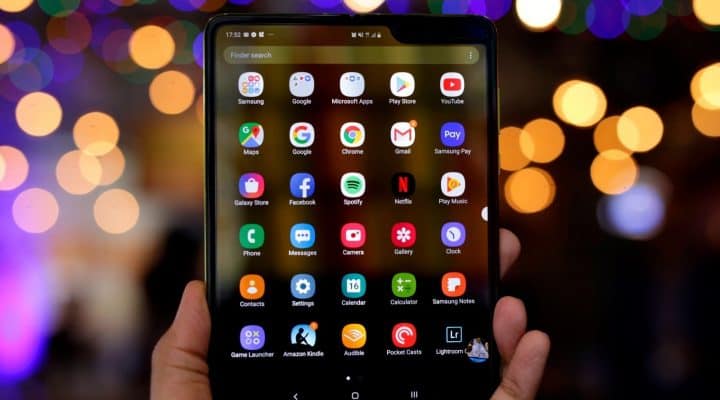
Here’s how Samsung may fix the Galaxy Fold’s design flaws

The display protection and hinge gaps would be covered up.

When Samsung said it was delaying the release of the Galaxy Fold to fix its design issues, it didn’t really say how it would address the flaws. You might have a clearer idea after today, though. Yonhap News claims Samsung will tuck the protective display layer into the body, preventing users from peeling it off under the mistaken belief that it’s an everyday screen protector. It will also block the gaps at the top and bottom of the hinge to prevent debris from wrecking the foldable display, according to the South Korean news outlet.

The firm is supposedly testing the Fold on Korean networks, and the results would affect the timeliness of the release. It’s “expected” to arrive in June, Yonhap said, although that’s not set in stone.

If this is accurate, Samsung would do what many expected — directly address the design weaknesses reviewers found ahead of the originally planned April 26th launch. Whether or not these tweaks are enough for everyday users isn’t certain. They should prevent glaring durability problems, though, and might reassure early adopters who’d otherwise be jittery.