Archives for May 7, 2019

Windows 10 will get a built-in Linux kernel this summer

2019 really is the year of the Linux desktop… on Windows.

The suddenly-cozy relationship between Linux and Windows is taking another step forward, as Microsoft announced in a blog post that it’s going to ship a full Linux kernel in Windows 10. It will arrive first with Insider preview builds by the end of June, underpinning the new Windows Subsystem for Linux 2. The first release will be based on version 4.19, the latest stable Linux release, and will keep up with each stable release going forward. According to Microsoft this isn’t its first release of a Linux kernel — that came last year on Azure Sphere — but it is the first time on Windows.

By making this switch as a “drop-in replacement” for the current emulator, it should speed up performance significantly, with faster bootup and more efficient use of memory. Users can interface with it either by installing a distribution from the Microsoft Store or sideloading.

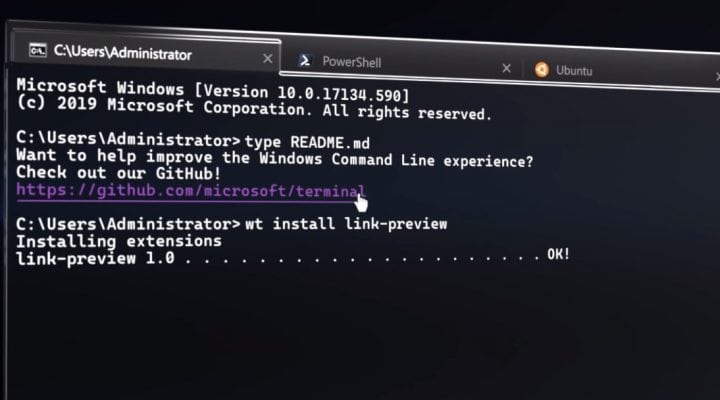
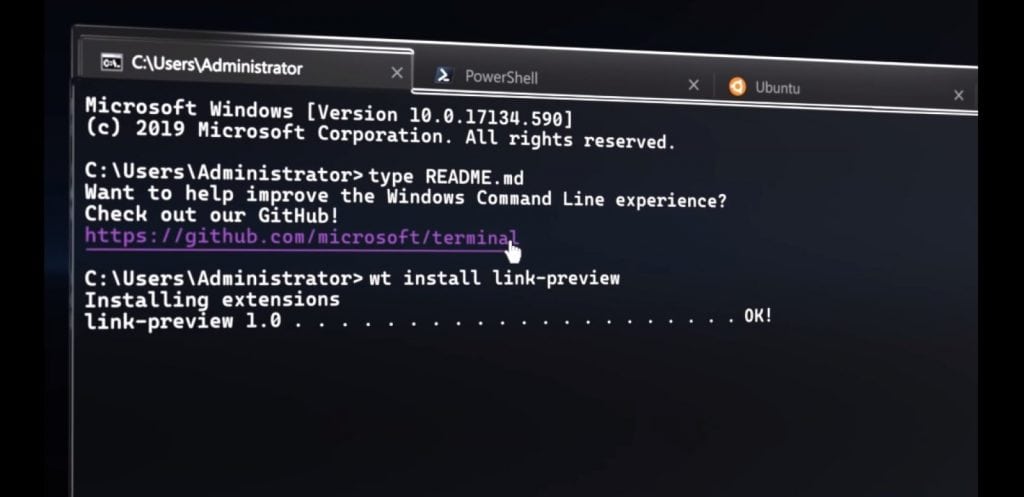
Also, the kernel itself will be open source, with instructions available to create your own, and Microsoft has pledged to contribute changes it makes open for others to use. All of this news also came after Microsoft earlier announced a new version of its Windows Terminal command line app.


Alexa takes hands-free voice commands on Windows 10 PCs

KRAKOW, POLAND – 2018/11/08: In this photo illustration, the Amazon Alexa logo is seen displayed on an Android mobile device.

Your computer is now an extra-large Echo speaker.

Amazon’s Alexa app for Windows 10 now behaves more like you’d expect it to — that is, it behaves more like an Echo speaker. An update to the software has introduced the option to invoke Alexa solely through your voice, whether or not the app is in the foreground. As long as you’re within earshot of the microphones, you won’t have to sit right at your PC to turn on the lights or check the weather. Push-to-talk is still an option if you don’t want to risk accidentally waking your voice assistant.

Simultaneously, the app has also introduced voice control for Pandora’s online radio.

You could see this coming. Microsoft has become increasingly comfortable with Alexa on Windows as Cortana becomes less of a direct competitor. Amazon’s addition of hands-free voice to its Alexa app is really just a logical extension of that warming relationship between the two companies. Even so, it’s notable that the AI helper has become a first-class citizen in the Windows world.

AMD and Cray are building the ‘world’s most powerful supercomputer’

“Frontier will accelerate innovation in AI,” Sec. Rick Perry said.

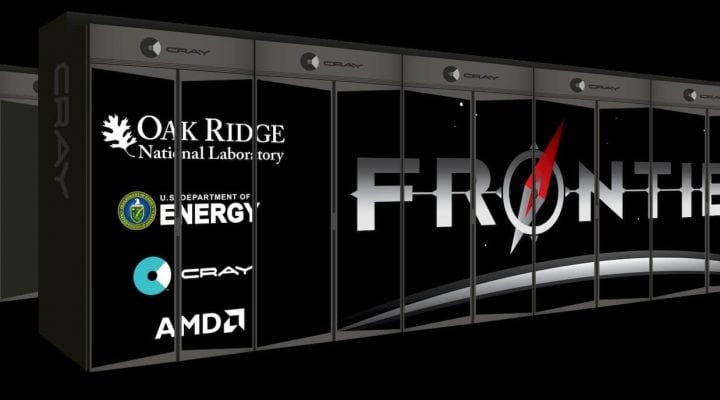
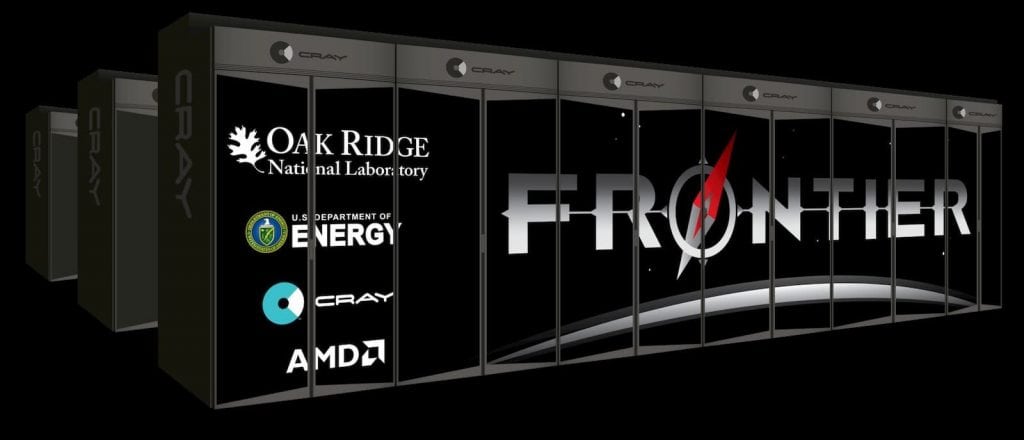
The US may be set to hang onto the crown of having the world’s most powerful supercomputer for some time. Cray Computing and AMD are building an exascale machine with the Oak Ridge National Laboratory. The system is set to debut in 2021, the same year Cray and Intel are scheduled to deliver the Aurora exascale supercomputer to the Argonne National Laboratory.

“Frontier’s record-breaking performance will ensure our country’s ability to lead the world in science that improves the lives and economic prosperity of all Americans and the entire world,” Secretary of Energy Rick Perry said in a statement. “Frontier will accelerate innovation in AI by giving American researchers world-class data and computing resources to ensure the next great inventions are made in the United States.”

Cray CEO Pete Ungaro said that at 1.5 exaflops, Frontier will have the combined power of the current top 160 supercomputers in the world. An exaflop is equivalent to a quintillion calculations per second. If everyone on Earth carried out one calculation per second, it would take us more than six years to perform as many calculations as Frontier will be able to in a single second.

Oak Ridge National Laboratory director Thomas Zacharia noted that when it’s activated, Frontier will be the “most powerful AI machine anyone has seen up until that point in time.” He also said it will be “by far the single most expensive machine that has ever been procured,” with the contract for Frontier’s system and technology worth more than $600 million. Oak Ridge also houses Summit, which is the current supercomputer record holder.

Frontier will use Cray’s Shasta supercomputer system and Slingshot interconnect, as well as AMD’s GPUs and custom EPYC processors. The companies are working together on programming tools to help developers harness the supercomputer’s power, while Cray, AMD and Oak Ridge jointly developed a custom environment for the hardware. Frontier will take up almost the same space as 2 basketball courts, include 90 miles of cabling and have enough network bandwidth to download 100,000 HD movies in a single second.

Scientists and engineers will be able to use Frontier for an array of projects, including climate change forecasting, predicting the path of hurricanes and developing new pharmaceuticals. They’ll also be modeling fusion energy sources, simulating combustion engine systems and conducting cosmology simulations for the distribution of billions of galaxies.

It remains to be seen whether Aurora or Frontier will be the first exascale supercomputer to be activated in the US. But there’s plenty of competition facing the country in the exascale sphere. China might pip the US to be the first with such a supercomputer, as the National Supercomputing Center plans to build one by late 2020 or in the first half of 2021. Japan aims to turn on an exascale machine in 2021, and Europe may have its own exascale systems up and running in 2022 or 2023.

How to watch Google’s opening I/O 2019 keynote at 1PM ET

Pixel phones, AI news and more are likely on deck.

This year’s Google I/O keynote promises to be a special one. For the first time in a long while, Google has confirmed there will be new hardware — new Pixel phones are virtually certain, while a Nest smart display could also be in the cards. And that’s not including the usual news about AI, Chrome and the seemingly inevitable surprises each year. Thankfully, you don’t have to miss a minute of it. Google is livestreaming the keynote both below and on its I/O event page starting at 1PM Eastern. And if you can’t watch or just want to stay one step ahead of the action, you can tune into our liveblog to follow the developer conference as it unfolds.

Stocks to Watch: Golden Star Resources LTD. (GSS), Real Goods Solar, Inc. (RGSE)

The price of Golden Star Resources Ltd. (NYSE:GSS) went down by $-0.02 now trading at $4.06. Their shares witnessed a 67.08% increase from the 52-week low price of $2.43 they recorded on 2018-11-27. Even though it is still -15.02% behind the $4.67 high touched on 2019-04-12. The last few days have been good for the stock, as its price has grew by 2.01% during the week. It has also performed better over the past three months, as it added around 8.85% while it has so far climbed around 20.01% during the course of a year. The stock of GSS recorded 28.89% uptrend from the beginning of this year till date. The 12-month potential price target for Golden Star Resources Ltd. is set at $4.97. This target means that the stock has an upside potential to increase by 22.41% from the current trading price.

10 institutions entered new Golden Star Resources Ltd. (NYSE:GSS) positions, 28 added to their existing positions in these shares, 24 lowered their positions, and 16 exited their positions entirely.

Golden Star Resources Ltd. (GSS) trade volume has decreased by -70.65% as around 87,123 shares were sold when compared with its 50-day average volume of traded shares which is 296,810. At the moment, GSS is witnessing a downtrend, as it is trading -3.83% below its 20-day SMA, 1.99% above its 50-day SMA, and 14.09% above its 200-day SMA. The company runs an ROE of roughly -60.4%, with financial analysts predicting that their earnings per share growth will be around 10% per annum for the next five year. This will be compared to the 47% increase witnessed over the past five years.

The first technical resistance point for Golden Star Resources Ltd. (NYSE:GSS) will likely come at $4.11, marking a 1.22% premium to the current level. The second resistance point is at $4.17, about 2.64% premium to its current market price. On the other hand, inability to breach the immediate hurdles can drag it down to $3.97, the lower end of the range. GSS’s 14-day MACD is -0.07 and this negative figure indicates a downward trading trend. The company’s 14-day RSI (relative strength index) score is 48.93, which shows that its stock has been neutral. The 20-day historical volatility for the stock stands at 49.73 percent, which is low when compared to that of the 50-day’s 56.76 percent.

The shares of Real Goods Solar, Inc. (NASDAQ:RGSE) has decreased by -6.52%, and now trading at $0.07 on the Wall Street in the intra-day deal, with their shares traded now around 380,029. This is a decline of -1,266,559 shares over the average 1,646,588 shares that were traded daily over the last three months. The stock that is trading at $0.07 went higher by 16.67% from its 52-week low of $0.06 that it attained back on 2019-04-26. The stock recorded a 52-week high of $1.64 nearly 363 days ago on 2018-05-09.

RGSE stock hasn’t performed well over the past 30 days, as it lost -55.85% while its price plunged by -86.6% year-to-date (YTD). Looking at the last few days, it has been tough for the stock, as it tumbled -20.5% over the last week. The stock’s 12-month potential target price is now at $2.

Real Goods Solar, Inc. (NASDAQ:RGSE) has been utilizing an ROE that is roughly 0%, with stock analysts predicting that the company’s EPS for the next five years will go down by 0% per year, following the 0% drop that was witnessed during the past five years. The stock at the moment is on a downtrend, trading -39.64% below its 20-day SMA, -70.15% below its 50-day SMA, and -81.9% below its 200-day SMA. In percentage terms, the aggregate Real Goods Solar, Inc. shares held by institutional investors is 1.88%. 5 institutions jumped in to acquire Real Goods Solar, Inc. (RGSE) fresh stake, 5 added to their current holdings in these shares, 10 lowered their positions, and 6 left no stake in the company.

The stock’s 9-day MACD is -0.0097 and this negative figure indicates a downward trading trend. The company’s 9-day RSI score is 24.77, which shows that its stock has been oversold. The 20-day historical volatility for the shares stand at 205.31 percent, which is more when compared to that of the 50-day’s 180.36 percent. On the daily chart, we see that the stock could reach the first level of resistance at $0.0765, sporting a 8.5% premium to the current level. The next resistance point is at $0.0827, representing nearly 15.36% premium to the current market price of Real Goods Solar, Inc. (RGSE). On the other hand, failure to breach the immediate hurdles can drag it down to $0.0637, the lower end of the range.

Stocks to Watch: Wake-up Call for Synacor, Inc. (SYNC), Genetic Technologies Limited (GENE)

The price of Synacor, Inc. (NASDAQ:SYNC) went down by $-0.05 now trading at $1.55. Their shares witnessed a 10.71% increase from the 52-week low price of $1.4 they recorded on 2018-12-21. Even though it is still -61.29% behind the $2.5 high touched on 2018-08-09. The last few days have been good for the stock, as its price has grew by 3.33% during the week. It has also performed poorly over the past three months, as it lost around -13.41% while it has so far retreated around -11.43% during the course of a year. The stock of SYNC recorded 4.73% uptrend from the beginning of this year till date. The 12-month potential price target for Synacor, Inc. is set at $2.48. This target means that the stock has an upside potential to increase by 60% from the current trading price.

5 institutions entered new Synacor, Inc. (NASDAQ:SYNC) positions, 17 added to their existing positions in these shares, 15 lowered their positions, and 7 exited their positions entirely.

Synacor, Inc. (SYNC) trade volume has increased by 47.06% as around 92,044 shares were sold when compared with its 50-day average volume of traded shares which is 62,590. At the moment, SYNC is witnessing a uptrend, as it is trading 0.65% above its 20-day SMA, -5.58% below its 50-day SMA, and -13.53% below its 200-day SMA. The company runs an ROE of roughly -14.4%, with financial analysts predicting that their earnings per share growth will be around 25% per annum for the next five year. This will be compared to the -31.2% decrease witnessed over the past five years.

The first technical resistance point for Synacor, Inc. (NASDAQ:SYNC) will likely come at $1.6, marking a 3.13% premium to the current level. The second resistance point is at $1.65, about 6.06% premium to its current market price. On the other hand, inability to breach the immediate hurdles can drag it down to $1.49, the lower end of the range. SYNC’s 14-day MACD is 0.03 and this positive figure indicates an upward trading trend. The company’s 14-day RSI (relative strength index) score is 48.58, which shows that its stock has been neutral. The 20-day historical volatility for the stock stands at 36.52 percent, which is high when compared to that of the 50-day’s 31.93 percent.

The shares of Genetic Technologies Limited (NASDAQ:GENE) has decreased by -6.58%, and now trading at $0.71 on the Wall Street in the intra-day deal, with their shares traded now around 83,083. This is a rise of 29,639 shares over the average 53,444 shares that were traded daily over the last three months. The stock that is trading at $0.71 went higher by 39.22% from its 52-week low of $0.51 that it attained back on 2018-12-20. The stock recorded a 52-week high of $2.04 nearly 295 days ago on 2018-07-16.

GENE stock hasn’t performed well over the past 30 days, as it lost -18.39% while its price climbed by 29.89% year-to-date (YTD). Looking at the last few days, it has been tough for the stock, as it tumbled -5.33% over the last week. The stock’s 12-month potential target price is now at $12.5.

Genetic Technologies Limited (NASDAQ:GENE) has been utilizing an ROE that is roughly -82.5%, with stock analysts predicting that the company’s EPS for the next five years will go down by 0% per year, following the 35.3% raise that was witnessed during the past five years. The stock at the moment is on a downtrend, trading -11.2% below its 20-day SMA, -15.29% below its 50-day SMA, and -27.02% below its 200-day SMA. In percentage terms, the aggregate Genetic Technologies Limited shares held by institutional investors is 3.8%. 0 institutions jumped in to acquire Genetic Technologies Limited (GENE) fresh stake, 3 added to their current holdings in these shares, 5 lowered their positions, and 3 left no stake in the company.

The stock’s 9-day MACD is -0.02 and this negative figure indicates a downward trading trend. The company’s 9-day RSI score is 30.77, which shows that its stock has been oversold. The 20-day historical volatility for the shares stand at 52.92 percent, which is less when compared to that of the 50-day’s 58.14 percent. On the daily chart, we see that the stock could reach the first level of resistance at $0.76, sporting a 6.58% premium to the current level. The next resistance point is at $0.8, representing nearly 11.25% premium to the current market price of Genetic Technologies Limited (GENE). On the other hand, failure to breach the immediate hurdles can drag it down to $0.66, the lower end of the range.