
Archives for May 4, 2019

Stocks to Watch: Open Text Corporation (TSX:OTEX) Up +3.68%

At close of market on Thursday, Open Text Corporation (TSX:OTEX) stock finished trading at +3.68%, bringing the stock price to $53.50 on the Toronto Stock Exchange. The stock price saw a low of $51.98 and a high of $54.30.

The company’s stock was traded 9,955 times with a total of 1,238,897 shares traded.

Open Text Corporation has a market cap of $14.38 billion, with 268.77 million shares in issue.

Open Text Corp grew out of a technology project involving the Oxford English Dictionary at Canada’s University of Waterloo in the mid-1980s. Its software allows clients to archive, aggregate, retrieve, and search unstructured information (such as documents, e-mail, presentations). The company is based in Ontario, Canada.


Stocks to Watch: Green Organic Dutchman (OTCQX:TGODF) Down -6.32%

At close of market on Thursday, Green Organic Dutchman (OTCQX:TGODF) stock finished trading at -6.32%, bringing the stock price to $3.15 on the OTCQX Marketplace. The stock price saw a low of $3.07 and a high of $3.31.

The company’s stock was traded 1,071 times with a total of 719,903 shares traded.

Green Organic Dutchman has a market cap of $863.67 million, with 274.37 million shares in issue.

The Green Organic Dutchman Holdings Ltd through its subsidiary operates as a cannabinoid-based research and development company in Canada. The company has two operating segments namely production and distribution of cannabis and related products and Hemp related products. It produces organic cannabis products, including organic dried cannabis, cannabis oils and edibles, fresh cannabis, and seeds for medical applications. Geographically, it generates maximum revenue from Europe.

Digital economy is bigger than mining, forestry, oil and gas, StatsCan says

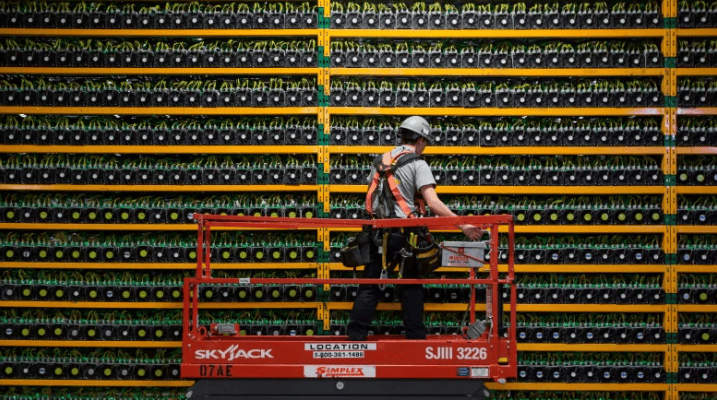
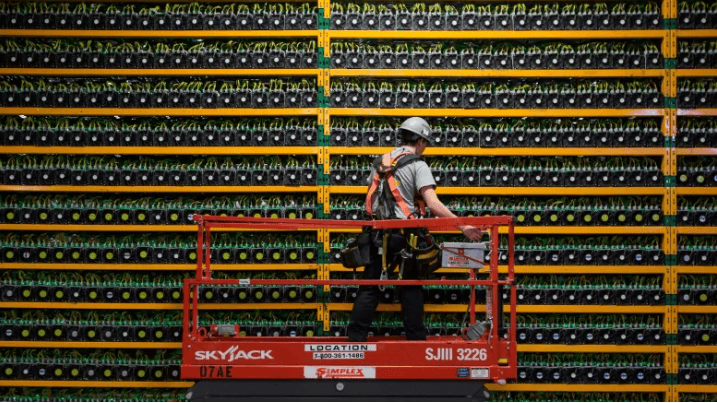
A technician inspects the backside of bitcoin mining at Bitfarms in Saint Hyacinthe, Que., last year. The scale of the digital economy in the economy is growing, new numbers from Statistics Canada suggest.

886,114 people work in Canada’s digital economy, figure has grown by 37% since 2010

Canada’s digital economy is growing much faster than the rest of the economy and is already bigger than staple industries such as mining, forestry and oil and gas.

That’s one of the main takeaways from a new Statistics Canada report released Friday that looked at the impact of technology-focused parts of the economy that are becoming increasingly important in the country’s overall economic picture.

While it’s not an industry on its own per se, the data agency defines the digital economy as any economic activity that is either affected by or enabling digitization. So the term would include everything from e-commerce to telecommunications, and software to consumer and business services that are provided over the internet.

Digital economy worth over $109B

All in all, Statistics Canada calculates that as of 2017, Canada’s digital economy was worth $109.7 billion, or about 5.5 per cent of the entire economy that year.

That’s a bigger economic bite than mining, quarrying, and oil and gas extraction (4.8 per cent), or retail (five per cent) or the agriculture, forestry, fishing and hunting sector took (at 1.8 per cent.)

It still lags behind manufacturing (10 per cent), construction (8.1 per cent) health care (7.5 per cent), and finance and insurance (6.7 per cent).

The digital economy includes everything from telecommunications to services delivered over the internet

Between 2010 and 2017, Canada’s digital economy grew by 40.2 per cent, Statistics Canada said. That compares with 28 per cent in the rest of the economy. The digital economy outpaced the rest of the economy every year in that time frame except in 2011 and 2017, two years that saw strong growth in the energy sector.

E-commerce more than triples

Within the digital economy, telecommunications is the biggest sector, but it’s getting caught by other parts. E-commerce is the fastest-growing segment, going from $4.2 billion in 2010 to more than $13.6 billion in 2017.

All that economic activity is leading to jobs, too.

Economist Brendon Bernard at job search firm Indeed Canada says he was glad to see Statistics Canada attempt to quantify the nebulous world of the “digital economy” because it’s hard to track what’s happening in it without reliable data.

“In some cases, what’s included in the digital economy isn’t actually particularly new and isn’t growing particularly quickly,” he says, noting that sectors such as telecommunications and hardware have been around for a while and aren’t exactly growing by leaps and bounds at the moment.

The growth in things like e-commerce and online services will be the ones to watch in the future, he says — because they’ve even changed the way things work at his company’s core business: recruitment.

As recently as 2016, Bernard says about two thirds of job vacancies were posted on digital job boards. Today that ratio is up to three in four, and it’s not industry-specific: whether it’s an oil company trying to find a welder for a pipeline or a tech firm in search of a coder, when it comes to hiring, “We also see that increasingly shifting online,” he said.

Statistics Canada tabulated there were 886,114 jobs in the digital economy in 2017, about 4.7 per cent of all the jobs that year — and almost three times the 329,600 people who worked in forestry, fishing, mining, quarrying, oil and gas that year.

The digital job market is growing faster than the regular one, too. Its job market grew by 37 per cent between 2010 and 2017. That compares to 8.6 per cent growth in the rest of the economy over that period.

The digital economy also grew in every province and territory, except in three places — Manitoba, Yukon and Nunavut — it grew by less than the rest of the economy did.

Ultimately, Bernard says while it’s nice to see growth in the digital economy, the sector still has a long way to go before replacing the manufacturing and natural resource pillars of Canada’s economy. “So much investment in the Canadian economy really is driven by natural resource extraction,” he said. 

“Even during down times, it has a huge footprint.”

Fiat Chrysler 1st quarter profit falls 47%

Fiat Chrysler Automobiles reported a 47 per cent drop in profits for the first quarter of 2019 and a 14 per cent drop in sales.

Vehicle sales drop 14%, but most of the profit comes from North America

Carmaker Fiat Chrysler Automobiles on Friday reported a 47 per cent drop in profits for the first quarter of the year due largely to changes in production, but expressed confidence that new models will help the company meet full-year profit targets.

Net profits fell to 508 million euros ($763 million Cdn) from 951 million euros in the same quarter a year earlier, while net revenue sank five per cent to 24.5 billion euros ($36.8 billion).

CEO Mike Manley said the rough quarter was expected, and stressed that the carmaker was taking action to address weakness in Europe, which posted a loss of 19 million euros ($28 million), and Asia, which lost nine million euros ($13 million).

“We expect to see sequential quarters improving throughout the year, and as a result we have confidence in our guidance and believe that 2019 will be another solid year for FCA,” Manley said.

Production changes in North America

Fiat Chrysler has cut a shift at its Windsor, Ont., assembly plant has invested in new production in the U.S. to make electric and hybrid versions of Jeep SUVs.

It sold 556,000 vehicles in North America, with fewer Chrysler and Dodge brand products sold as well a drop in Jeep sales. The fall in sales was offset by higher pricing, the company said. North American revenues were 16 billion euros ($24 billion).

North America accounted for virtually all profits, with Latin America making a small contribution.

Fiat Chrysler maintained its guidance for full year earnings, saying it still expects adjusted earnings before interest and taxes above 6.7 billion euros ($10 billion).

Shares in the company rose five per cent as the earnings figures beat many analysts’ forecasts.

14% fewer vehicles shipped

The carmaker said it shipped 1.037 million vehicles in the first quarter, down 14 per cent from a year earlier, due mainly to the decision not to produce the old Jeep Wrangler alongside the new model. That was only partially offset by increased sales of the Ram.

Luxury marquee Maserati saw sales drop by 41 per cent, with profits diving 75 per cent to 11 million euros ($16.5 million). Manley said that sales and marketing resources have been added to boost sales, acknowledging that “the first half will be a low point in Maserati performance, with improvements coming in the second half.”

The carmaker has been at the centre of merger speculation, focused in particular on the French mass-market competitors PSA Peugeot and Renault.

Manley, who has previously stressed that the company can continue to make it as an independent player, told analysts that he expects further consolidation in the industry in the near-term.

“I don’t want to get in details but I honestly believe that the next two three years are going to yield very significant opportunities in this area,” Manley said. He told analysts to stay tuned for future conference calls.

A&W raises distribution

A&W Revenue Royalties Income Fund increased its distributions to unitholders as it reported its first-quarter profit fell compared with a year ago due to a non-cash charge.

The fund says it will now pay a monthly cash distribution of 15.4 cents per unit, up from 14.7 cents per unit.

The increased payment to unitholders came as A&W reported a profit of $5.7 million, compared with $6.3 million a year ago due to a non-cash loss on an interest rate swap.

Sales reported by the restaurants in the royalty pool increased to $308.8 million compared with $267.7 million, while royalty income grew to $9.3 million compared with $8.0 million a year ago.

Same-store sales increased 10.0 per cent, while the number of restaurants in the royalty pool grew to 934 compared with 896 a year ago.

A&W Revenue Royalties Income Fund’s website describes it as a limited purpose trust established to invest in A&W Trade Marks Inc., which indirectly owns the trademarks used in the A&W restaurant business in Canada.

TransCanada’s $1B profit

TransCanada Corp. topped expectations as it reported a profit of $1.00 billion in its latest quarter, up from $734 million a year ago, as its revenue edged higher.

The pipeline company says the profit amounted to $1.09 per share for the quarter ended March 31. That compared with a profit of 83 cents per share in the same quarter last year.

Revenue for what was the company’s first quarter totalled $3.49 billion, compared with $3.42 billion in the first quarter of 2018.

On a comparable basis, TransCanada says it earned $987 million or $1.07 per share for the quarter, up from $864 million or 98 cents per share a year ago.

Chief executive Russ Girling says the increase was due to the strong performance of the company’s legacy assets, along with roughly $5.3 billion of growth projects that were placed into service in the quarter.

Analysts on average had expected a profit of 99 cents per share, according to Thomson Reuters Eikon.