Archives for April 28, 2019

Kids Are Terrible for Your Retirement

If you want someone to look after you in your golden years, here’s some financial advice that is probably going to get some people upset.

Don’t have children. Just buy long-term care insurance.

It’s a lot cheaper. And you have some assurance it will actually turn up when you need it. Every state has an insurance regulator that does its best to keep insurance companies honest. But there are, as yet, no regulators for kids.

This week, a survey from Bankrate.com confirmed what has already become an open secret in middle-class America: Moms and Dads everywhere are plundering their meager retirement savings to support their adult children.

About half of parents surveyed said they were sacrificing their own retirement savings to help their adult children. A third said they were sacrificing their savings somewhat, and 17% said they were sacrificing them “a lot.”

And those retirement savings were already looking desperately thin. The Employee Benefit Research Institute, an independent think tank, estimates about two-thirds of those aged 35 to 64 face a shortfall in their retirement savings.

It’s a further sign that having children, far from being a source of security in your old age, may be a risk instead.

“When it comes to finances, children are a liability,” James Gambaccini, a financial planner in Reston, Va., tells Barron’s. “They always have been.”

Sandra Sable Gilpatrick, a financial planner in Boston, calculates that for a single $212,000 premium, a 40-year old woman could get a whole life policy with generous coverage for long-term care: $1.2 million in insurance over her lifetime on day one, and $3.3 million by the time she’s 80.

Compare and contrast that with the cost of children.

Raising a single child to the age of 17 costs about $233,000, according to U.S. government data. And that’s not counting the continued drain after they turn 18.

Too cynical? Possibly. The main reason for having children isn’t to have financial security in your old age. On the other hand, it’s an illustration of what you’re giving up.

Financial planners, meanwhile, say parents need to stop putting themselves at risk for their adult children in this way. “Parents today are to blame,” says Jon Ten Haagen, a financial planner in Huntington, N.Y. “They have coddled these kids to the point of complete dependence on Mom and Dad…. STOP, and let your kids grow up to be self-sufficient.”

Raymond Benton, a planner in Denver, agrees. “Pay yourself first,” he urges.

This way you may not have to spend your golden years resenting your children—and working as a greeter till you’re 80.


Here are the spots with the best weather for retirement

Many people nearing retirement and craving warmth think of Florida. Yet some destinations offer even more idyllic weather — if you’re willing to look beyond the U.S.

A new report by International Living, a guide to retirement abroad, ranks destinations where you might think about spending your later decades by their weather. Of course, not everyone loves the heat.

“The sort of weather you prefer is a very personal thing,” said Jennifer Stevens, executive editor of International Living. “And one of the strengths of our highest-scoring countries in the climate category is that they all offer a variety of climates, so retirees can find the spot that best suits their tastes — from steamy beaches to cooler highlands.”

Here are the top five places on the list.

1. Ecuador

Jim Santos, a correspondent for International Living, said Ecuador has “some of the best weather on the planet.”

The beaches are warm year-round and there are places in the hills where you don’t even need a heater or air conditioner, according to International Living.

2. Costa Rica

Appreciate both the heat and a breeze?

In Costa Rica’s Central Valley, you’ll find “eternal spring,” according to International Living.

“It’s warmer on the beaches and cooler on the higher mountains, but you can easily find several degrees of variation even in the same town just by going up, down or even around a hillside,” said John Michael Arthur, correspondent at International Living.

3. Colombia

No need to check the temperature in the morning here. The weather in Colombia — warm and tropical, or with spring-like temperatures, depending on the region — is consistent all year, according to International Living.

“January looks and feels the same as June or October,” said International Living correspondent Nancy A. Kiernan.

4. Mexico

Mexico’s weather varies greatly by region. In the north, it’s cooler in the winter; in the south, temperatures stay about the same throughout the year.

Still, there are no extremes to worry about.

“The entire country is warm and mild, with small amounts of snow falling only on the highest peaks,” said Don Murray, International Living contributor. “Just a light sweater will add some comfort on the few chilly evenings.”

5. Peru or Portugal — tied

Peru also offers spots for people who like all different types of weather. “Almost every climate zone in the world can be found somewhere in Peru,” said Steve LePoidevin, at International Living.

In the northern coastal city of Trujillo, it rarely rains and the temperature averages around 70 degrees. In the popular southern city of Arequipa, nights are cool.

The average temperature in Portugal is around 70 degrees, according to International Living.

If you’re a fan of the rain, check out winters in the north.

Why You Need a Great Credit Score in Retirement Too

Think only young people need to establish great credit scores? That’s understandable. Credit cards are marketed to college students looking to work toward financial adulthood. The thinking is that folks in their early 20s can prove their ability to handle credit responsibly, and sail on from there.

But retired people also need to make sure their credit scores are rock solid, and to try improving them if not. Banks, credit unions, and other lenders base the interest rates they offer, as well as fees, on an applicant’s credit score. It’s not just interest rates, either — getting any credit may be hard if your score is lackluster.

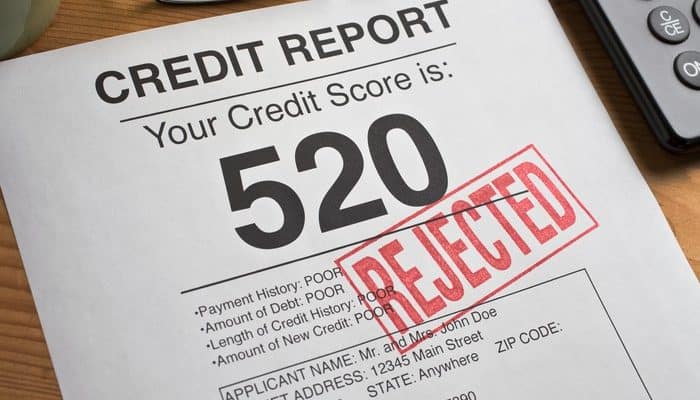
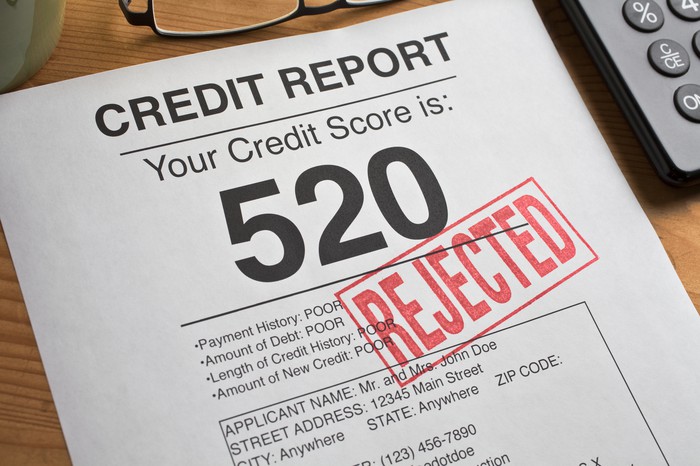
What’s a good score? Lenders usually use a score from a company called Fair Isaac (FICO), though there are many sources. FICO looks at your credit history, crunches the data, and assigns you a credit score of between 300 and 850. A score of 800 or above means your credit is excellent. A score from 740 to 799 is very good. A score between 670 and 739 is good. A score between 580 and 669 is fair. A score of less than 580 is poor.

The U.S. average is 701, according to Experian. But many Americans — of all ages — have much lower scores.

Curious about how you stack up? Credit reports are compiled by the three credit bureaus: Equifax, Experian, and TransUnion. All Americans can obtain one free credit report per year. If you want more than one, you’ll be charged.

We’ll give you the lowdown on how the scores are crafted, but first, let’s look at how having a lower score can hurt you financially. If you have an average or lower score, lenders may charge you higher interest rates and fees. The higher the interest rates and fees, the higher your monthly payment will be. High monthly payments may make it difficult or even impossible to live on a fixed income. Plus, your total debt will take longer to pay off with a higher interest rate.

Retirees need good credit for the following three reasons.

1. Optimizing mortgage payments

Back in the day, the standard picture of retirement assumed a predictable life trajectory: Young people bought a house in their 30s, paid a mortgage with a 30-year term, and could retire with the house paid in full.

Increasingly, though, older people are still stuck paying a mortgage. Roughly 30% of senior citizens pay a mortgage bill every month.

That figure is likely to rise in the future, because millennials are forming households at a later age than previous generations did. If you don’t buy a house until you’re 42 and you have a 30-year mortgage, you don’t finish paying off the house until you’re 72. But what if you want to retire at 66?

Most retired people live on a fixed income. A mortgage payment can take up a chunk of it that may make it hard to live comfortably on what you’ve got left over.

Now, mortgage payments can be shrunk if you can refinance to a lower interest rate. But if older people don’t have good credit scores, they may find it difficult to obtain lower interest rates. Lenders may refuse to refinance at all for older people with iffy credit scores.

2. Reducing credit card debt

Older Americans are carrying startlingly high balances of credit card debt. Baby boomers have an average of $7,550, much higher than the $6,354 average across all age groups. Generation X, the generation to enter retirement after boomers, has the biggest average, at $7,750.

Credit card debt interest rates are currently very high. At nearly 18%, they are much steeper than average mortgage rates, which hover around 4%. The high interest rates may make it very tough to pay down credit card debt at a reasonable pace, and thus the cycle of debt begins.

There are several strategies to make credit card debt payments smaller, which can provide relief from a tightly stretched budget, allow the faster repayment of debt, or both. One way is to consolidate credit card debt into a personal loan, which can have an interest rate as low as 10%. Another is rolling over credit card debt into a low or 0% annual percentage rate (APR) credit card. This will reduce or eliminate interest, which can make payments very low.

Unfortunately, both these avenues may be closed to people with average or poor credit, since personal-loan lenders and credit card companies prefer lending to folks with good credit.

3. Obtaining a business loan

Many older people want to develop a business once they’re retired. It could be a long-standing dream previously put on hold while working full time or a way to earn some needed money. It’s a way to be engaged in a new project in retirement and keep some income coming in.

But guess what: Small businesses often require business loans. You may need seed money for equipment or a loan to expand once your business takes off. The terms you’re offered will be less advantageous or you might get outright denied credit if your credit score isn’t good.

The lowdown: Credit scores up close

FICO calculates credit scores by assessing data from five categories. It closely guards the specific formula, but we know the categories and their relative importance.

1. Payment history contributes 35% to your score. The biggest chunk of your score is based on data about whether you pay your bills on time. Paying bills late, having delinquent debt or derogatory marks will hurt your score.

2. The second-largest category is amount owed, which makes up 30%. Amount owed includes (1) how much debt you are carrying, by dollar amount, (2) weight vis-a-vis your available credit, and (3) your current balances versus what you owed initially. In other words, let’s say you currently owe $5,000 on a credit card with a $10,000 limit, and you originally owed $8,000. Amount owed accounts for all of that, looking at this by account and by the aggregate of debt you owe. In general, lenders don’t like to see maxed-out cards or high aggregates, because people who max out cards can struggle to pay their debt service.

3. The third-largest category is length of credit history, at 15%. The longer you’ve proved you can responsibly handle credit, the higher the score in this section will be. FICO looks at the age of the credit card you’ve held the longest, plus the average of all cards, as well as at the individual accounts.

4. New credit is worth 10% of your score. The number of credit inquiries on your record counts in this category. The more hard inquiries (which imply attempts to open new credit or get a loan) over the past year the lower your score in this area may be. The number of new accounts opened also counts. Generally speaking, lenders view many credit inquiries and new accounts as a sign that you need money, which could make them nervous you won’t be able to pay the bills.

5. Your mix of credit also is 10% of the score. FICO looks at how many different types of accounts you have: mortgage, credit card, car loan, and student loans. They believe that the more types of accounts you’ve shown yourself responsible with, the better a credit risk you are.

Once you know your score, make plans to raise it if you need to. Pay your bills on time. Pay down debt. Don’t close any credit cards (because your length of time matters). Have a good mix of credit.

NFL player Carl Nassib’s simple rules for saving money

Carl Nassib may earn a nice paycheck as a defensive end for the Tampa Bay Buccaneers, but he certainly isn’t living the high life.

His rules are simple: Live below his means and put money away for the future by using investments readily available to average Americans.

Younger people “have a much larger time span to invest, so I think with long-term investing, index funds are a great tool,” Nassib said Friday on CNBC’s “Power Lunch. ”

His interest in finance began after he was drafted by the National Football League in 2016. He started his career with the Cleveland Browns and in 2018 started playing for Tampa Bay.

“I didn’t want to pay someone to manage my own money, so it took a while, but I educated myself,” he said.

Nassib, who has career earnings of $2.73 million according to the website Hero Sports, has a strict monthly budget. During the season, it is $3,500 and covers food, rent and bills. Off season, he has a higher budget of $5,500, because he travels more to see friends and family and no longer has meals provided by the team.

“I try to get at least to where I have $400 or $500 miscellaneous spending, and then everything else is accounted for,” Nassib explained.

He’s been successful enough that he has taken to giving out financial advice to his teammates. In an episode of the HBO documentary series “Hard Knocks: Training Camp with the Cleveland Browns, ” he was seen teaching players about compound interest, which is essentially interest on interest. It’s calculated on the initial principal and the accumulated interest over the years.

“This is the easiest equation to make you rich,” he said on the show. “It’s crazy.”